
By
Álvaro De Benito
The exhibition by the Ecuadorian artist, featuring works created specifically for the Córdoba space, proposes a journey in which the viewer is invited to explore concepts such as migration, memory, and colonialism by moving through a space that brings together history and displacement.
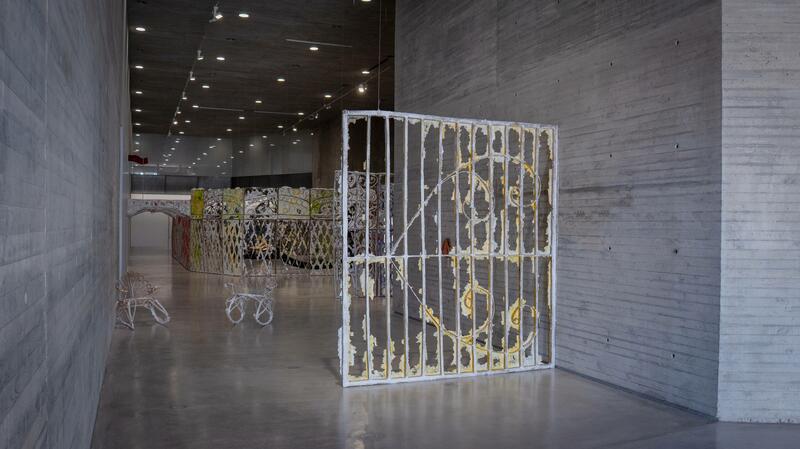
Centro de Creación Contemporánea de Andalucía (C3A) presents Travesías de una lágrima, a solo exhibition by Sofía Salazar Rosales (Quito, Ecuador, 1999), whose practice lies between sculpture, installation, and architecture, and critically analyzes the concepts of migration and memory that underlie materials. The exhibition, which includes production created specifically for this space, is framed within a line of research that also takes colonial legacies as structuring elements and is conceived as a journey in which visitors move through the arranged works, thus proposing a framework for reflection on belonging and uprootedness.
In this way, the space is transformed into a bodily experience in which history and territory converge. As bearer of the performative dimension that the artist grants to the visitor, the latter also becomes a participatory element within the narrative. The works and their arrangement seem to become stops along an itinerary that raises a critique or reconsideration of the meaning of traversing or transforming a territory marked by history.
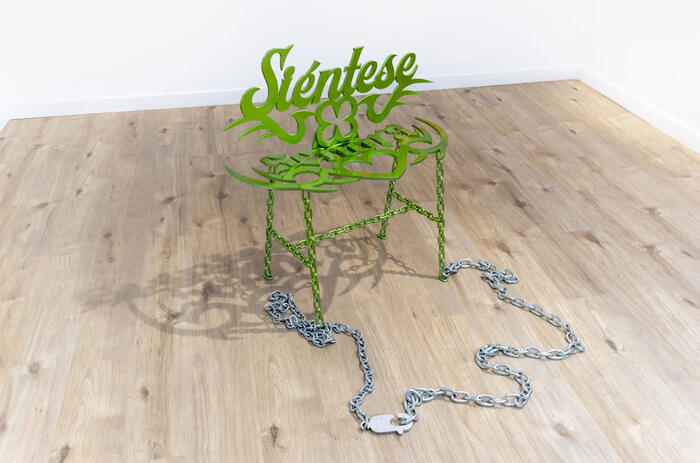
A path of grilles begins the journey and opens a dialogue alluding to the tradition of Hispanic ironwork as a language of border and transit. Works such as the one that gives the exhibition its title articulate this act of traversing in a metaphorical way, yet with enormous emotional and political weight. Meanwhile, others such as Reja (ensayo para una frontera blanda) reflect on physical limits and their symbolism. The works take shape through the use of everyday materials that are imbued with a certain symbolism in order to conceptually explore the narratives of colonization and exclusion posed by Salazar Rosales.
Sillas para un cuerpo que espera, structured around seats that have been covered in wax, point to the accumulation of time and memory. The fragility of the component contrasts with the solidity of the structure, playing with the dichotomy provided by the sensibilities of matter. Red de cuentas y bananas (economía de la herida) incorporates molds made of charcoal that refer to themes related to extractive and capitalist activities, even linking the artisanal element with colonialism and its impact on local historiography. There is also a presence of architectures that evoke bones or fragmentation, through which the environment, as in Arquitectura blanda para un territorio incierto, seems to appropriate corporeal and bodily elements.
Sofía Salazar Rosales. Travesías de una lágrima can be seen until April 26, 2026 at the Centro de Creación Contemporánea de Andalucía (C3A), Carmen Olmedo Checa, n/n, Córdoba (Spain).
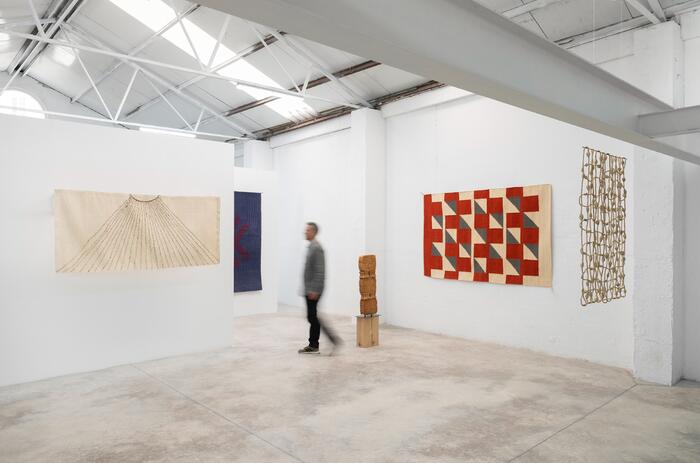
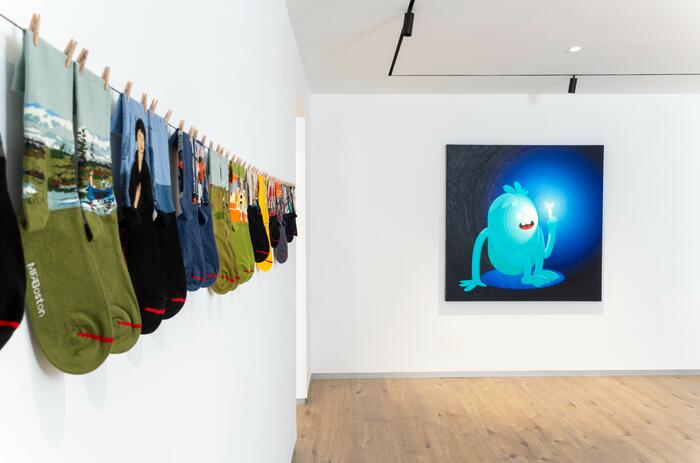
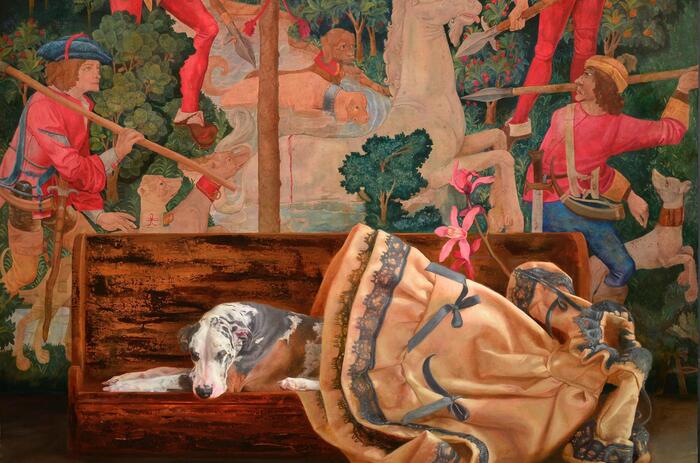
Global selection underscores the Colombian singular pictorial language shaped by tension, staging, and introspective inquiry.
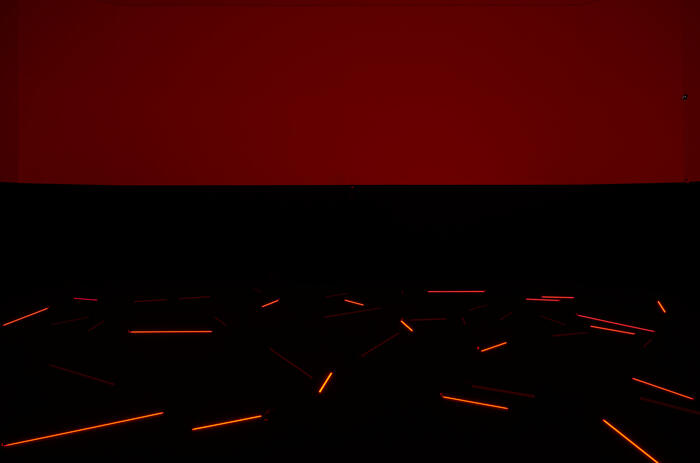
beginning, middle, beginning presents an installation by Brazilian artist Cinthia Marcelle, conceived specifically for the Central Gallery of the Serralves Museum. The work questions the linear conception of time and its relationship to colonial structures.
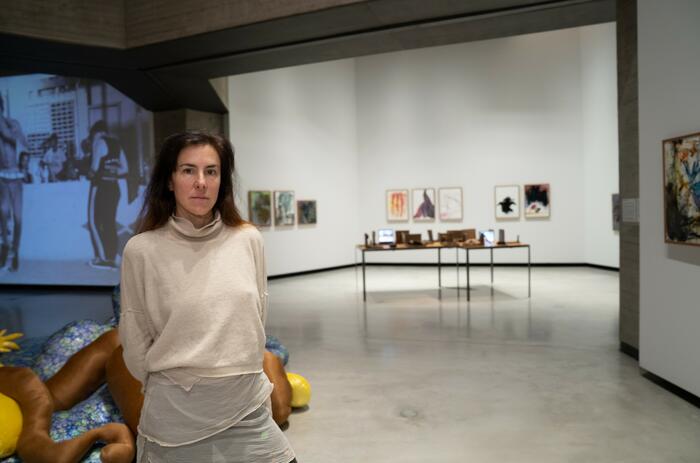
The exhibition brings together works created ad hoc by the artist in the city. Through them, she reinterprets craft and tradition from a contemporary perspective and invites the audience to understand sound as a language that redefines our relationship with the environment.
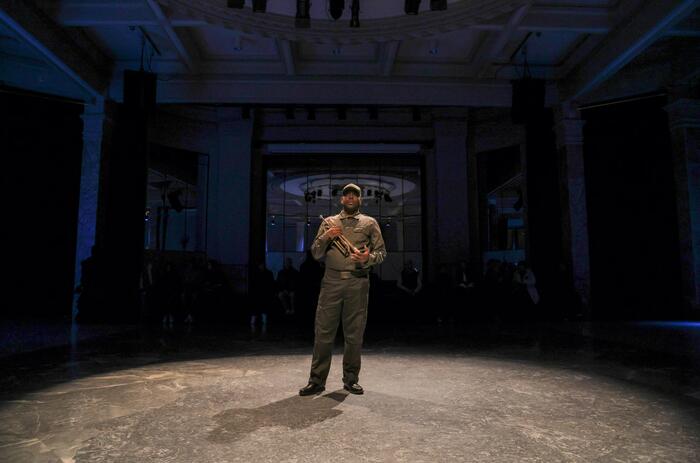
La lechuza de Minerva reflects on the power of cultural institutions in the contemporary context and creates a space where proposals by Dagoberto Rodríguez, Regina Silveira, and Los Carpinteros, among others, coexist in order to re-read the trajectory of the institution itself.
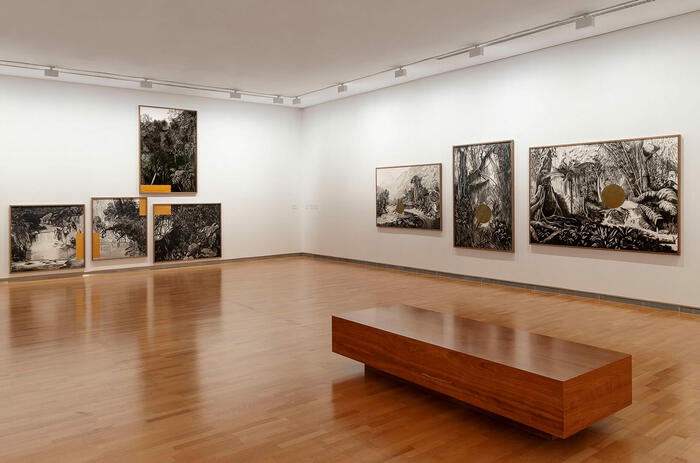
The first retrospective in Spain of Gabriela Bettini reflects on absence and the politics of forgetting through images that challenge official history.
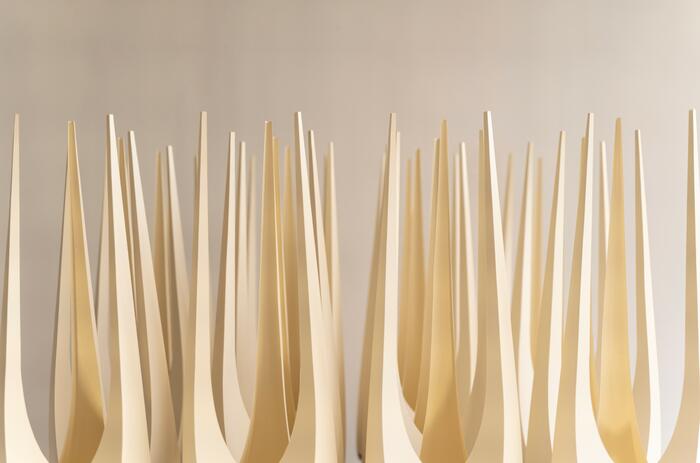
The Ecuador-based design studio DON NADIE presents the project 1 m² / 1 second at the Fuorisalone of Milano Design Week 2026. The paper-sculptured native plants seek to translate deforestation into a tangible experience.