By
María Galarza
Isabella Lenzi (São Paulo, 1986) is a curator trained in architecture, museology, and art history. She lives in Madrid, where she works as Visual Arts Curator at the Círculo de Bellas Artes and as Artistic Director and Chief Curator of the Fundación Alberto Cruz, following a trajectory that includes institutions such as the Museo Reina Sofía, Fundación Mapfre, Videobrasil, the Cuenca Biennial, and the Whitechapel Gallery.
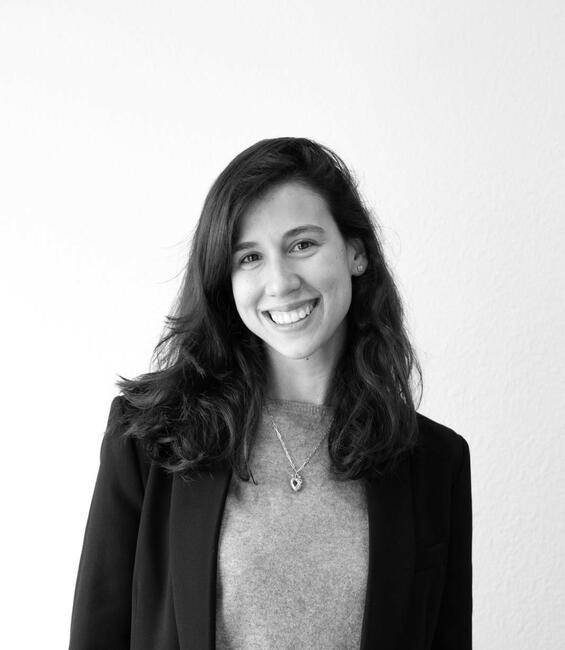
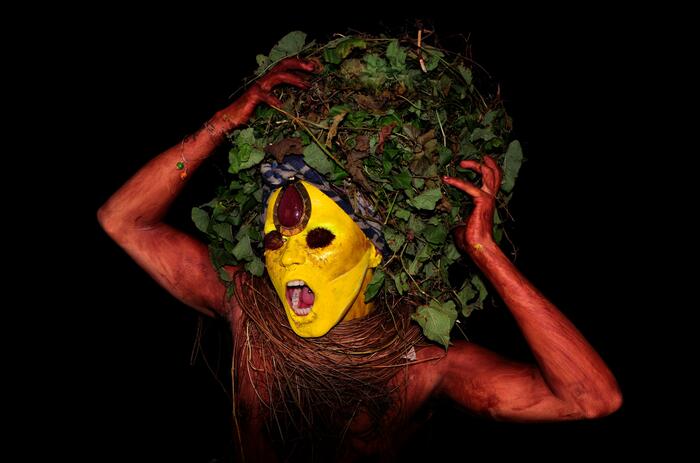
For the 2025 edition of Pinta Miami, Isabella is in charge of curating RADAR, a section she conceives as a polyphonic space attentive to how knowledge circulates among bodies, materials, and generations. Under the title Earth’s Navel, she brings together practices rooted in an intimate relationship with land, the organic, and the textile—recovering genealogies historically displaced and restoring their critical, symbolic, and affective power.
Participants include Sandra Monterroso (Fernando Pradilla), Sonia Navarro (T20), Paloma de la Cruz (Proyecto H), UÝRA and Renan Teles (Aura Galería).
Regarding the participating artists in RADAR at Pinta: what was indispensable for you when recognizing these genealogies in each one?
For me, what was indispensable was paying attention to how knowledge is produced within each practice: not only which materials they use, but which ties are activated with a territory, with a community, with a memory, and with a set of gestures transmitted across generations. In these works, genealogy does not appear as a folkloric citation nor as a decorative “cultural reference,” but as a fabric sustained by different forms of transmission—oral, technical, ritual, domestic, collective. It was also key to acknowledge that these genealogies are neither “pure” nor static: they are crossed by displacements, erasures, historical violence, and contemporary transformations. Matter—earth, fiber, ceramics, image—functions as a living archive: it preserves traces but also produces meaning in the present and opens imagination toward the future.
In what ways do you think spaces like RADAR can contribute to a more nuanced reading of contemporary Latin identity?
I believe RADAR contributes precisely by avoiding a single idea of “the Latin.” In a territory where very diverse experiences coexist—migration, Afro and Indigenous diasporas (and also European ones), mixed identities, queer identities, multiple languages and memories—the most interesting task is to create a framework that does not flatten these differences into a fixed category. These spaces allow identity to be read as something in movement: made of hybrid and partial belongings, crossed by tensions, translations, and contradictions. And above all, they place emphasis on what is situated: on how these histories are embodied in specific bodies, materials, and landscapes, without being reduced to a general identity narrative.
What transformation would you like to see—or to help bring about—in curatorial practices?
I would like transformation to be not only a shift in narrative but a shift in ways of doing and relating: with artworks, with artists, with audiences, and with the contexts from which these practices emerge. That implies revising hierarchies (what is legitimized as “art” and what is relegated to “craft,” for instance), but also revising rhythms and conditions: giving time to processes, caring for mediations, making decisions transparent, and acknowledging that curatorship always produces effects. And something concrete: understanding that exhibitions are not neutral and can be tools for experimenting with and hosting other forms of work and knowledge—sensory, communal, spiritual, affective—without forcing them to fully translate into hegemonic language.
With your experience in institutions in Europe and Latin America, how would you define the curatorial role today?
Today I think of that role less as an “author” (in my case, “authoress”) and more as someone who builds bridges: a mediator who creates conditions for materialization, visibility, listening, and care. To sustain, for me, means to sustain rigor and responsibility: research, context, precision in language, and ethics in relationships. To transform implies stepping away from the position of sole spokesperson and working through alliances, through the choral: allowing the exhibition to be a space of negotiation, productive friction, and multiple voices. Dwelling in problems and discomfort is a fundamental part of the work. And it also means taking responsibility for the institutional dimension: understanding which structures enable or block certain narratives, and intervening there to open small cracks.
How does your multidisciplinary background shape the way you read and organize an exhibition?
Architecture and urbanism lead me to think of the exhibition as a spatial and political journey: how a body moves, what hierarchies a room produces, what remains at the center and what is pushed to the margins. They allow me to approach artworks, artists, and spaces in a situated way, from context. Photography trained my attention to framing, detail, and to what an image conceals as much as what it reveals. Museology made me acutely aware of devices—conservation, mediation, narrative, accessibility—and also of everything that exceeds the exhibition itself, including the political weight of the narratives upheld by institutions. And art history provides a framework for locating long genealogies without forcing linear readings—rather circular or spiral ones. But above all, I learn from artists and from my colleagues. Taken together, this background helps me think of the exhibition as a system: a choreography of materials, times, scales, bodies, and voices, where the installation itself also thinks, writes, and speaks.
In its new edition, Pinta Miami reaffirms its role as a vital anchor of Miami Art Week. Curated by Irene Gelfman, the fair presents three projects that explore—through distinct approaches—the shifting relationships between landscape, identity, and collective experience.
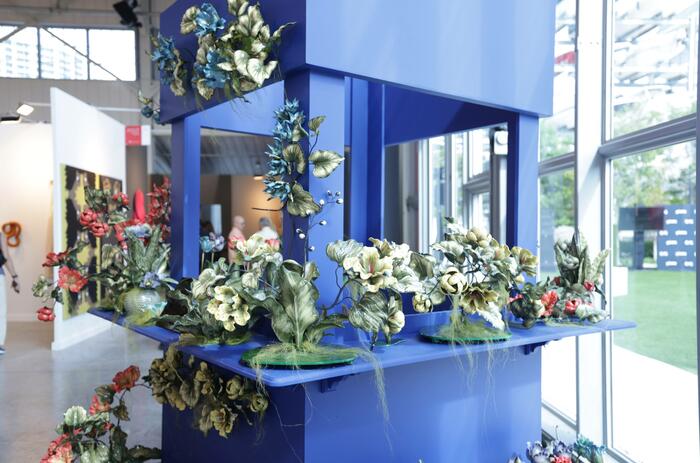
With Special Projects, the Sculpture Garden, and the FORO program, the fair stands as the key meeting point for Latin American art during Miami Art Week.

In its 2025 edition, the fair unfolds a terrain of questions and encounters. Curated by Juan Canela, NEXT proposes pairings of artists and galleries that explore how we inhabit, name, and imagine the region, articulating new ways of thinking about the contemporary from Latin America and the Caribbean.

By Violeta Lozada
Art Week opens its doors next week and Miami begins to beat differently. There’s a pulse you can feel while walking through the fairs—a mix of curiosity, intuition, and discovery.
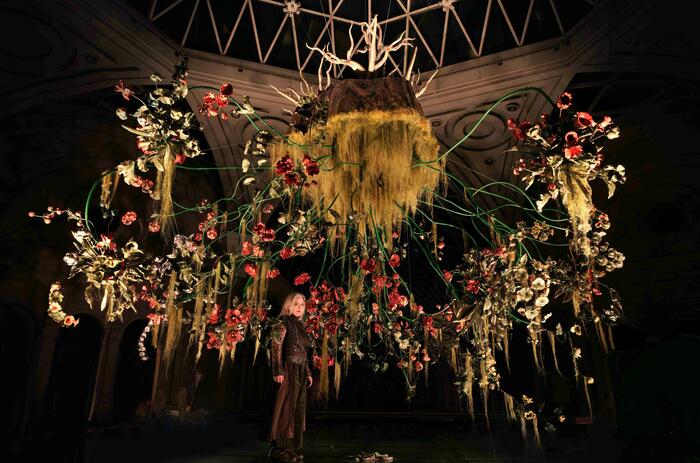
Among jaguars, giant flowers, and living ceramics, Nicola Costantino unfolds a universe where technique and concept seek each other out. From initial rawness to a beauty guided by nature, her work continues to evolve like an expanding jungle.
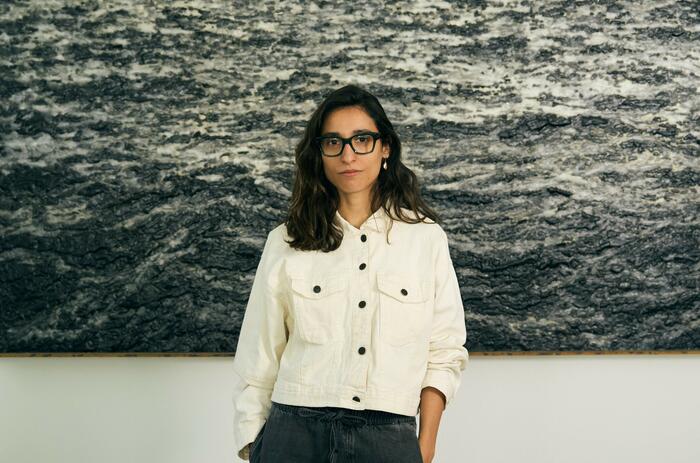
To tell, narrate, or curate always implies a perspective. From where one speaks, to whom one speaks, and which points of support are chosen when conceiving an exhibition—when designing a story. Irene Gelfman is an Argentine curator, art critic, and cultural manager. She trained as an art historian and curator. Today, she is the global curator of Pinta.
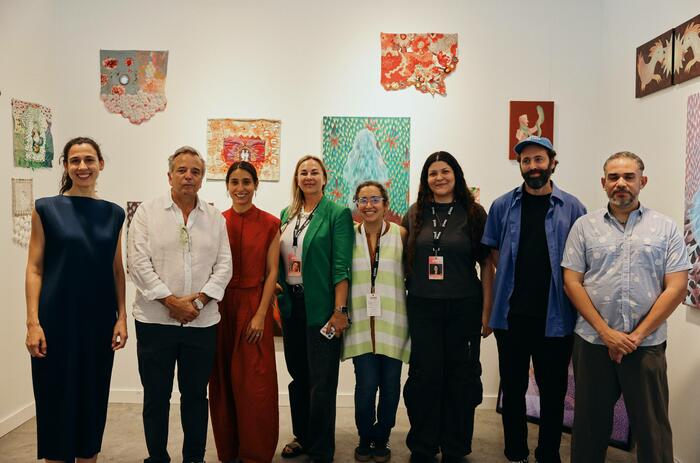
The 2025 edition of Pinta Miami concluded by reaffirming its commitment to elevating Latin American art, celebrating artists, galleries and institutions through its awards program and key acquisitions that strengthened regional collecting.
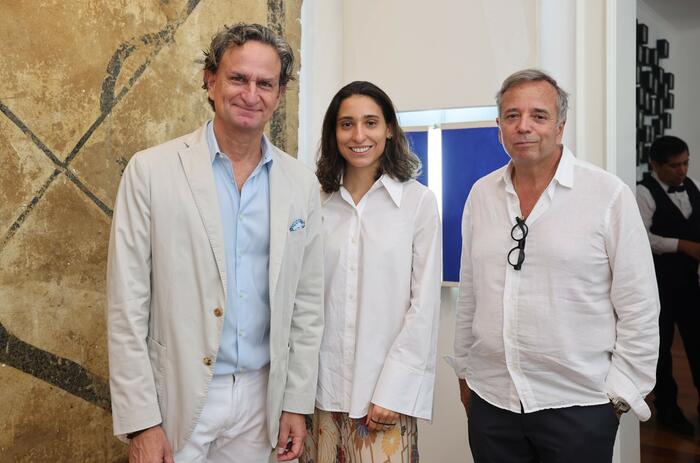
Argentine Luciano Giménez, who took part in the fair in Miami, was selected to undertake a two-month residency in Peru.