

By
Margarita Sánchez Prieto
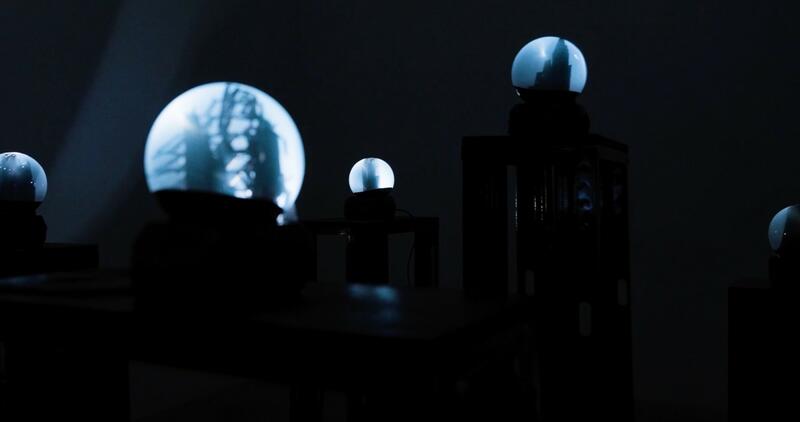
Futurist Vernor Vinge predicted that by 2030 we would reach a moment of “technological singularity.” Development would become so complex that a new technology, no longer requiring human intervention to operate, would be needed; unable to control it, humanity would face catastrophe. Argentine artist Gabriel Valansi has long worked with the concept of impossible cities built from technological detritus. Realizing that we are approaching that date, he anticipates what will occur: the explosion and submergence of a continent as a result of this process. The ancient Platonic myth of a civilization swallowed by the Atlantic—submerged Atlantis—revived in the eighteenth century to explain how an advanced society destroyed itself through uncontrolled development, resurfaces now as we near this foretold dystopian future.
With a well-established reputation in photography, earned through his investigations into how visual memory is intertwined with the degradation of information, Valansi proposes a vision of an event yet to come—one that, according to the narratives, had already occurred in the past—by harnessing the errors produced by 3D printers or by disrupting the linearity of their process. Although his gaze had been shaped by photographic practice, several years ago he realized that certain ideas could not be materialized through direct photography and that he would need to venture into other forms of expression. From this conclusion emerged Babel, a large city constructed from 3,600 discarded motherboards, whose floor-based installation reinforced its appearance. Valansi imagined that, over time, it would be buried and that when a future archaeologist uncovered it, they could reconstruct its former life from the memory archived in those electronic components—turned technological waste—that composed it. The mixture of languages and information they contained compelled him to give it the homonymous title of the biblical tower.
From this work arise his questions about why technology has the form it does and why some of its objects take on ominous shapes. From the beginning of his career, Valansi has shown concern for wars and humanity’s self-destructive tendencies, and for how acts of extreme violence—events in which we do not participate—become part of our visual memory through images that bear the erosion of their transfer from one medium to another, from analog to digital technology, the superimposition of textures in their reproductions, or their treatment in mass media. Hence his inquiries into the extent to which information is conditioned by the degradation of the photographic record of events—that is, by the images themselves—have led him to focus on technology: its role in the unfolding of the present, in the reconstruction of the past, and its threatening predominance in the future due to the autonomy with which its latest inventions operate. This explains why technology is now the axis of his work, and justifies the admonitory character of his recent production.
Atlantis breaks with the installation format of Babel: it returns to photography while drawing on other disciplines for the formal resolution of its pieces. Nevertheless, the four sculptures—snow spheres—and the six photographs in this project, exhibited at Dot Fiftyone Gallery in Miami from September 27 to November 20, 2025, are also remnants of those (impossible) architectures which, in this case, lie on the ocean floor. Distorted structures and nonexistent information, an event fabricated from the failures of 3D technology and from the handling of texture, framing, and light in its photographic record, staged on a simulated seabed. The immersive sensation—aligned with the scenario the works foreground—enhanced by the electronic music of a video soundtrack and the dim gallery lighting, heightens the viewer’s unease in the face of this vision of a sunken continent. An exhibition that invites reflection on the consequences of uncontrolled technological development and on the extent to which images (of this nature) shape perception and can falsify reality.
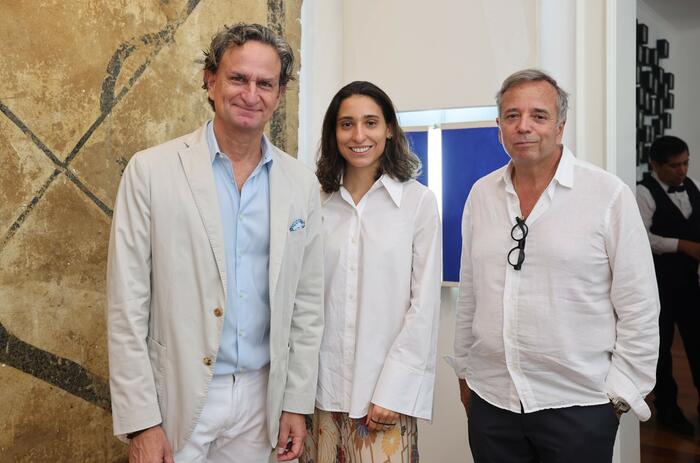
Argentine Luciano Giménez, who took part in the fair in Miami, was selected to undertake a two-month residency in Peru.
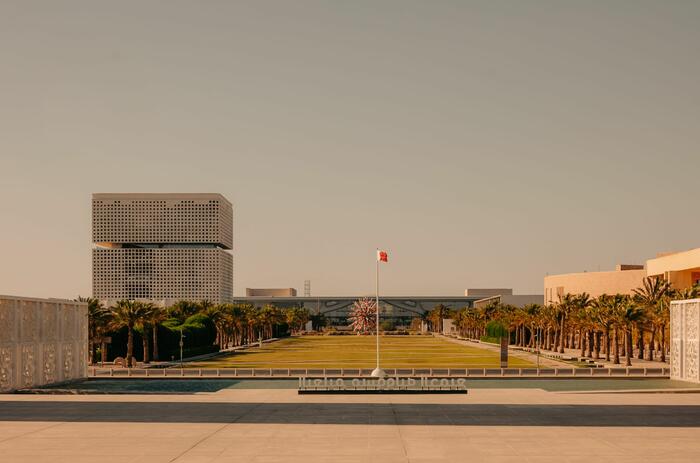
As 2025 draws to a close, the long-anticipated recovery of the global art market has not yet truly taken shape. The cautious optimism that marked the end of 2024 quickly gave way to a more sobering reality.
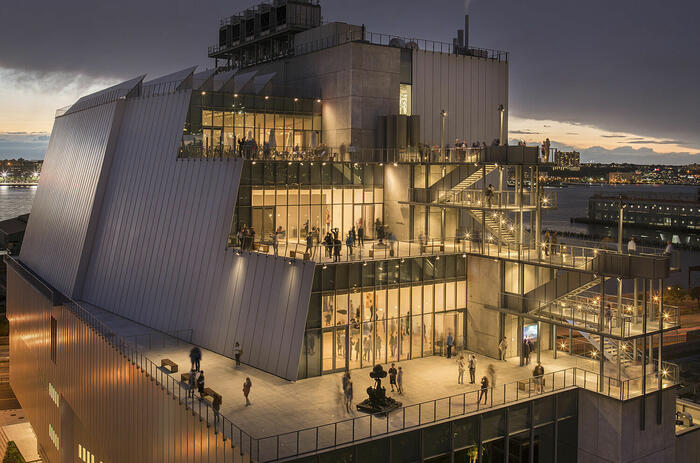
The 82nd edition brings together 56 artists and collectives in an exhibition that privileges atmosphere, sensibility, and contemporary forms of coexistence. Within this framework, Latin American artists play a key role, weaving together memory, technology, body, and territory.
The award recognizes a sculptural practice in which the geometric and the organic are articulated in suspended scenes, shaped by fable, theater, and memory.
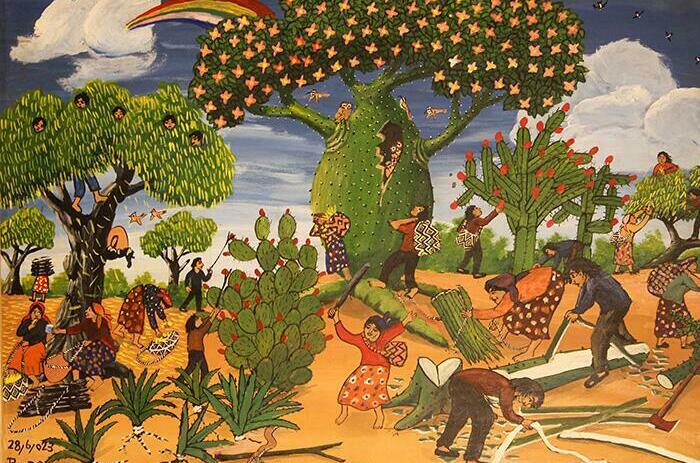
The event will bring together 46 Indigenous artists from different regions of Argentina and neighboring countries, with exhibitions and activities taking place between February and April.
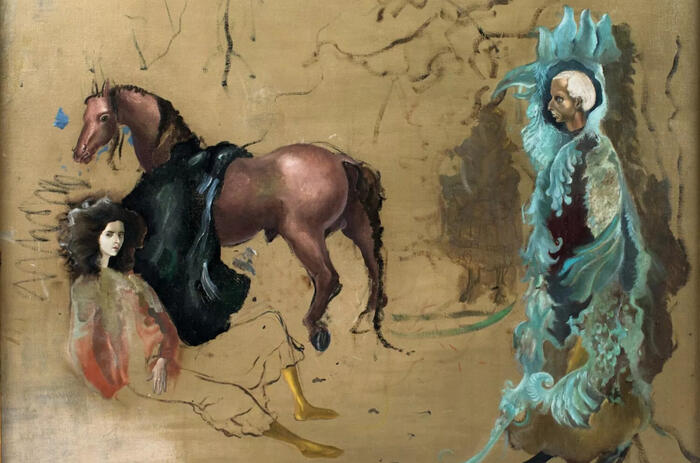
The museum presents the work of the Mexican artist through a journey that articulates her main interests, combining chronological and thematic perspectives.