
WHITNEY BIENNIAL 2026: LATIN AMERICAN IMAGINARIES IN A TIME OF TRANSITION
The 82nd edition brings together 56 artists and collectives in an exhibition that privileges atmosphere, sensibility, and contemporary forms of coexistence. Within this framework, Latin American artists play a key role, weaving together memory, technology, body, and territory.
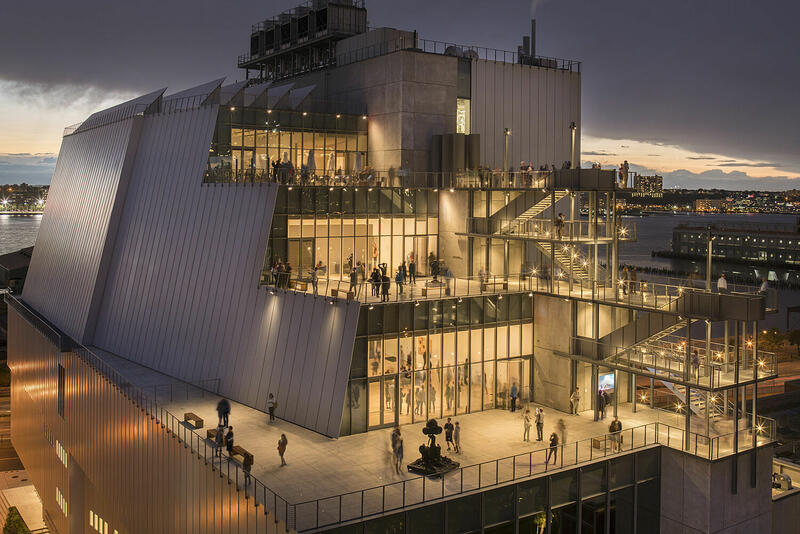
Opening to the public on March 8, 2026, with member previews from March 4–7, the Whitney Biennial 2026 offers a vivid survey of contemporary American art shaped by a moment of profound transition. Rather than proposing definitive answers, the exhibition foregrounds mood and texture, inviting visitors into environments charged with tension, tenderness, humor, and unease.
Co-organized by Marcela Guerrero and Drew Sawyer, with Beatriz Cifuentes and Carina Martinez, the Biennial embraces relational forms that explore interspecies kinships, geopolitical entanglements, technological affinities, and shared mythologies, proposing unruly and unexpected ways of imagining coexistence.
-
Leo Castañeda, PAMM 2024. Courtesy of the artist
Within this landscape, the participation of Latin American artists emerges as especially significant. Through situated perspectives and diverse practices, their works address questions of identity, history, perception, and cultural memory.
Colombian artist Leo Castañeda (born 1988 in Cali), based in Miami, presents a practice that merges digital art, video games, and immersive installation. Drawing on Latin American Surrealism and contemporary technologies, his work creates episodic narrative worlds where painting, video, mixed reality, and sculpture converge, rethinking the boundaries between fiction, memory, and digital culture.
-
Carmen de Monteflores, Four Women, 1969. Collection of the artist. ©Carmen de Monteflores. Photo by Philip Maisel. Courtesy of the artist
Carmen de Monteflores (born 1933 in San Juan, Puerto Rico) brings a singular, multivalent trajectory to the Biennial. Crossing visual art, literature, psychology, and activism, her work reflects on exile, sexuality, language, and intimacy, expanding autobiographical practice as a political and affective space.
Chilean artist Ignacio Gatica (born 1988 in Santiago), based in New York, investigates systems of knowledge and technologies that shape urban, historical, and personal experience. His work examines how social landscapes are constructed and translated into cultural forms that challenge dominant narratives.
-
Ignacio Gatica. Courtesy of the artist
Born in Cartagena de Indias, Oswaldo Maciá (1960) develops sculptural compositions that integrate images, objects, sounds, and smells. His works operate as sensory scenarios that privilege subjective experience over objectivity, activating an expanded perception of space and environment.
Also contributing to this Latin American presence are Julio Torres (born 1987 in San Salvador), whose practice navigates humor, language, and performance, and Johanna Unzueta (born 1974 in Santiago de Chile), widely recognized for her work in drawing and sculpture that reflects on labor, materiality, and memory through manual processes.
Together, these artists underscore the relevance of Latin American perspectives within the Whitney Biennial 2026, enriching its exploration of the present with critical, poetic, and deeply embodied forms of artistic inquiry.
*Cover image: courtesy of Whitney Museum.
Related Topics
May interest you
OPEN CALL FOR THE 2028 MCKINNEY INTERNATIONAL RESIDENCY AT INDIANA UNIVERSITY
The institution invites international artists and designers to apply for a four- to six-week residency offering a fellowship, studio space, and access to a distinguished academic and cultural environment. Application deadline: January 18, 2026.
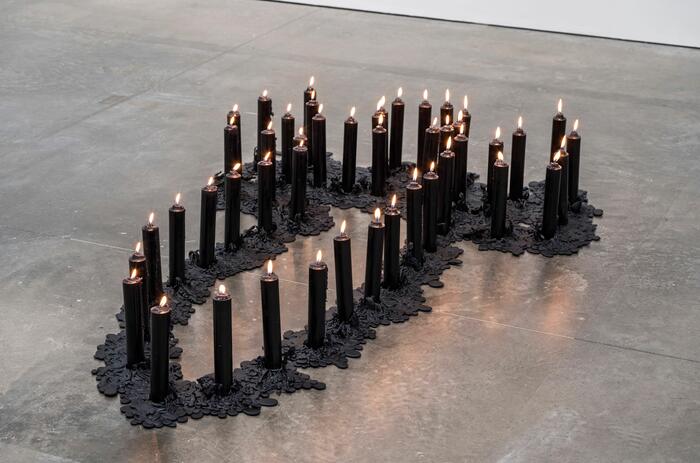
ANA MENDIETA BACK TO THE SOURCE
The Marian Goodman Gallery in New York is presenting its inaugural exhibition Ana Mendieta Back to the Source. Thoughtfully and beautifully installed, the exhibition presents a significant body of work from 1972 to 1985 that includes photographs, the installation Ñañigo Burial, designs on leaves, drawings of hands and female figures on paper with ink, graphite and wash, ten films, and two vitrines with diverse personal items.

ARTICULATING SPACE: ALEXANDRE ARRECHEA BETWEEN GALLERY AND CITY

TARA LONG AT LOCUST PROJECTS: A SWEET, DARK, AND SURREAL UNIVERSE
The artist unfolds an all-encompassing installation that invites viewers to move through scenes in constant tension between allure and ruin.
NOTES ON GABRIEL VALANSI AT DOT FIFTYONE GALLERY, MIAMI
WHITNEY BIENNIAL 2026, A FIELD DENSE WITH ENCOUNTERS
The intergenerational selection traces a sensitive map of practices connected to the United States, where affective, political, and technological ties intertwine through an experimental lens.
THE CENSORSHIP OF MOURNING: SOUTH AFRICA AND THE 2026 VENICE BIENNALE
The exclusion of Gabrielle Goliath’s work due to its reference to Gaza exposes the tensions between memory, mourning, and political power in contemporary art.