
LATIN AMERICAN ARTISTS IN SPAIN: NOTES FROM A RESEARCH PROJECT
By Mónica Sotos
What are the successive diasporas of Latin American artists to Spain from the final years before the beginning of the 21st century to the present about? Article 1 of a 3-part series.
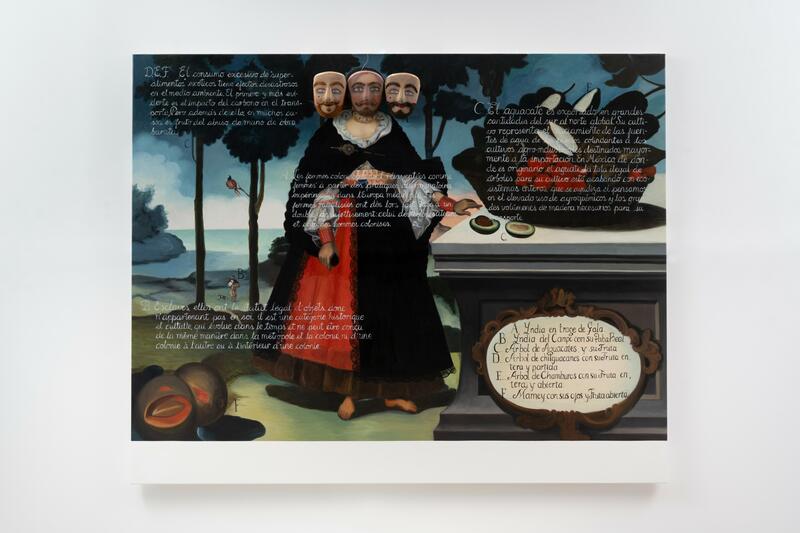
Before we begin…
As an introductory note for the reader, I would like to clarify that this is the first of three articles that stem from ongoing research in the academic field.
With this series of articles, I seek to trace the successive diasporas of Latin American artists to Spain from the final years before the beginning of the 21st century to the present. Like any complex compilation that gathers processes of transculturation and corresponds to decolonial presents, it has compelled us to look back and analyze the different reasons behind the migratory flows that brought many generations of creators to reside here: from higher education, successive economic crises and/or political reasons, to more prosaic motives.
This framework of reflection aims to highlight the disarticulation or modification of practices generated within the cultural fabric thanks to the contributions—both artistic and intellectual—produced in Spanish territory, which have provoked a shift in decolonial and anti-racist dramaturgy in museographic and/or independent spaces as well as in institutional practices.
-
María María Acha-Kutscher. “Derruidas” del proyecto “Womankind”. Cortesía de la artista
Three Singular Cases before the 2000s
Before underlining some of the creators who arrived in Spain in the early years of the new century, we must first point out three figures who stand out for their long-standing relationship with Spain: Cuban Waldo Balart (Banes, Cuba, 1931 – Madrid, Spain, 2025), who lived and worked in Madrid for 53 years until his passing this year; Argentine Matías Costa (Buenos Aires, 1973), now nearing fifty; and Chiapanecan Carlos Vidal (Chiapas, Mexico, 1957), who next year will celebrate forty years of residence in Madrid.
Balart, with a fascinating personal history that led him to leave Havana in 1959 and later to take part in the New York scene of the 1960s—with links to Warhol, among others—arrived in Spain a few years before Franco’s death. This distinguished member of concrete art, whose work is held by MoMA among others, continued producing tirelessly until the age of 94 in his studio in Madrid’s Lavapiés neighborhood, represented for over a decade by Casado Santapau gallery.
Costa, meanwhile, arrived in Spain in 1977 as part of the diaspora caused by Argentina’s military dictatorship. His photographic oeuvre has focused on themes of exile, uprootedness, and orphanhood, and points to some of the questions that concern the concluding reflection of this series: when does a citizen, despite acquiring a new nationality, stop being perceived as a migrant or foreign creator? His retrospective Solo at Canal de Isabel II in 2020, curated by Carlos Martín, revisited, among other series, his own family’s exile history in his field notebooks. The World Press Photo awardee recently presented his latest curatorial project Afterwork at PHotoEspaña in Alcalá de Henares, which ran until September 21, precisely probing into the notion of travel and its relationship with the creator.
For his part, Vidal studied at La Esmeralda and San Carlos in Mexico and later in Rome, before completing a doctorate at UCM in the mid-1980s. He participated in most of the group shows of the Spanish painting scene in the late 1990s, strongly influenced by the figurative painting wave of the 1970s, alongside near-contemporaries such as Chema Cobo or Carlos Franco. With the latter, he exhibited at ICME under the curatorship of Miguel Cereceda, in one of the three occasions on which this Mexican artist—member of the Sistema Nacional de Creadores and deeply rooted in Spain—was supported by this institution with over fifteen years of history.
Late 1990s: Three Mexican Creators in Spain
Spain entered the 1990s in an apparent process of change and modernization, which, though harder to narrate positively today, positioned the country as a destination for major Latin American names. Among those who arrived were Mexican-Canadian Rafael Lozano-Hemmer (Mexico City, 1967) and fellow Mexican Ximena Labra (Mexico City, 1972), in 1992 and 1998 respectively—the first in Madrid, the second in Barcelona. The prolific, award-winning, and internationally renowned multimedia artist Lozano-Hemmer launched the Beep Awards for artificial intelligence, created by Fundación Telefónica, and years after living in Spain, received a major retrospective, Biometric Abstraction, in 2014. Although his studio is based in Montreal and his impressive large-scale works are exhibited worldwide, his representation by Madrid’s Max Estrella gallery ensures his most recent works are presented in the Spanish capital each year, maintaining his close ties with the local art scene forged during his twelve professional years in Madrid—not including his earlier adolescent stay.
Labra, then very young, began her career in Spain with her first solo show twenty-five years ago at the Instituto de México in Spain. From her residence in the Basque Country and later in Barcelona—where she completed her doctorate and carried out major projects in Madrid, Girona, and León with curators such as Martí Perán (in Lost in Space, alongside peers like Artemio Narro, México, 1976, who, though not settled, had successive residencies in Madrid)—she went on to produce significant public-space works such as her intervention at Denver Airport in 2013; the performance If I Were a Building at MUAC in 2023; or her installation Tlatelolco Public Space Odyssey at Centro Cultural Los Pinos in 2020, a project that reflects on and questions the usefulness of commemorative monuments.
-
Rafael Lozano-Hemmer. "Border Tuner / Sintonizador Fronterizo, Relational Architecture 23", 2019. Installation across the US-Mexico border, with one station in Ciudad Juárez, Chihuahua and the other in El Paso, Texas. Foto Monica Lozano. Cortesía del artista
-
Rafael Lozano-Hemmer. "Pulse Topology", 2021. Foto de su exhibición en San Francisco, California, Estados Unidos, 2023. Foto de Barak Shrama. Cortesía del Artista
-
Ximena Labra. Taltelolco , 2020. Centro cultural Los Pinos. Cortesía de la artista
-
Ximena Labra.To those who go, 2012. Aeropuerto de Denver, EEUU
-
Bosco Sodi. Uno, 2022. Exhibición "What goes around comes around". Palazzo Vendrami, Venecia. Cortesía del artista
-
Bosco Sodi. Vista de exhibición. Galería Hilario Galguera 2019. México. Cortesía del artista
Also in Barcelona, Bosco Sodi (Mexico City, 1970) settled for nearly eight years at the beginning of the century, during which he developed his first, strongly pictorial period influenced by informalism, working with Carles Taché gallery. He later evolved into large-scale sculpture from his studios in New York, Greece, and Mexico City, and founded Casa Wabi to support artist residencies on the Oaxacan coast. He recently returned to Madrid with his gallery Hilario Galguera.
Two Groundbreaking Women Artists from Peru to Highlight
The prevailing decolonial narrative has become visible in the acquisition of works by the Museo Reina Sofía, particularly in the last five years, from Latin American artists. Among them, two artists must be mentioned: María María Acha-Kutscher (Lima, Peru, 1968) and Sandra Gamarra (Lima, Peru, 1972).
The Lima-born, Spanish-naturalized María María Acha-Kutscher arrived in Madrid in 2001 from Mexico, where her family had moved from Peru. Granddaughter of philosopher and critic Juan Acha, she carries a family tradition of high culture, and in her own body she embodies that diaspora across multiple territories. Over her twenty-four-year artistic career based in Spain—represented in recent years by the Catalan gallery ADN—she has traversed diverse contexts, from the legendary independent spaces such as Ojo Atómico to the creation of the Antimuseo, together with her partner, artist Tomás Ruiz Rivas.
-
María María Acha-Kutscher. Vista de exhibición "WomanKind" de la serie "Indignadas", 2024. Galería ADN, Barcelona. Cortesía de la artista. Carteles de la serie "Indignadas" dentro del programa extramuros del [M]UMoCA
-
María María Acha Kutscher. Vista WomanKind, Galería ADN, 2024. Cortesía de la artista
The artist, whose corpus of work is linked to women and their struggles, entered the Museo Reina Sofía collection in 2021. Her career has developed largely on the international stage, although she has also had major solo shows in Spain, such as Womankind at La Malagueta in Málaga in 2023, curated by Sema d’Acosta, or her inclusion that same year with her iconic series Indignadas in the exhibition Art Against Gender Violence – So Many Women in One at La Nau, University of Valencia. She was also included in Communicating Vessels: Collection 1881–2021 at the Museo Nacional Centro de Arte Reina Sofía, although we might question why she was not included in Giro Gráfico when her work is so evidently militant and directly linked to social movements and their demands.
A year later came fellow Peruvian, also Spanish-naturalized, Sandra Gamarra, who represented Spain in the Spanish Pavilion at the 60th Venice Biennale in 2024 with the project Migrant Art Gallery. This marked the first time a migrant artist served as Spain’s representative at such a major event. The exhibition offered an important reflection on colonial modes of representation and had its precedent three years earlier with Buen Gobierno at Alcalá 31, both curated by Agustín Pérez Rubio. The Ministry of Culture successfully presented the Venice project adapted to the halls of the Biblioteca Nacional de España, where it can be seen until September 14 in Madrid.
Mexicans Settled before the ARCO Mexico Expansion
In 2003, Mexicans César Martínez Silva (Mexico City, 1962) and Ugo Martínez Lázaro (Mexico City, 1974) arrived in Spain. The former came to pursue a doctorate in Cuenca—which he extended for more than eight years, forging a strong bond with the local scene that has brought him back countless times since his solo show at Conde Duque in 2004. This was evident in the packed hall during the presentation of his most recent publication Mexpaña. Nos-otros mismos last year, the result of research that led to an exhibition precisely on the 500 years of intercultural and inter-affective relations between Mexico and Spain. His gunpowder paintings, performances, and inflatables, still remembered in the capital, were recently revisited in La Idea y la Odisea—again reflecting on the idea of the journey—at Ex Teresa Arte Actual.
Martínez Lázaro ended up forming a family and staying for the past twenty-two years, participating mainly in independent, artist-organized initiatives such as the second edition of Aragón Park in 2021, or his solo show The Holy Mountain at Ramón Luján in 2022, which reflected on Mesoamerican symbols such as maize and the sacred, right in Madrid’s Usera neighborhood. RPM—an acronym for “revolutions per minute”—was his latest exhibition at Casa de América in 2024.
-
César Martínez Silva. "Monarquía global comestible: el cacao de la otra moneda". Alteración de la obra de Carlos V a caballo en Mühlberg (1548, pintada por Tiziano). Cortesía del artista
-
Ugo Martínez Lazaro. "The Holy Mountain", 2022. Vista de la instalación en el espacio Ramón Luján
-
Ugo Martínez Lázaro. Vista de instalación en Aragon Park, 2021. Cortesía del artista
-
Hisae Ikenaga. Archaeological Manufacturing, 2022. Rotondes 2, Luxemburgo. Cortesía de la artista
-
Hisae Ikenaga. Vista de exposición. Vista “In between". Galería Max Estrella, 2025
It is worth noting that both were programmed at ICME with solo projects in the case of the younger artist, curated by gallerist Fernando Cordero de la Lastra, closely linked to Mexico, who, together with Mexican theorist and gallerist Issa Benítez Dueñas—also based in Madrid in the early 2000s—introduced important names in contemporary artistic practice to the Spanish capital.
Hisae Ikenaga (Mexico City, 1977) lived in Madrid for eight years after completing postgraduate studies in Barcelona. From her first solo show in 2007, she earned significant recognition, such as Generaciones 2008 and Jóvenes Creadores, which immediately absorbed her as one of her brilliant generation. After a three-year period in France, she has lived in Luxembourg since 2019. Highlights include the LEAP Prize in 2020 and the exhibition Archaeological Manufacturing in 2022 at Rotondes in Luxembourg. After working with Formato Cómodo, she is currently represented in Madrid by Max Estrella. Her multidisciplinary work explores, among other issues, the contrast between industrial processes and manual production, and in recent years she has questioned the representation and functionality of ceramic objects in museums.
Beginnings of the Cuban Diaspora and Other Notable Cases
Alexandre Arrechea (Trinidad, Cuba, 1970), who along with his colleagues from the Instituto Superior de Arte in Havana, Dagoberto Rodríguez (Caibarién, Cuba, 1969) and Marco Castillo (Camagüey, Cuba, 1971), created the legendary collective Los Carpinteros in 1992 just after the collapse of the Soviet Union, settled in Madrid in 2005. He had been active in Spain since winning first prize from Fundación Argentaria at ARCO in 1997, and has been represented by Madrid’s Casado Santapau gallery since 2006 and by LNS in Miami. His works reflect geopolitical aspects of surveillance and control, and along with Carlos Garaicoa (Havana, 1967) and Elio Rodríguez Valdés (Havana, 1966), he paved the way for the large Cuban diaspora that would arrive in Spain over the following twenty years.
Two artists who played a crucial role in establishing the dynamic of open studios in Madrid were Carlos Garaicoa (Havana, 1967) and Marlon de Azambuja (Porto Alegre, Brazil, 1978). They invited many colleagues to present their work in their studios in Plaza de Pedro Zerolo and Calle Puebla. Eighteen years later, what is now a fully normalized practice—particularly in Madrid’s Carabanchel district—was initiated by them, even as they developed significant individual careers. Both supported exhibitions by artists from various latitudes when institutional spaces reserved their programming for established creators.
Garaicoa exhibited at CA2M well before many local artists of his generation, and throughout his stay in Madrid acted as a true Cuban embassy in the capital, supporting Cuban artists of different generations. Notable is his most recent exhibition at Es Baluard in 2024 with David Barro, with whom he produced an intervention in the courtyards of Conde Duque in 2021. De Azambuja, now based in Paris, curated the space OTR, where many later-settled Latin American artists had their first opportunity to showcase their work. Once again, Alberto de Juan had the vision to support his production and represent him for several years.
-
Carlos Garaicoa. "Familia", 2023. XVI Bienal de Cuenca, Ecuador. Cortesía del artista
-
Carlos Garaicoa. Vista de exhibición "Contrapeso". Galería Filomena Soares de Lisboa, 2022. Cortesía del artista
-
Marlon de Azambuja. "Núcleo", 2024. Al Ballad, Yeda Arabia Saudí
-
Marlon de Azambuja. "Nocturna", 2022. Salón Nacional Colombia. Museo Ibague
A year later, Cuban Elio Rodríguez Valdés and Venezuelan Alexander Apóstol (Barquisimeto, 1969) arrived to stay on Iberian soil. Rodríguez, based in Elche, has produced prolifically to exhibit mainly in the United States and his native Cuba, although he recently had major retrospectives, such as the one dedicated to him in 2022 by the Museo de la Universidad de Alicante (MUA). He has been a visible Afro-descendant voice since the 1990s, with relevance and pertinence that still resonate today. Upon arriving in Spain, he continued working on dismantling Caribbean myths from the periphery, which is why I believe he has not been sufficiently recognized nationally, even though in recent years he has participated in various artist-led initiatives in Madrid. Afro-Cuban imagery and the ceiba tree as a ritual symbol of ancestral powers inhabiting the jungle led him to invade exhibition spaces such as his spectacular installation at the Pittsburgh Museum in 2010, or at the Centro Wifredo Lam. He is part of the exhibition Dogma, opening September 27 at the self-managed space La Caja Muda in Carabanchel alongside other Cuban colleagues based in Spain, further demonstrating how Latin American-led initiatives are shifting attention toward the periphery.
Apóstol, for his part, was among the Latin American artists—along with Ikenaga, Labra, and Gamarra, among others—who exhibited in 2008 in the initiative organized by conceptual art master Joseph Kosuth at La Casa Encendida under the direction of José Guirao. Al fin creí entender, Located Work was a fundamental project that, through processes of collaborative practice among resident creators, in hindsight proved pioneering in making visible the presence of artists from diverse latitudes in Spain. Winner of the Cuenca Biennial in 2023, his work delves into prejudices against the LGBTQ+ community and totalitarianisms. His iconic piece Dramatis personae, first exhibited at the XII Shanghai Biennale curated by Cuauhtémoc Medina, entered the CA2M collection in 2023.
-
Elio Rodriguez Valdés. CeibaNegra. 2010 Museum Pitssburgh, EEUU. Cortesía del artista
-
Elio Rodríguez Valdés. Jungla Santera, 2021. Escultura Blanda, 150 x 150 x 20 cm. Cortesía del artista
-
Alexander Aposto. Régimen, A dramatics personae. Vista de instalación Bienal de Shangai, 2018. Cortesía del artista
-
Alexander Apóstol. Vista de exposición "Postura y geometría en la era de la autocracia tropical". Museo CA2M, 2022. Cortesía del artista
The transformative power of many migrant colleagues, both through artistic and intellectual practice, has been shaping new realities. While I aim to highlight how these dislocations occur—challenging and questioning, let’s not forget, from practice upwards, toward museums and institutions—I did not want to overlook the contributions of intellectuals, critics, and academics. In particular, the contributions of Cubans Iván de la Nuez (Havana, 1964) and Omar-Pascual Castillo (Havana, 1971), who, from north and south respectively, built their work at CCCB and La Virreina, in one case, and at CAAM in the Canary Islands, in the other. Also worthy of mention are Argentine researcher Rodrigo Gutiérrez Viñuales (Resistencia, 1967), professor of Latin American Art at the University of Granada, for his academic and curatorial contributions, and Colombian Carlos Jiménez Moreno (Cali, 1947), who has spent more than forty-five years in Spain, and without whom national criticism and curating would lack his brilliant and significant contributions.
*
Mónica Sotos holds a degree in Fine Arts from UCM. She transitioned from artistic practice to curatorial practice, specializing in Mexican creators, whom she has promoted since 2000 as Visual Arts Coordinator at ICME. Over the past 25 years, she has developed curatorial and management projects addressing issues of territory and gender, building bridges to and from Latin America.
She has curated exhibitions within the framework of international festivals of photography, architecture, design, and gender. She has also organized artist talks, moderated roundtables, and taught classes and lectures in several editions of the Master’s in Cultural Management at La Fábrica, the Cultura Curada program at Universidad de la Comunicación (Mexico), and the Latin American Studies Seminar at the University of Granada, among others. She is currently a faculty member in the MUPIA Master’s program at Universidad Miguel Hernández. As a cultural manager, she has more than 30 years of experience, with around 400 exhibitions and over 800 artists in both public and private institutions.
Related Topics
May interest you
CONDEDUQUE CONNECTS ITS ARTS PROGRAMMING WITH LATIN AMERICA
Condeduque, one of Madrid’s leading cultural centers, has unveiled its seasonal program, which establishes a strong connection with Latin American art and thought. The municipal institution, which recently appointed the Mexican writer Jorge Volpi to oversee the center’s cultural direction, has also redesigned its proposals into seven areas of activity, reinforcing connections between the various performing arts and exhibition spaces.

LATIN AMERICA EMPHASIZES ITS CRITICAL PRESENCE AT THE REINA SOFÍA
The presentation of the current season at Madrid’s Reina Sofía Museum has underscored the strategic importance of Latin America and its artistic practices in the vision of Spain’s largest public contemporary art institution. This is not something new, since its commitment as a public museum has incorporated the Ibero-American narrative as an essential part of its historical account from the beginning. However, what does stand out is the accentuation of its critical essence in a program —the first fully developed under the direction of Manuel Segade, with the exception of a single exhibition— which introduces new elements.
THE HUMAN CONDITION AT FUNDACIÓN PROA: TWELVE LENSES ON CONTEMPORARY URGENT ISSUES
The tenth edition of the Prix Pictet brings together in Buenos Aires twelve international photographers who address the major social and environmental challenges of our time.
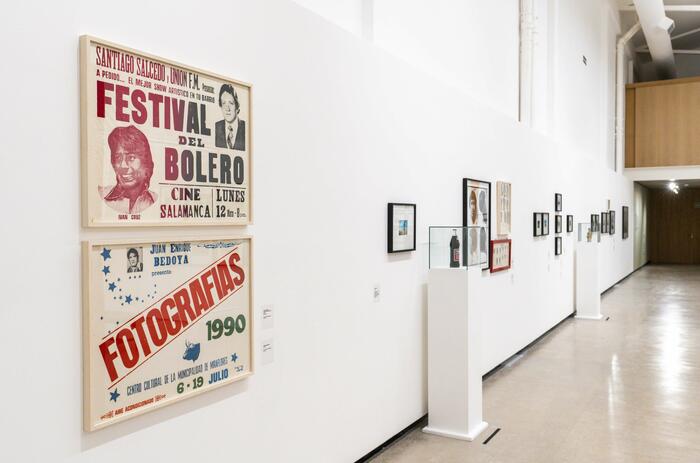
JUAN ENRIQUE BEDOYA’S ANTHOLOGY AT FUNDACIÓN LARIVIÈRE
In its final weeks, the exhibition Mi país no es Grecia offers one of the most comprehensive overviews of the Peruvian photographer’s work—moving between the popular, the precarious, and the poetic.

DEBORAH CASTILLO AND A CLOSING PERFORMANCE IN MEXICO CITY
As part of the exhibition Gran Basamento at the Chapel of Laboratorio Arte Alameda in Mexico City, artist Deborah Castillo and composer Lanza present on October 10 the nano-opera Discursos para las masas (Speeches for the Masses) as the closing act of the show.

NOTES ON A PICTORICAL SURFACE — MARINA PEREZ SIMÃO: TUNING FORK
By Mario Gioia, art critic and independent curator
CANADA’S LEADING ART FAIR INTRODUCES A SECTION FULLY DEVOTED LATIN AMERICAN ART
Curated by Karen Huber, Arte Sur brings together eleven galleries whose artists engage with memory, territory, craft, and identity.
LATIN AMERICAN ARTISTS IN SPAIN: NEW NOTES FROM AN ONGOING RESEARCH
By Mónica Sotos
What are the successive diasporas of Latin American artists to Spain about, from the final years prior to the turn of the twenty-first century to the present? Article 2 of a series of 3.
SPAIN HONORS SANDRA GAMARRA HESHIKI WITH ITS MOST PRESTIGOUS CULTURAL AWARD
The Lima-born, Madrid-based artist received the Gold Medal for Merit in the Fine Arts from King Felipe VI and Queen Letizia at a ceremony in Toledo.