
JORGE EIELSON, THE LAST QUIPUCAMAYOC
The vindication of the Peruvian Jorge Eduardo Eielson (Lima, Peru, 1924) looks fundamental, far beyond any framed motivation in the round figures of the anniversaries. However, the work being done around the centenary of his birth shows a titanic effort to explore one of the most versatile artists in the plastic arts and, perhaps in his best-known aspect, in the literature of contemporary Peru.
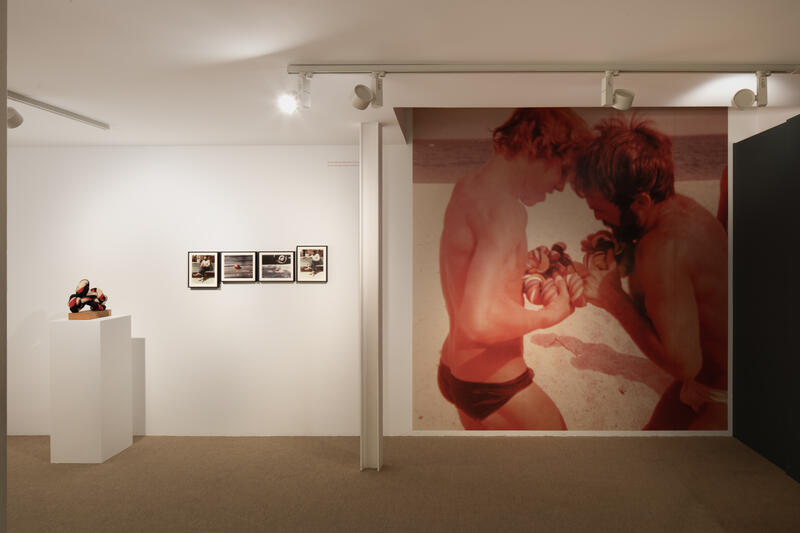
Framed in giving visibility of his figure within the visual arts, the retrospective proposed by the Mexican Patrick Charpenel in Travesía Cuatro sharpens a complete vision of the production of the Limeño with the aim to capture his essence from the presence, covering from the chronology of his intense biography to the showing of representative works from his different periods.
However, for Charpenel, the figure of Eielson is not understandable without his essence, without that almost cosmological vision and rootedness produced by uprooting that leads him to affirm that the Peruvian artist was the last quipucamayoc, the last narrator or maker of quipus according to the Inca tradition. In fact, this concept can be clearly seen in his work both physically and materially as well as spiritually, dragging the observer to witness a story that lies behind the apparent simplicity of the knotted canvas or the exposed nodos, that same knots that become fundamental in the narrative of a fact or feeling.
Eielson finds himself in that no man's land between the contemporary language of his environment and his European journey and the traditional language of his geography of origin, a space able to show the possibility of the conjunction of both semantics. Framed his production by his relationship with Michele Mulas, without whom one cannot understand the symbiosis between part of his language and the relationship itself - with an exhibition section that focuses on this -, and strongly influenced by spirituality, the Peruvian shows great knowledge and approach to its roots. Perhaps influenced by temporal distance and the distortion of the locative link, Eielson recovers tradition in his understanding, a cosmology and network that produce new spaces and forms of expression around the mythological and the social that are perfectly arranged in another of the three large spaces in the exhibition and which bears the name, not at all coincidental, Línea de cien nudos.
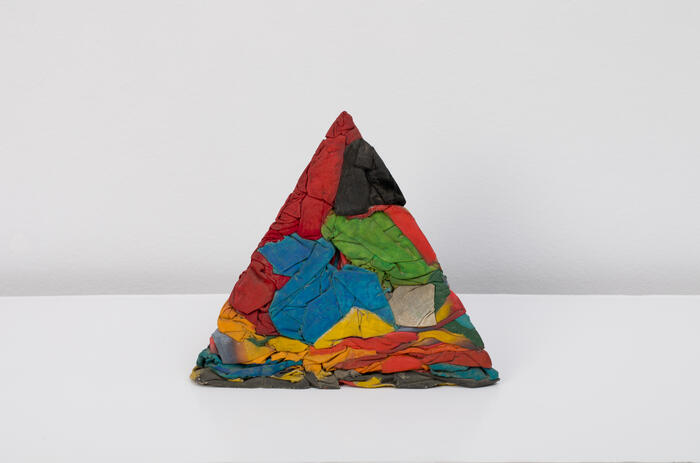
He was able to maintain a certain balance in that search for what was innate and -at the same time distant- without neglecting the new languages that emerged from Europe. Whoever calmly observes Piramide di Tesutti (1970) will be able to conclude that the material used brims with that new realism teach by his mentor Pierre Restany, at the same time that it recalls the pyramid as an ancestral symbol and the more contemporary triangle, which allows it to be concentrated in a single image the full iconography and plastics of the artist. This artwork could be a good essential summary, but there would be a risk of overlooking the depth and complexity of Eielson's entire ecosystem, that view that allowed him, from a very wide range of languages and techniques, from words and poetry to the most plastic notion, to materialize his essential legacy.
EIELSON quipucamayoc. Ending April 27. Travesía Cuatro. San Mateo, 16, Madrid, Spain.
May interest you
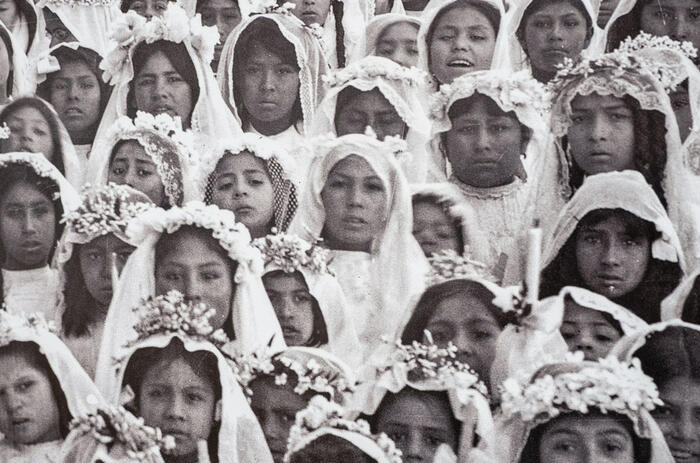
TWO EXHIBITIONS OF PERUVIAN PHOTOGRAPHY AT CASA DE AMERICA
Casa de América inaugurated two exhibitions of Peruvian art: Memoria del Perú. Photographs 1890-1950, with works by various photographers that capture a significant period in the country's history, and Shipibo-Konibo. Portraits of my blood, with photographs by artist David Diaz on the life of the Shipibo-Konibo.
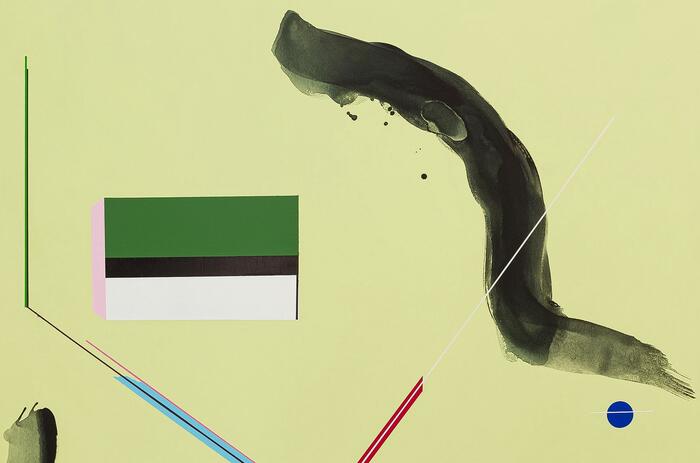
CABIESES’ INTERCEPTED IMAGE
The geometry in Jorge Cabieses' (Lima, Peru, 1971) usual outline is broken with the action of the spontaneity of the curved and almost organic stroke in his second solo exhibition in the Spanish capital. The Lima-born artist thus proposes, in a certain way, a dialogue between the artificial of the synthetic and the atavistic through the incorporation of those more spontaneous brushstrokes over the usual framework of rectitude that the artist usually presents.
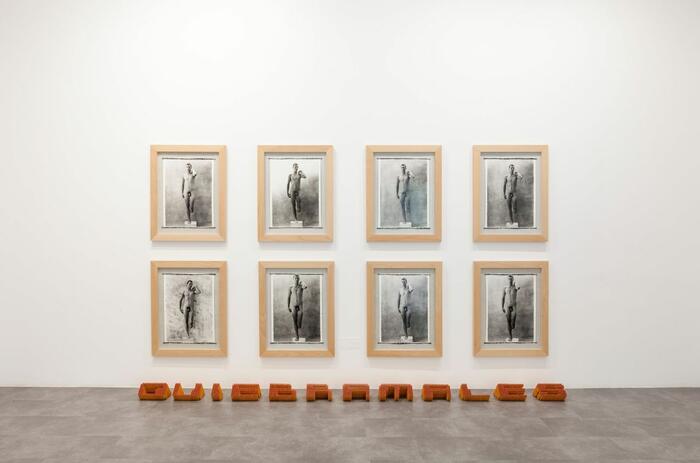
TOWARDS MIGUEL ÁNGEL ROJAS' QUIEBRAMALES
Two decades after Miguel Ángel Rojas (1946, Bogotá, Colombia) conceptualized in his project David Quiebramales his denunciation of violence and the use of education as the most efficient vehicle towards a catharsis for those who suffer it, the Madrid headquarters of La Cometa revisits his most emblematic work and reinterprets it as the framework for a kind of thematic retrospective. This commemoration of that first David Quiebramales reinforces a view that is still difficult to overcome and that, even today, serves to trace those harmful social dynamics that are created between society and war, the institutional and the political systems.
RESISTANCE AND EMPTINESS: TERESA SOLAR ABBOUD AT CA2M
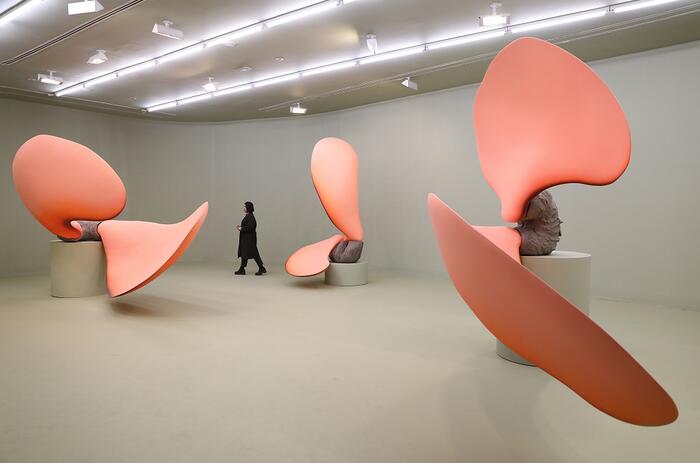
The exhibition Teresa Solar Abbourd. Pájaro sueño de máquina (Bird dream of machine) in CA2M Museum presents two large installations that condense the artist's research in recent years. It is curated by Tania Pardo and Claudia Segura Campins.
MAC LIMA COLLECTION: RESEARCH, CONSERVATION AND EXHIBITION
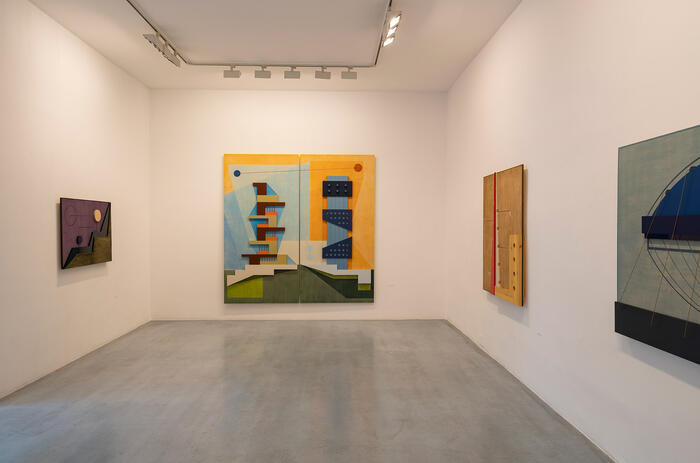
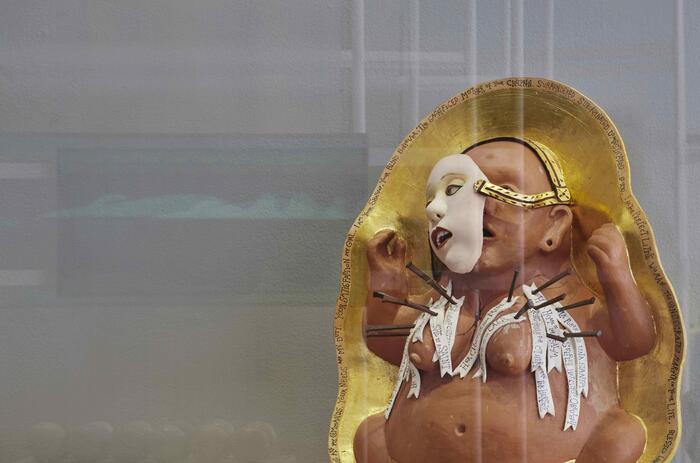
The Collection of the Museo de Arte Contemporáneo de Lima brings together works by Peruvian and international artists created since 1940 in media ranging from painting, sculpture and installation to photography and video. The exhibition is curated by Patricia Pajuelo, Giuliana Vidarte, Iosu Aramburu and Nicolás Gómez Echeverri.
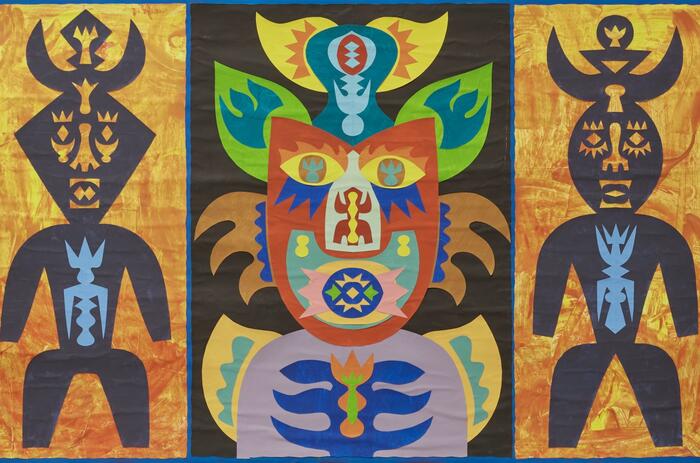
TURNING THE MEANINGS OF OUR CONTINENT UPSIDE DOWN: HERLITZKA & CO. + HENRIQUE FARIA AT PINTA PArC
In the next edition of Pinta PArC 2024, Herlitzka & Co. (Buenos Aires) and Henrique Faria (New York) join forces to present a booth proposal that challenges conventional notions of contemporaneity and ancestry in Latin American art.
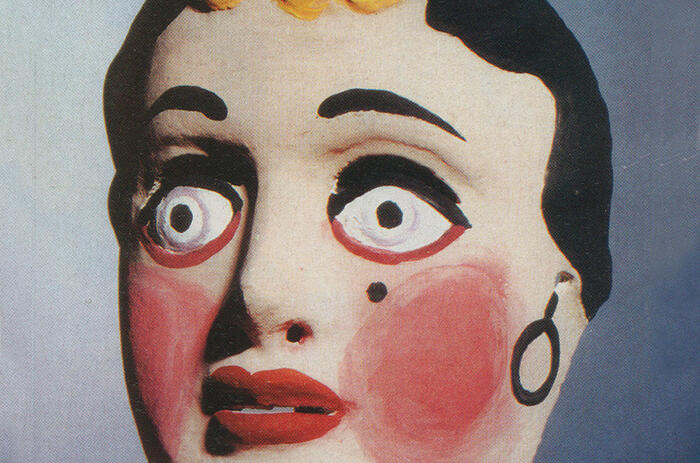
NEXT: VIBRANT PLATFORM AND TERRITORY FOR DIALOGUE
The NEXT section of Pinta PArC 2024 is set as a window to the Latin American emerging art scene, tracing a profound dialogue between diverse artistic systems and a dynamic collaboration with six galleries: Vigil Gonzales (Cusco and Buenos Aires), Salón Comunal (Bogotá), Enhorabuena Espacio (Madrid), Remota (Salta), Constitución (Buenos Aires) and Paseolab / Galería del Paseo (Lima and Punta del Este).