
DEPARTAMENTO 112: A STORY, A BIRD, AN ENCOUNTER
The artist and the gallerist were drinking mate on Fleming Avenue in Martínez, in front of the gallery, trying to hold onto the warmth of a cool autumn sun. That simple, everyday, and sincere image foreshadowed the exhibition at Departamento 112.

A coffee, bread with butter, and a prayer to Gauchito Gil welcomed me into the space. I accepted it all. I visited Departamento 112 for the first time on Saturday. I knew it was a gallery founded and directed by Hans Petersen, with a clear commitment to sharing emerging and idiosyncratic Argentine art, and that it also operates as a creative agency for design and image. What I didn’t know, and believe I’ve come to understand, is that in every sense, the gallery seeks encounter.
The opening featured two exhibitions. The first was a solo show by Mariano “Rojito” Podesta, who tells Argentine myths through spreadsheets, metalwork, and archival materials. Several of us gathered around to listen as the artist narrated the stories that contextualized his works. His storytelling revealed a relentless curiosity and an overwhelming drive to recover what’s been forgotten, even though his pieces were arranged in a slow, deliberate way. “Am I going on too long?” the storyteller asked. “No, keep going,” we, the audience, replied. A light blue enameled iron Argentine flag stood in the center of the room, inspired by the logo of a contemporary art museum once imagined for the Malvinas Islands but never realized. Behind a wall hung the archival materials of that story: a magazine article from Arte al Día announcing the museum that never came to be, and the graphic designs by Jorge Canale. Here they were, hidden behind everything—what we don’t always see: the sources behind the materialization of ghosts. With the full story in mind, I asked the artist for the title of the piece. “Untitled,” Rojito replied, having recovered a forgotten story but choosing not to name it.
In another room, there were crustless sandwiches, medialunas, cookies, and more coffee. People were at ease, chatting around a large table. And I imagined what that museum in the Malvinas might have looked like, and how I would have liked to visit it. I also wondered what artworks might have been included, beyond Rojito’s work leading the building.
I moved on to the second exhibition, fresh and labyrinthine, diverse in styles and approaches. According to Hans’s explanation, it features 23 national and international artists selected for the Second Acquisition Incentive Prize, who, in some ways, are part of the engine that drives the gallery. I went over the artworks several times, circling the installations. One piece in particular moved me: a kind of tent, its fabrics decorated with bird figures, upon which, curiously, a large fly had landed and was walking in circles. Next to the tent, a book opened to the first page read, “I’ve never seen so many dead birds.” So I looked again at the figures: featherless birds, rigid legs, black eyes, and silent beaks. Ah, such brutal simplicity, such pain, such beauty. I thought of the many little birds my cat has brought me, the ones I rush to check if they’re still alive, and the stains left on my windows by pigeons crashing into the glass, and the many bodies I’ve found in my garden, victims of my dogs’ teeth. My body shudders; I feel small, uncomfortable, and cruel. I step back and continue walking.
Hans takes us through the next rooms and talks about future plans he would like to realize. I realize that Departamento 112 is ambitious in its vision, but never tries to be something it’s not. That’s the feeling it gives. A gallery that captures a young audience and allows that audience to encounter its own history and its everyday life. Because it’s in the everyday that we also find what’s truly ours.
I wasn’t there long, and I instantly regretted leaving so soon. I walked back along that avenue in Martínez, trying not to look too closely at the ground—I was afraid I’d see a dead bird.
Related Topics
May interest you
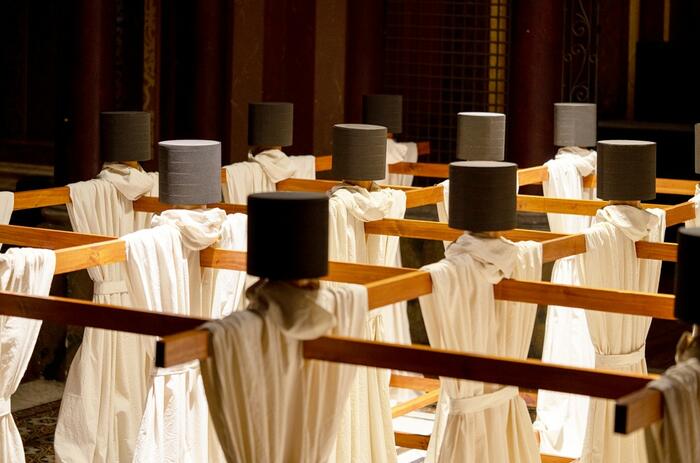
THE SILENCED WOMEN RAISE THEIR VOICES WITH TERESA MALUF AT PASEO DEL BUEN PASTOR
The Cordoban artist and architect Teresa Maluf presents Cuando el encierro es la salida (When Confinement Becomes the Way Out), a site-specific installation located in the chapel of Paseo del Buen Pastor in Córdoba, Argentina. With this work, Maluf pays tribute to all the women who, over nearly one hundred years, passed through this building—many of them deprived of their freedom.

THE OSCILLATION BETWEEN REALITY AND FICTION AT THE GALERIE JOCELYN WOLFF

120 YEARS OF WOMEN REVOLUTIONIZING DESIGN
Proa Foundation celebrates the reopening of its renovated spaces with an exhibition organized in collaboration with the Vitra Design Museum: Here We Are! Women in Design 1900–Today, a journey through 120 years of female creativity, innovation, and talent in design.

DA-LI-LA: THE MALLEABILITY OF THE FIXED
From White Plaster to Colorful Textiles, Dalila Puzzovio (1942, Buenos Aires) has always known how to appreciate broken bodies and dress the living. While some destroy, others build is the title of one of her photographs—a phrase that runs through her remarkable artistic career.

TWO NEW EXHIBITIONS AT THE MUSEUM OF MODERN ART OF BUENOS AIRES
Valentina Quintero: A Day in the Life, the first institutional exhibition in Buenos Aires of the young artist from Mendoza, and Jorge Miño: The Fourth Wall, a proposal that redefines the relationship between photography and space, are exhibited at the Museo Moderno under the curatorship of Raúl Flores.

GALLERY 2025 INAUGURATES ITS TOUR THROUGH THE NEIGHBORHOODS OF BUENOS AIRES
With the support of the Ministry of Culture of the City of Buenos Aires, Gallery returns on Friday, June 6, 2025, bringing its iconic art circuit to the neighborhoods of Recoleta, Retiro, and Microcentro. The initiative aims to promote visits to artistic spaces such as galleries, museums, artist studios, and foundations, with the goal of bringing contemporary art closer to the general public and showcasing the excellence of the local art scene.
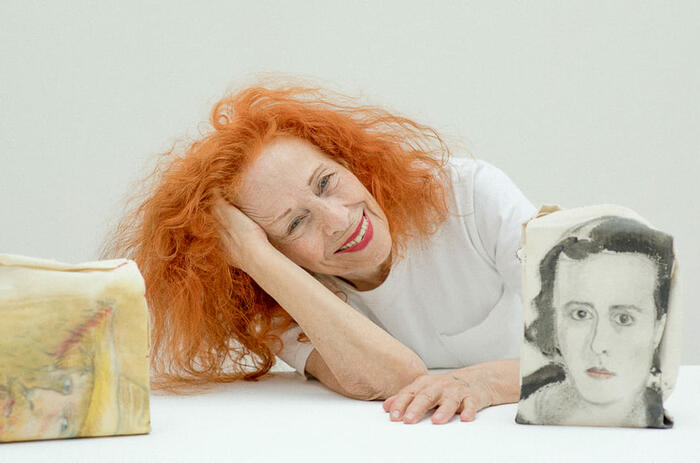
RUTH BENZACAR OPENS ITS DOORS TO DELIA CANCELA
The gallery welcomes a key figure in Argentine and Latin American art since the 1960s. Her practice has unfolded between Buenos Aires, New York, and Paris, spanning painting, design, performance, and fashion, with a radical approach to the body, desire, and a bold, romantic vision of the female condition.
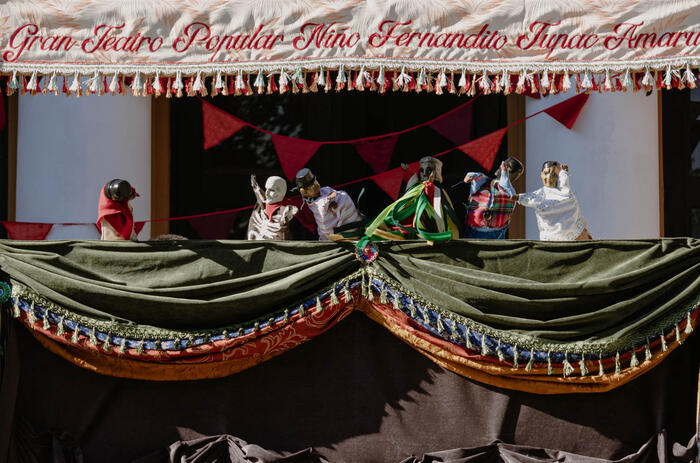
ARTISTIC ACTIVISM AT PROA21: THE STREET AS AN ARCHIVE
PROA21 presents Disobedience Archive (the street), a mobile and evolving exhibition on view until July 2025 that highlights the relationship between artistic practices and political action.

THE NOISY PRESENT AND THE EVERLASTING SILENCE AT DEPARTAMENTO 112
At the Argentine gallery, Pariente by Hans Petersen and Redondita by Juana Cravero engage in dialogue: two exhibitions that explore what we have turned into habit, and the desire that never fades away.
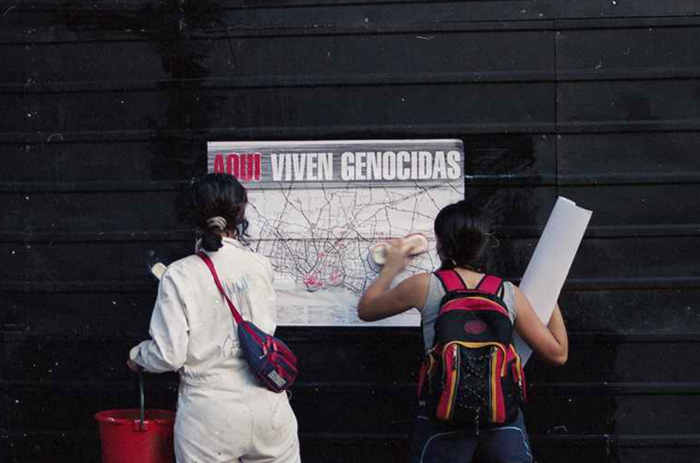
THE ARCHIVE HITS THE STREETS: DISOBEDIENCE IS ALWAYS POLITICAL
After its acclaimed presentation at the 60th Venice Biennale, the Disobedience Archive lands at PROA21 with a new configuration. What in Italy took the form of an animated pre-cinematic machine —The Zoetrope— that drew the viewer into a visual experience, now adopts in Buenos Aires a more intimate and austere format.