

By
Álvaro De Benito
An exhibition at the Capitoline Museums traces the development of modern Mexican art, muralism, and the search for a national identity, structuring its narrative around the figure of the master.
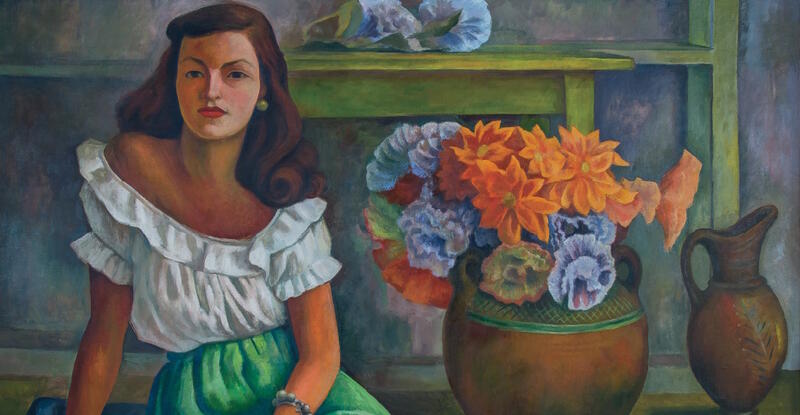
Diego Rivera and the Construction of Modern Art in Mexico in the 20th Century, hosted at the Capitoline Museums – Villa Caffarelli in Rome, surveys the evolution of Mexican art from the 19th through the 20th century, utilizing Diego Rivera (Guanajuato, Mexico, 1886 – Mexico City, Mexico, 1957) as its central thematic thread. Featuring over 140 works, the exhibition pairs thirty-some pieces by the painter alongside creations by key figures essential to understanding the emergence of a national artistic identity, such as Rufino Tamayo (Oaxaca de Juárez, Mexico, 1899 – Mexico City, Mexico, 1991), Roberto Montenegro (Guadalajara, Mexico, 1885 – Mexico City, Mexico, 1968), and Frida Kahlo (Coyoacán, Mexico, 1907 – Coyoacán, Mexico, 1954), among others.
Seeking to provide a comprehensive overview of Rivera’s oeuvre and trajectory, the exhibition layout is organized into four thematic sections: Rivera’s academic training and his engagement with 19th-century artistic traditions; his European years and contribution to the avant-garde movements; the post-Revolutionary Mexican cultural renaissance; and the evolution of Mexican art beyond social realism.
Consequently, one of the central motifs of the exhibition examines Mexican muralism, initiated in the early 1920s by José Vasconcelos, with Rivera acting as one of its foremost proponents. In this regard, the show also displays works by other seminal figures of the movement, including José Clemente Orozco (Zapotlán el Grande, Mexico, 1883 – Mexico City, Mexico, 1949) and David Alfaro Siqueiros (Mexico City, Mexico, 1896 – Cuernavaca, Mexico, 1974).
In the wake of the Mexican Revolution, art emerged as a vital social medium through which to rearticulate the nation’s history and solidify its national identity. Artists reclaimed pre-Columbian motifs and folk traditions while championing social movements, granting figurative prominence to peasants, industrial workers, and the working classes. This socio-political focus contrasts with—yet complements—Rivera’s dialogue with European avant-gardes, particularly Cubism, and his travels abroad, from which he integrated European stylistic influences with indigenous traditions to forge a distinct aesthetic idiom.
Ultimately, the central thesis pursued by the exhibition, curated by Miguel Fernández Félix and Alberto González Torres, posits that Mexican artistic modernity was the byproduct of a complex synthesis of tradition, formal experimentation, and social commitment—a process in which Rivera occupied a pivotal role. Furthermore, Rivera served as a major catalyst in disseminating Mexican culture globally, demonstrating the instrumentalization of art as a vehicle for social transformation and the construction of Mexican identity.
Diego Rivera and the Construction of Modern Art in Mexico in the 20th Century is on view through December 13, 2026, at the Capitoline Museums – Villa Caffarelli, Pl. Caffarelli, 2, Rome (Italy).
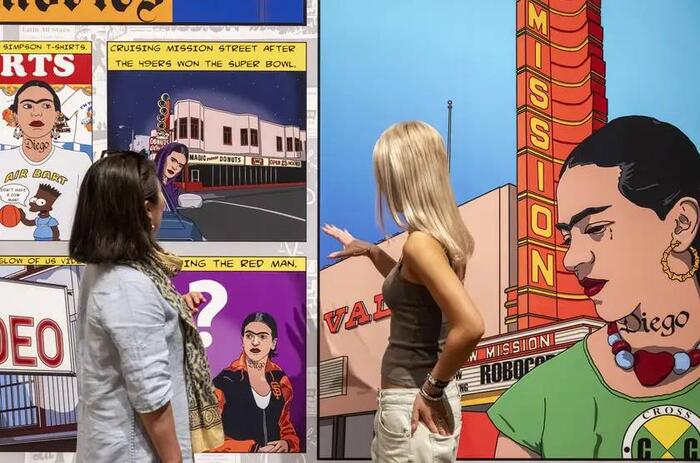
The Tate Modern presents a sociological reflection on the construction of Frida Kahlo as a cultural icon through a curatorial discourse that risks becoming a theoretical justification for a proposition of immense commercial appeal.
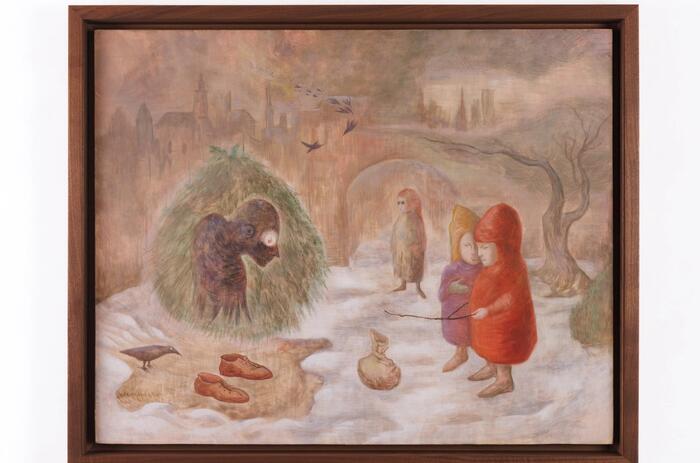
Lehmann Maupin and Gallery Wendi Norris present, in New York and San Francisco, a two-part exhibition of historical works by one artist and new works by the other.
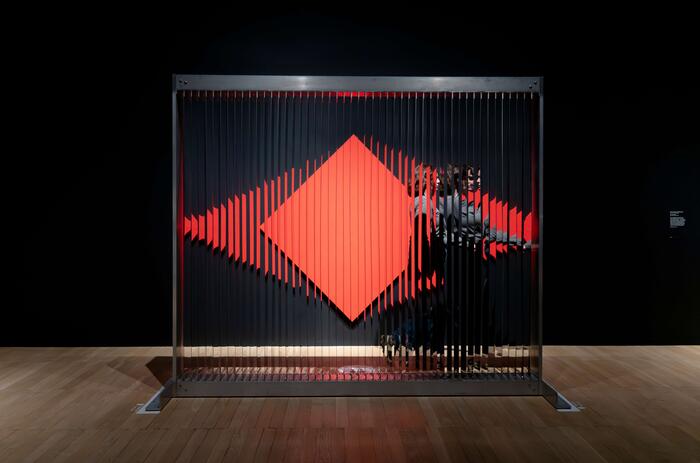
The London-based museum presents a pedagogically structured retrospective on the Franco-Argentine artist, yielding a successful outcome that showcases his experimentation with light, movement, and color while maintaining viewer participation as a key element.
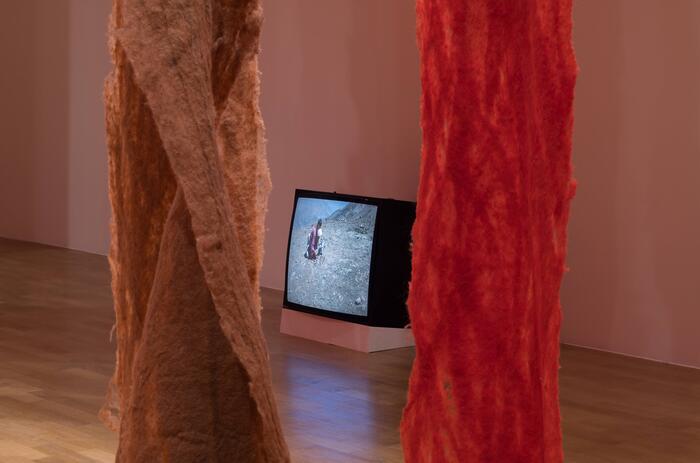
The Whitechapel Gallery presents a retrospective survey of Cecilia Vicuña’s oeuvre in an exhibition that weaves together art, poetry, political resistance, indigenous memory, and ecology.