

By
Álvaro De Benito
Resistir, reparar e imaginar brings together six artists across different generations and contexts in a curatorial proposal by Isabella Lenzi that explores memory, the transmission of knowledge, and modes of resistance, examining how art can reclaim silenced voices and open up new possibilities for the future.
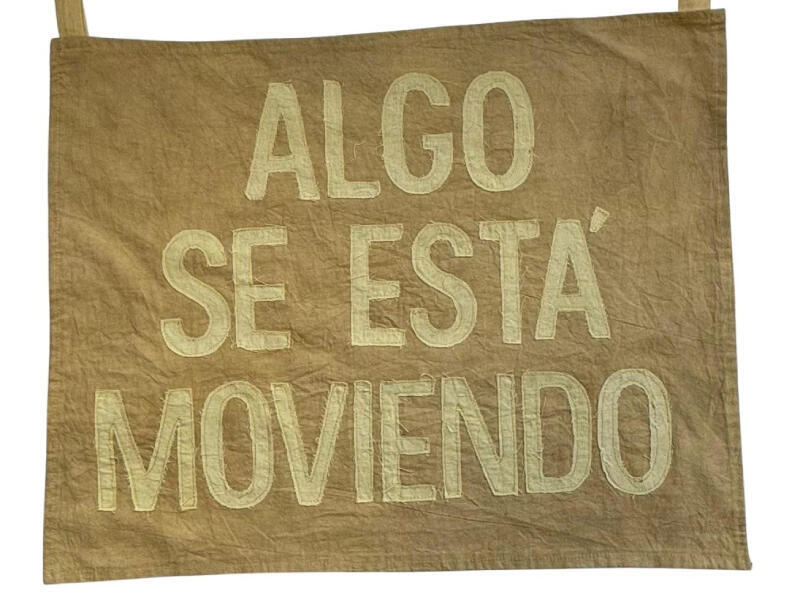
In this new edition of Pinta Miami, RADAR is once again curated by Isabella Lenzi, who establishes continuity with the central theme of the previous edition—focused on ancestral and community-based knowledge, connection to the land, and resistance to extractivism—while placing the emphasis this year on art's capacity to transform inherited legacies and imagine alternative futures. The section brings together four galleries and six artists from diverse backgrounds and generations.
'I was interested in addressing a radical imagination that artists are constantly proposing. It is not only a matter of identifying wounds, recovering memory, and reclaiming silenced voices, but also of imagining other possible futures.' Building on this premise, Lenzi structures her proposal around three closely interrelated concepts: resisting, repairing, and imagining. 'To resist is to reclaim, and to repair is also a form of reclaiming—seeking to heal open wounds without fear of inhabiting them—while to imagine is yet another way of reclaiming, by turning things on their head and seeking alternative paths perhaps not yet taken.'
María Carbonell (Molina de Segura, Spain, 1980), Guadalupe Carrizo (Tucumán, Argentina, 1987), Blanca Rosa Machuca (Tucumán, Argentina, 1959), José Morbán (Santo Domingo, Dominican Republic, 1987), Guido Yannitto (Mendoza, Argentina, 1981), and Pajita García Bes (Salta, Argentina, 1914–1978) are the artists who, working across diverse visual languages and trajectories, investigate memory, territory, and the transmission of knowledge—at times recovering silenced voices and proposing alternative ways of inhabiting the present.
The Wounds of Territory
Several of the practices gathered in RADAR examine how historical violence and inequalities continue to operate in the present. In the case of José Morbán, presented by Catalysta, the memory of dictatorship and colonization intersects with contemporary forms of territorial exploitation. His work traces connections between Dominican history and the broader Caribbean and Latin American context, attending to the legacies of these processes as well as issues such as capital accumulation, plantation economies, mining, and the transformation and commodification of the landscape driven by tourism. His use of jute, for instance, renders the history of exploited labor and land materially visible. 'His work is not an analysis of the past; rather, it thinks through the traces and wounds of the past in the present tense,' Lenzi notes.
Guadalupe Carrizo, presented alongside Blanca Rosa Machuca by Ceibo Gallery, also approaches these issues through socio-environmental activism. Working with textiles and organic materials, her practice interrogates modes of production and their impact on ecosystems. In her research with pigments derived from herbicide-resistant plants, resistance manifests directly within the materiality of the work. The spoken word and collective voices are likewise integral to her practice, linking local struggles with the global dynamics of agribusiness.
Dialogues
The section seeks to foster dialogues among artists who, despite belonging to different generations, share references, concerns, or approaches to materiality—as is the case with Blanca Rosa Machuca and Guadalupe Carrizo. Separated by a generation, their practices engage forms of knowledge that have historically occupied a secondary, marginalized position within art historiography, such as textiles.
According to the curator, in Machuca's work, color and material take on a spiritual dimension rooted in folk art and peasant traditions inherited from her family. The artist sews, embroiders, and assembles second-hand garments, fabric scraps, seeds, and mirrors, reclaiming and transforming the symbolic universe of altars, ex-votos, and amulets. The act of gathering and resignifying these fragments becomes a healing ritual. This notion of regeneration resonates in Tierra fértil (Fertile Land), the large-scale work she presents at RADAR. Carrizo, for her part, employs textiles and other organic matter within a practice that bridges socio-environmental activism, academic research, and collective labor. Together, they represent two distinct ways of understanding artistic creation, demonstrating that transmitting knowledge and techniques does not mean merely repeating them, but transforming them.
'Both share a strong connection to textiles, to the earth, and to these so-called minor forms of art that continue to be categorized as craft,' Lenzi explains. Yet their approaches differ markedly: 'Whereas Machuca is an artist of the sensible, materiality, color, and spirituality, Carrizo is an artist-researcher and activist.'
Territory as a Nexus
Another foundational dialogue unfolds between Pajita García Bes and Guido Yannitto, brought together by the Salta-based gallery Remota. García Bes, a pioneer of textile research within the context of Argentine art, took an active interest in Indigenous Wichí art and, as Lenzi explains, engaged directly with this community to learn their techniques, iconographies, colors, and modes of making. His study of the myths and petroglyphs of Salta likewise informed a textile language that brings ancestral visual repertoires into dialogue with artistic modernity.
Guido Yannitto grew up near Pajita's home and, although he never met him in person, regarded him as a foundational reference. Having begun weaving as a child, Yannitto found in García Bes's oeuvre a point of departure for developing his own visual language. 'He was born and raised with the memory of who Pajita was,' Lenzi recounts, 'and it felt deeply meaningful to establish a dialogue between the two.' Bringing both bodies of work together not only takes on historical, artistic, and territorial significance, but also carries forward knowledge rooted in a specific region of northern Argentina into the contemporary moment. In Yannitto's practice, the criollo loom also operates as a medium of communication and translation, tied to oral transmission, genealogy, and collective labor.
Matter as a Gesture of Repair
In the practices of María Carbonell, Blanca Rosa Machuca, Guido Yannitto, and Pajita García Bes, materiality functions as a vehicle for memory and the transmission of knowledge. In the case of Carbonell, presented by the Murcia-based gallery T20, oil paint and embroidery on linen articulate a visual language that addresses inequality and violence while introducing a dialogue between Latin American and European contexts. By reclaiming the visual repertoire of the suffragettes, Carbonell links those historical struggles to contemporary ones and reactivates embroidery—historically relegated to the domestic sphere—as a political language. 'They are visually compelling works, yet beneath the surface they speak directly of inequalities, wounds, violence, and resistance,' Lenzi explains.
Within this expanded geographical conversation, Carbonell's proposal also aligns with a conception of repair that understands the recovery of memory and dialogue as starting points for reshaping the future. As Lenzi observes, 'although the fair is heavily focused on the Latin American context, I also find it compelling to build bridges and spaces for shared reflection with the European context.'
If resisting entails confronting the persistence of structural violence and inequality while sustaining enduring knowledge systems and kinship ties, imagining is equally a way of transforming that inheritance. The works gathered in RADAR do more than recover memories and make past wounds visible—they actively propose alternative futures. This imagination is not confined to fiction; it operates directly within the materials, techniques, and working methods themselves.
A Reflective Proposal
RADAR also prompts critical reflection on the commercial context of the art fair. Isabella Lenzi aims for the gallery presentations to function as focused mini-exhibitions in which research, experimentation, and the artists' formal and material languages take center stage. 'I am not a market curator; my background is institutional,' she states.
From this vantage point, Lenzi has once again found in the project an opportunity to counterbalance the traditional dynamics of the fair: 'to create a space within market structures where one can open up fissures—spaces for critical reflection and transformation. Our proposal must bring the research, experimentation, and work of these artists closer to the public. Selecting one or two artists per gallery reflects a deliberate effort to foster encounters that bring diverse generations, references, and visual languages into conversation.'
RADAR: Resistir, reparar e imaginar is a curated program of Pinta Miami taking place December 3–6, 2026, at The Hangar, 3385 Pan American Drive, Coconut Grove, Florida (United States). On December 4 at 4:00 PM, 'Matter of Resistance,' a panel discussion featuring María Carbonell, Guadalupe Carrizo, and José Morbán and moderated by Isabella Lenzi, will take place.
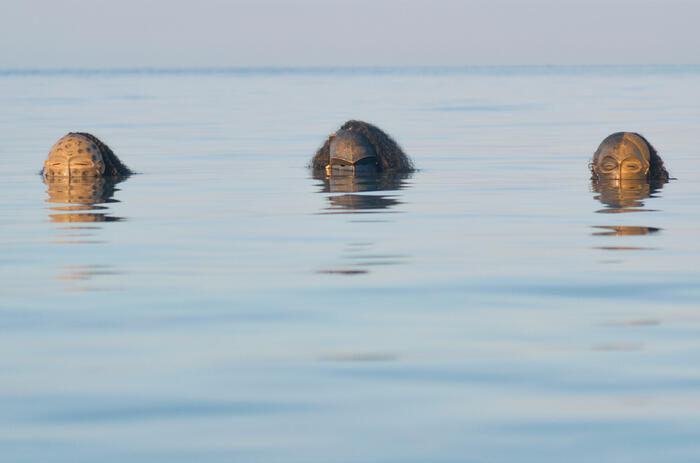
From Argentina to Puerto Rico, embroidery, ceramics, botanical science fiction and sculpture shape the lineup.
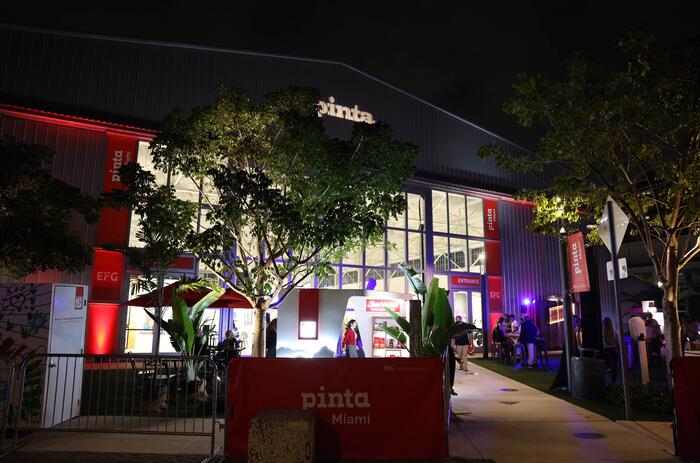
From December 3 to 6, The Hangar, in Coconut Grove, will host an edition that includes a Main Section curated by Irene Gelfman and a program of conversations.
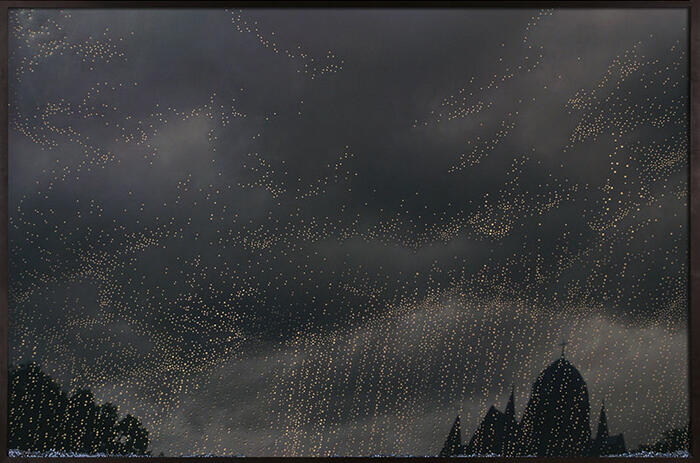
The Berlin-based Argentine artist was selected at Pinta BAphoto with a micro-perforated photograph.
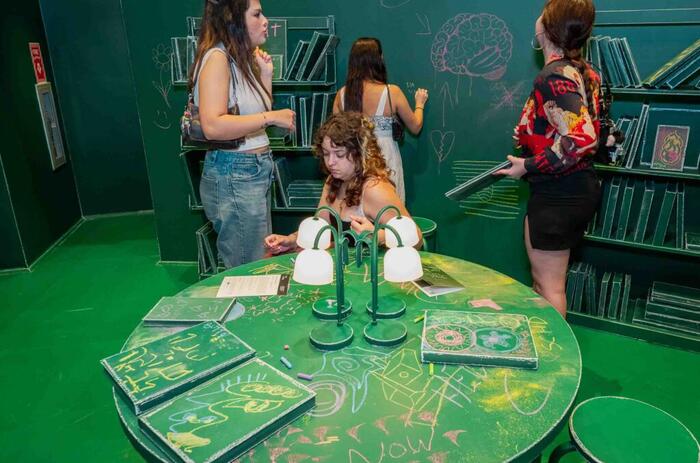
The interactive installation by the Argentinian artist covers walls, furniture, and objects in chalkboard paint and invites the public to draw and write with colored chalk.
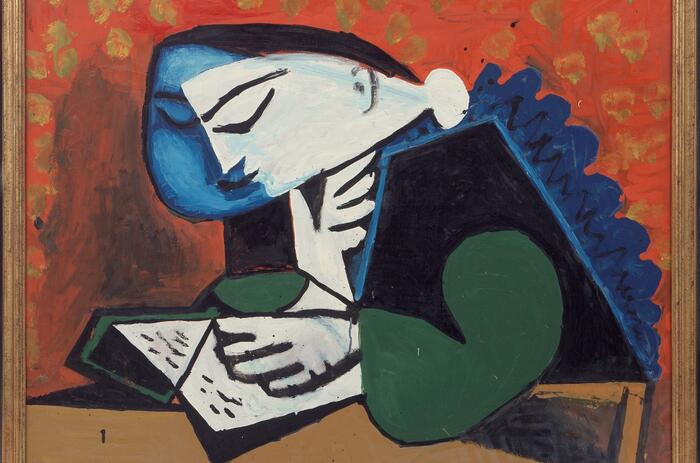
Nearly 100 works from one of Europe’s great modern art collections arrive in South Florida.
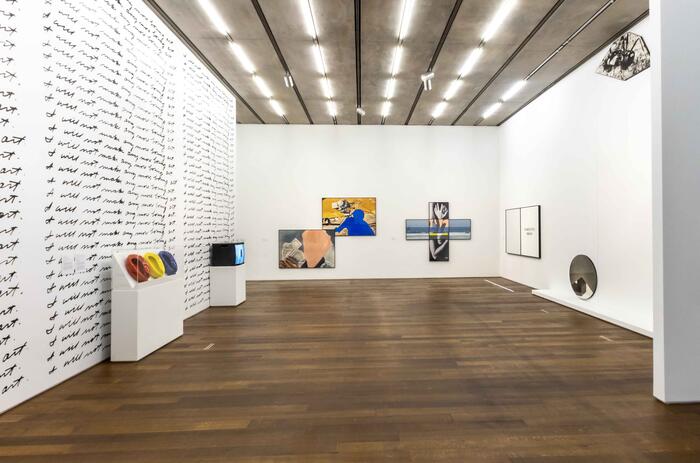
The first major institutional Baldessari survey in South Florida brings together nearly 40 works spanning five decades, drawn from the Craig Robins Collection.
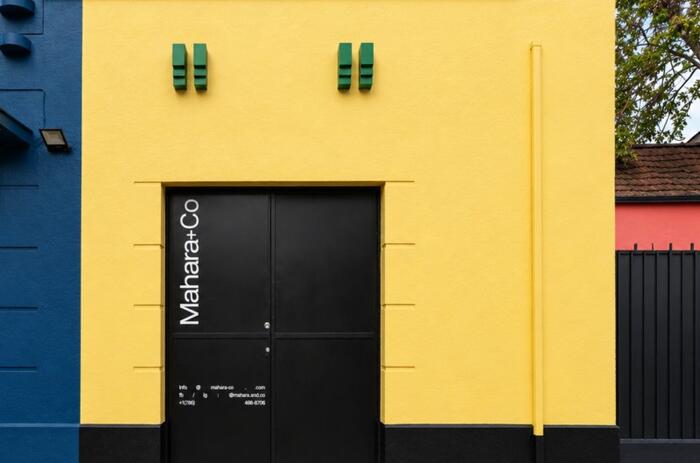
The exhibition inaugurating the space, Escondida llora alguien hoy por la frustración de su deseo, brings together sculptures and objects that have been altered, displaced, or diverted from their usual functions. The gallery’s opening expands its platform for dialogue between Miami, Chile, Latin America, and the Caribbean.