
PÉREZ ART MUSEUM MIAMI PRESENTS "JOHN BALDESSARI: THE END OF THE LINE”
The first major institutional Baldessari survey in South Florida brings together nearly 40 works spanning five decades, drawn from the Craig Robins Collection.
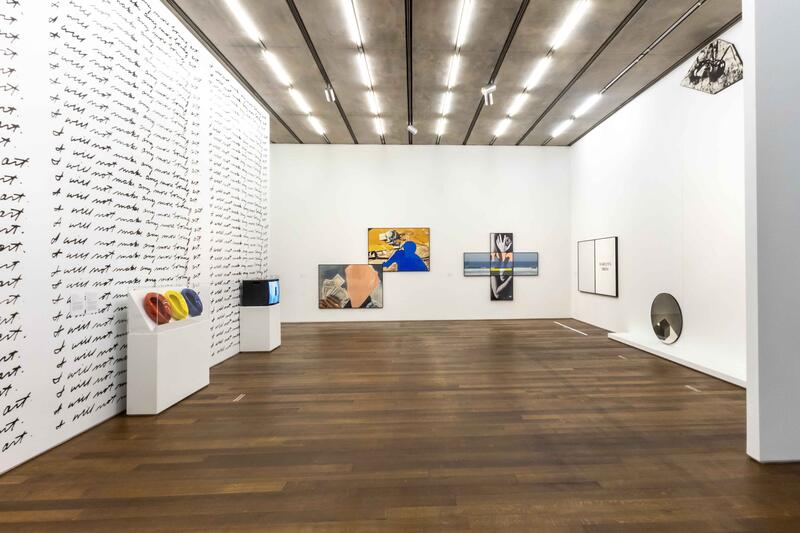
Pérez Art Museum Miami (PAMM) presents John Baldessari: The End of the Line, a major survey spanning five decades of work by one of the most influential figures in conceptual art. Drawn largely from the Craig Robins Collection, the exhibition marks the first significant institutional presentation of John Baldessari in South Florida and the first iteration of the exhibition in the United States, following presentations in Argentina and Uruguay.
A pivotal figure in postwar contemporary art, John Baldessari (California, United States, 1931–2020) fundamentally redefined what art could be, shifting emphasis away from craftsmanship and technical mastery and toward ideas, language, and systems of meaning. Abandoning a career in traditional painting in the late 1960s, he favored text, found photography, film stills, and appropriated imagery to develop a practice that combined deadpan humor with philosophical rigor to challenge conventions surrounding authorship, originality, and how images convey meaning.
-
Cortesía de PAMM
Bringing together nearly 40 works across painting, photography, video, and installation, The End of the Line traces Baldessari’s enduring investigation into the relationship between image and language. Organized across three thematic sections, the exhibition explores the artist’s early foundational works, his serial and experimental photographic methodology, his iconoclastic engagement with mass media and popular culture, and the wide-ranging artistic and literary influences that informed his approach.
Among the exhibition’s early highlights is Clement Greenberg (1966–68), a seminal text painting that encapsulates Baldessari’s challenge to artistic authorship and modernist orthodoxy: rather than painting the work himself, he hired a commercial sign painter to reproduce the opening lines of an essay praising Abstract Expressionism, collapsing distinctions between artist, fabricator, and idea. This radical reconsideration of artistic practice culminated shortly thereafter in Baldessari’s landmark Cremation Project (1970), in which he burned the paintings he had created between 1953 and 1966 and transformed their ashes into commemorative objects, symbolically marking a decisive break from traditional painting and the beginning of a new direction.
The exhibition also foregrounds Baldessari’s groundbreaking use of photography as a conceptual tool. Works such as Blasted Allegories (1978) and Kissing Series: Simone. Palm Trees (Near) (1975) disrupt traditional compositional logic through repetition, fragmentation, and absurd juxtaposition, encouraging viewers to reconsider how meaning is constructed through images.
Throughout his career, Baldessari assembled an expansive visual archive drawn from cinema, advertising, newspapers, and popular culture, freely incorporating appropriated and found imagery into his work. In Miami—a city deeply shaped by spectacle, media, design, and cinematic visual culture—these works take on renewed resonance, offering a sharp and playful reflection on the images that structure everyday life.
Positioned between conceptualism and Pop art, Baldessari profoundly influenced subsequent generations of artists with his blending of intellectual rigor, figuration, and wit. His influence carried through his teaching at California Institute of the Arts and University of California, Los Angeles, where students including Barbara Bloom, Mike Kelley, David Salle, and Tony Oursler would go on to define the ensuing decades.
John Baldessari: The End of the Line will be on display until May 9, 2027, at PAMM, 1103 Biscayne Blvd., Miami, FL 33132, United States.
Related Topics
May interest you
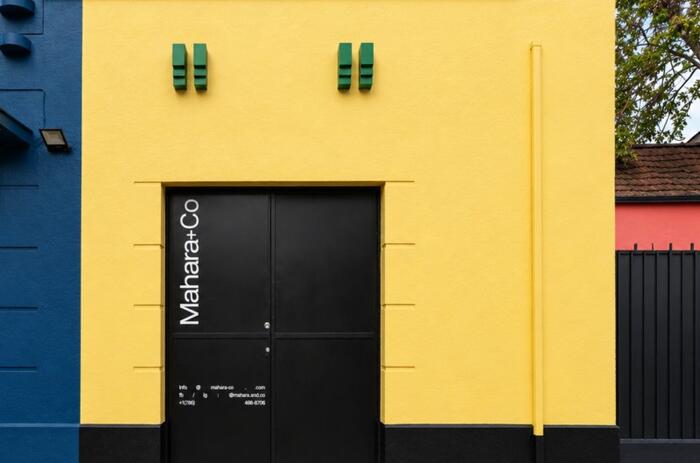
FROM MIAMI TO PROVIDENCIA: MAHARA+CO OPENS IN SANTIAGO WITH AUGUSTA LECAROS
The exhibition inaugurating the space, Escondida llora alguien hoy por la frustración de su deseo, brings together sculptures and objects that have been altered, displaced, or diverted from their usual functions. The gallery’s opening expands its platform for dialogue between Miami, Chile, Latin America, and the Caribbean.
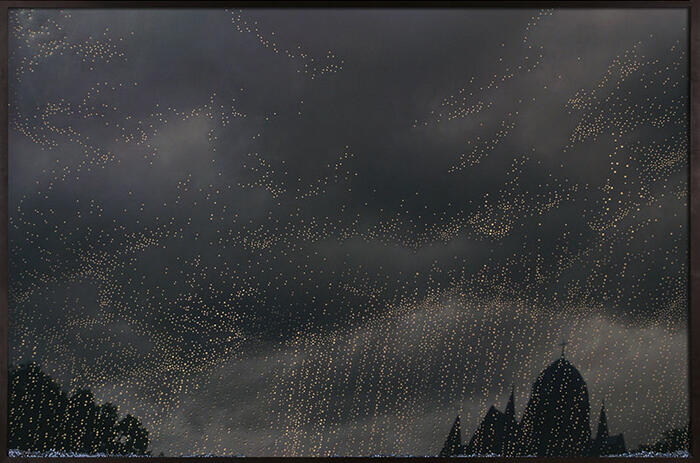
MIGUEL ROTHSCHILD NOMINATED FOR THE EFG LATIN AMERICA ART AWARD
The Berlin-based Argentine artist was selected at Pinta BAphoto with a micro-perforated photograph.

PINTA ART FOUNDATION AND EL ESPACIO 23 ANNOUNCED A NEW PARTNERSHIP
The collaboration covers airfare, accommodation, and participation in the Miami space's residency program for one selected artist.