
By
Violeta Méndez
From Argentina to Puerto Rico, embroidery, ceramics, botanical science fiction and sculpture shape the lineup.
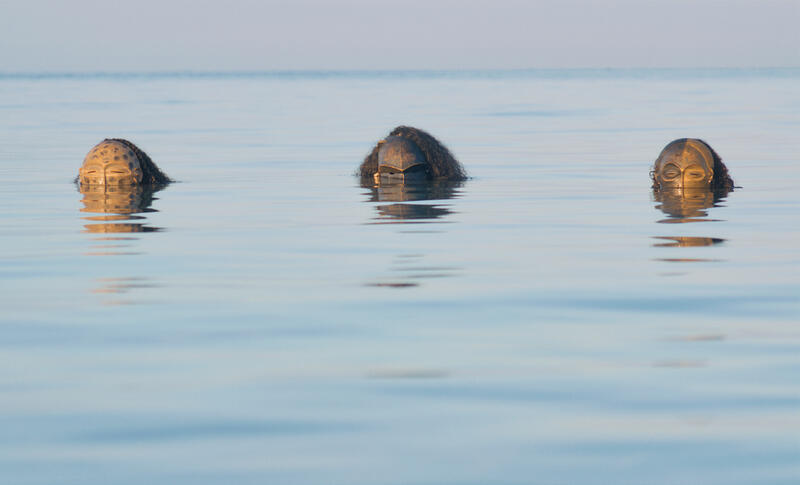
Miami Art Week is approaching, and Pinta is the only fair specializing in Latin American art. Under the global curatorial and artistic direction of Irene Gelfman, the 2026 edition, running December 3–6, seeks to reaffirm its role as a space to discover, explore, and project modern and contemporary art from the region on the international stage.
Curated by Marina Reyes Franco, the fair's NEXT section brings together a selection of galleries and independent spaces whose proposals reflect the vitality and diversity of emerging artistic practices in Latin America and the Caribbean. With the participation of artists also linked to Latin American diasporas in the United States, the projects chart a map of cultural exchanges and shared sensibilities that spills beyond geographic borders. Arte al Día highlights five proposals that reflect this thematic and disciplinary breadth, as well as the recurrence of certain concerns.
CRUDO (Argentina)
The contemporary art gallery's proposal is a two-person show featuring Yuyo Gardiol (Argentina, 1980) and Nicole Mazza (United States, 1989), two artists who work around femininity, intimacy, and identity.
Among the many practices she pursues, Gardiol works with expanded photography. She generates images of her skin printed on satin, fusing photography and textile. Mazza, for her part, was raised in a Portuguese family and lives in Argentina, and she bases her textile practice on the encounter between these cultures. In embroideries of strident reds and subtle golden threads, she unfolds scenes linked to the eroticism and sensuality of the encounter between dancing figures.
Galería Arteconsult (Panama)
The gallery will present Panamanian-Venezuelan artist Hugo González in the NEXT section. A visual artist, González is interested in recognizing the phenomena that surround him. In his work, he understands architecture as a physical manifestation of the intangible, where new interpretations can be applied to everyday elements and used as devices that activate awareness.
In addition, the artist will exhibit the sculpture Balustrada in the fair's Sculpture Garden, curated by Irene Gelfman.
NaVa Fundación (Dominican Republic)
NaVa Fundación presents Amas de leche, by Julianny Ariza Vólquez (Dominican Republic, 1987). The multidisciplinary series vindicates the historical legacy of Black wet nurses: enslaved women forced to breastfeed the children of their colonial oppressors.
"I carry out exercises in recovery and just coexistence through painting, sculpture, installation, and video art, using the materials and techniques representative of these cultures in a hybrid, frictional way, such as ceramics, porcelain, wood, and fibers, as well as visual elements of the Caribbean island environment, such as sand, the sea, and the estuary," the artist explains.
Matia Borgonovo (El Salvador)
The gallery Matia Borgonovo presents La comunidad del compost, a work by Gabriela Novoa (El Salvador, 1991), an artist who approaches desire through feminist speculation and science fiction, using techniques such as embroidery, painting, and audiovisual media.
The project arises from powerlessness and the need to seek alternatives to violence and repression. It is a botanical science fiction project in which hybrid bodies are created that respond to the violence of their territories as a form of survival, becoming genetically stronger bodies capable of facing the challenges of climate change, fear, and the triumph of fascism in Latin America and throughout the world. La comunidad del compost is a mechanism for preserving the one thing violence cannot take away: the capacity to dream.
Estudio Arriba Abajo (Puerto Rico)
The gallery presents the work of Jorge Jiménez Vélez (Puerto Rico, 1993). His practice seeks to develop a unique visual language that responds to the present, grounded in an understanding of his role as a communicator in society. He moves between abstraction and figuration.
"My practice proposes a dialogue on the identity and history of Caribbean art, questioning established parameters and the narratives that have historically defined its artistic expressions," the artist explains.
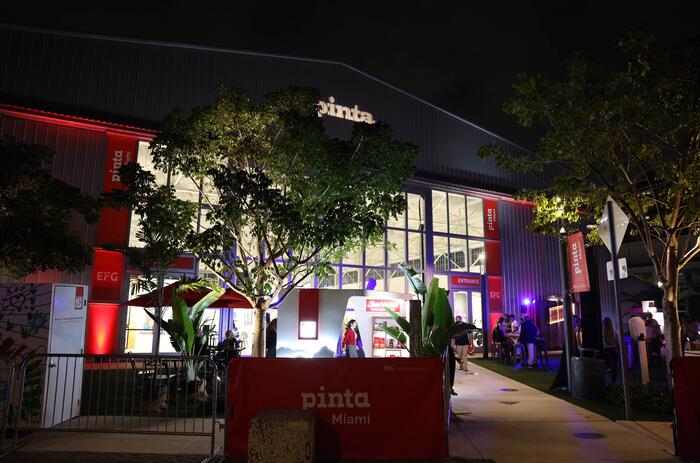
From December 3 to 6, The Hangar, in Coconut Grove, will host an edition that includes a Main Section curated by Irene Gelfman and a program of conversations.
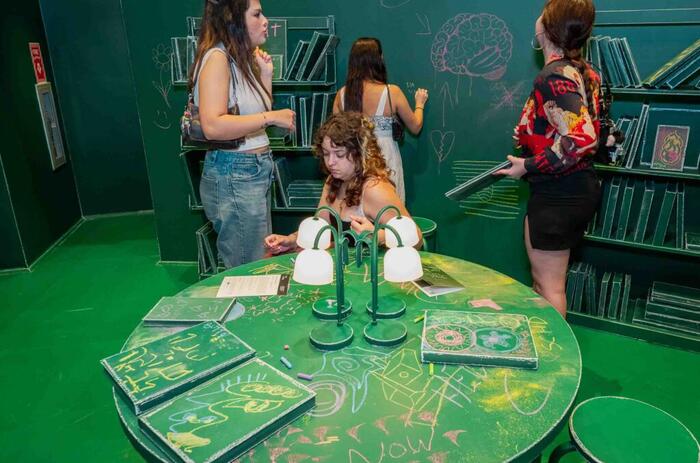
The interactive installation by the Argentinian artist covers walls, furniture, and objects in chalkboard paint and invites the public to draw and write with colored chalk.
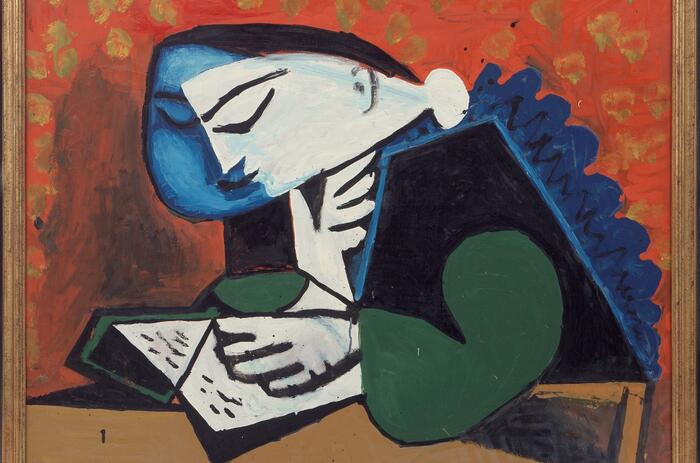
Nearly 100 works from one of Europe’s great modern art collections arrive in South Florida.
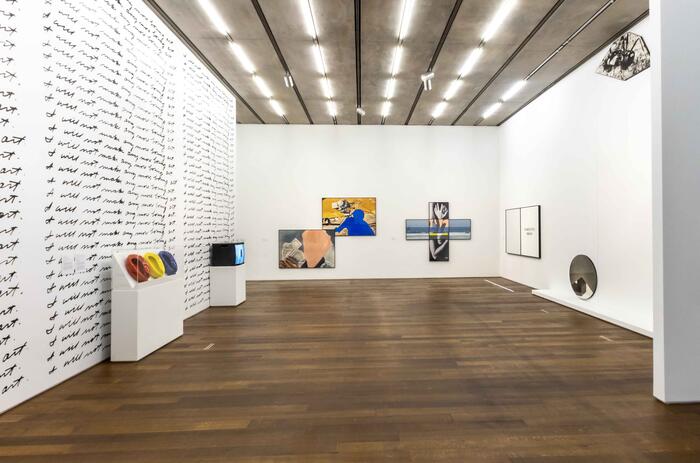
The first major institutional Baldessari survey in South Florida brings together nearly 40 works spanning five decades, drawn from the Craig Robins Collection.
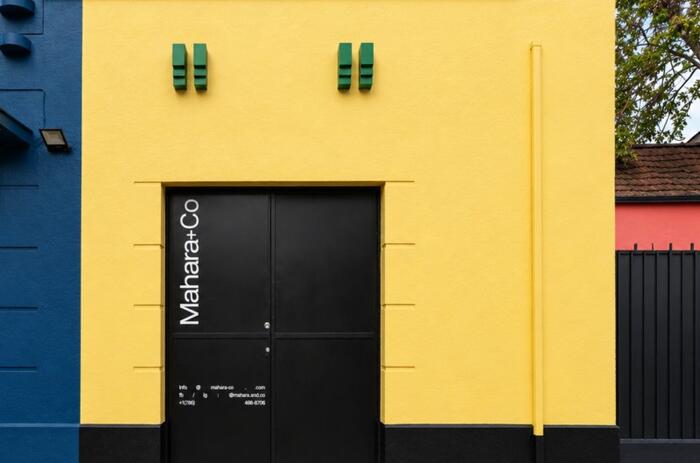
The exhibition inaugurating the space, Escondida llora alguien hoy por la frustración de su deseo, brings together sculptures and objects that have been altered, displaced, or diverted from their usual functions. The gallery’s opening expands its platform for dialogue between Miami, Chile, Latin America, and the Caribbean.
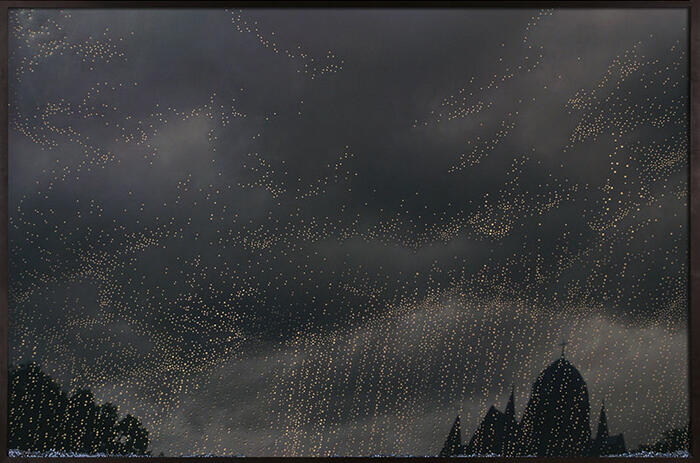
The Berlin-based Argentine artist was selected at Pinta BAphoto with a micro-perforated photograph.