
By
Álvaro De Benito
The Swiss institution presents an extensive survey spanning five decades of the Venezuelan-born artist’s production, highlighting her ironic focus on power and mass culture.
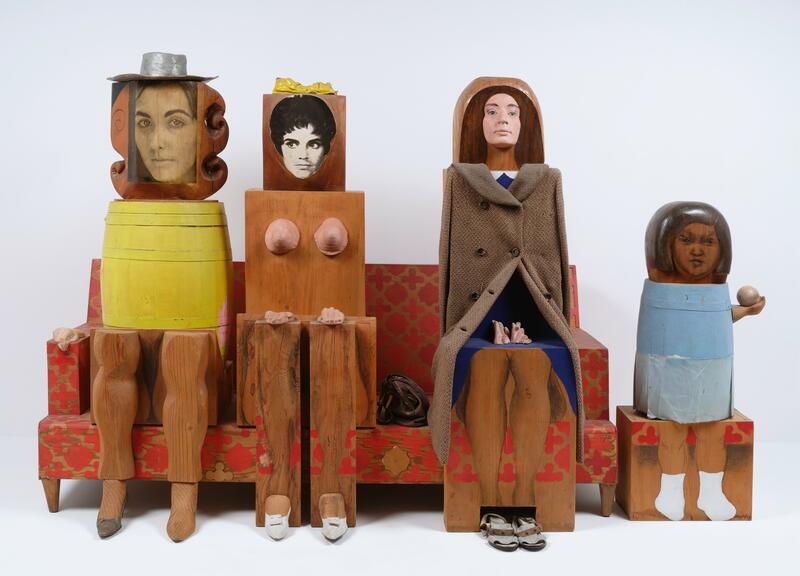
The Kunsthaus Zürich hosts the first major retrospective in Europe dedicated to Marisol (María Sol Escobar, Paris, France, 1930 – New York, United States, 2016). The exhibition, part of an international project involving the Louisiana Museum of Modern Art, the Museum Boijmans Van Beuningen and the Museum der Moderne Salzburg, brings together nearly one hundred works that encompass the full scope of the Venezuelan-born artist’s production.
Within this framework, the exhibition unfolds across an extensive five-decade chronology, tracing her work from its earliest stages to her final years, coinciding with the tenth anniversary of her death. In this detailed approach, it is particularly notable that many of the works are being shown in Europe for the first time, offering insight into lesser-known aspects of her practice.
Given the central role of sculpture in Marisol’s artistic identity, nearly sixty sculptural works form the core of the exhibition, complemented by dozens of works on paper, photographs, and archival and audiovisual materials. Her well-known life-size anthropomorphic figures, carved in wood and painted, reaffirm their connection to Pop aesthetics through the incorporation of everyday objects and elements of popular culture.
The exhibition emphasizes her most productive period in 1960s New York, when she achieved her greatest recognition. During this time, her work engaged with both Pop Art and, across the Atlantic, European Nouveau Réalisme. Although she never formally belonged to either movement, her singular approach within the art scene allowed her to develop a distinctive, socially charged and ironic visual language.
The Zurich presentation also focuses on her partial withdrawal from public life following the events of 1968 and her subsequent travels in Asia. It was during this period that she developed new areas of interest, particularly in ecology and Eastern philosophy. From then on, her production continued—albeit more discreetly—through work in theatre and stage design, as well as further explorations in graphic media.
By the end of the exhibition, visitors gain a clear understanding of Marisol as a complex and socially engaged artist, whose work critically addresses issues of power, identity and culture through an original artistic language that, while seemingly naïve, conceals a profound questioning of everyday life.
Marisol can be seen until 23 August 2026 at the Kunsthaus Zürich, Heimplatz, Zurich (Switzerland).
An exhibition at the 2026 Venice Biennale that revisits television archives to reflect on coexistence as both a social promise and a contested field.
The art maket stabilizes, but the recovery remains uneven.
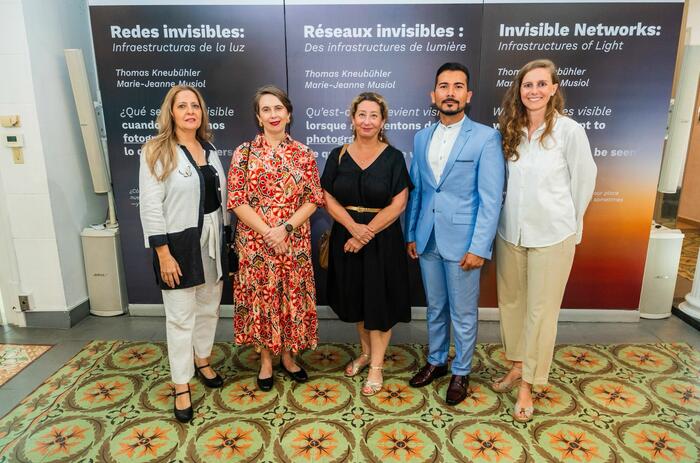
The exhibition of the Swiss-Canadian photographers at the Alliance Française in Panama City invites the public to look beyond what we can usually see.
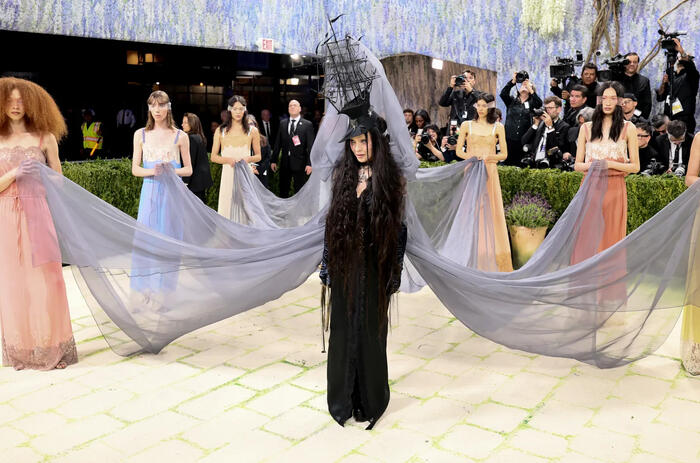
Between references to art history and spectacular visual statements, the 2026 Met Gala once again pushed the boundaries between aesthetic creation and performance.
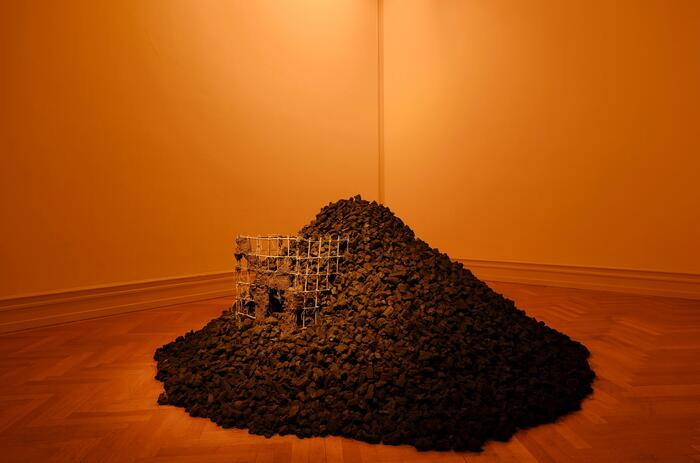
The Brazilian artist links climate crisis, history, and extractivism in her solo exhibition in Bern, reflecting on the social, political, and environmental consequences of a model whose patterns continue to reproduce colonial logics.
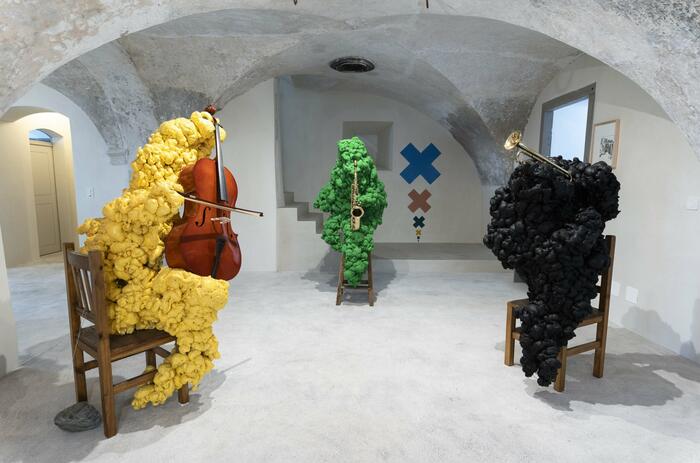
On view through August 31 in proyectoamil, the program spans video, sculpture, and painting shaped by ritual, material experimentation, and ancestral knowledge systems.