
THE UNFINISHED BUSINESS OF LIVING TOGETHER AT THE SWISS PAVILION
An exhibition at the 2026 Venice Biennale that revisits television archives to reflect on coexistence as both a social promise and a contested field.
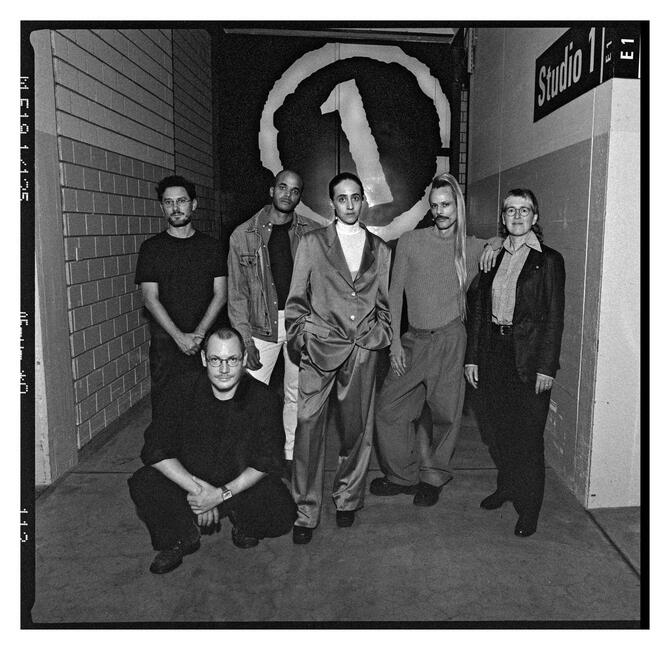
The Swiss Pavilion at the 61st International Venice Biennale presents The Unfinished Business of Living Together, an exhibition conceived by Gianmaria Andreetta and Luca Beeler together with artist Nina Wakeford, and developed in collaboration with Miriam Laura Leonardi, Lithic Alliance, and Yul Tomatala.
The project approaches coexistence as both a social promise and a contested condition, mobilizing art to reopen the archive as a space of conflict and active participation. It begins with an April 1978 episode of Telearena, in which the so-called “problem of homosexuality” was debated live on public television. This broadcast marked one of the first instances in which homosexual individuals gained a public voice in mass media, catalyzing alliances between lesbian and gay communities across Switzerland.
The topic was revisited in Agora (1984), which brought together Swiss, French, and Canadian audiences through satellite transmission. Both programs used live sketches to stimulate discussion and encourage audiences to respond from their own experience.
For the artistic team, the challenges of living together remain unresolved, as attempts at social change continue to confront established norms and systems of exclusion and silence. In this framework, homosexuality serves as a historically specific entry point to examine how social norms determine who can speak and be heard, revealing broader patterns such as state surveillance and moral panics surrounding the nuclear family.
The exhibition stages both the possibilities and tensions of “living together.” At its center, a spatialized video production combines archival material with new images and sound, extending into the pavilion’s garden to explore intimacy in public space and the ways memory is anchored in place. Through montage and installation, the project reactivates the archive as a living resource and raises questions about media infrastructures.
The exhibition results from a collaborative artistic and curatorial process, bringing together multiple perspectives to explore how voices, spaces, and viewpoints can be shared and continuously reconfigured.
Related Topics
May interest you
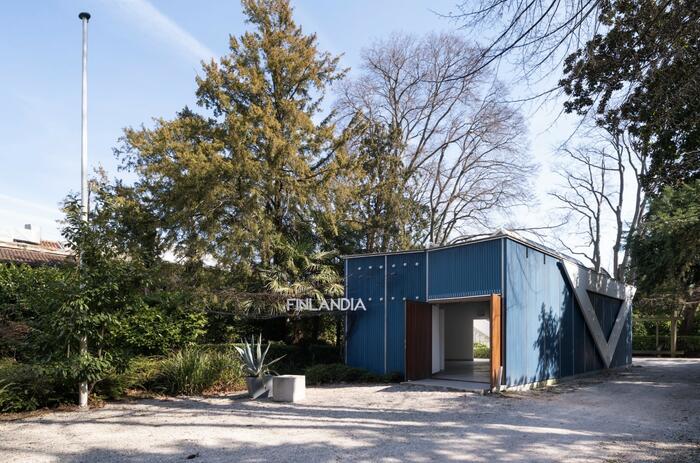
THE WIND AS PROTAGONIST AT THE FINLAND PAVILION
Combining science, music, and theatricality, Jenna Sutela’s work—curated by Stefanie Hessler—explores the unpredictable nature of the wind and its connection to the contemporary environmental crisis.
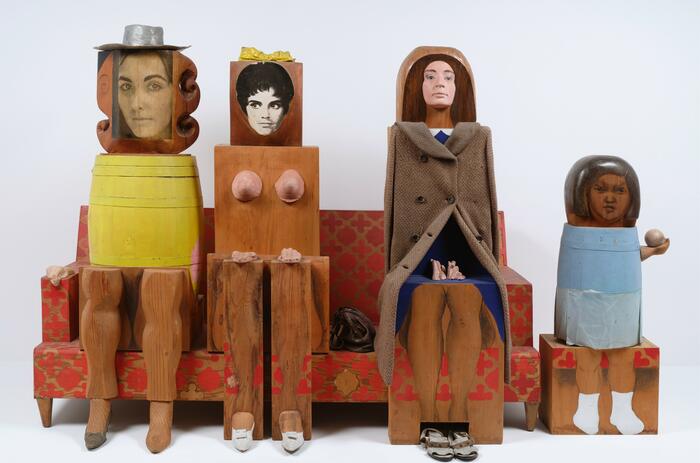
KUNSTHAUS ZÜRICH CHAMPIONS MARISOL WITH HER FIRST MAJOR EUROPEAN RETROSPECTIVE
The Swiss institution presents an extensive survey spanning five decades of the Venezuelan-born artist’s production, highlighting her ironic focus on power and mass culture.

"NOBODY CAN DEFEAT ME": THE BRAZILIAN PAVILION IN VENICE BETWEEN SPIRITUALITY, HISTORY, AND NATURE
Curated by Diane Lima, the exhibition brings together Adriana Varejão and Rosana Paulino for the first time to rewrite the wounds of colonialism.
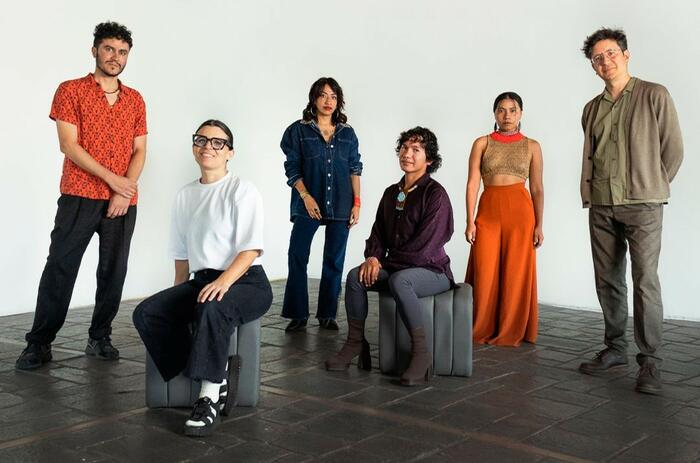
OSCAR SANTILLÁN AND THE TAWNA COLLECTIVE WILL REPRESENT ECUADOR AT THE 61ST VENICE BIENNALE
This May, the Ecuador Pavilion will present an exhibition curated by Manuela Moscoso that explores territory, knowledge, and coexistence.
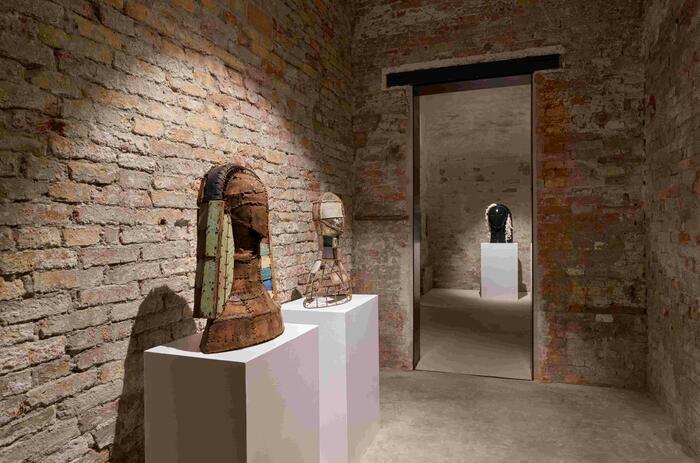
CUBA PRESENTS "FREE MEN" AT THE VENICE BIENNALE
Cuban artist Roberto Diago presents a sculptural installation that turns the scar into an emblem of identity and precariousness into an act of sovereignty.
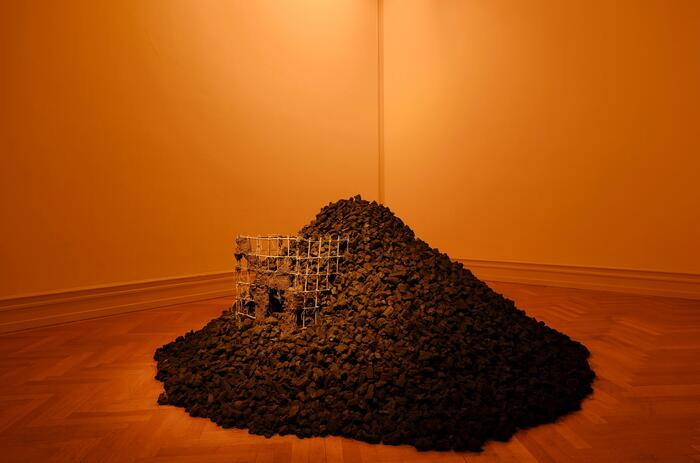
JOTA MOMBAÇA IN SWITZERLAND: CHALLENGING THE COLONIAL LOGICS OF EXTRACTIVISM
The Brazilian artist links climate crisis, history, and extractivism in her solo exhibition in Bern, reflecting on the social, political, and environmental consequences of a model whose patterns continue to reproduce colonial logics.
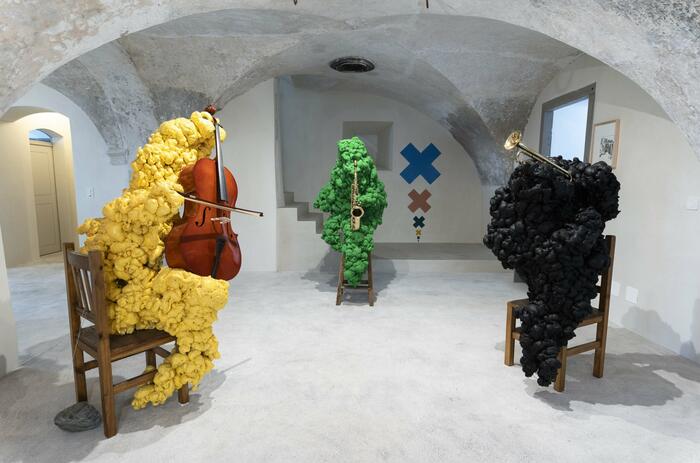
TANIA CANDIANI, LEÓN FERRARI AND SARA FLORES: THREE PARALLEL SHOWS IN ARDEZ
On view through August 31 in proyectoamil, the program spans video, sculpture, and painting shaped by ritual, material experimentation, and ancestral knowledge systems.