
INSIDE MASP'S NEW UNDERGROUND PASSAGEWAY: 98 METERS OF BEATRIZ MILHAZES
Pietrolina borrows the rhythm of a Carnival parade, brought to life in 33 acrylic shades.
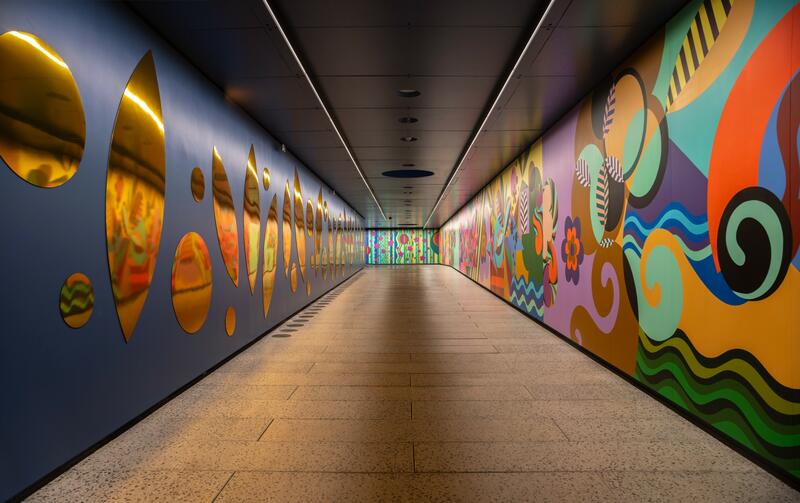
Museu de Arte de São Paulo Assis Chateaubriand (MASP) opened this September the underground passageway connecting the Lina Bo Bardi and Pietro Maria Bardi buildings, cementing the museum’s status as a cultural complex. The underground structure is the first of its kind in a museum in Latin America, and the space features a unique immersive painting conceived by Brazilian artist Beatriz Milhazes.
Curated by Adriano Pedrosa, artistic director at MASP, and Amanda Carneiro, curator at MASP, Milhazes created the work Pietrolina specifically for the underground passageway. The title pays homage to Lina Bo Bardi and Pietro Maria Bardi, the couple who founded MASP, after whom the museum’s two buildings are named. The work extends over 98 meters, consisting of a 60-meter-long painting running parallel to various reflective elements positioned on a 38-meter wall.
-
Pasaje subterráneo con pintura inmersiva «Pietrolina (2026)», de Beatriz Milhazes. Foto Eduardo Ortega
Drawing on the world of allegories—a recurring theme in the Rio de Janeiro-based artist’s work—Pietrolina was conceived to accompany the visitor’s journey. The composition evokes the rhythm and succession of elements characteristic of Carnival parades, creating different visual experiences along the way. The work began with a sketch and subsequently underwent a color study that resulted in a palette of 33 acrylic paints, carefully selected to reproduce the colors of the original design. The project took more than two years to complete, including three months of work inside the underpass to create the immersive painting.
Pietrolina features elements characteristic of Milhazes’s work, such as arabesques, stripes, and organic and floral forms. The mural also establishes a dialogue with the artist’s work Avenida Paulista (2020), which was donated to the MASP collection on the occasion of the retrospective dedicated to her at the museum. The exhibition brought together more than 170 works and was the largest comprehensive exhibition ever held on Milhazes’ career.
“After the exhibition Beatriz Milhazes: Avenida Paulista, the color blue left a lasting impression on the museum, covering the floor and walls. This striking presence led to the color being referred to internally as ‘Beatriz Blue.’ Now, that same shade is used on the ceiling and one of the walls of the tunnel. Beatriz Milhazes’ work holds a fundamental place in Brazilian and international art, and welcoming this mural to MASP is a gift for the museum and for the country,” says curator Amanda Carneiro.
Internationally recognized as one of the most prominent contemporary Brazilian artists, Milhazes has works in the collections of major museums, such as MoMA—Museum of Modern Art, United States; Tate Modern in the United Kingdom; the Centre Georges Pompidou in France; and the Museo Nacional Centro de Arte Reina Sofía in Spain; as well as MASP, the Pinacoteca de São Paulo, and MAM—Museu de Arte Moderna de São Paulo—in Brazil. Among her many notable projects, she has created installations that engage with the architecture of spaces such as the Vienna State Opera in Austria; the Tate Modern restaurant and the Gloucester Road subway station in London; the Art House Project (Casa A) on the island of Inujima, Japan; and New York-Presbyterian Hospital.
May interest you
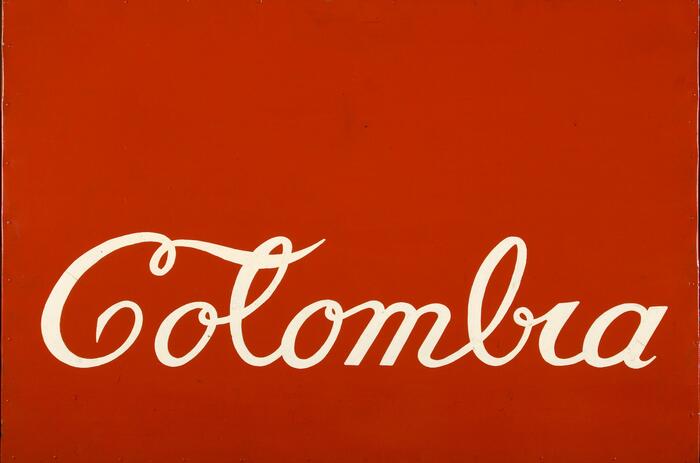
MASP PRESENTS INTERNATIONAL GROUP EXHIBITION “HISTÓRIAS LATINO-AMERICANAS”
Spanning five floors of the Pietro Maria Bardi Building, the exhibition brings together works by 148 artists, including previously unseen works, to examine how the idea of Latin America was constructed and continues to be contested today.
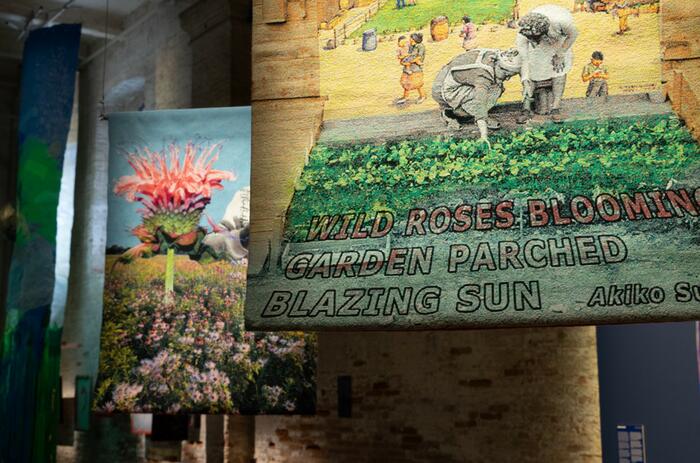
CAROLINA CAYCEDO: BETWEEN VENICE AND SÃO PAULO, RIVERS AND RESISTANCE
The Colombian-British artist participates in the current Venice Biennale and opens Confluences at MASP on July 3.
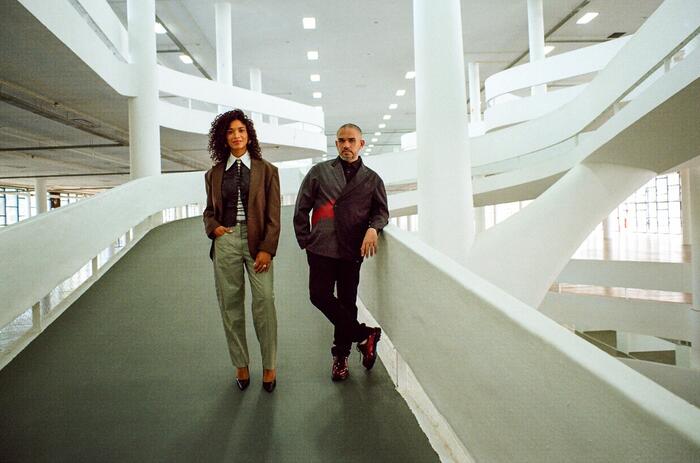
WHO ARE THE CURATORS THAT WILL LEAD THE NEXT BIENAL DE SÃO PAULO
For the second time in its history, two Brazilian curators take on the artistic direction of Latin America's largest visual arts event.