
AN ANGEL, COLUMBUS, WRESTLERS AND A PAIR OF WINGS: THE COUNTER ALLEGORY AS A RESIGNIFICATION OF HISTORY
The echoes of the bells from the Church of San Ignacio of Loyola, in Buenos Aires, resound on the stones of the old Manzana de las Luces historical complex, one of the last buildings from the colonial era that survive in the city’s historic center. The place, which through the centuries has been a convent, a Museum of Natural Sciences and even a Faculty, transpires hispanic barroqueness. It is now a museum without a permanent exhibition; it is, in its way, a monument of its own. In the courtyard, the spectator looks upwards and there stand the balconies of the old cloisters, higher up the glass and steel walls of the skyscrapers of the financial district and, poised on the museum’s ceiling, observing this ancient patio, an unwinged angel that looks out of place. And it is. Or maybe not.
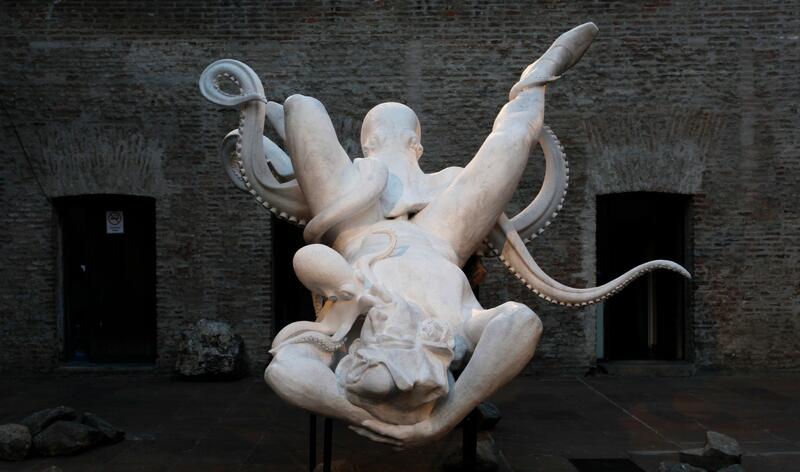
The sculpture is a reference to one of the allegories that is part of the monument to Cristopher Colombus (1921), by the Italian artist Arnaldo Zocchi, a monument that after years of fierce political and symbolic tit-for-tat, went from standing in the Casa Rosada, the country’s presidential palace, to the shores of the Rio de la Plata. The angel’s juvenile and indecipherable silhouette, which in the original sculpture points forward, towards the future, setting the transatlantic path for America’s Conquistador, in this case is signalling downwards, towards this colonial courtyard on a mild, typically porteña, afternoon.
It is here that the project “UNOFFICIAL. Mounted Stories, Dissident Narrations” (NO OFICIAL. Historias Montadas, Relatos Disidentes) is held, in the context of BIENALSUR, a biennial born in the South’s South and celebrated simultaneously in 124 venues around the world between July and December. The first of the episodes in UNOFFICIAL is “The Piety in the Statues”, a group of sculptures by Argentinean artist Alexis Minkiewicz. This angel is one of the four pieces that make up the exposition, which can be visited until February 28th.
In the courtyard, Columbus enjoys, immersed in a surreal and underwater sexual dream. If the sailor, in the original monument, stands erect, potent, masculine and imposing, Minkiewicz’s version features this majesty, yes, but of another kind. Here, Columbus lies naked half a meter above the ground, entangled in a bewildering orgy with two octopuses, a direct reference to The Dream of the Fisherman's Wife (1814) by Katsushika Hokusai. The vulnerable navigator, co-opted by a spasm of pleasure, holds the back of his neck with both arms while an octopus devours his sex, in the same way that the whole exhibition devours, with eroticism and a hunger for resignification, everything that the original monument represents. “There’s this established notion: that monuments help to build a national identity. But they build one national identity, a hegemonic story”, says Leandro Martinez Depietri, co-curator of the exhibition together with Diana Wechsler. "Monuments are platforms for thinking about new identities," he adds. And in that line is inscribed "The Piety in the Statues", which takes its name from the poem "Plegaria" (Prayer), by the Uruguayan Delmira Agustini. "Eros: have you ever felt / piety in the statues?"
Minkiewicz shares that fascination for sculpture, a voracity so aesthetic that it becomes physical, a desire to “climb onto a sculpture, merge with it, make it my own; to have a physical relationship with that inanimate and represented being". Demonstrations of such avidity emerge in every aspect of the exhibition, one that is both a historical-cultural critic and a libertine manifesto, a platform for the resignification of stories and an ode to erotic power.
In the third of the sculptures, which the artist informally baptized as “Los luchadores” (The fighters), eroticity gushes out of every inch. Sailors, in the original sculpture, both figures intertwine in a contortionism halfway between the violent and the lustfull. Wrapped in ropes with the Japanese shibari technique, placed by Alejo Petriz, it is another nod to Japanese culture, for which Minkiewicz cultivates a fondness. In the figures, of about three meters, one can perceive the musculature, the tendons outstanding visibility, the fusion of the bodies. It is even difficult to distinguish where one ends and the other begins, while both swing, supported by ropes, above the colonial stones, in a soft dance of light and shadow. Sculptural dynamism in its purest form. From above, they are too observed by the angel, who contemplates like an adolescent voyeur, intrigued, with a facial expression that cannot be defined precisely.
Intrigued, and also unwinged. Minkiewicz, in what makes up the fourth piece of the work, "hung" the angel’s wings on a self-supporting structure that embraces two columns without damaging the original material (an absolute priority for the show). In what is, according to the artist himself, the most hardcore moment in the exhibition, the wings hang like a half beef pierced by hooks. A violent dismemberment, in an almost fetichist manner. “I’ve replaced the Catholic angel for something else. This angel has a sexual desire, an impulse”, says Minkiewicz, who once again included the shibari technique in this piece. Deglorify in order to resignify. Or, as the curatorial text elaborates: “The irreverence in the iconographic mutations, the fold of the heroic narrative on itself and the rich intertextuality with the history of art and with the various transits of the monument allow us to think of this work as a resurgence of the dissident tradition of the Latin American neo-baroque. A game of polysemic thicknesses settles, of passion for excess and artifice, which break with a monolithic vision of identity to open up other foundational myths that dispute the official story”.
That is what this is all about. Dissent and alternative channels of expression. New counter-hegemonic narratives, sometimes explicit, sometimes ambiguous. Even a wink that is almost ironic: the inauguration was held on the Day of Respect for Cultural Diversity. Minkiewicz also won a contest sponsored by the Nation’s Ministry of Culture to erect a sculpture of María Remedios del Valle, the only woman named captain of the Army of the North by Manuel Belgrano. The sculpture, which will be located in a popular intersection in Buenos Aires, in November, is also a manifesto of this quest. An Afro-descendant, this national heroine was “forgotten by history,” and in the background of the Black Lives Matter movement, Minkiewicz chose Louis Yupanqui, a trans and Afro-descendant woman and activist, as a model. "I want to actualize that cause", says the artist.
“History has other potential outcomes, other future possibilities. Instances of the expression of dissent that have to be open. These are steps forward in artistic and democratic expression, symbolically held in public spaces”, Depietri concludes.
Useful information
The exhibition can be visited until February 28th. The Manzana de las Luces Historical Cultural Complex (Peru 294, kilometer 2 of the biennial) is open from Wednesday to Sunday between 12 and 7 pm, without prior reservation.
Framed in the same project, from October 15th until November 26th every Friday afternoon, the public will be able to observe the performances "Barroco furioso" (Furious Baroque), by the company Ópera Periférica, and "Cabaret Neo Bar Otra”, curated by Loréne Belloni. Both proposals work from the perspective of gender, diversity and social transformation.
May interest you
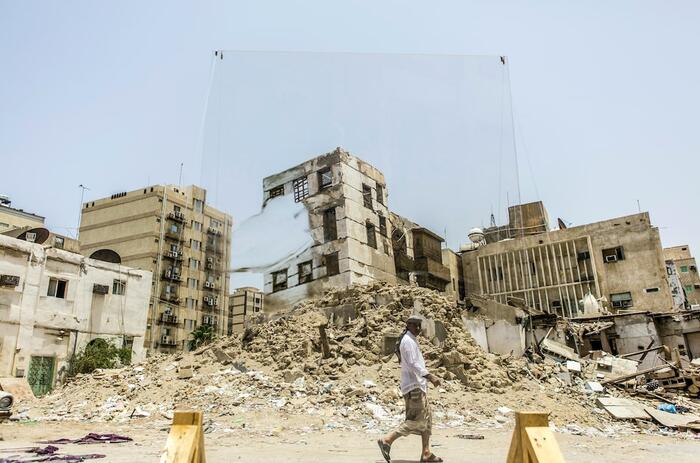
WITH A POETIC AND INTERACTIVE EXHIBITION, BIENALSUR LANDS IN SAUDI ARABIA FOR THE SECOND TIME
The Bienal Internacional de Arte Contemporáneo del Sur (International Contemporary Art Biennial from the South, in English), better known as BIENALSUR 2021 and born in the Tres de Febrero National University, in Argentina, arrived for the second time in faraway Saudi Arabia with “Echoes. A world between the analogic and the virtual”, a collective exhibition. The show will feature 20 artists from Asia, Africa, America and Europe.
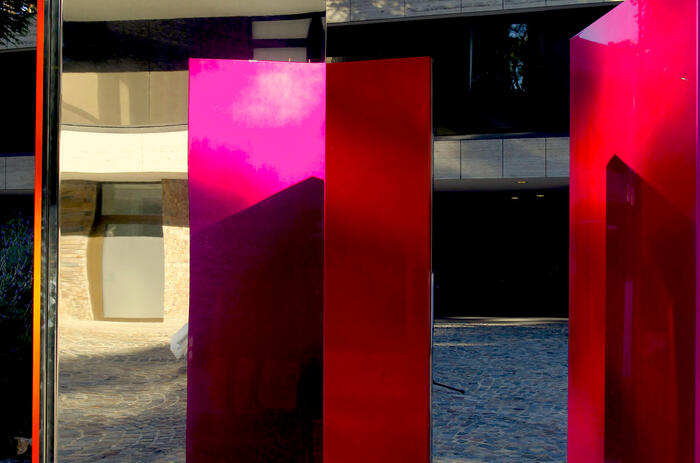
BIENALSUR INTERVENES THE GERMAN EMBASSY IN BUENOS AIRES
The work of Carola Zech, Argentinian artist of German descent, arrived, starting September 25th, at the German Embassy in Buenos Aires. A site-specific intervention, “Al azar del viento” (At the wind’s random will) is curated by Diana Weschler, also of German descent, and can be visited until November 28th as part of BIENALSUR 2021’s expositions.
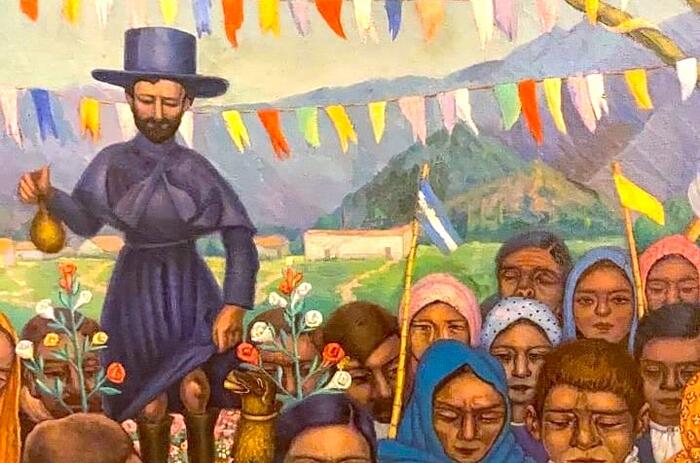
A REFLECTION ON THE HISTORY OF MODERN ART IN ARGENTINA – BIENALSUR AT MUNTREF
“Pistas” (Clues would be the literal translation), inaugurated on October 27th at the MUNTREF Artes Visuales Sede Caseros I, in Buenos Aires, is an exhibition that brings together works from the collections of the Emilio Pettorutti Provincial Museum of Fine Arts and the MUNTREF. The exhibition, curated by Diana Wechsler, seeks to trace some historical-artistic journeys of 20th century Argentina, and includes works by such prominent artists as the Argentineans Emilio Pettorutti, Antonio Asís, César Paternosto, Alfredo Gramajo Gutiérrez, Ennio Iommi, Juan Melé, Pablo Páez, Javier Plano, Alejandro Puente, Víctor Rebuffo, Carlos Sessano, Clorindo Testa and Daniel Santoro, the Italians Juan Del Prete and Líbero Badíi, the Spanish Pompeyo Audivert and the German Anne-Marie Heinrich, among others.
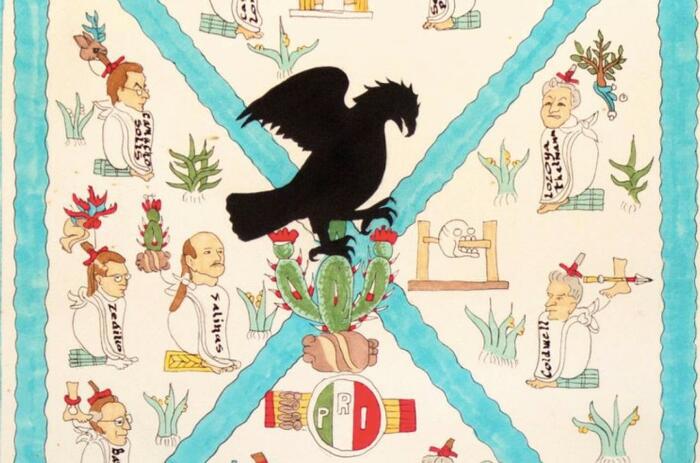
IN BUENOS AIRES, BIENALSUR INAUGURATES EXHIBITIONS CENTERED ON ABORIGINAL CULTURE
Two new exhibitions were presented last week in the framework of BIENALSUR, the international biennial of contemporary art that is held simultaneously in 124 venues in 50 cities around the world. In this case, the expo’s are held at the Enrique Udaondo Provincial Museum Complex in Luján (Province of Buenos Aires), and are dedicated to the native peoples of the American continent.
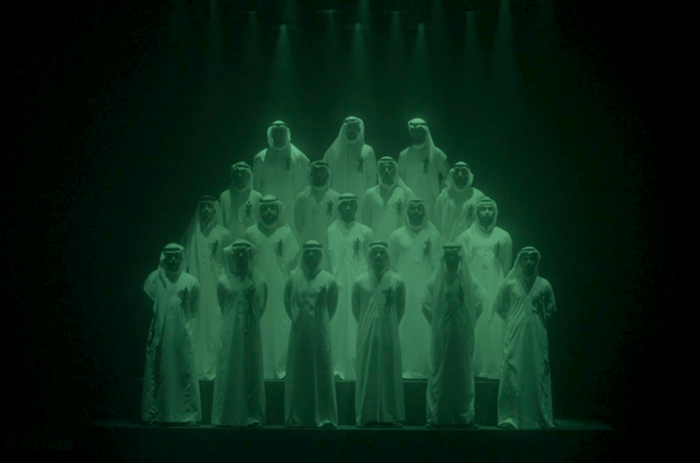
BIENALSUR AT THE CCK (BUENOS AIRES): MASS CULTURE. DOMINANT HISTORICAL NARRATIONS AND THE ENVIRONMENTAL CRISIS
The International Biennial of Contemporary Art of the South, BIENALSUR 2021, arrives on November 10th and 17th at the Kirchner Cultural Center (CCK) with three exhibitions featuring works by almost 20 artists from America, Asia and Europe. The exhibitions analyze how information impacts on our subjectivities, and at the same time question the social, gender and ethnic inequalities that traditional historiography entails, drawing attention to the need to strengthen an ecological conscience in the face of our planet’s growing degradation.