
By
Violeta Méndez
The artist’s organic minimalism reveals the intertwining of ecological phenomena, personal and ancestral memory, and the relationship between cultural anthropology and the natural world.
From peeling the bark of a eucalyptus tree with her fingers as a child, watching as both she and the plant slowly healed, to producing monolithic works with organic pigments processed in laboratories. From healing her own body through the wisdom of nature to attempting to awaken an audience and show how they might do the same. The young Puerto Rican who used to escape into the forest of El Yunque to drink from its source of survival is now 60 years old and presenting her first exhibition on her island, after having taken her art around the world.
Gisela Colón (1966) is a Puerto Rican–American artist raised in San Juan. Her voice is clear and committed to a world that urgently needs to care for itself in the face of catastrophe. She argues emphatically that through natural processes such as geology and geography, negative energy can be healed. Her multifaceted works involve an extremely meticulous process: drawing, gathering materials—volcanic, desert, even cosmic—laboratory work, selection, and finally the assembly of the piece itself. This deliberate and deeply studied production gives rise to what she calls the “conceptual leap between conflict and healing”: a monolith.
The artist seeks to create a universal work out of the personal. For this reason, her work reflects not only her own history, her country, the violence in its territories, and the silhouettes of its mountains, but also an ancestral narrative that connects everything. She works with the soil her father once walked on, with pulverized bullets she heard in her neighborhood, with onyx and alabaster. She brings everything into the same space and time, concentrating energy to create a new plane. She meditates on time, building upon the past and its cosmic continuation. She uses the monolith—a form revered by humanity since ancient times—as an evocation of ancestral memory in dialogue with a complex present and an imagined future.
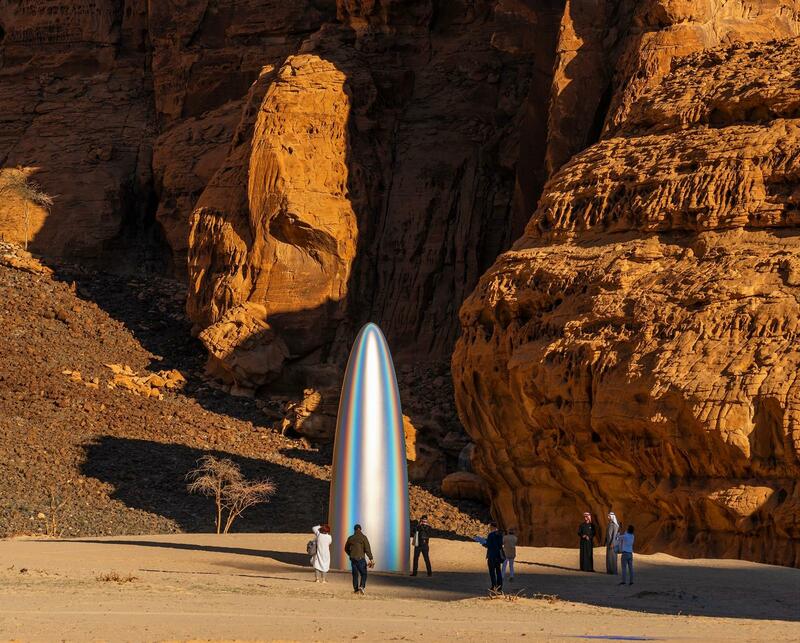
Colón has expanded her practice through the development of cellular vessels with humanized geometric forms that embody characteristics of organic life. By observing structural color behaviors driven by nature, her sculptures change their physical qualities according to environmental factors and the viewer’s position, generating a perceptual experience of color as refracted light.
The artist's practice, which has involved global projects in countries such as France, the Netherlands, Egypt, Saudi Arabia, Brazil, Cuba, and Turkey—activating three UNESCO World Heritage sites—takes on a different form in each location. The artist is particularly attentive to creating earthworks in her exhibitions in order to engage with the space in which the show takes place.
“People always—perhaps especially today, when the world is in such a terrible situation—look to art as a source of something transcendent,” explains Colón. She proposes sources of matter.
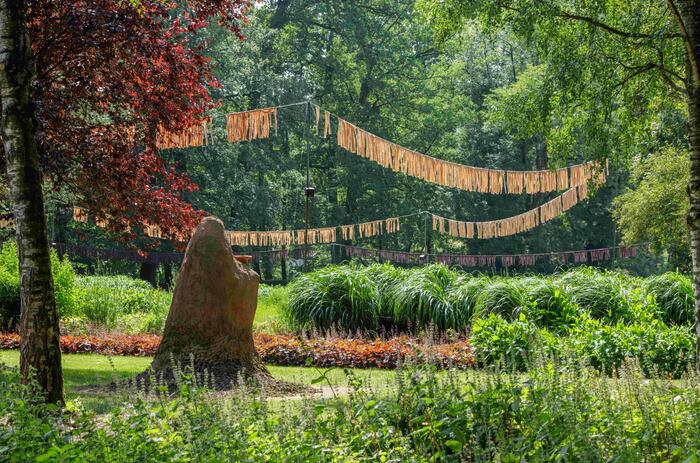
Among her monumental landscape installations and public exhibitions are: The Future is Now for the Desert X AlUla Land Art Biennial (Saudi Arabia, 2020); Forever is Now (Egypt, 2021), where she presented a site-specific monument at the Giza Pyramids, a 4,500-year-old UNESCO World Heritage site; Godheads – Idols in Times of Crisis in the Oude Warande forest (Netherlands, 2022); One Thousand Galaxies of Light (Starfield), an immersive light installation in the Wadi Hanifa River, Riyadh, Saudi Arabia (November 2022); If The Walls Could Talk / Reclaimed Stones: Foundations of Civilization, Past, Present, Future at the Citadel of Salah al-Din, Cairo, Egypt (October 2023), also a UNESCO World Heritage site; Máteria Prima, a survey exhibition together with the large-scale environmental activation Plasmático: The Fourth State of Matter at the Museu Nacional da República, Brasília (2024), which later traveled to Instituto Artium da Cultura, São Paulo (2024); and the 15th Havana Biennial, Shared Horizons, at the National Museum of Fine Arts of Cuba (2024).
On March 14, MAC Puerto Rico will open La Montaña, el Monolito, the first monographic exhibition by Gisela Colón in Puerto Rico.
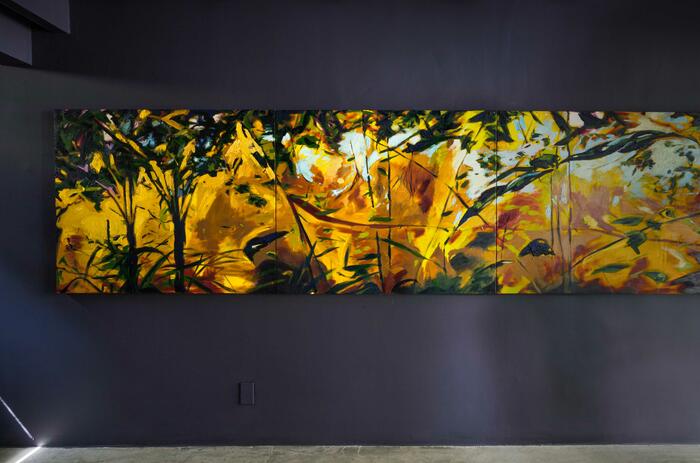
Jun Martínez uses artistic practice as a space for reflection; the Mexican gallery adhesivo hosts one of them.
Books are published about artists, museums, and collectors—but why not talk about the gallerist, the one who connects them all?
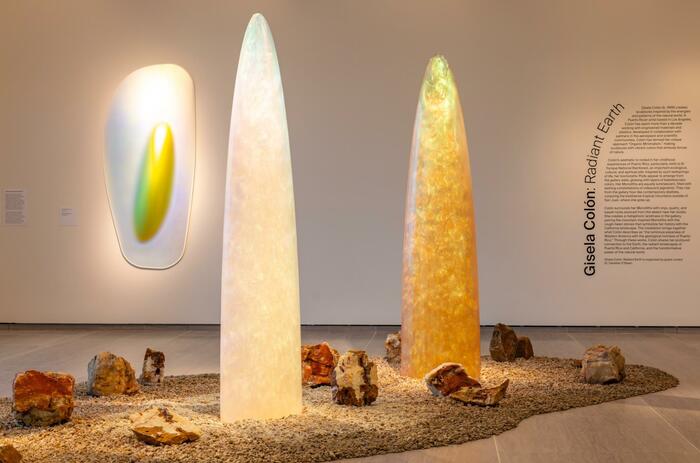
The Latin American artist draws inspiration from the landscapes of Puerto Rico and those of her adopted home in California to create sculptures that reveal the transformative power of nature.
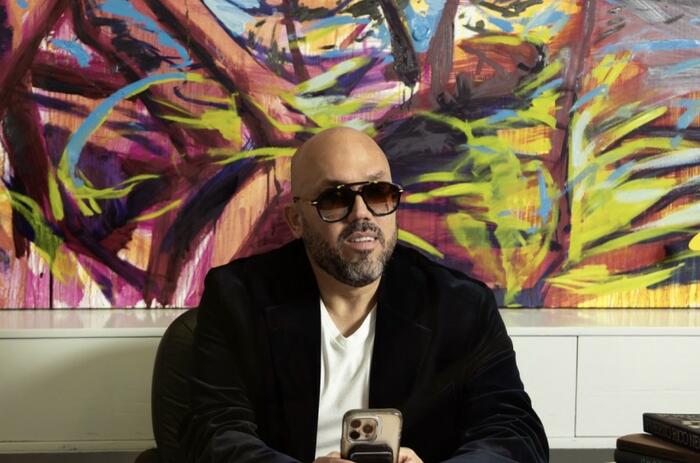
Walter Otero is recognized for his unconventional approach to artist management and the Puerto Rican art ecosystem. His career is now compiled in Walter Otero. A Tropical Gallerist, a book in which he reviews his career and reflects on changes in the sector.
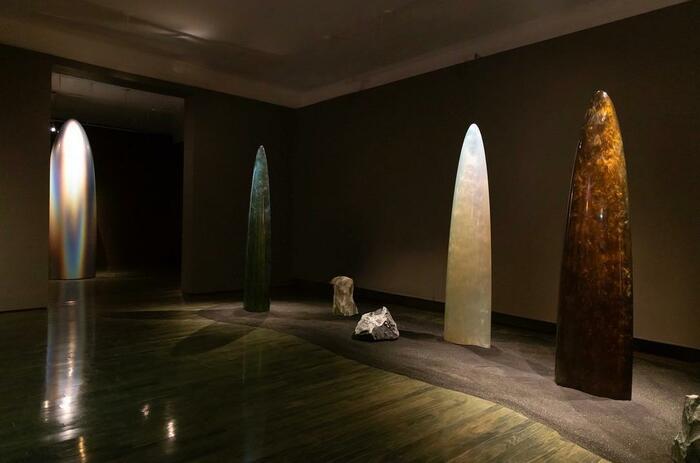
The Puerto Rican–American artist explores the relationship between geology, memory, and vital energy in an exhibition spanning more than three decades of work.
Álvaro Barrington and Jota Mombaça present architectural installations in the Netherlands that address the event's central theme.