By
María Galarza
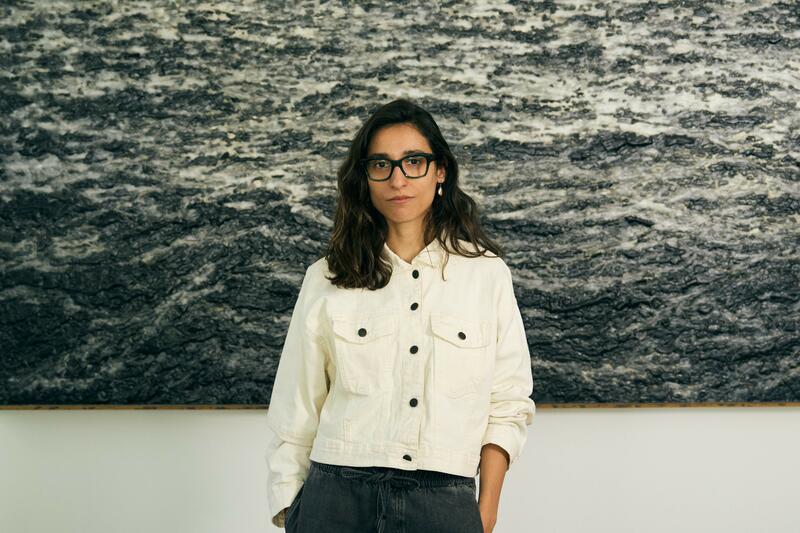
To tell, narrate, or curate always implies a perspective. From where one speaks, to whom one speaks, and which points of support are chosen when conceiving an exhibition—when designing a story. Irene Gelfman is an Argentine curator, art critic, and cultural manager. She trained as an art historian and curator. Today, she is the global curator of Pinta.
Over the past years, I’ve had several conversations with Irene. Our work often meets in a shared space: we both think, from different angles, about how to accompany and disseminate Latin American art. There is an ongoing dialogue that helps us better understand how the region’s artistic proposals are narrated today. This interview emerges from that exchange.
What first drew you to curating when you started, and what continues to motivate you today?
I was always attracted to the possibility of developing visual discourses and working closely with artists and artworks. From the beginning, I was interested in studio work—that dialogue where you discover what each exhibition wants to express: why make it, what would set it apart, what significant gesture in the artist’s practice needed to be translated into a spatial proposal.
I always enjoyed transforming spaces, building walls, intervening through design, and using installation to highlight what emerged from conversations with artists. When I worked with archives, as in the Alicia Penalba exhibition*, the challenge was how to bring her into the present and place her in dialogue with a contemporary artist—in that case, Laura Ojeda Bär—to build generational links between different practices. Those kinds of crossings have always intrigued me.
Today, all of that remains what I enjoy most: the preliminary process and the installation phase.
[The exhibition Una colección de bolsillo, featuring Alicia Penalba and Laura Ojeda Bär. Curated by Irene Gelfman. April–July 2022].
At Pinta you hold a key role as global curator. How would you describe the curatorial approach guiding the project today?
This is my fourth year in charge of global curation. Over this time, I’ve built a unifying vision that strengthens Pinta as a platform for Latin American art. The first step was to generate a shared language across the different projects: having the fairs share sections, incorporating transversal elements, tributes, and dialogues between the historical and the contemporary, along with proposals from more emerging artists. I’m interested in showing the full spectrum of Latin American artistic strength.
We also deepened the work on Open Files. They were born during the pandemic and underwent a major shift by collaborating with local audiovisual teams and with Arte al Día, Pinta’s editorial line, giving them greater care and turning them into a showcase for artists from each country.
In every Art Week and fair, we aim to highlight what is unique and most relevant in each local scene, always in dialogue with local cultural agents. For me, building from the voices already working in each place is essential: it enriches the curatorial proposals.
Another focus was communication—presenting Pinta as an integrated project rather than isolated components. For example, in Buenos Aires, during the last edition of Media Point, we included a Solo Project by Donna Conlon, an artist living in Panama. In 2023 and 2024, we did something similar by bringing artists from Pinta Asunción, such as Fernando Allen and Joaquín Sánchez. The idea is to use the platform to encourage circulation beyond each city.
All of this weaves a wide network of artists, curators, and cultural managers that exceeds Pinta and strengthens regional alliances. Along the same lines, the FORO was renewed; it now truly functions as a space for gathering, exchange, and collective reflection.
You coordinate teams and projects in different countries. What have you learned from working across cultures and production modes?
The most interesting part is seeing that within each country there are multiple centers and peripheries, and that meeting points often aren’t where one expects. It’s important to work within the language, humor, and sensibility of each place—and adapt. It’s a major exercise in openness and in learning to think differently.
Discovering other countries, scenes, curators, artists, and galleries is deeply enriching both professionally and personally. But it also poses a challenge: avoiding the obvious and staying open to constant readjustment.
Territory is a notion always in tension. In Asunción, for example, what happens in the city is very different from what happens just a bit outside it. The same applies now as we consider expanding Art Weeks into Central America: it is a region extremely diverse in histories, migrations, political processes, and geographies. All of this shapes how territory is understood.
This is why I believe it is essential to think from a regional perspective—without neglecting what is local, but relying on the Latin American network to build valid discourses from here, without always looking outward.
What challenges does curating in Latin America face today? What does it mean to you to curate from Argentina or from Latin America?
For me, the biggest personal challenge today is being both a curator and a mother. It’s a world that demands constant movement: traveling, attending events, being present in different scenes. And that implies absences at home—a strong clash between professional and maternal life, one I share with many colleagues.
This is why giving voice to women is important: we face different challenges. Looking around, many spaces are still occupied by male voices—not due to a lack of female voices, but because of the concrete difficulty of sustaining these rhythms.
At a regional level, I think the challenge is to continue positioning ourselves with a distinct identity, without falling into the exoticisms that have emerged in recent years. To uphold our narratives without diluting them.
What attracts you to being a curator today, and what gives you pause? Is there anything you feel is in crisis or needs rethinking?
I’m drawn to the possibility of working collectively with artists and colleagues to build discourses from polyphony rather than from a single voice. I think that’s where the opportunity to imagine new narratives and new genealogies of art emerges.
The biggest risks are falling into exoticisms or obvious paths. Another major challenge is the place women occupy in the art world: ensuring our voices grow stronger and that material factors—like motherhood—are acknowledged.
I also think we need to rethink the idea that each curator must have a single research theme. Today we work in networks; we can build teams that engage different areas of knowledge without being forced into a single category or identity. That openness feels much more interesting.
What themes or concerns shape your curatorial projects today?
My current projects are shaped by historical revisions—those that perhaps didn’t receive enough attention in their time and that I’m interested in revisiting. I also work extensively with video, a medium often overlooked but incredibly rich.
I continue creating generational crossings between historical and contemporary artists to rethink the contexts in which each work was created. And I’m deeply interested in the study of materiality—spending time with works in their material dimension.
Is there anything you'd like to demystify from your role?
I want to demystify the idea of the curator as a glamorous figure. It’s a job that demands a great deal of study, effort, and rigor, yet it’s often associated with something more superficial.
I also think it’s important to open space for other voices. Often, only a few are legitimized, and they appear to determine processes, aesthetics, or identities. I’m interested in expanding that spectrum.
In recent years, there’s been growing attention toward young art collectors. How do you see that scene? What characteristics or sensibilities do you notice among the new collectors you engage with through Pinta?
There is a new young collecting scene with a very interesting sensibility. They care about the history of artworks and their connection with the artist; when that dialogue is established, they truly form a bond with the piece.
It’s essential to cultivate new audiences, new scenes, and new buyers. Also to develop an educational dimension: at Pinta, we work to ensure that all fairs have guided visits not only for specialists but also for the general public, spaces for children, and experiences that allow entire families to enjoy the fair. This builds new audiences.
Young collectors feel comfortable at Pinta due to its boutique scale, which allows for close contact with gallerists and artists. They are also well-informed, with broad access to information and a genuine desire to stay informed. That is very stimulating.
*Cover image: Irene Gelfman. Courtesy of Pinta.

By Violeta Lozada
Art Week opens its doors next week and Miami begins to beat differently. There’s a pulse you can feel while walking through the fairs—a mix of curiosity, intuition, and discovery.

A leading platform for Ibero and Latin American art, the fair brings together galleries, curators, and emerging talents for a dynamic edition shaped by new voices and cross-regional perspectives.
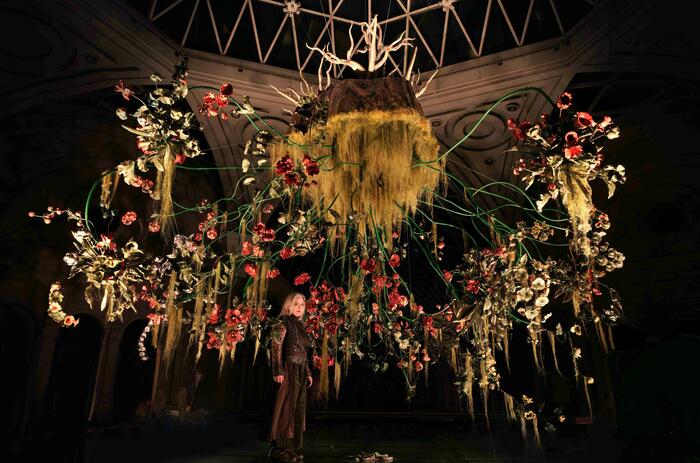
Among jaguars, giant flowers, and living ceramics, Nicola Costantino unfolds a universe where technique and concept seek each other out. From initial rawness to a beauty guided by nature, her work continues to evolve like an expanding jungle.

Organized by Pinta in collaboration with Meridian International Center, CAF – Development Bank of Latin America and the Caribbean – and CC LATAM, the exhibition brings together works by artists from seven countries addressing themes of identity, territory, and memory, reaffirming the value of art as a tool for regional integration.
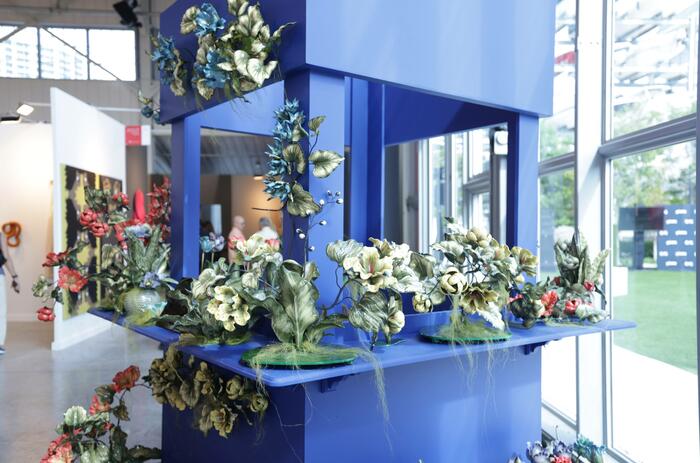
With Special Projects, the Sculpture Garden, and the FORO program, the fair stands as the key meeting point for Latin American art during Miami Art Week.
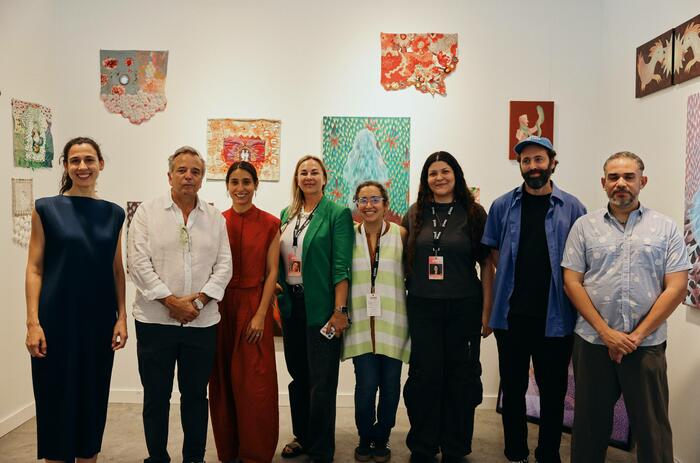
The 2025 edition of Pinta Miami concluded by reaffirming its commitment to elevating Latin American art, celebrating artists, galleries and institutions through its awards program and key acquisitions that strengthened regional collecting.
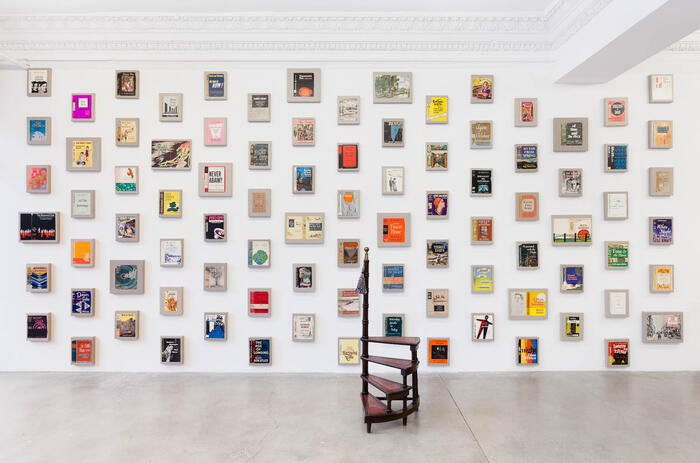
In an image-saturated present, Francisco Lemus proposes new relationships through a selection of works that appropriate space to assert their presence in the face of contemporary volatility.
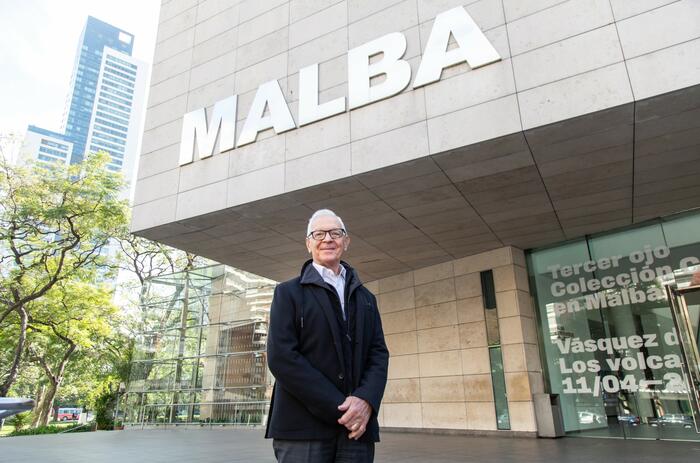
In a historic operation that nearly doubles its holdings of modern and contemporary Latin American art, the museum moves forward with the expansion of its headquarters and consolidates its position as one of the region’s leading international institutions.
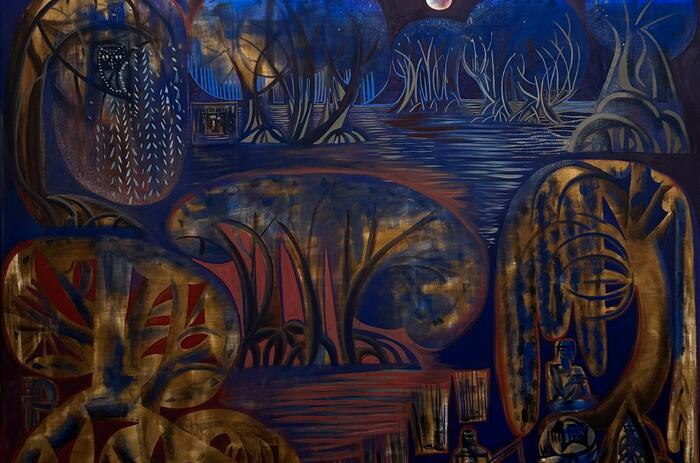
Between the exposed Misiones jungle and the revealed basin of the Río de la Plata, the museum proposes a journey through the work of Florencia Böhtlingk this summer.

Isabella Lenzi (São Paulo, 1986) is a curator trained in architecture, museology, and art history. She lives in Madrid, where she works as Visual Arts Curator at the Círculo de Bellas Artes and as Artistic Director and Chief Curator of the Fundación Alberto Cruz, following a trajectory that includes institutions such as the Museo Reina Sofía, Fundación Mapfre, Videobrasil, the Cuenca Biennial, and the Whitechapel Gallery.
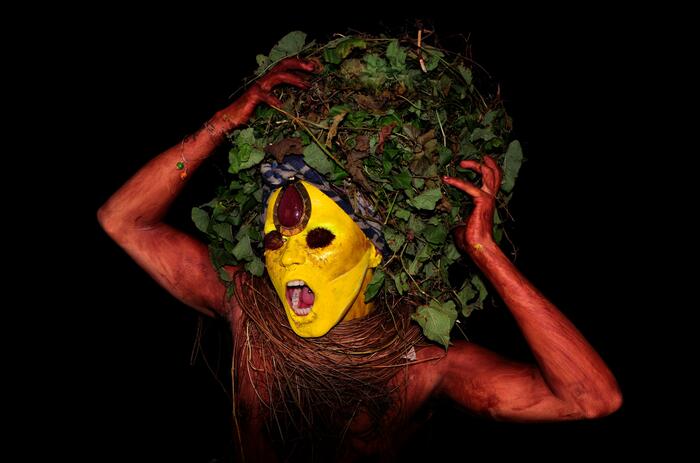
In its new edition, Pinta Miami reaffirms its role as a vital anchor of Miami Art Week. Curated by Irene Gelfman, the fair presents three projects that explore—through distinct approaches—the shifting relationships between landscape, identity, and collective experience.

In its 2025 edition, the fair unfolds a terrain of questions and encounters. Curated by Juan Canela, NEXT proposes pairings of artists and galleries that explore how we inhabit, name, and imagine the region, articulating new ways of thinking about the contemporary from Latin America and the Caribbean.
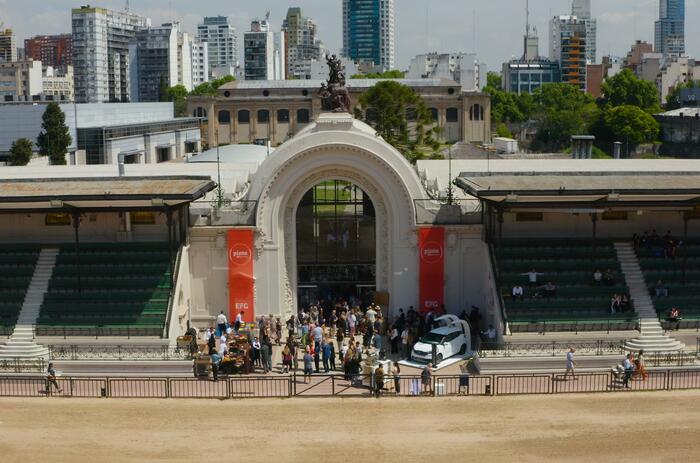
Curated by Irene Gelfman, this year's edition brings together the many faces of contemporary photography in Buenos Aires.