CASA ARDISSONE INAUGURATED ITS PARTICIPATION IN PINTA ASUNCIÓN ART WEEK 2025
With a solo exhibition by Fernando Allen and a group show featuring five regional artists, Casa Ardissone brings to the forefront the tensions between territory, memory, and the ecological urgency of the Paraguayan Chaco.
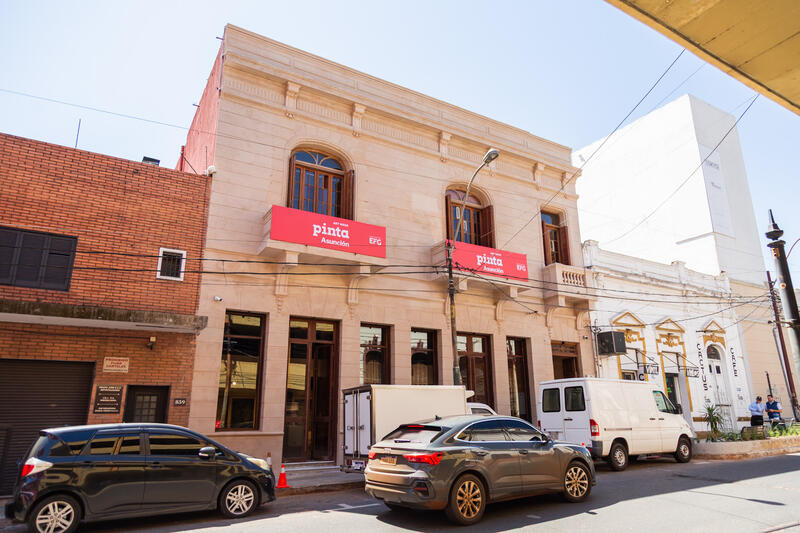
This Wednesday, Casa Ardissone launched the program of Pinta Asunción Art Week, which this year chose the emblematic cultural space as one of its main venues. With the presence of artists, curators, cultural managers, and the local public, two exhibitions opened simultaneously, both engaging in dialogue around a shared axis: territory and its political, ecological, and social tensions.
The first, El nombre del mundo es ‘bosque’ (The Word for World is ‘Forest’), presents the work of artist Fernando Allen under the curatorship of Adriana Almada. The project takes as its starting point the celebrated science fiction novel by Ursula K. Le Guin, published in 1972, in which a planet covered in forests and inhabited by communities living in harmony with nature is devastated by terrestrial colonizers. Allen transposes that metaphor to a landscape he knows well: the Paraguayan Chaco, one of the regions with the highest rates of deforestation in the world.
-
Pinta Asunción 2025 en Casa Ardissone
In the past fifteen years, the Chaco has lost around four million hectares of forest. Through photographs, textiles, satellite maps, videos, and audio works, Allen highlights the clash between a balanced way of life and one rooted in exploitation and domination. A central aspect of his research is the similarity between the camouflage patterns of military and police uniforms and satellite images of deforested land: in both cases, fragmentation and discontinuity operate as signs of power and control over bodies and ecosystems. The exhibition thus seeks to reconstitute the image of the forest in transformation and reflect on the traces left by environmental devastation.
In parallel, the first floor of Casa Ardissone hosts a group exhibition featuring five artists who expand and complicate the view of territory, memory, and materiality.
-
Pinta Asunción 2025 en Casa Ardissone
Mónica González (Asunción, 1952) presents Últimas aguadas, 2025, an installation created with the footprints of endangered birds and mammals impressed on unfired clay. The work reflects on the ecological crisis in the Chaco, where water scarcity forces different species to share the same spaces, erasing each other’s tracks and revealing the fragility of an ecosystem under tension.
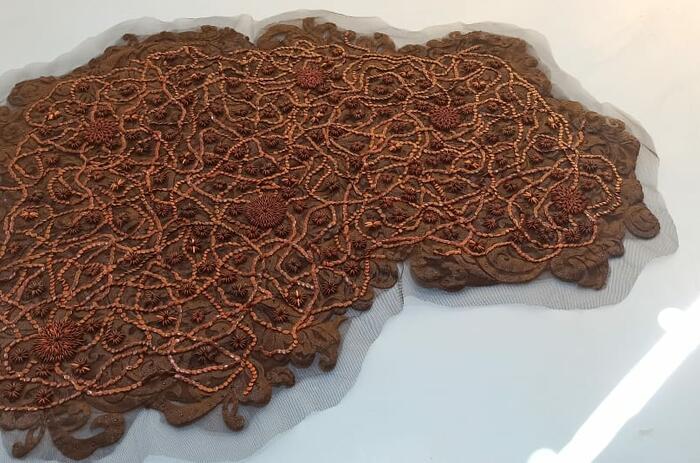
Claudia Casarino (Asunción, 1974) exhibits What We Do So They Don’t Know What We Do, 2025, tulle pieces that continue her exploration of transparency, layering, and suspended forms in space. The artist shifts her focus toward the visible and the processual, proposing an experience situated between perception and what resists capture.
-
Pinta Asunción 2025 en Casa Ardissone
Joaquín Sánchez (Barrero Grande, 1977) shows Pullira, 2014–2025, an installation that connects the memory of Aymara women with the communal potato harvest on Isla Pariti, in Lake Titicaca. The polleras (pulliras) here become devices of symbolic and collective safeguarding, intertwining the intimate, the ritual, and the political.
Gustavo Riego (Paraguay, 1983) participates with a work from his series Repression, 2025, created with hydrochloric acid on cotton fabric. His practice incorporates writing as a field of friction between word and image, confronting codes of control and the manipulation of information in everyday life.
Finally, Laura Mandelik (Buenos Aires, 1977), in collaboration with Victoria Mussi and Gabriela Mercado, presents the video Elevator, 2024. With a duration of 2:23 minutes, the piece reflects on the presence and absence of objects and questions how things occupy physical and mental space, playing between geometry and nature, order and accident.
Related Topics
May interest you

PINTA ASUNCIÓN ART WEEK 2025 BEGINS: FOUR DAYS OF EXHIBITIONS, GALLERIES, AND DEBATES
From September 10 to 13, Asunción hosts the final edition of Pinta Art Week, with a program that brings together museum and gallery openings, a network of cultural institutions, and a FORO that fosters reflection among local and international voices.
BETWEEN THREADS AND MEANINGS: THE WOVEN WORDS OF LUCRECIA LIONTI
In this interview, the artist from Tucumán talks about her inspirations, goals, and connections with the public. About beauty, chance, and irony. About materials and words. About community.
“AJÚRA”: A DIALOGUE BETWEEN ANCESTRAL CERAMICS AND CONTEMPORARY ARCHITECTURE AT PINTA ASUNCIÓN
Christian Ceuppens and Carolina Noguera present at Viedma Galería de Arte an exhibition that merges tradition and design, exploring the connection between Tobatí’s ancestral ceramic knowledge and a modern architectural vision.
FROM PARAGUAY TO THE WORLD: THE INTERNATIONAL IMPACT OF PINTA ASUNCIÓN ART WEEK
Galleries, installations, talks, collections, exhibitions, institutions, celebrations, and visits to artists’ studios. All this, and more, is brought together in the three editions—and an upcoming fourth—of Pinta Asunción, where every initiative aims to expand and connect a country’s artistic ecosystem. Under the curatorship of Irene Gelfman and Adriana Almada, the goal over the years has been to enhance the cultural industry and exercise the muscle of openness to the world.

JOURNEYS IN WASHINGTON: A CULTURAL BRIDGE BETWEEN LATIN AMERICA, THE CARIBBEAN, AND THE UNITED STATES
Organized by Pinta in collaboration with Meridian International Center, CAF – Development Bank of Latin America and the Caribbean – and CC LATAM, the exhibition brings together works by artists from seven countries addressing themes of identity, territory, and memory, reaffirming the value of art as a tool for regional integration.