
GROUP EXHIBITION ON THE RESIGNIFICATION OF CRAFT IN ISABEL HURLEY
By Álvaro de Benito
With the aim of analysing the incorporation of craft techniques into contemporary art, the Isabel Hurley Gallery in Málaga presents Manos, materia y memoria (Hands, Matter and Memory), curated by Alicia Ventura, on view until mid-month. This group exhibition re-signifies the traditional role of craft and its historical association with the domestic and the feminine.
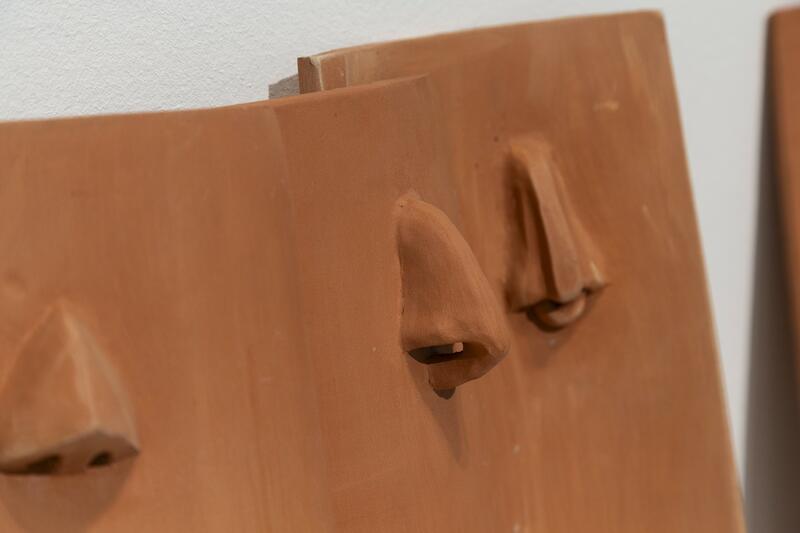
The show, which includes Natalia Castañeda (Manizales, Colombia, 1982), Ariamna Contino (Havana, Cuba, 1984) and Álex Hernández (Havana, Cuba, 1982) among a total of eight artists, also unfolds as a proposal of knowledge and reivindicative narration. For the artists in the exhibition, weaving, embroidering or modelling are expressions of memory and experience which, rather than being treated as nostalgic gestures, are reframed as contemporary actions.
Natalia Castañeda presents Sentires, a research-based project that approaches, through clay and ceramics, the relationship between body, land and landscape. Manual craftsmanship becomes a conversation in which these three agents dialogue and converge between the human and the natural.
Ariamna Contino and Alex Hernández continue their work with cut paper. This material functions both as embroidery and as cartography, integrating organic elements with social and statistical aspects that refer to real issues hidden beneath triumphant narratives. The artisanal nature of the process and its resulting forms appear as political actions against official discourses.
Alongside these Latin American artists, the exhibition includes El Lugar de las Fuerzas by Paula García-Masedo (Madrid, Spain, 1984), centered on the use of humble materials such as linen and various plants to produce handmade paper that challenges the established hierarchy between art and craft. Leonor Serrano Rivas (Málaga, Spain, 1986) explores, in Carcasa, a certain ritualism and resistance within the practice of modelling, linking art, architecture and performance as instrumental registers.
The work of Fuentesal Arenillas (Julia Fuentesal, Huelva, Spain, 1986, and Pablo Arenillas, Cádiz, Spain, 1989) proposes an expanded notion of craft grounded in experimentation and chance. Their sculptures and installations arise from processes infused with thought and action, presenting the artisanal as an organic and evolving practice.
Paloma de la Cruz (Málaga, Spain, 1991) engages with ceramics from an intimate standpoint, creating sewn pieces that stem from a practice where memory, space and affection meet. María Alcaide (Aracena, Spain, 1992) employs irony in La Romería de los Cornudos as a means to critique the tensions between labor and art, while in Cuerpo de Trabajo she revisits folkloric representations of it.
Manos, materia y memoria can be visited until 12 December at Isabel Hurley, Reding 39, Málaga (Spain).
May interest you
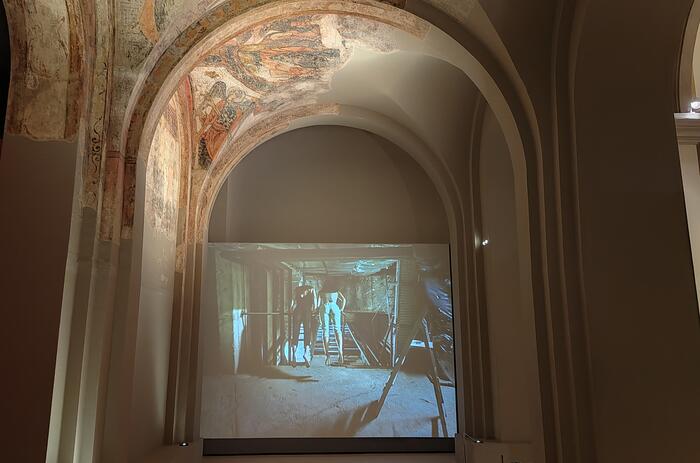
ANCAROLA’S ARCHITECTURAL REINTERPRETATION AT THE MNAC
The Force of the Display. Gae Archive is the title of the project by Nora Ancarola (Buenos Aires, Argentina, 1955) currently on view at the National Art Museum of Catalonia (MNAC).

GUGGENHEIM BILBAO RECLAIMS THE FIGURE OF VIEIRA DA SILVA
The Guggenheim Museum in Bilbao presents Anatomy of Space, an extensive exhibition dedicated to Maria Helena Vieira da Silva (Lisbon, Portugal, 1908 – Paris, France, 1992), which primarily encompasses her production from the 1930s through the 1980s. The exhibition is structured around two fundamental axes: architecture and the architectural landscape as compositional frameworks, and memory as the generator of the image.
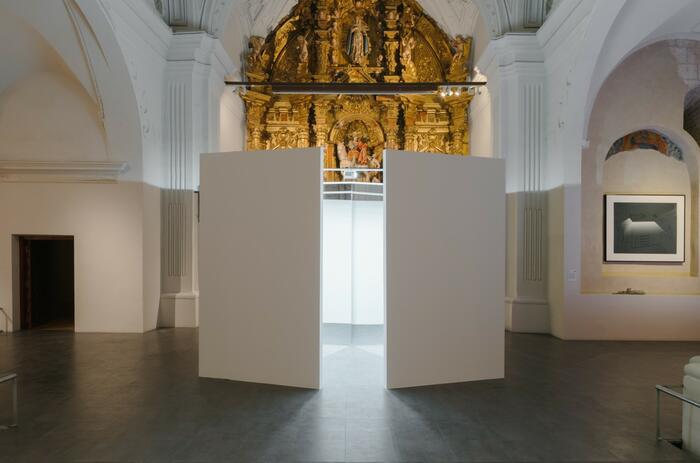
MARCELLE, BASUALDO, AND PRIETO INCLUDED IN CONCEPTUAL EXHIBITION AT COLLEGIUM
Collegium is hosting at its headquarters in the Castilian town of Arévalo the exhibition Jaque. Poder, tiempo e imagen en estado de juego (Check. Power, Time, and Image in a State of Play), a conceptual show that stems from the relationship between chess and the Torre de los Ajedreces, part of the Romanesque-Mudejar style Church of San Martín, which currently serves as the institution’s main headquarters. The building, dating from the 11th and 12th centuries, features an unusual brick frieze in a checkerboard pattern that evokes the chessboard and the strategic dimension of the game.

GDA – GALERIA DE ARTISTAS LANDS AT ZIELINSKY BARCELONA WITH THE GROUP SHOW PERQUIRERE
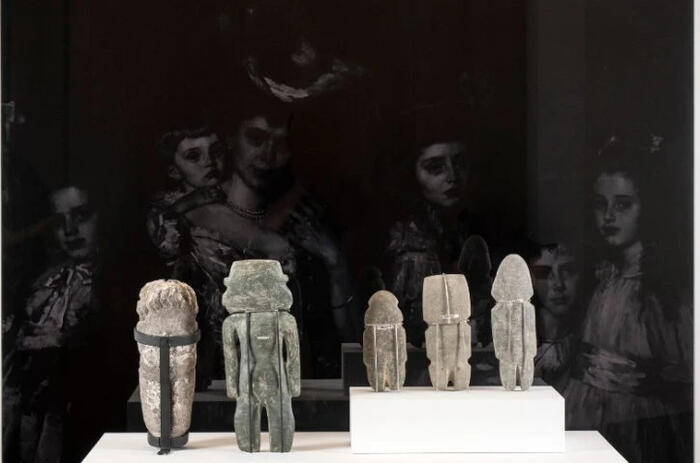
THE LATEST EVOLUTION OF BLACK MIRROR / ESPEJO NEGRO BY LASCH, AT CASA DE MÉXICO
The Fundación Casa de México in Spain hosts Re/Generación, a new installation from the Black Mirror / Espejo Negro series produced by Pedro Lasch (Mexico City, Mexico, 1975) and curated by the National Institute of Anthropology and History of Mexico (INAH). Originating from an initiative originally produced by the Nasher Museum of Art in Durham, North Carolina, in 2007, the series has been transformed through various techniques, evolving its language toward a narrative that makes it impossible to separate past and present, as well as spectator and proposal.
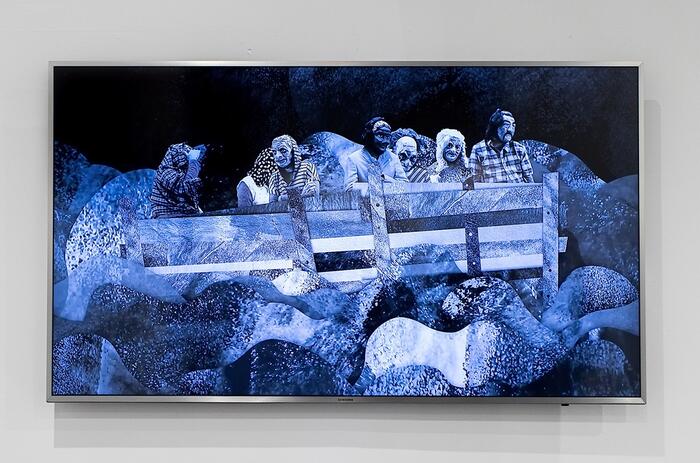
VIDEO COLLECTIONS FROM CA2M, MAC PANAMÁ AND BIENALSUR JOIN IN MÓSTOLES
Un visionado a tres voces (A three-voiced screening frames) is the conversation between three video art collections that draw from the languages and dynamics of different Southern contexts. The selections prepared for the occasion by the Centro de Arte Dos de Mayo Museum (CA2M Museum) in Móstoles —which hosts the initiative—, MAC Panamá and BIENALSUR, carried out through MUNTREF in Buenos Aires, also aim to establish synergies among the institutions.
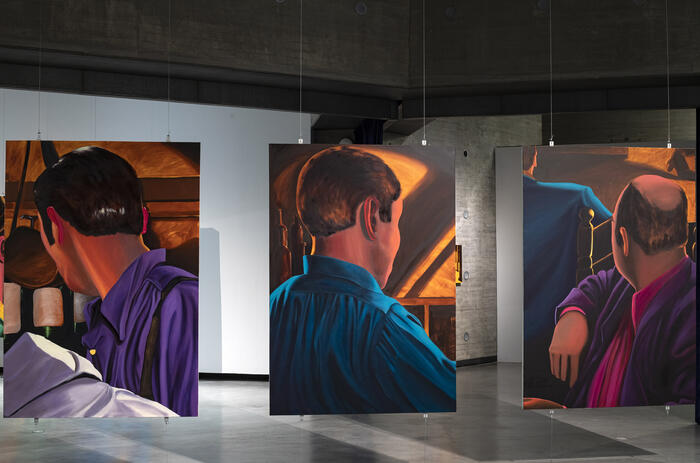
THE CINEMATIC GAZE OF ANA SEGOVIA AT C3A
The Centro de Creación Contemporánea de Andalucía (C3A) in Córdoba is presenting Me duelen los ojos de mirar sin verte, the first solo exhibition in Spain by Ana Segovia (Mexico City, Mexico, 1991), on view until January. Curated by Jimena Blázquez Abascal, the show features thirteen oil paintings on canvas and one work on wood, all created expressly for the occasion.
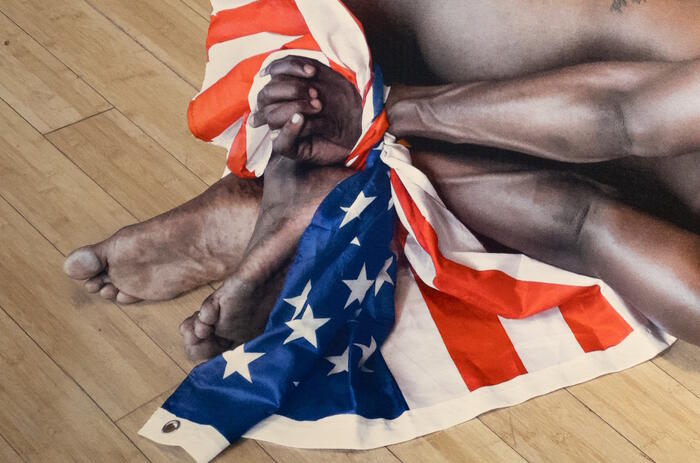
MARTIEL AND THE BODY AS ACTION AGAINST EXCLUSION, AT CENTRE DEL CARME
The Valencian Centre del Carme presents South Body, a broad selection of recent performance documentation by Carlos Martiel (Havana, Cuba, 1989). Through photographs and videos, the exhibition explores the relationship between racism and xenophobia and the way the body becomes the materialization of exclusion. This corporeal object, or objectified body, is employed by the artist as a medium to express cries of resistance and to propose critical reflections on power structures and their influence on the construction of contemporary society.