

By
Álvaro De Benito
The exhibition by Peruvian artist at Galería Maisterra examines memory, identity, and belonging through a literary narrative articulated across video and sculpture, interrogating systems of social classification and the cultural hierarchies that sustain mechanisms of exclusion.
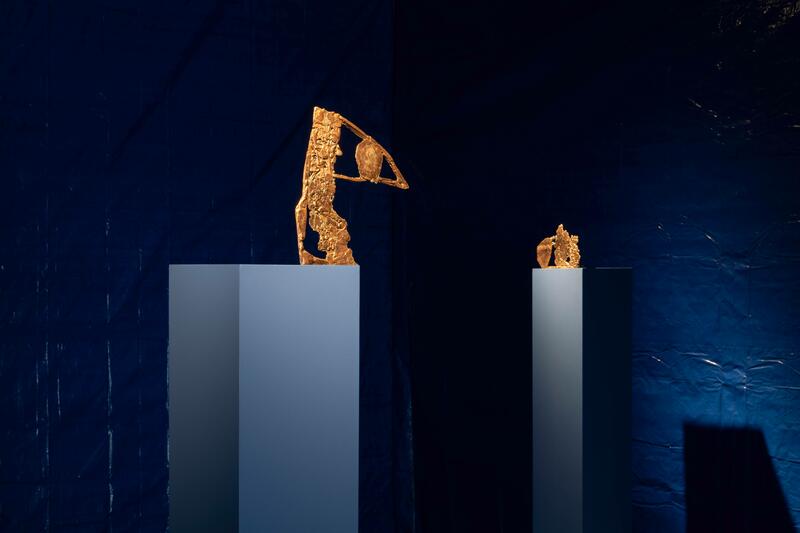
Maisterra presents Cathartes, a solo exhibition by Daniel Jacoby (Lima, Peru, 1985), which investigates memory and its role in shaping recollection and temporality, alongside identity formation and social classificatory systems that generate exclusivity and belonging. The exhibition unfolds across two technically differentiated yet conceptually interdependent areas. The audiovisual work Gallinazo, together with five bronze sculptures, initiates and develops a narrative of literary character whose formal articulation emerges through moving image, sculptural figures, and spatial environment.
In the film, Jacoby constructs a guided trajectory through personal episodes mediated by the presence of the artist’s hand, taking as its point of reference a private club that operates as a symbol of continuity and segregation. Within this space, temporality appears suspended, producing a condition in which time seems arrested and permanence is reinforced as an illusion. Through these recollections, the work reveals how identity and belonging are shaped—and constrained—by dominant social and perceptual structures.
At the exhibition’s conceptual core, a vulture (gallinazo) functions as a disruptive agent. Its appearance destabilizes entrenched classificatory categories, while the symbolic framework imposed upon it simultaneously positions the bird as an emblem of transformation and purification. The refusal to acknowledge its presence within established social hierarchies reiterates the semiotic power of the figure as a perceived threat to stability.
The narrative concludes with the subjective account of an eighteenth-century European naturalist whose questionable methodological practice leads to the stigmatization of the vulture despite never having encountered it directly. This episode articulates a broader critique of European epistemological systems devoted to cataloguing and ordering the world. Only when the naturalist falls ill and is saved by the bird does recognition of its purifying function emerge, although its imposed categorization persists historically.
The bronze sculptures extend the conceptual framework introduced in Gallinazo, embodying these mediated perspectives through the image of a central subject rendered distorted and eroded, positioned atop elevated plinths in a manner that echoes the surveillance implied in the audiovisual work. The gallery space is covered with blue raffia, emphasizing the artificial condition of the exhibition environment, replacing the symbolic neutrality of the white cube with a visibly constructed interior endowed with its own spatial identity.
Daniel Jacoby: Cathartes can be viewed until 4 July at Galería Maisterra, Hospital 8, Madrid (Spain).
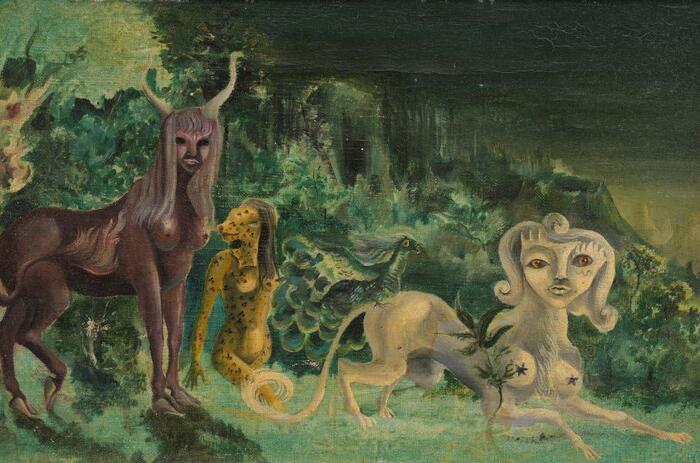
The exhibition Leonora Carrington: el surrealismo sintomático will include a painting the artist made in 1940 during her stay in Santander, a work that has remained hidden for decades.
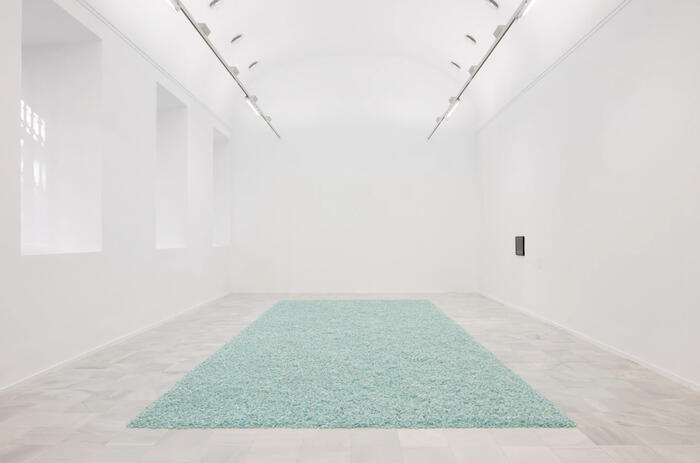
The Museo Reina Sofía presents a selection of more than fifty participatory, reconfigurable and conceptually driven works by Felix Gonzalez-Torres, activating a contemporary reading of his practice that exceeds both curatorial boundaries and established discursive frameworks.
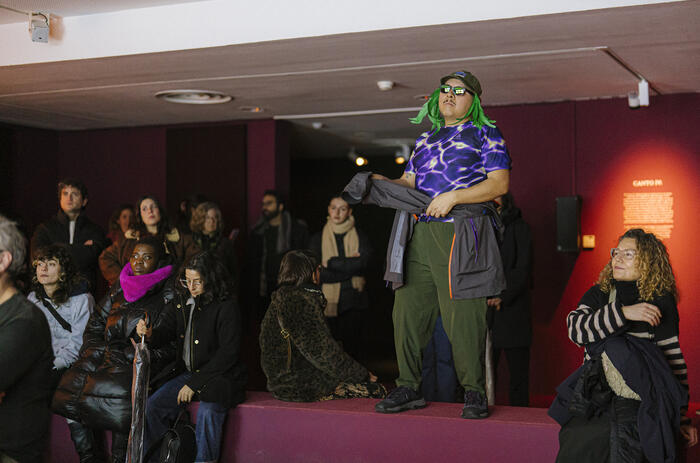
The call for submissions, open until May 31, is aimed at creators residing in Spain and invites them to design performative tours and workshops in dialogue with “Cautín,” the exhibition by the Mapuche trans artist.
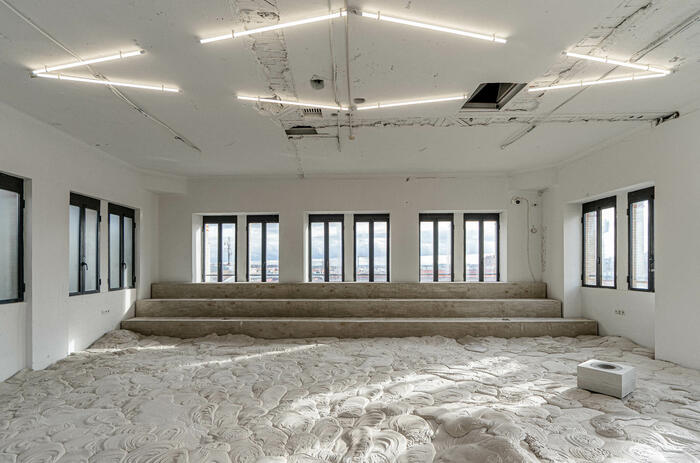
Fundación, by Marlon de Azambuja, transforms one of La Casa Encendida’s towers into a walk-through sculptural installation. Aiming to reflect on the act of founding and the search for what underpins knowledge, the work questions the divisions between reason and sensation and proposes the exhibition space as an experiential environment.
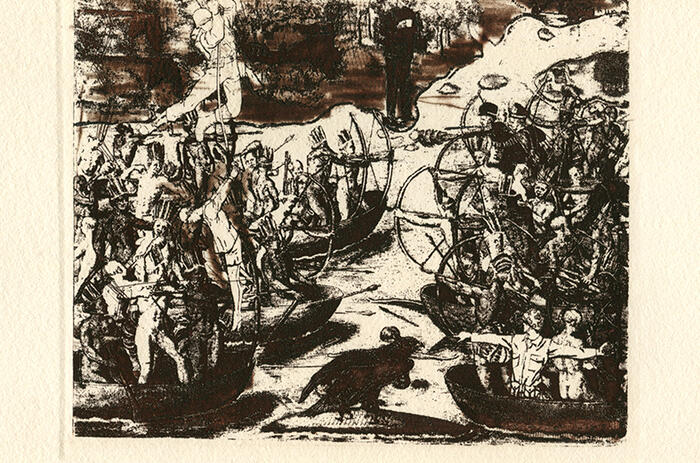
The Mexican artist reinterprets colonial-themed prints by Theodor de Bry to question the construction of otherness and denounce neocolonial violence and contemporary conflicts.
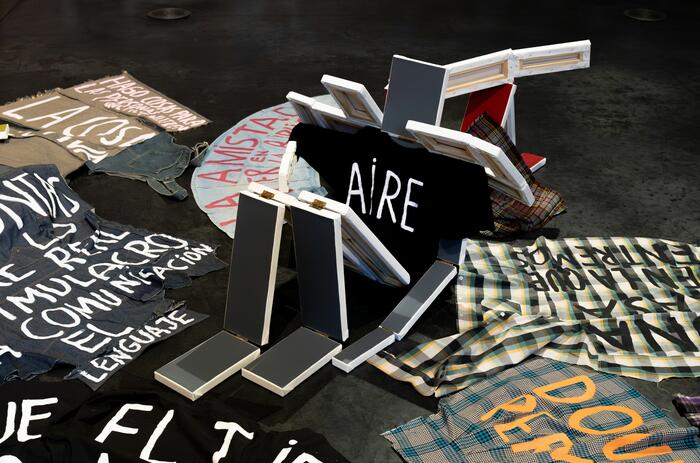
Nombrar el mundo reconsiders painting through a political and affective perspective, expanding the canvas as textile toward sculptural and sonic dimensions as a gesture of resistance.
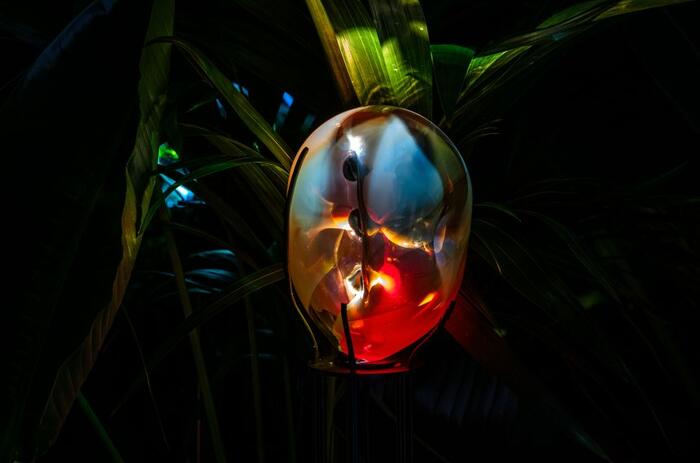
Tania Candiani arrives in Valencia with an immersive installation that reimagines the subsoil as a living, speculative organism, where nature, technology, and memory converge to configure a hybrid ecosystem.
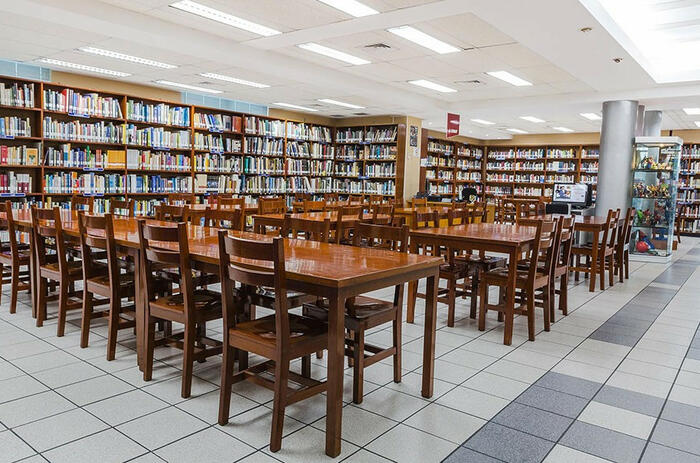
The 10th International Seminar on Library and Information Science – SIBI 2026 takes place on June 25 and 26 at the Goethe-Institut Perú and ICPNA Miraflores.