

By
Álvaro De Benito
The Museo Reina Sofía presents a selection of more than fifty participatory, reconfigurable and conceptually driven works by Felix Gonzalez-Torres, activating a contemporary reading of his practice that exceeds both curatorial boundaries and established discursive frameworks.
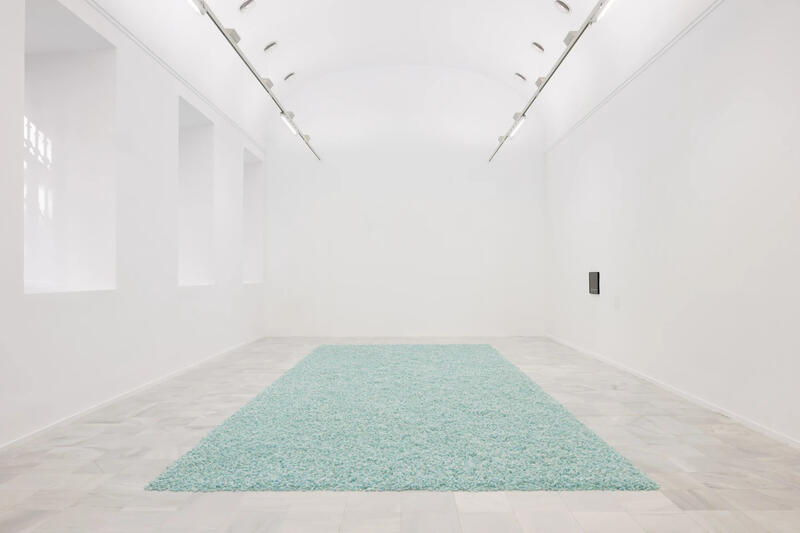
Under the title Sweet Revenge, the Museo Reina Sofía in Madrid presents a solo exhibition dedicated to Felix Gonzalez-Torres (b. Félix González Torres, Guáimaro, Cuba, 1957 – Miami, USA, 1996) that situates itself less within the logic of a retrospective than within that of reinterpretation and the renewed relevance of the artist’s work in a contemporary context. In this sense, one might argue that virtually any exhibition could have been conceived by Alejandro Cesarco and Nancy Spector, curators of the show, given the elasticity of its conceptual framework.
Structured around the biographical thread of displacement as a formative condition, particularly the artist’s early arrival in Madrid in the 1970s from Cuba and his subsequent departure one year later, this curatorial narrative does not fully achieve a cohesive articulation. The autobiographical notion of “sweet revenge,” linked to Gonzalez-Torres’ return to the Spanish capital two decades later and underscored through the installation of Untitled (Madrid 1971) (1988), ultimately proves insufficient as an anchoring structural device. In this sense, the conceptual ambition of the thesis appears to dissolve within its own realization.
This displacement—at times also framed as exile—can be understood as a curatorial device subordinated to the broader constellation of works on display. The conceptual and affective framework of Gonzalez-Torres’ practice remains a fertile field for reinterpretation within contemporary social and emotional registers; in this regard, the exhibition’s present reading may well be sufficient in itself. Rather than focusing on perceived absences within the artistic production, attention should instead be directed towards the way in which the narrative is constructed through them.
This does not necessarily imply a structural weakness in the exhibition, but rather suggests that the expected outcome might have unfolded along different lines, particularly with regard to its attempted articulation of Madrid, exile, and displacement as biographical and conceptual axes. The exhibition thus unfolds through a first moment of return and reactivation of the work as a discursive nucleus, followed by a second axis centered on biographical fragmentation, and finally a progressive emphasis on the operational logic of the work itself.
The continuous unfolding of the works, and the activation of circulation within the exhibition space, are sufficient to account for the tensions and paradoxes embedded in Gonzalez-Torres’ practice. His work emerges from the historical context of the HIV/AIDS crisis and the conservative political climate of the United States during the 1980s and 1990s. His visual language—rooted in abstraction, fragility and participation, and deeply marked by the death of his partner, Ross Laycock—carries an emotional density that interrogates notions of authorship, memory and identity.
Within the dialectics of presence and absence, intimacy and publicity, permanence and disappearance, Gonzalez-Torres’ work operates through constant processes of modification and reconfiguration in relation to space and viewer participation. The seminal Untitled (Revenge) (1991) may be understood as a paradigmatic expression of this condition. In this sense, it may at times appear that the final spatial arrangement—an emphatic and carefully articulated exhibition design—partially subsumes the curatorial discourse, folding it back into its own material realisation and the logic of its finalised form.
At this point, the exhibition appears to align with a broader tendency in contemporary thesis exhibitions, in which the accumulation of discursive imperatives renders articulation increasingly complex. In particular, the curatorial emphasis on specific identity categories risks producing a fixed reading that the artist himself sought to displace through abstraction, ambiguity and interpretative openness. Any attempt to follow the narrative trajectory is therefore confronted with the material reality of the installation, shifting attention instead towards a deeper tension: the dissolution of boundaries and the erasure of difference that underpin the conceptual framework of the artist’s practice.
From an experiential perspective, however, the exhibition succeeds in its spatial and dispositive articulation. The dynamic between the self and the other, as necessary agents in the construction of a discursive form of equality, is effectively activated within the exhibition space, engaging the visitor in a reading that is arguably closer to the internal logic of the work.
Works such as Untitled (Passport) (1991), Untitled (1990), and the spatial sequences defined by Untitled (Beginning) (1994) demonstrate that the viewer does not merely observe, but participates in a system that demands activation, circulation and continuous reinterpretation. In this regard, several of Gonzalez-Torres’ foundational intentions are acknowledged: the expansion of the work beyond the institutional limits of the museum, and the activation of a logic grounded in circulation, ambiguity and the dissolution of fixed meaning, ultimately resisting any closed reading based on thematic or identity-based categorization.
Felix Gonzalez-Torres: Sweet Revenge is on view until 12 October 2026 at Museo Reina Sofía, Santa Isabel 52, Madrid, Spain.
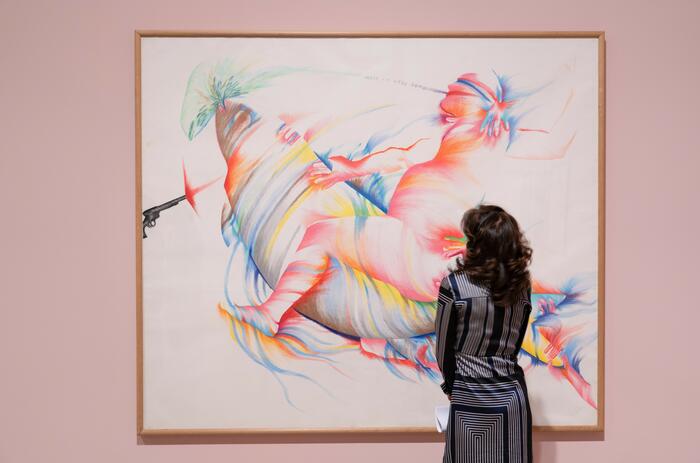
The Santander-based institution proposes a curatorial reading of Marisol through a major retrospective of her drawing practice, understood as a fundamental axis of her work and as a means of articulating the knowledge acquired through her vital displacements.
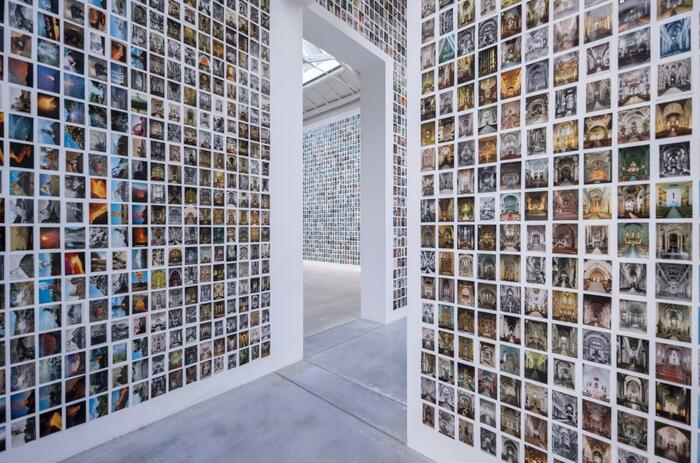
The Spanish Pavilion at the Biennale is transformed into an anti-museum led by the Catalan artist, grounded in the accumulation of postcards, memory, and a critique of the archive.
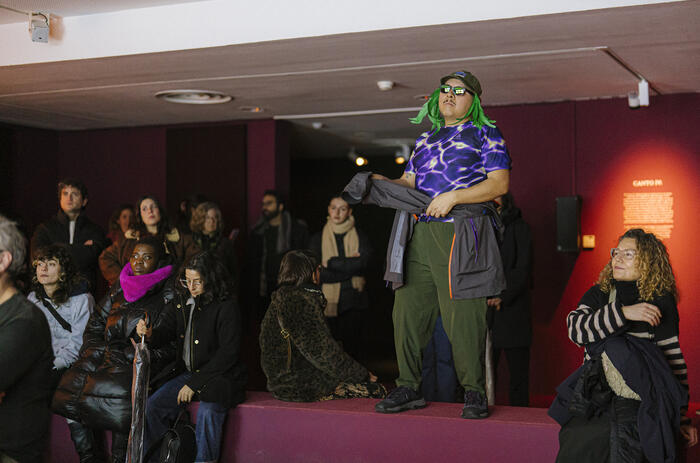
The call for submissions, open until May 31, is aimed at creators residing in Spain and invites them to design performative tours and workshops in dialogue with “Cautín,” the exhibition by the Mapuche trans artist.
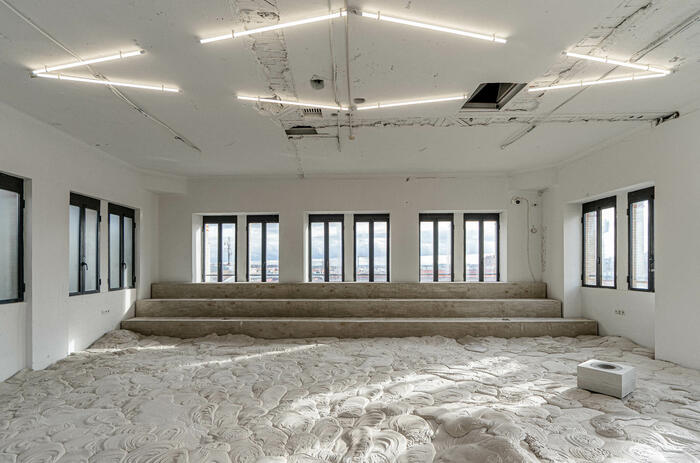
Fundación, by Marlon de Azambuja, transforms one of La Casa Encendida’s towers into a walk-through sculptural installation. Aiming to reflect on the act of founding and the search for what underpins knowledge, the work questions the divisions between reason and sensation and proposes the exhibition space as an experiential environment.
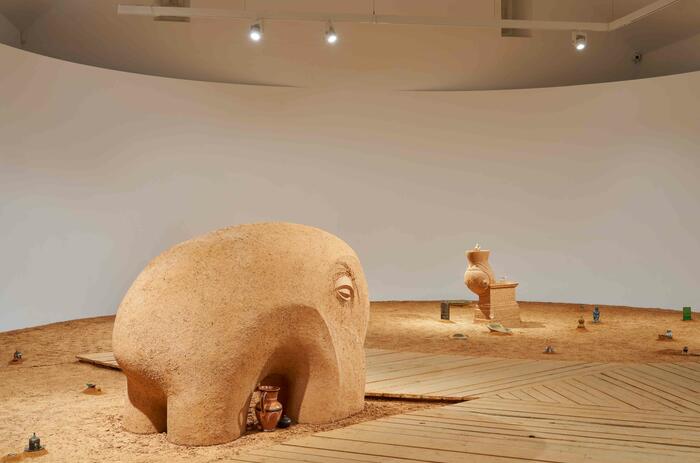
The Argentine artist connects memory and identity in a large-scale installation commissioned by Whitechapel Gallery, where adobe sculptures and collected objects examine the experience of displacement through a contemporary archaeological lens.
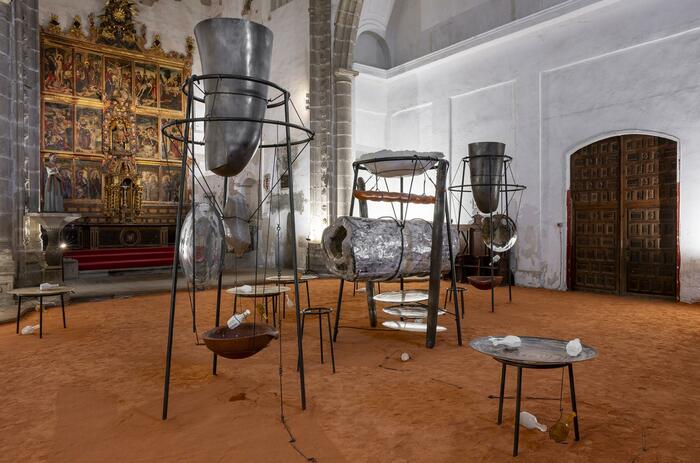
Supported by Collegium, the acclaimed installation by the Brazilian artist arrives in Spain with a sensorial and contemplative proposal in dialogue with the Church of San Miguel in Arévalo.
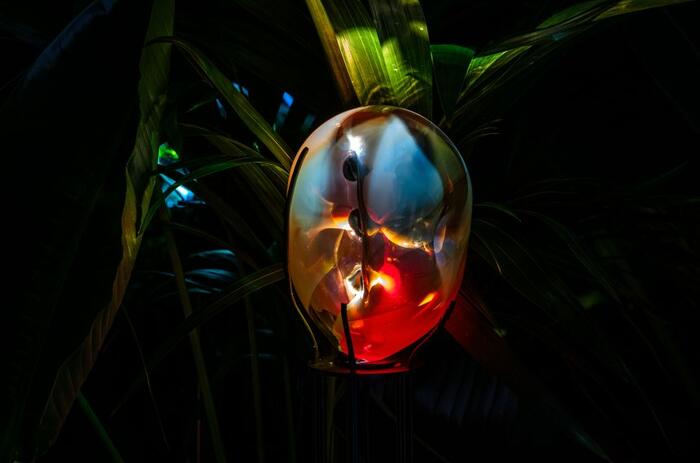
Tania Candiani arrives in Valencia with an immersive installation that reimagines the subsoil as a living, speculative organism, where nature, technology, and memory converge to configure a hybrid ecosystem.