
By
Álvaro De Benito
Nombrar el mundo reconsiders painting through a political and affective perspective, expanding the canvas as textile toward sculptural and sonic dimensions as a gesture of resistance.
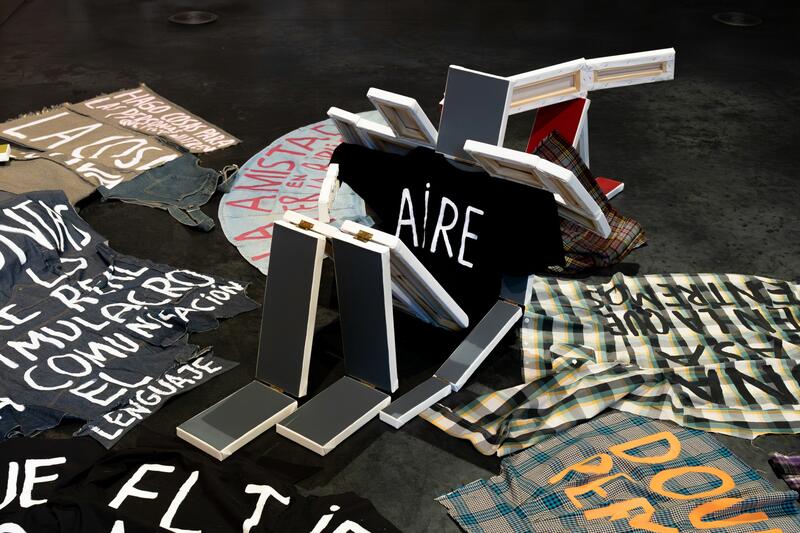
The Madrid-based Centro de Cultura Contemporánea Condeduque hosts Nombrar el mundo (Naming the World), the first institutional solo exhibition in Spain by Mariela Scafati (Olivos, Argentina, 1973), a project that advances a radical and politically grounded reassessment of the pictorial support within contemporary painting. Curated by Marta Ramos-Yzquierdo, the exhibition primarily engages a dynamic of rupture with the traditional limits of the pictorial, reconfiguring painting into formats that approach sculpture and installation as sites of materialization for a practice structured around affect, activism, and relational exchange.
Rooted in its title, the exhibition departs from the premise that the act of naming generates reality itself, bringing into being that which had previously remained unnoticed or inexistent. The project assembles works developed through dialogue and networks of friendship, in which the canvas relinquishes the rigidity of the flat surface in favor of a corporeality situated between object and spatial environment. While some works were conceived specifically for the exhibition, most emerge from a personal archive of memory that establishes a framework aligned with activist artistic practices.
A central axis may be identified in the series Faldas banderas (2003–2026), a sculptural body of work composed of skirts belonging both to the artist and to members of her close community. Here, slogans and written language are transformed into activist compositions that propose ways of envisioning the future, translated into pictorial form. These textile works reveal seams and processes of transformation in which texts derived from shared experiences become visible.
Comparable in the concision of meaning attributed to the word—a concept the artist has developed over time and previously presented within the Latin American program of ARCOmadrid 2025—Scafati reconsiders creative production as a practice grounded in listening and exchange, foregrounding questions surrounding painting, embodiment, and identity. To this end, eight monochrome “canvas-bodies” appear to articulate the exhibition’s spatial progression, accompanied by assembled compositions constructed with ropes or clothed in garments.
A sound work revisiting radio programs produced in Buenos Aires in collaboration with Lola Granillo reinforces the centrality of language—here translated into sonic form—while adding an additional political dimension to the exhibition. Scafati situates her challenge to pictorial support within an equally radical ideological framework grounded in a form of social architecture through which activism and marginality become operative sites for constructing practices of resistance against exclusion and violence.
Mariela Scafati. Nombrar el mundo can be visited until 19 July 2026 at Centro de Cultura Contemporánea Condeduque, Conde Duque 9–11, Madrid (Spain).
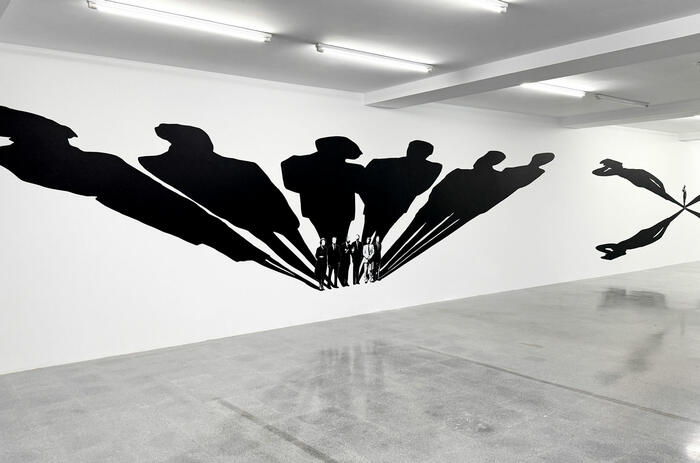
Enrique Ježik and Matías Costa address violence, memory, and exile in Elche, highlighting the connections shaped by displacement.
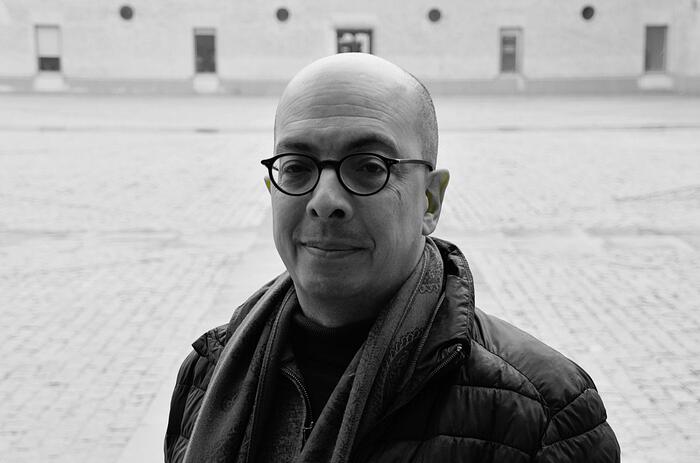
Jorge Volpi, after one year as Artistic Director of Contemporánea Condeduque, reflects on programming through a multidisciplinary narrative and how it fosters dialogue while giving Latin American art a central role in Madrid’s cultural scene.
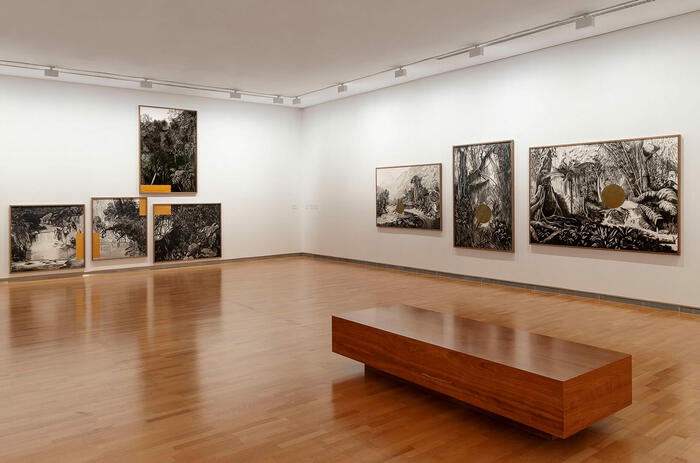
The first retrospective in Spain of Gabriela Bettini reflects on absence and the politics of forgetting through images that challenge official history.
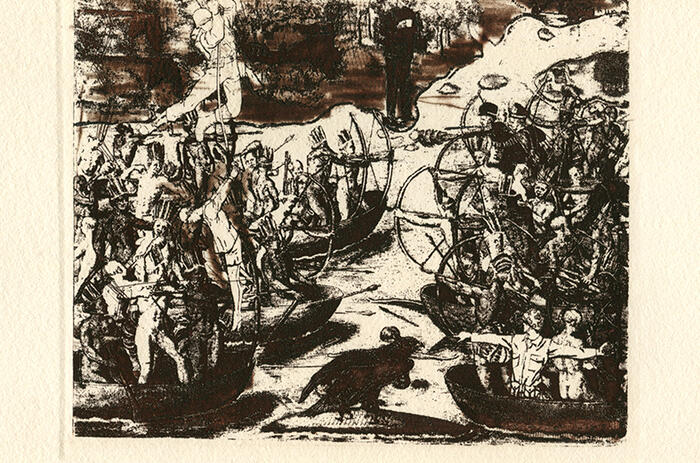
The Mexican artist reinterprets colonial-themed prints by Theodor de Bry to question the construction of otherness and denounce neocolonial violence and contemporary conflicts.
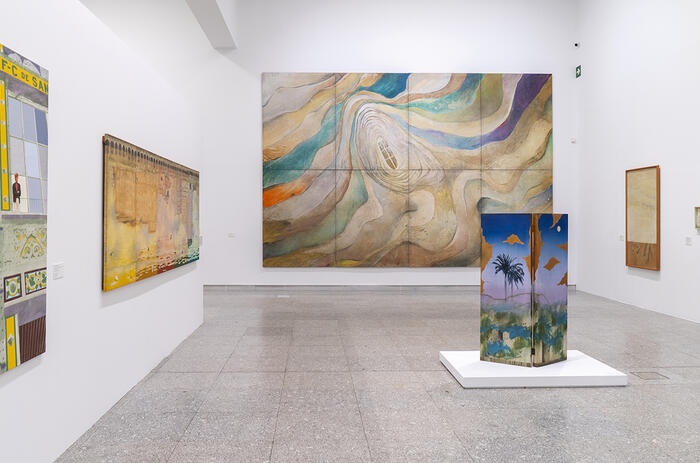
Artium brings back into the artistic debate the trajectory of Juana Fernández Cima, a body of work shaped by dissidence, identity, and spirituality that was progressively marginalized from the dominant artistic narrative.
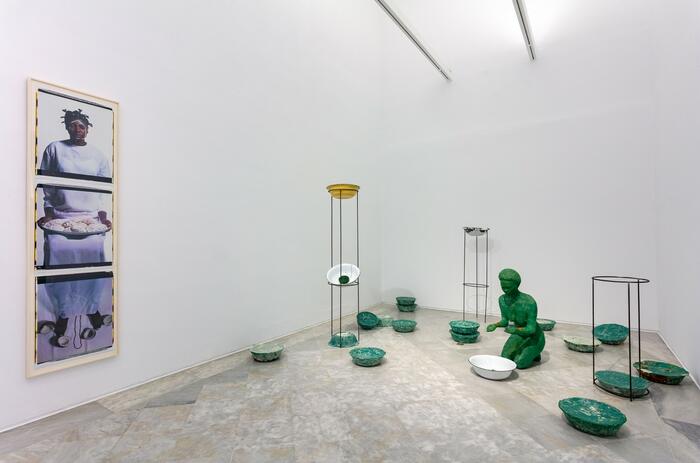
Inspired by Lélia Gonzalez’s concept of “amefricanity,” Seville once again engages with the Jorge M. Pérez collection, bringing together American and African artists and proposals to question the historical, symbolic, and aesthetic links across both sides of the Atlantic.
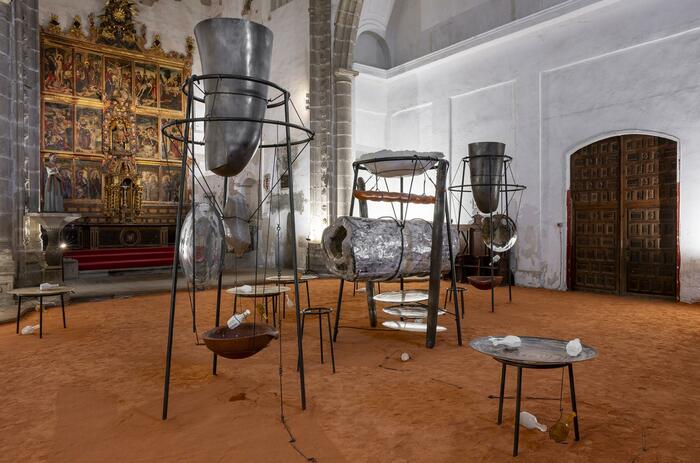
Supported by Collegium, the acclaimed installation by the Brazilian artist arrives in Spain with a sensorial and contemplative proposal in dialogue with the Church of San Miguel in Arévalo.
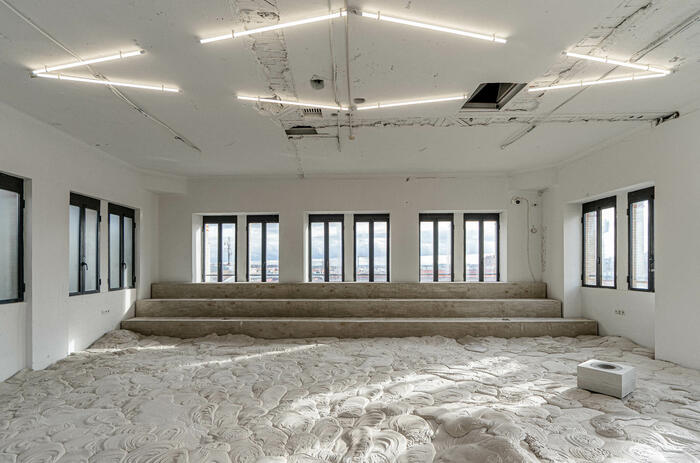
Fundación, by Marlon de Azambuja, transforms one of La Casa Encendida’s towers into a walk-through sculptural installation. Aiming to reflect on the act of founding and the search for what underpins knowledge, the work questions the divisions between reason and sensation and proposes the exhibition space as an experiential environment.