
By
Álvaro De Benito
The Brazilian artist’s exhibition at the Centro Botín explores the links between matter, nature, spirituality, and architecture through a multidisciplinary body of work that evokes origin and transformation as the fundamental axes of her production.
Solange Pessoa’s (Ferros, Brazil, 1961) proposal positions materiality as an inexhaustible source of the spiritual. Her creations seem conceived as the very origin of that contemplation, in a relationship established precisely with the immaterial. And not only because of what they conceptually represent, but also owing to their intention to convey a certain sensitivity.
Of Day or Night, the exhibition organized by the Fundación Botín and displayed at the Centro Botín in Santander traces an almost retrospective path through the Brazilian artist's production and system of thought, where the selection and manifestation of her elements, as well as their spatial arrangement, allow matter translated into form to acquire a somewhat overwhelming force. Consequently, both on a structural and a symbolic level, the exhibition functions as a solid artistic proposal that responds directly to a multidisciplinary dialogue.
The artist’s relationship with nature and the environment, understood as sources, is fundamental to understanding her output as a whole. Her work reflects and embodies the physical plane of territory and culture in order to translate it into a throbbing corporeality. From the ritual use of hair to the employment of soil from her native state of Minas Gerais, each element responds to a logic in which diverse disciplines and key passages of Brazilian art historiography converge, establishing direct nods that range from Oscar Niemeyer's architecture and the ever-present Baroque to the premises of the anthropophagic movement.
In this exhibition—Pessoa’s first in Spain—the Fundación Botín building itself plays an essential role and helps underscore the project's dimension through a direct dialogue with light and structure, without which the exhibition would be something entirely different. The architecture articulates a subtle interplay of lights, key to recounting the cycles of day and night, as well as that primordial genesis linked to the luminous.
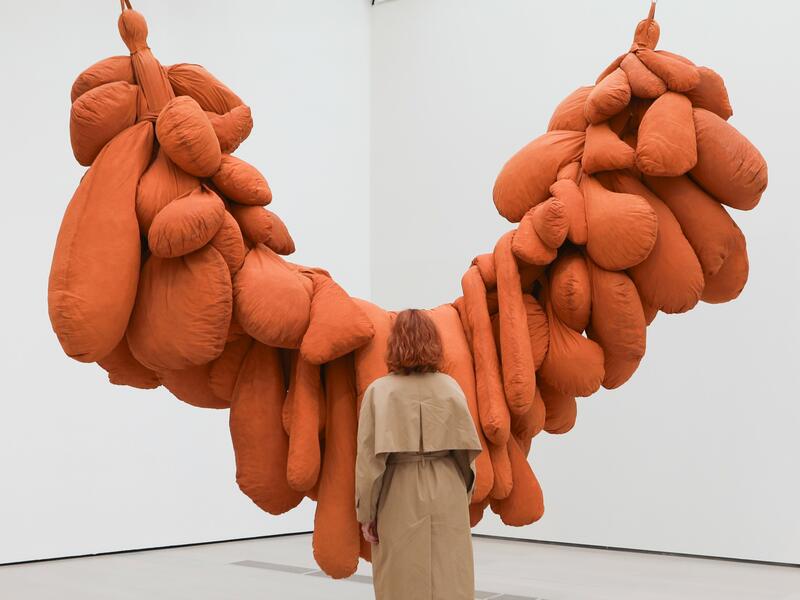
The careful layout of the galleries fosters deep concentration on these dynamics and makes it possible to differentiate the chromatic blocks in which the narrative discourse of the exhibition unfolds. Hammocks (1999–2026) engages in dialogue with the dozen works that comprise Sin título (2011–2012) to indicate that the organic does not merely acquire a material and tangible dimension. The very morphology of the suspended pieces and what is captured on the supports explicitly allude to the living forms and structures of nature.
In the context of a heightened relationship with the architectural, the idea of Catedral (1990–2003) emerges as an infinite entity encompassing the artist's ideology: a structure that extends from the subconscious to—through organicism and the symbolism of pressed hair—command the space and embody the very notion of a work of art in continuous transformation. In the final stretch, Arreios (2026), one of the productions created ex professo for this exhibition, maintains a relationship with traditional sculpture and its expansion toward spatial installation.
Origo (2010–2017) impresses through the intense dialogue it establishes with the interior space, while simultaneously referencing the infinite exterior. The installation, in which various formal sculptures evoke the sense of origin, connects with the idea of genesis—recurrent in Pessoa's work—and suggests the birth of something primigenial that endures over time. Its adaptation and renovation for the exhibition fit with the idea that each installation constitutes a new experience, recommencing in each room and endowing past projects with new life.
It is not the only work that addresses the idea of the source and the maternal as absolute origin. Metaflor/Metaflora (2005–2012) incorporates living matter from genesic forms with which it delves deeper into its forceful declaration of intent. Together with the rest of the peripheral works, which corroborate these lines of investigation through video or performance, Of Day or Night presents itself as a fine encyclopedia of the trajectory of a multidisciplinary artist in whose production the formal unfailingly prevails in order to explore the aesthetic and conceptual possibilities that the environment and the moment offer her on each occasion.
Solange Pessoa. Of Day or Night can be seen until March 28, 2027, at the Centro Botín, Muelle de Albareda, s/n (Jardines de Pereda), Santander (Spain).
The new center opens its doors with exhibitions devoted to the Gelman Collection and Mexican art, another exploring Leonora Carrington’s connection with Santander, and a third featuring a selection of masterpieces from the Banco Santander Collection.
The citizens' movement challenges the legality of an agreement authorizing the works to remain abroad until at least September 2030, in contradiction with existing legislation on the protection of artistic heritage.
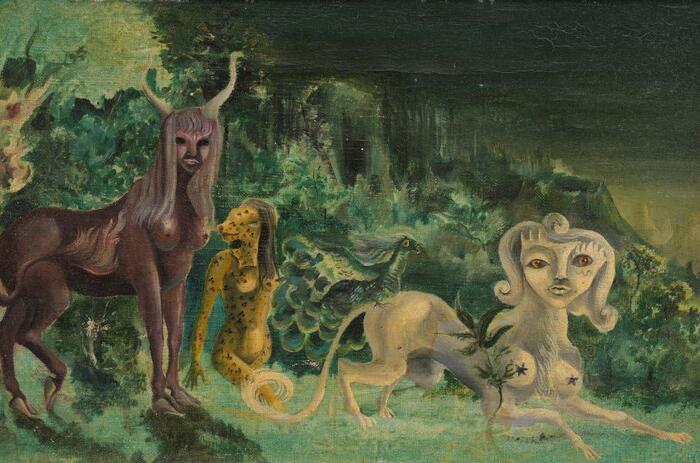
The exhibition Leonora Carrington: el surrealismo sintomático will include a painting the artist made in 1940 during her stay in Santander, a work that has remained hidden for decades.
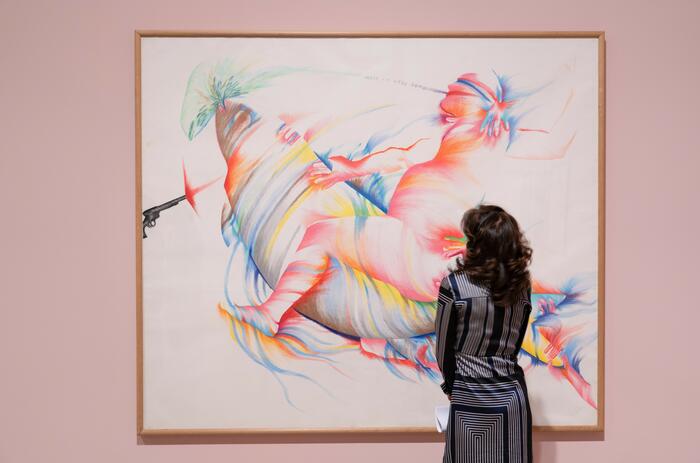
The Santander-based institution proposes a curatorial reading of Marisol through a major retrospective of her drawing practice, understood as a fundamental axis of her work and as a means of articulating the knowledge acquired through her vital displacements.
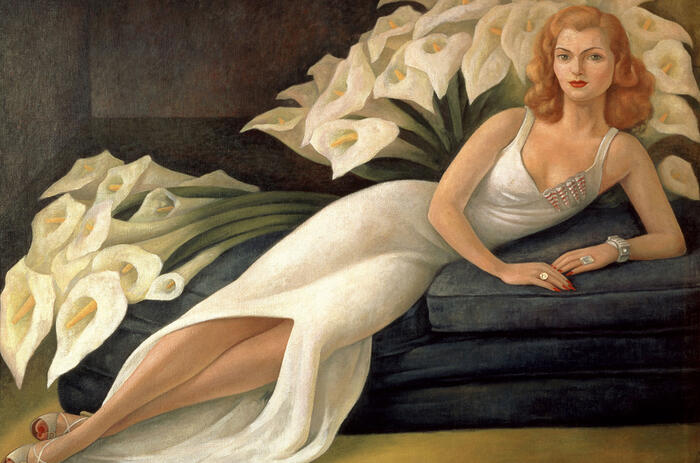
The current controversy highlights the difficult coexistence between the collection’s private ownership and the heritage protection that covers part of its works.