SOFT RESISTANCE
By Daniela Arroyo
On Atardecer en un bosque (Sunset in a Forest), the latest solo exhibition by Tadeo Muleiro at the Luis Perlotti Sculpture Museum in Buenos Aires, curated by Jen Zapata.
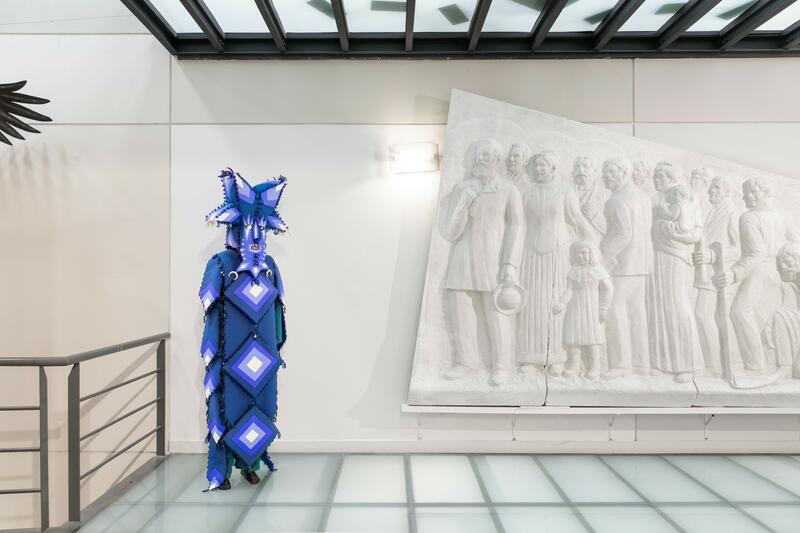
Atardecer en un bosque unveils a very particular universe as soon as you enter the museum. In the airspace, presences appear, beckoning you to climb the Perlotti’s stairs. These disruptions in the museological narrative of the permanent collection float as if they were a previously unseen species of callers or guides. Upon reaching the first floor, another one—bluish, solemn, and upright—greets you. In the gallery, a burst of vibrant shapes and colors takes over the entire space.
The exhibition hides nothing and presents a landscape that seems ready to come to life at any moment. This landscape is built with works from different periods of Tadeo’s career, and the game is to allow yourself to be permeated by this environment and everything it has to offer.
-
Vista de sala de "Atardecer en un bosque" de Tadeo Muleiro. Curaduría de Jen Zapata. Foto: Fotografia De Obra
-
Vista de sala de "Atardecer en un bosque" de Tadeo Muleiro. Curaduría de Jen Zapata. Foto: Fotografia De Obra
-
Vista de sala de "Atardecer en un bosque" de Tadeo Muleiro. Curaduría de Jen Zapata. Foto: Fotografia De Obra
-
Vista de sala de "Atardecer en un bosque" de Tadeo Muleiro. Curaduría de Jen Zapata. Foto: Fotografia De Obra
The moment you cross the threshold of the gallery, you enter the forest. From the ceiling, a monumental black-and-white figure: Otorongo (2017) unfolds like a dreamlike creature that both observes and seems eager to embrace. In the background, La casita (2010), a colorful structure with circular shapes, appears as a living capsule, a soft yet safe refuge. Along the way, between one piece and another, 2024’s “soft high reliefs” occupy the walls, whispering different stories.
This environment, carefully shaped by its curator, Jen, brings together in a single narrative the diverse explorations and techniques of Tadeo’s practice, allowing us to revisit his work and generate new interpretations through contiguity. A certain horizontality that neither distinguishes nor classifies—one that dares to play and, at the same time, invites others to play.
Thus, the exhibition becomes a powerful stimulus for the visitor’s imaginative capacity; it appeals to meaning rather than instruction (a wonderful thing for a museum). And when I speak of meaning, I do so in the terms of Chiqui González, whom I always recommend listening to: “[…] meaning is the device and the data, the sensation and the perception, the intuition and the emotions, the ideological orientation, the contextualization of discourse, and the question of existence; a kind of conceptual network turned into sensitive and critical acts. A holistic response of the body in the distant territory of signification.”1
This forest that appeals to meaning emerges through the interplay of the works and functions this way, in part, thanks to the space that hosts it. So, what does the forest offer inside the museum? I immediately think of oxygen—something so simple and vital. A necessity not only in the physiological sense but also on a metaphorical level...
How do we create oxygen? How do we generate zones of pleasure, of symbolic imagination, in places and times that feel stale?
It is a soft resistance—one that invokes volume and proposes imagination as heritage. One that makes a system with the other, to confront a reality that feels increasingly flat and harsh; in the streets, in institutions. In the capacity to imagine, to find the fantastic in the real and make the real fantastic. And so, I return to Chiqui and the question of meaning: Where are we going, and from what ideology do we look?
Perhaps it is softness, pliancy, color, the embrace, and “the art of living together.”2
The exhibition is on view until November 2025.
1“Cuerpo, juego y lenguajes,” Chiqui González. In the framework of «El mundo en juego. Encuentro de educación y cultura sobre el porvenir de la infancia» Secretaría de Cultura y Educación de la Municipalidad de Rosario. Centro de Expresiones Contemporáneas, June 30, 2003.
2“La niñez como acto político,” Chiqui González. Written in the framework of El Congreso de los Chicos. Hablemos de la felicidad, October 2013.
Related Topics
May interest you
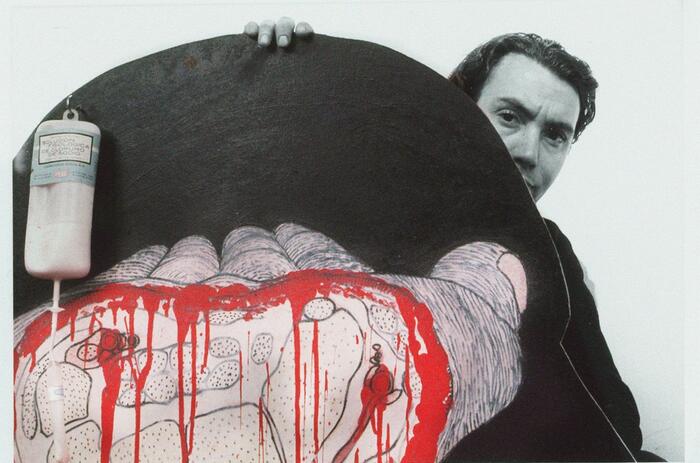

2025 AZCUY PRIZE: NATIONAL CALL FOR LARGE-SCALE ART PROPOSALS
The Azcuy Contemporary Art Prize Launches Its Seventh Edition with USD 10,000 and Full Project Funding for the Winner. Submissions deadline: September 29, 2025.

BETWEEN A DRAGON AND A VIRGIN, AGAINST DOMESTICATED IMAGINATION
If there were no way to create something new—believing everything has already been done—if every form of creative intelligence were exhausted, then it would be time to unearth hidden worlds.
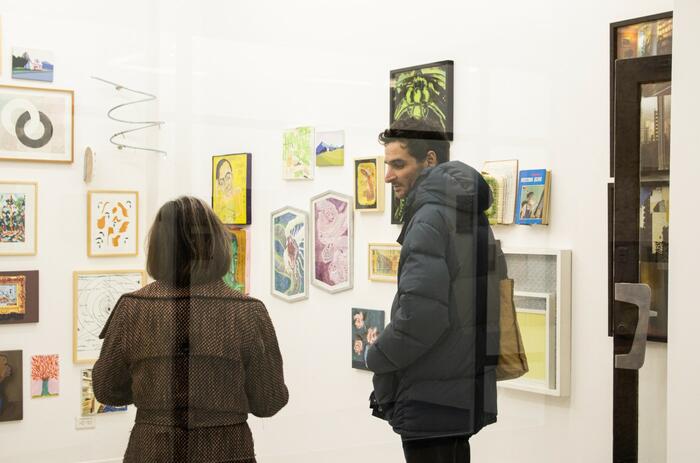
AFFAIR #3: A FAIR COMMITTED TO NEW CONNECTIONS, IN BUENOS AIRES
The contemporary art fair organized by gallerists opens to the public in Buenos Aires’ renovated downtown featuring “resident” and “guest” galleries as well as international participants.