
By
Álvaro De Benito
The British event highlights the growing presence of Latin American contemporary art, although its visibility remains conditioned by the commercial dynamics of a global fair and by local cultural policies that pragmatically contribute to shaping a contemporary art landscape closer to its audience.
FRIEZE London once again marks key dates on the calendar of art industry activity in the English capital, while also serving as a reliable barometer of market movements within dynamics that, step by step, are making room for Latin American contemporary art—beyond Brazilian art, which is traditionally more tied to the British scene than that of other regions.
In this regard, it is worth highlighting that while FRIEZE and Art Basel compete to consolidate their leadership in the art market, both in terms of influence and turnover, the surge of Latin American art seems to manifest more clearly in more aligned fairs, such as ARCOmadrid, and even in other events linked to these major brands, such as FRIEZE New York, where its presence and relevance are particularly notable.
Pure Fair in its Essence
Does this mean that the presence of Latin American art at FRIEZE London occupies a secondary role and lacks true prominence in the fair's discourse? Not at all, but it is necessary to consider, first, the historical and geographical context of each international fair and, second, the conception each develops regarding the role it should play. In the competition among major brands, the local acquires a particular value as a site of specialization, and mid-tier fairs can offer a more precise curatorial reading of the specificities and dynamics of Latin American art.
FRIEZE London continues for another year consolidating its market position across its various editions and through its idiosyncrasy as a commercial benchmark, yet it raises questions regarding the likely space reserved for reflection. Curated programs or performances that might better differentiate one fair from another have led their spaces toward an impersonality that is, nevertheless, characteristic of any franchise.
Claiming Latin American Voices
This year's edition in Regent’s Park leaves several interesting avenues regarding the Latin American presence within this commercial entanglement. Perhaps the most notable aspect is precisely the remarkable individual proposals amidst the extraordinary. The statement of intent by Studio Lenca (José Campos, La Paz, El Salvador, 1986), who has resided in the United Kingdom for years, signs Ojalá for the Deutsche Bank lounge—a project replicated at the presence of the British gallery Carl Freedman. With his proposal, the Salvadoran artist denounces the precariousness and the social and personal consequences of irregular immigration, presenting an aesthetically striking stage design alongside social advocacy, even if its discourse is somewhat burdened by the financial environment in which it is exhibited.
In the Artist to Artist section, we find a sanctuary featuring three particularly relevant Latin American proposals. Commissioned by several artists, it is they who have promoted a fresher voice amidst such a lineup of galleries. Jorge González Santos (San Juan, Puerto Rico, 1981), whose work was nominated by the Colombian-Korean artist Gala Porras-Kim (Bogotá, Colombia, 1984), expounds at Embajada upon the materiality of collaborative textiles and smoke-dyed drawings to sketch a cultural narrative of the island.
For her part, the Afro-Dominican artist Eilen Itzel do Espírito Santo, nominated by Firelei Báez (Santiago de los Caballeros, Dominican Republic, 1981) and represented by Bolanle, presents a multidisciplinary body of work where pastels, paintings, and clay sculptures convene to converse on the physical and the spiritual through Afro-Caribbean religions. Jota Mombaça (Natal, Brazil, 1991), who relatively recently had a prominent presence with a solo exhibition in Switzerland, fills the space with MUD/EMBANKMENT, a project for Jaqueline Martins revolving around a large-scale abstract painting where ceramics and organic materials, as well as their characteristic raw earth, prompt the viewer to reflect on environmental risks.
Another of the most prominent Latin American presences falls to Andrea Canepa (Lima, Peru, 1980), who, through her proposal for CRISIS in the Focus section, brings her social research work on literature and Indigenism closer to the international public. In its visual translation, mosaics and mobile sculptures present vibration and rotation as catalysts for a cultural transmission that still yields unresolved questions. The same section also allows us to approach the work of Giovanni Fabián Guerrero (Cherán, Mexico, 1993), an impactful production for Llano arising from the political activism of the community to which he belongs, delivering a powerful visual language linked to ancestral roots and nature.
Narratives in the General Section
In the galleries section, Dalton Paula (Brasilia, Brazil, 1982) presents a solo exhibition at Lisson's space, where portraits and still lifes prompt the retrieval from memory of non-European historical figures who have been eradicated from historiography by official narratives. Continuing with the Brazilian generation of the early 1980s, Simões de Assis gallery presents an interesting intergenerational conversation between the modernist painter Miguel Bakun (Marechal Mallet, 1909) and Thalita Hamaoui (São Paulo, Brazil, 1981), in which, through a shared lens despite the temporal distance, they emotionally address the transformation of nature and the landscape.
Fortes D'Aloia & Gabriel highlights the painting of Márcia Falcão (Rio de Janeiro, Brazil, 1985), who, with her series Camufladas, posits the urban resistance of women in peripheral environments through a pictorial language of great depth. Meanwhile, Casa Triângulo provides international presence to Fernanda Galvão (São Paulo, Brazil, 1994) with an exhibition focused on recent paintings by the artist exploring abstraction and color dynamics.
Within the landscape of international activity, mention must be made of Guatemalan gallery Proyectos Ultravioleta, faithful to its almost diplomatic representational role, which displays Other Ways of Being Together. In this group show, different techniques play a leading, almost encyclopedic role, and the semiology of patterns and symbols articulates a distinct thesis in representing its artist roster. Following the line of collective presentations, Mexican gallery OMR also reveals itself as an index of artists to follow in both sculpture and painting.
This edition of FRIEZE London thus raises the question of the extent to which Latin American art maintains its capacity to challenge and proposes alternative narratives within a contemporary art scene understood, more than ever, as a global market subject to the dynamics of demand and exposure. It is not so much a matter of quantifying Latin American presence, but rather of assessing its qualitative impact: to what extent the works and artists represented contribute to transforming the fair's discourse, or whether, on the contrary, they end up integrated into a global narrative whose prescriptive capacity conditions their interpretation.
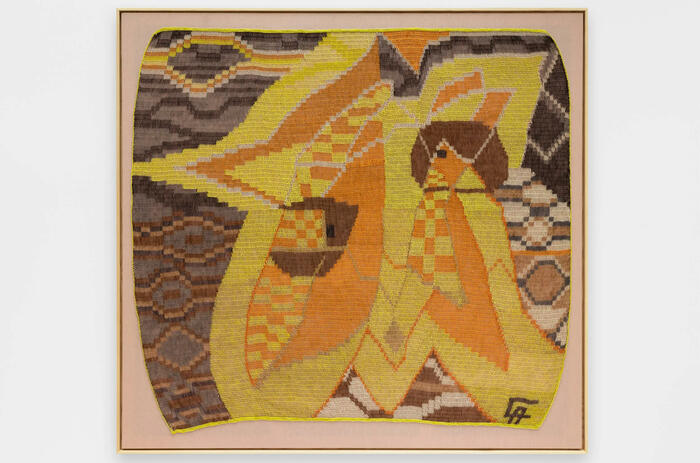
Yanantin and Cecilia Brunson Projects present it in London during Frieze week.
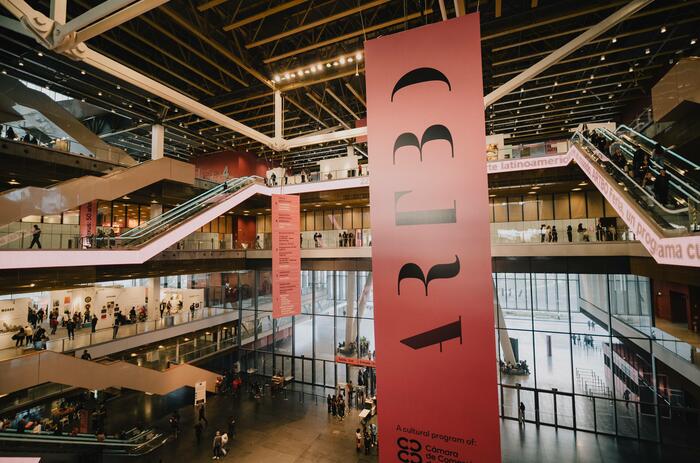
Some art fairs are defined primarily by their galleries, while others also seek to explain the cultural context in which they take place. ARTBO clearly belongs to the second category. Created in 2004 by the Bogotá Chamber of Commerce, it was conceived with an ambition that goes beyond organizing an art fair: to support the development of the art market, contribute to the city’s cultural ecosystem, and connect the Colombian and Latin American art scene with the international art world.
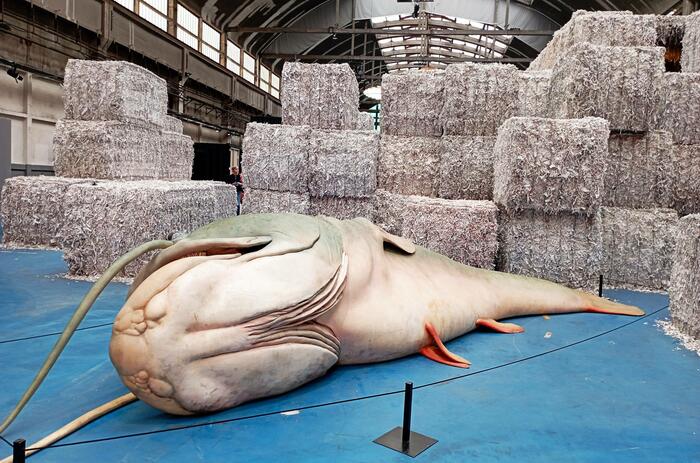
In a world marked by dizzying change and a constant flow of images and information, the 18th Lyon Biennale encourages us to take the time to observe, disconnect and listen to what the works of the invited artists seek to express. In dialogue with the social, political and economic realities of our time, they question and challenge our certainties, enriching democratic debate, our collective imagination and our ways of living together.