

By
Violeta Méndez
Guillermo Iuso and FlorenciaBöhtlingk next to Sebastián Gordin present two exhibitions at the Buenos Aires gallery where text and painting coexist without translating each other.
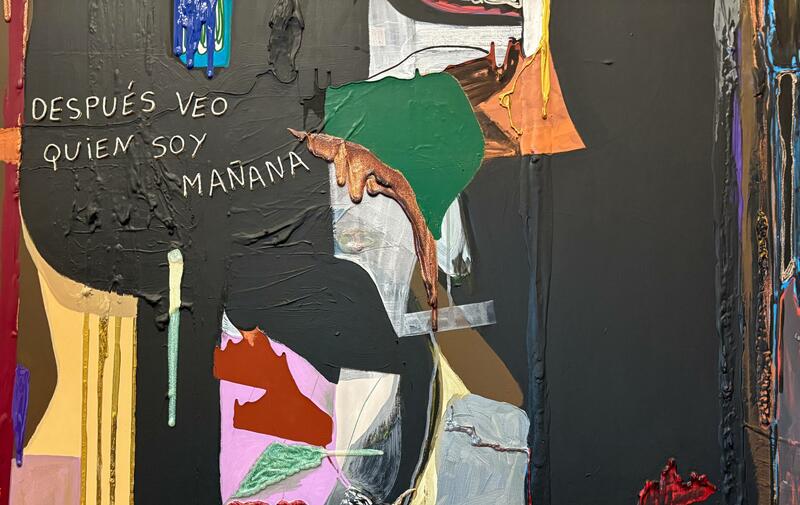
Of image and word, and therefore of fiction. Since the avant-gardes of the last century, text has made its way into works of art. The discipline was no longer seeking to create faithful portraits of reality, and so the various movements began integrating written elements into their visual work — not as a clarifying tool for an abstract or undefined language, but to generate additional layers of meaning. As play, as unconscious revelation, as expression, as political weapon, as sound. One more way of telling.
Guillermo Iuso (Buenos Aires, Argentina, 1963) is a self-taught artist who has been painting since the age of 25, has published four books, used to draw during school classes, and has been making lists his whole life. In Una noche perfecta, an exhibition that captures nearly two years of work, the pictorial material and the written word are presented with the same tension. The paint drips down the canvas, turns abruptly, splashes, shines, darkens, climbs, hides, leaps, travels; the words settle wherever they please, stepping firmly into a stage that is also theirs. What would the painting be without its words, or vice versa? It would not be Una noche perfecta. The phrases unfold within a universe that contains them — they belong to its space. The inscription "There are days impossible to fix but at night maybe I'll heal" cannot, and should not, be separated from its shade of blue, from the tray on which it is written, from the metallic puddle in which it floats, from its background of transparent colors. "NOTHING STOPS" appears in black and uppercase, surrounded by a pink background with various crossed-out marks that give it its meaning. To lift the words from the work and interpret them in isolation would be like looking at the colors through a black-and-white lens.
The exhibition is, in its entirety, a confession presented with skin. It includes personal anecdotes, percentage measurements of courage and mistakes, of fear and enthusiasm, of luck and anguish. Affirmations for self-compassion, records of emotional states and lucid reflections. Propositions that could just as well be questions of a single moment as of an entire lifetime. The declarations are positioned within the works the way one might imagine ideas living inside the mind — some ruminate, others hide, others shout, float. Read this way, the material volumes might be understood as nerves, muscle, pain, pleasure. A body of fiction. The path through the exhibition is one more of Iuso's lists: the last twenty months inside one man's head.
Florencia Böhtlingk (Buenos Aires, Argentina, 1966) and Sebastián Gordin (Buenos Aires, Argentina, 1969) interweave their languages to produce a different effect. Their work in Entre hojas takes up the poetic narrative of Vanna Andreini and unfolds in the small room at Ruth Benzacar, where the pieces are distributed in numerical order, simulating the pages of a book. In each work, three voices converge: Böhtlingk's colors — which vibrate like sunlight, dust, a strong wind, the smell of dryness —, Gordin's technique — layering gilded glass and copper leaf over oil paintings — and Vanna's verses. The result is a vivid scene. The metallic quality of the lettering reflects the viewer, places them within the frame, and makes explicit what every work of art requires: someone to complete it. A fourth layer.
The exhibition also proposes two modes of reading. An adjoining room invites visitors to sit and read the book with a Böhtlingk painting as silent company. The main room, by contrast, is traversed on foot, clockwise, like someone turning pages by walking. Whether reading seated or in motion, the space constructed by words and images together is intimate — designed so that the viewer, too, might in some way confess before Vanna's sighs.
Foucault's words become clear when you feel the tension between text and the plastic arts. The image does not say everything, nor do the words, and when brought together they do not complete each other. Both Iuso and Böhtlingk and Gordin work in that territory: they produce fictions that need someone looking at them in order to fully exist. What remains is read by the viewer.
Guillermo Iuso: Una noche perfecta and Florencia Böhtlingk and Sebastián Gordin: Entre hojas will be open to the public until July 4, 2026 at Ruth Benzacar, Juan Ramírez de Velasco 128, Buenos Aires, Argentina.
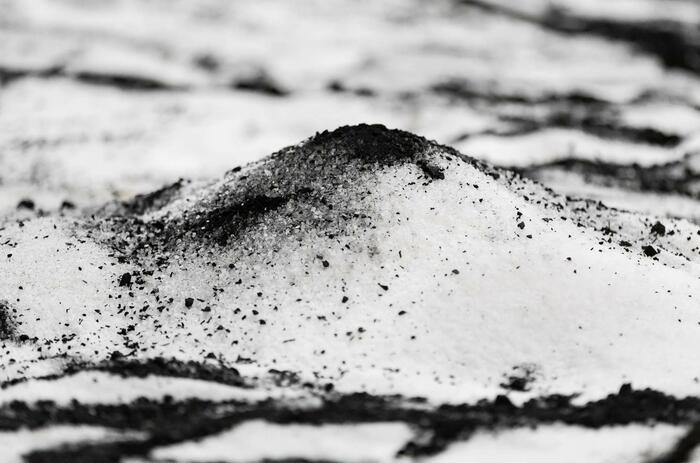
Matías Duville's installation proposes a traversable landscape where light and shadow, permanence and transformation coexist without resolution.
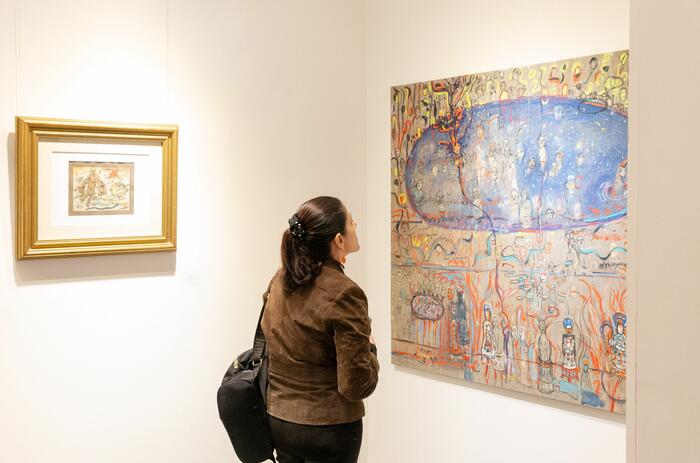
The first 2026 edition of Gallery arrives in Recoleta, Retiro, and Microcentro. Organized across different circuits, this major free event has been showcasing the best of local art scenes for over two decades.
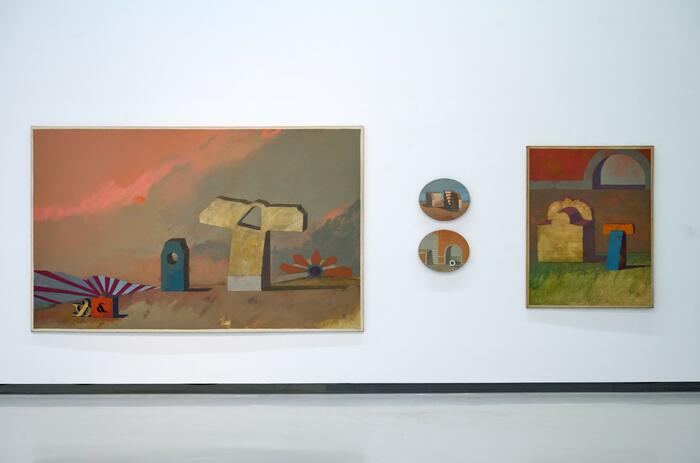
With more than 50 paintings and watercolors, the exhibition offers a journey through the metaphysical universe of the painter, marking the beginning of a national tour that will continue in Córdoba and Mendoza.
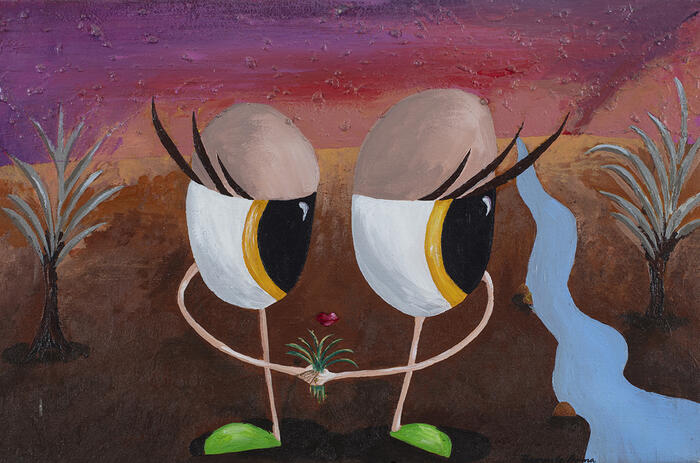
Malba presents the most comprehensive survey of the Argentine artist’s work, featuring nearly 200 paintings, drawings, collages, embroideries, sculptures, installations, and videos; an exhibition that invites making without fear.
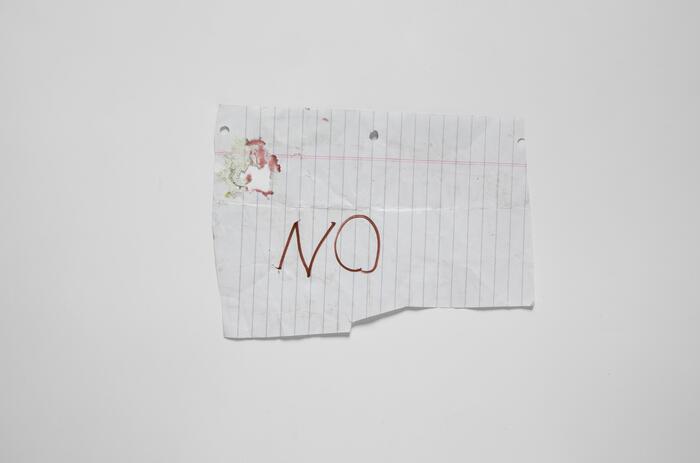
In RETOUR the Argentine artist builds a cartography of the city from discarded papers bearing writings that were never meant to be read; on view through August 9, 2026, at Museo Sívori, Buenos Aires.
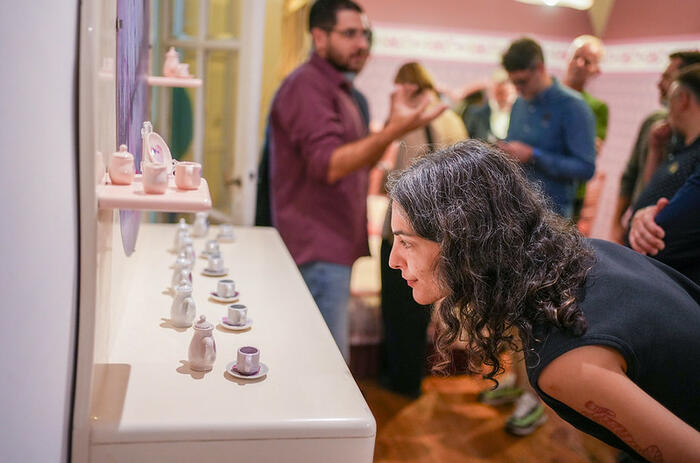
This June, the program will tour seven neighborhoods across the city with free admission, and will include an institutional acquisitions segment and visits from professionals from Mexico, Colombia, Panama, the United States, Spain, Germany, and Brazil.