AN AVANT-GARDE IN LOCAL COLORS - ONCE UPON A MODERN TIME
On the occasion of the centenary anniversary of the 1922 Modern Art Week, a key event for the artistic avant-gardes in Brazil and which consolidated what would become known as modernism in the country, several exhibitions throughout the year (and also in 2021) revolved around, discussed, explained, replaced and 'cancelled' such an initiative. Considered a milestone in the cultural renewal of Brazilian art, the week was about to turn around in its already canonical grave.
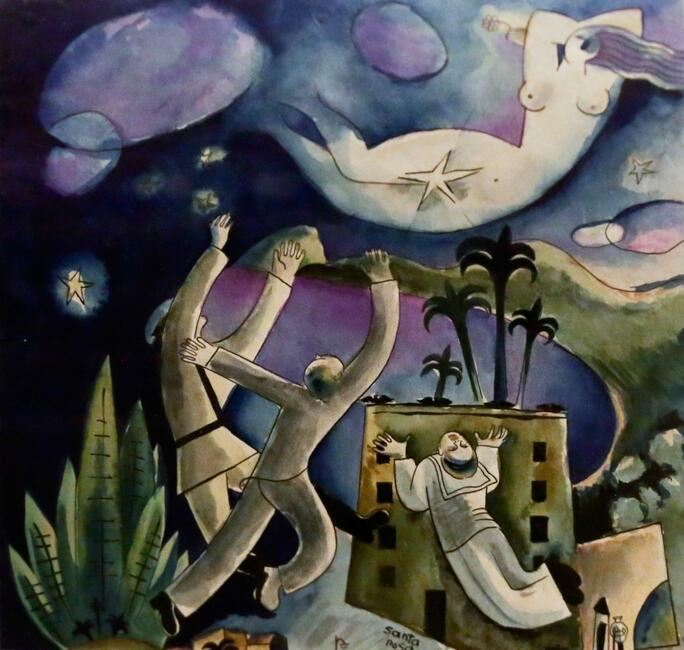
However, Once Upon a Modern Time (1910-1944), which exhibits around 300 pieces –paintings, drawings, sculptures, books, photographs and engravings, among others– establishes its great relevance from the extremely rich IEB-USP collection (Instituto de Estudos Brasileiros da Universidade de São Paulo), originating from the succession of Mario de Andrade (1893-1945), and, very vertically, manages to display chapters of interesting reading, although provoked by known names and productions once seen. Thus, it testifies to how much Brazilian art and its characters still need in-depth investigations that bring to light new perspectives of collections, archives and collections sometimes not seen in their full potential.
“(...) These sources can be questioned again and again to experience the circumstances that made them present in their time, partially going back to the original conditions in which those protagonists must have acted: Anita Malfatti, Di Cavalcanti, Lasar Segall, Brecheret, Tarsila do Amaral, Mario de Andrade, Oswald, Manuel Bandeira, Raul Bopp, Carlos Drummond de Andrade, Goeldi, Cândido Portinari and so many others had to answer questions, build positions, occupy places, face criticism and heartbreak”, Luiz Armando Bagolin, curator of the exhibition, writes in the catalog which is also signed by historian Fabrício Reiner.
Despite the expressive epistolary presence, sometimes in small-format notebooks, period editions, domestic photos and original graphic work, the most exhibited works -paintings and sculptures, for the most part- are relevant and, with new approaches and established relationships now, contribute to renewed debates. By Anita Malfatti (1889-1964), A Estudante Russa (1915) and O Homem Amarelo (1915), for example, continue to boast challenging visual attributes, but the joint display of charcoal and pastel drawings or small amounts of graphite help forge the still robust poetics of the artist from São Paulo.
On the other hand, the canvas Interior de Monaco (1925), by Anita, flanked by A Princesa Bibesco (c. 1920), by Vuillard (1868-1940), from Masp, also points to less studied phases and connections. “In my painting I reached a great stage. Made a great discovery for myself. I now know that I will always be able to achieve the harmonious unification of my tones and the relationship between them so that they all seem to be component parts of a single body. – Discover the ‘local color and apply it simultaneously according to the problem to be solved’”, writes Anita in a letter to Mario dated April 1925, now exhibited in the exhibition and in the catalogue. For the curator: "In particular, her production between 1907 and 1920 is a clear manifestation of the return to order, with a reinterpretation of classical themes in a post-impressionist pictorial style." The artist, therefore, left the canvases with an expressionist tone and, influenced by the Nabis, took more into account the highly chromatic productions of Denis (1870-1943), Bonnard (1867-1947), Sérusier (1864-1927) and by artist Vullard himself.
-
Fotos por Karim Kahn. Cortesía del Centro Cultural Fiesp
One aspect of Once Upon a Modern Time little discussed and analyzed in the history of Brazilian art is the surrealist, present in the clipping with pieces by Ismael Nery (1900-1934), Murilo Mendes (1901-1975) and Jorge de Lima (1893 -1953). Precious is the photographic montage by Lima, on a small scale and quite original in the modernist corpus and its ramifications. Famous for producing poetry, the collages influenced by the work of Ernst (1891-1976) in the volumes of Éluard (1895-1952) still retain the typical provocative atmosphere, for example, when Pintura em Pânico (1943) was published, an album that featured 41 photomontages and a limited edition of 250 copies. “There is a combination of the unexpected and logic. And photography has helped man to broaden the experience of vision,” writes Mendes in the book's introduction.
The exhibition does not shy away from presenting works by today obscure names of the Week, such as that of the German Wilhelm Haarberg (1891-1986), a sculptor with a little-known biography and present with the interesting three-dimensional wooden Mother and Child (n.d.) –at the same time, it is quite productive to read this format together with the sketches of master Victor Brecheret (1894-1955) on display, as well as his already well-known masterpieces, such as Cabeça de Cristo (1920s), which scandalized Mario's family for his version of braids of the religious figure. And the architecture of Antonio Moya (1891-1949), author of drawings and sketches presented at the Municipal Theater event in 1922, a character linked to the neocolonial and who, within the timeline of the modern in national architecture, was undermined for projects by Warchavchik (1896-1972), Flavio de Carvalho (1899-1973) and others. Thus, it accounts for the extent to which fields such as photography and architecture would later flourish in the avant-garde or come from more cosmopolitan centers, such as Rio de Janeiro, the Brazilian capital at the time.
Once Upon a Modern Time has as a finishing touch small jewels of the still life genre, generally considered minor within the historiography of art, but which can provide very particular works. The section includes works by Guignard (1896-1962), Clovis Graciano (1907-1988) and the special Cebollas (1926), by Hugo Adami (1899-1999). Affiliated with the Italian 19th century, he studied in the peninsular country, met and exhibited alongside names such as De Chirico (1888-1978). And, given the lack of criticism of the visual arts in Brazil, he still needs extensive studies on his production. The exhibition, therefore, opens many possibilities for research, approaches and numerous and varied discussions from public, university and large collections not yet exhaustively detailed.
Once Upon a Modern Time
Curators: Luiz Armando Bagolin and Fabrício Reiner
Until May 29th, 2022
Fiesp Cultural Center
Sao Paulo, Brazil
Related Topics
May interest you
THE SURREALIST INTRANSIGENCE OF THE TROPICS – MARIA MARTINS: IMAGINARY DESIRE
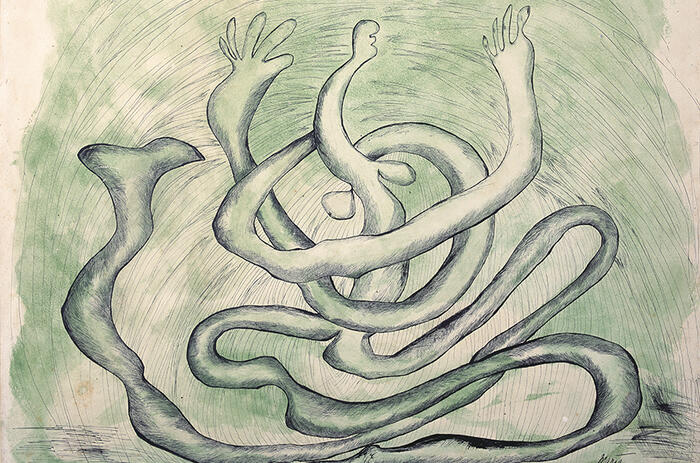
Reluctantly classified, with increasing complexity and interest, the work of Maria Martins (1894-1973) has yet to gain recognition in her native country. But a selection of some 50 pieces, on display in Rio de Janeiro through June, should help reposition the sculptor, draftswoman and engraver in the pantheon of leading Brazilian artists.
SILENT RISINGS - 34th BIENNIAL OF SÃO PAULO, JURACI DÓREA AND GIORGIO MORANDI
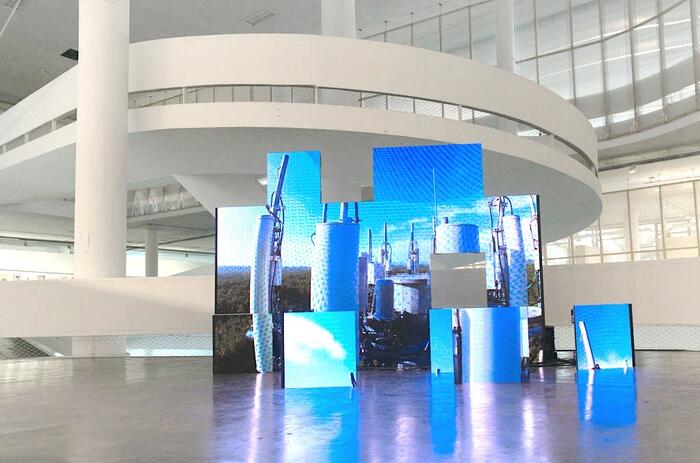
One of the key works of the 34th São Paulo Biennial literally anchors the robust and uncomfortable presence between the interstitial areas of this modernist building, so questioned today. However, its meanings go beyond the perimeters of the construction and extend to, for example, some of the civic sculptures that populate public places throughout Brazil and that are also located in the surroundings.
DIASPORAS AND ATLANTIC COMMUNIONS - YORUBÁIANO AND JUNTÓ: AYRSON HERÁCLITO
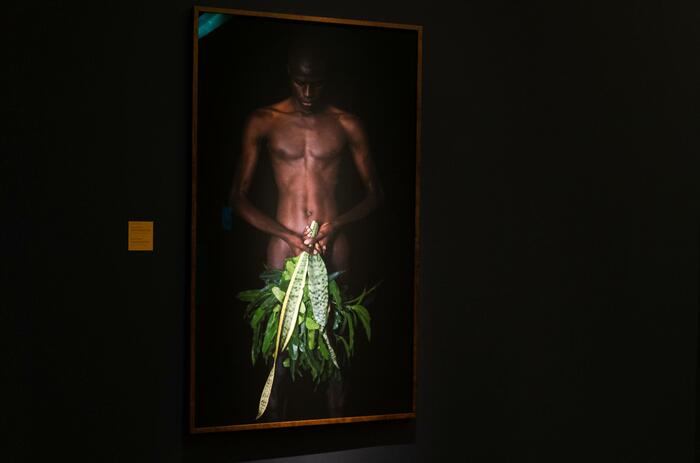
“Moving with great fluidity between spirituality, the production of visuality, academic reflection and political action, Heráclito is explicit when he says that he wants to ‘act, in a symbolic way, on the devastating consequences of racism and social inequality that affect the black populations'." In this way, the curator and researcher Solange Farkas (Videobrasil and ex-MAM Bahía) summarizes the approach to the production of Ayrson Heráclito, a Bahian artist who won a retrospective at the MAR (Museu de Arte do Rio) and who had an important recent solo show at the Simões de Assis Gallery, in São Paulo.
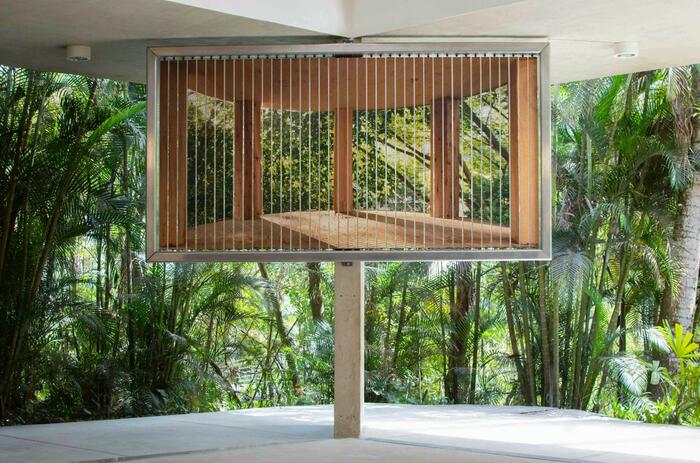
ARTIFICIAL PARADISES - RÓMMULO VIEIRA CONCEIÇÃO, LUCIA KOCH AND ALEKSANDRA MIR
The flows of architecture and circulation in continuous movement set the tone for the new commissioned and individual works that are exhibited now at the Inhotim Institute. There are three projects as the result of almost two years of inactivity, without openings, in the immense space of the cultural center located in Brumadinho, in Greater Belo Horizonte, capital of Minas Gerais. It is a mix between a botanical garden and a refuge for contemporary art works specially developed for the institution or that have been reformatted in this special exhibition context that extends over an old estate, now with 140 hectares of visitation.
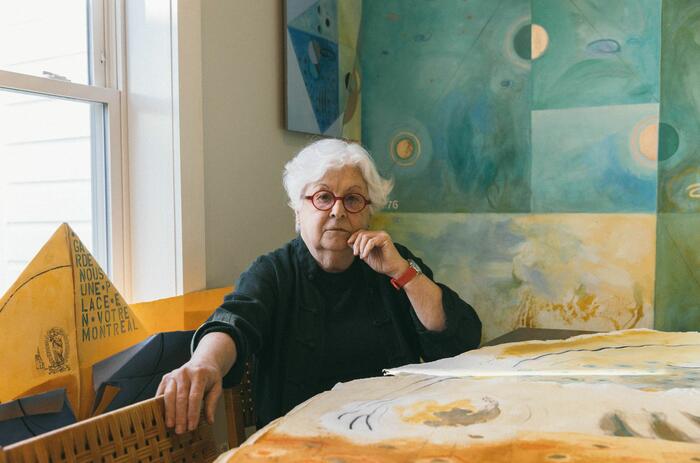
LYDIA RUBIO: THE ARTIST IN ARCADIA
Lydia Rubio was born in Havana, Cuba, with art in her bones. She comes from three generations of women painters, to be precise. "My grandmother painted every day, whenever she could," Lydia recalls. "She worked at an office but painted in the living room. The whole family lived together, so I used to see her painting there and was trained visually. My cousin, everybody was drawing and painting, but I was the only one that took it to another level of development and commitment."
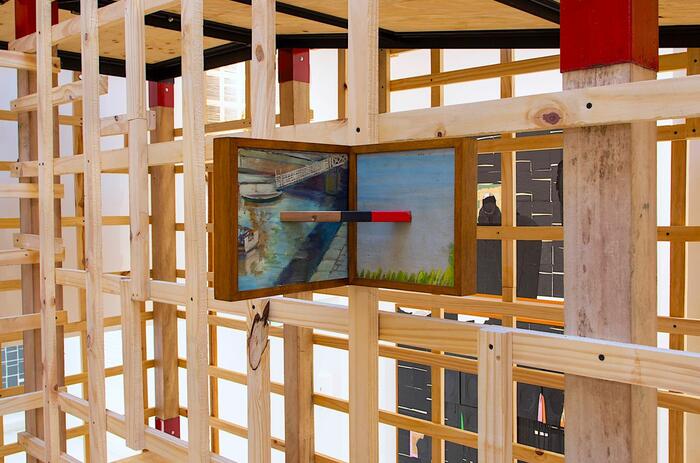
“EL ATAJO”. A DISPLACEMENT IN THE AUTHOR
José Luis Landet has been searching for the image of the Latin American landscape for years. And in El Atajo (The Shortcut), the exhibition that he presents in Marco, he finds some ways of approaching that idea. He builds ramps, connects vestiges, shreds colors, traces identikits, joins random images, creates an alphabet ... and ends up building a total idea of our landscape, but above all of another subject that also haunts him: the painting. There is a large installation, a physical shortcut, and a set of 467 works that point to something that is clear in the subtitle: a displacement in the author.

CONTEMPORARY AND TIMELESS - MARIO CRAVO NETO: NAMELESS SPIRITS
The 322 pieces that make up Espíritos sem nome (Nameless Spirits), a retrospective dedicated to the production of the Bahian Mario Cravo Neto (1947-2009) at the São Paulo headquarters of the Moreira Salles Institute, attest to his vigor as a visual artist; With the robustness of his work, he permeates media beyond photography, since he produces pieces in languages such as cinema, the three-dimensional, drawing and publishing, among others.
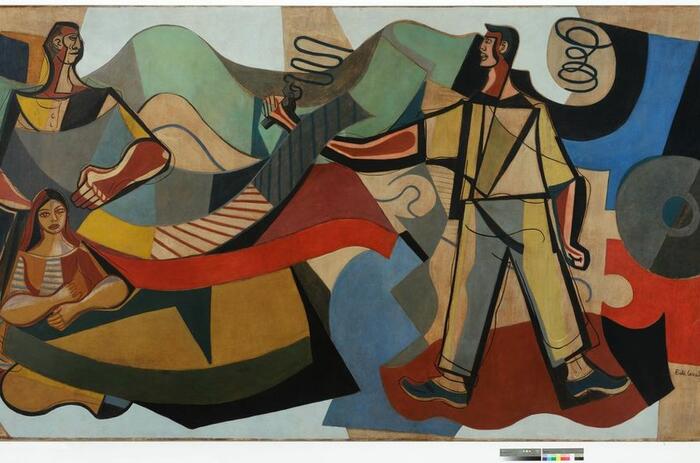
MODERNITIES IN MOVEMENT - TARSILA, DI CAVALCANTI AND THE GOMIDE-GRAZ FAMILY
The narratives of the Brazilian avant-garde in the arts go through an intense revision. Due to the centenary of the Week of 22, the emblematic event that in the thesis launched the foundations of modernity through different languagesand fields of activity in the country, three exhibitions currently on the billboard rotate and bring new elements from the production of two icons of Modernism in Visual Arts - Tarsila Do Amaral (1886-1973) and Di Cavalcanti (1897-1976). In addition, they cast more emphatic lights on three not-so-famous characters within the journeys within the movement and the modernist winds: Antonio Gomide (1895-1967), John Graz (1891-1980) and Regina Gomide-Graz (1897-1973) .
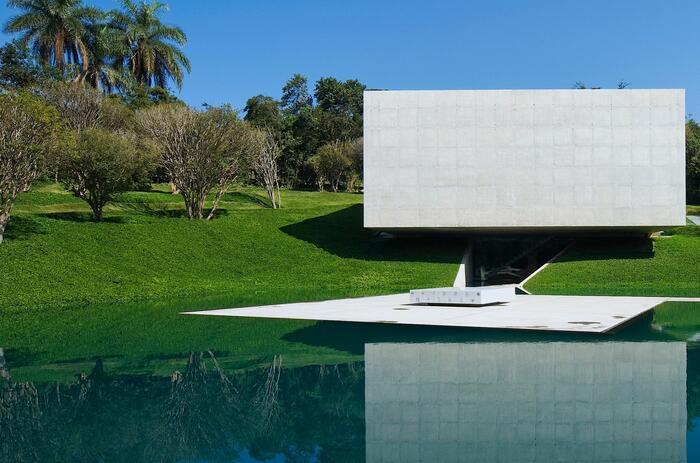
'INHOTIM IS ABSOLUTELY UNIQUE,' SAYS JULIETA GONZÁLEZ
An institution that is more attentive and permeable to public debate, that has its own collection as a living witness to the changes. This could be one of the guiding axes of the work of the Venezuelan Julieta González at the head of the artistic direction of Inhotim, one of the main centers of contemporary art in Brazil and one of the most inspiring open-air museums in the world.
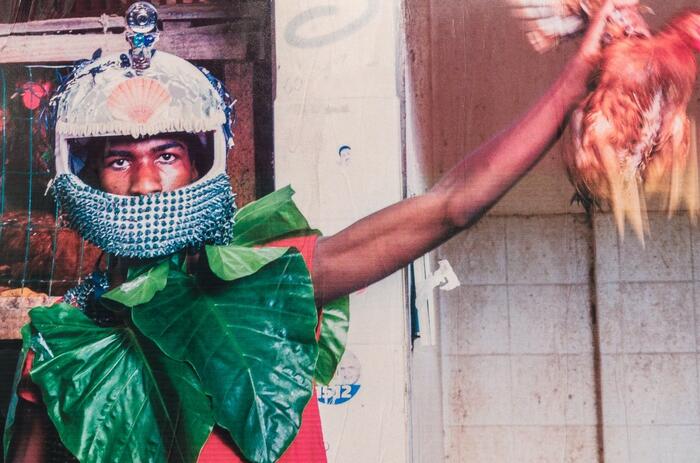
SLEEPING EMBAR - 37TH PANORAMA OF BRAZILIAN ART
Somewhat fused forms, in a dismantling that seems continuous, signaling a kind of tired geometry. The banal brilliance of a chromatic automotive cover in what could have been the label of a crumbling and volatile language typical of large urban agglomerations, in a tenuous cross between street art and graffiti.
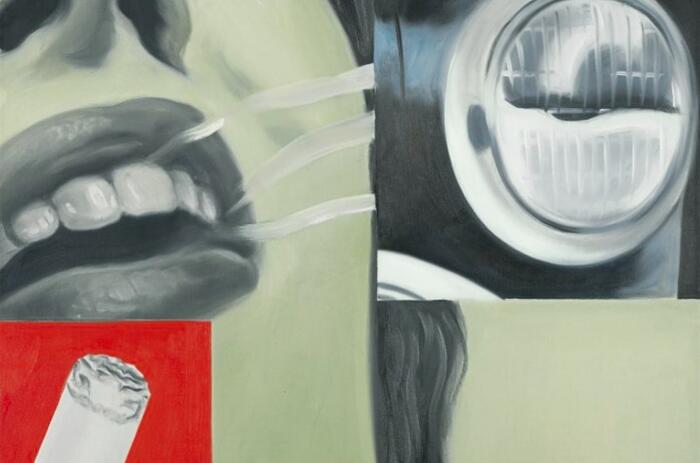
DEAD TREE IN THE FRONT YARD
The Thyssen-Bornemisza National Museum (Madrid, Spain) contains the world view of the American people. Almost four centuries of American painting are on display in rooms 46 to 55 on the first floor of the museum. To name but a few names: Peale, Cole, Heade, Church, Hopper, Burchfield, Shahn, Rothko, de Kooning, Pollock, Estes... Probably the most complete collection of American art in Europe, and a must-see exhibition for anyone who wants to understand the history and thougt of the Western country.