MIAMI PHOTOGRAPHIC OBSERVATORY OPENED WITH ARTIST RAMÓN WILLIAMS
The new center promotes residencies and curatorial projects focused on visual research and artistic production, building an alternative archive on Miami’s urban transformation.
The Miami Photographic Observatory (MPhO) is a project conceived and directed by Aluna Art Foundation. It opened its doors at Tower Art Space as an artist residency and platform dedicated to studying the urban evolution and current configuration of Miami’s vital spaces through photographic imagery. Local and international photographers, filmmakers, and visual artists will have access to a studio/gallery space where they can develop commissioned projects curated by Aluna Curatorial Collective. Throughout their stay, artists will also have the opportunity to exhibit previous works alongside visual outcomes created during their residency.
Ramón Williams is MPhO’s inaugural invited artist. The Observatory initially exhibited a selection of images from his Trace Crop Off series, a unique documentation of the city begun upon his arrival in 1996. He has documented Miami through an unembellished poetic approach that conceptually decodes and recodes the keys to the city’s contradictory nature. Avoiding idyllic natural paradises and the seductive stereotypes of luxury and fame commonly associated with Miami, Williams’ incisive lens captures the layers beneath its urban epidermis.
As Baudrillard writes in America, cultural experience in this country stems from life itself staged as a continuous performance. Miami is one of the cities bound to spectacle, to the paradise of artifice. Williams’ artistic practice deconstructs this vision. Through photographic chronicles of organic scenes, he’s stumbled upon, he employs relentless humor to portray the intervals within the city’s ongoing spectacle. In doing so, he reveals the authentic Miami beneath its glamorous façade with a witty gaze that provokes reflection. In his continuous drift through the city, consistently countering the spectacle, he seeks—as a faithful disciple of Guy Debord and Joseph Kosuth—the precise instant when letters fade and sharp conceptual language games arise.
Williams’s inaugural exhibition displayed the way in which he mapped the city with a compositional sharpness that captures urban gaps, contradictions, the discovery of verbal and visual puns, and the intrusion of alternative meanings within found kitsch. Ultimately, his photographs simultaneously function as hypertexts connected to the broader history of American abstraction and as an exercise in cultural critique.
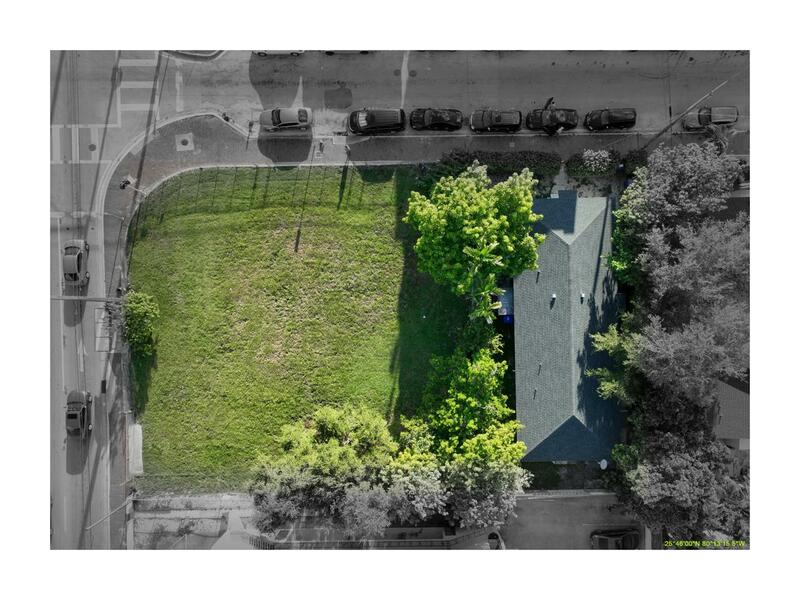
For the final exhibition of his residency, Williams created an alternate documentation using drones to capture Little Havana’s green spaces. The statement accompanying the series reads:
“At the beginning, there was the swamp and its alligators, native peoples and their conquerors, then Black communities, Jewish immigrants, Hispanic diasporas, the mafia and skyscrapers, artists and galleries, yuppies and their parents, investors and realtors, schemes and drawings, bulldozers and steamrollers, cranes and Airbnbs. Each green stretch of land surrendered to ungentle gentrification tightens to the binary pulse of the global stock exchange, in the midst of a future that confesses it has already gone by, though we still refuse to believe it. Last Green Patches is a forensic document written ahead of its time, conceived and carried out within the grounds of the MPhO. Archives lodged in the future of such a past-to-come promise to guard and to share this aerial testimonial vision of greenery in extinction, invoiced in the name of progress—or at least in the euphoric urban sprawl of one of its iconic enclaves: Calle Ocho in Little Havana”.
In the coming months, MPho will present a continuous program featuring invited residents such as Lili (Ana), Geandy Pavón, Juan Carlos Alom, and Elisa Benedetti, each developing unique visualities connected with Miami’s incessant transformation. Together, these practices will contribute to the construction of a body of knowledge of Miami that—following the Foucauldian sense of the archive, not merely a collection of documents but the system that governs what can be remembered—will function as an alternative urban archive of the city instigating a dialogue about its present and future.
MPhO is on view at Aluna Art Foundation, 1444 SW 7 St, Miami, Fl 33135 (United States).
Related Topics
May interest you

NEW PEDAGOGIES AT THE HEART OF MoMA PS1
LA ESCUELA___ debuts in the United States with a proposal that turns education into a creative and collective experience.

CIRCLES, SPOKES, ZIGZAGS, RIVERS: CONTEMPORARY ABSTRACTION AT WHITNEY MUSEUM
Artist Grace Rosario Perkins’s solo exhibition reveals a dynamic process of layering, erasure, and renewal, where personal and collective histories converge.specifically for this exhibition.

FROM FIELD TO FABRIC: THE ECOLOGICAL JOURNEY OF AMERICAN QUILTS
The American Folk Art Museum presents an innovative exhibition examining the natural history of quilts and their connections to agricultural production, industrial manufacturing, and international trade, revealing the environmental and social impact of this quintessentially American art form.
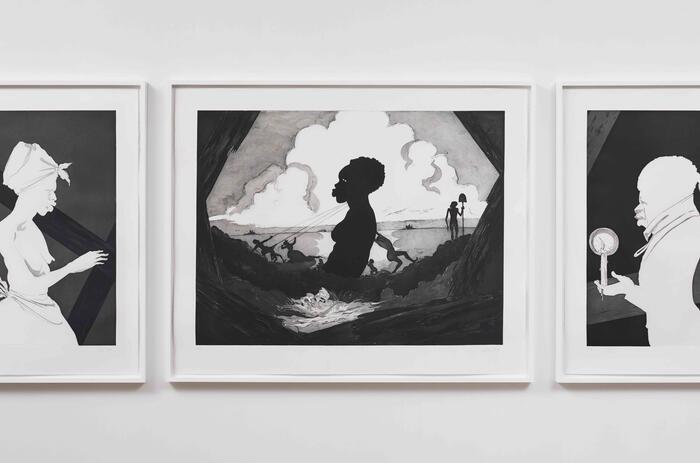
KARA WALKER'S SILHOUETTES AT FUNDACIÓN PROA: HISTORY, POWER, AND REPRESENTATION
For the first time in Argentina and South America, Fundación Proa presents an exhibition dedicated to the American artist, one of the most influential figures in contemporary international art.
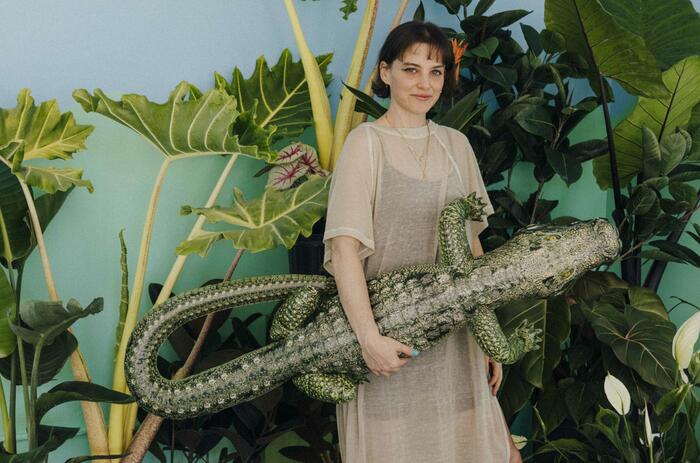
INTERVIEW TO ALEX NUÑEZ AND HER VISION OF FLORIDA'S PLAYFUL WILD
By Violeta Lozada
For Miami-born artist Alex Nuñez, inspiration often springs from the familiar yet unsettling details of everyday life in South Florida. Her latest project, "There’s a Gator in the Pool", takes a symbol that outsiders often fear and transforms it into a playful, layered metaphor for life as a Floridian. The exhibition is on view at the Faena Art Project Room in Miami Beach through September 14th.
ELLIOT AND ERICK JIMENEZ: TWINS WITH A VISION
By Violeta Lozada
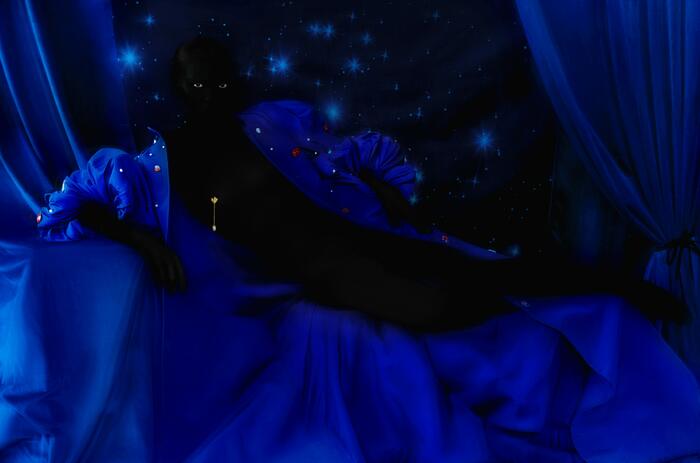
For the first time, twin brothers Elliot and Erick Jiménez step into a museum as an artistic duo, presenting a body of work that is both personal and deeply spiritual. Identical twins with identical passions, they work through photography to explore themes of memory, identity, and tradition, but with a profound layer of meaning rooted in their spiritual practice of Lucumí, a syncretic Afro-Caribbean religion born in late nineteenth-century Cuba. Emerging from the fusion of Yoruba, Catholicism, and Spiritism, Lucumí continues to shape lives across generations of the Cuban diaspora, and in the case of the Jiménez brothers, it has become both inspiration and guide.
LINES OF BELONGING AT MoMA: MEMORY, COMMUNITY, AND FUTURE THROUGH CONTEMPORARY PHOTOGRAPHY
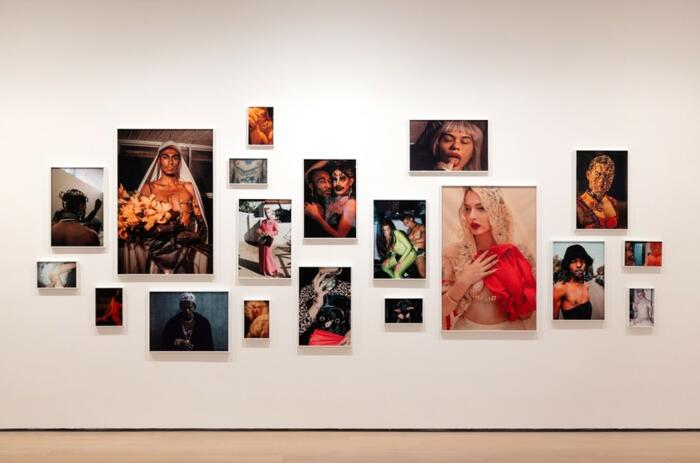
The show brings together 13 artists from Mexico City, Johannesburg, Kathmandu, and New Orleans to explore the power of connection across generations and geographies.
RECIPROCITY IN MIAMI: DIALOGUE BETWEEN GENERATIONS AND JULIO LARRAZ
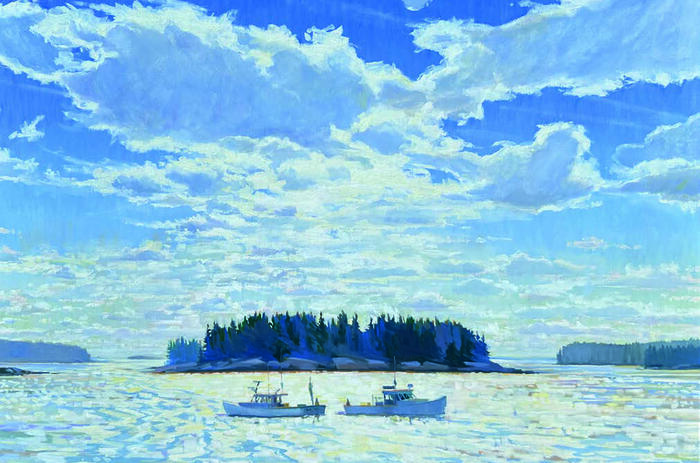
The exhibition brings together works by the Cuban master alongside eleven artists who have found in him inspiration, guidance, and a space for dialogue.