

By
Violeta Méndez
Thirty works join the exhibition starting Saturday, September 19, including pieces from the Colección Daros Latinoamérica.
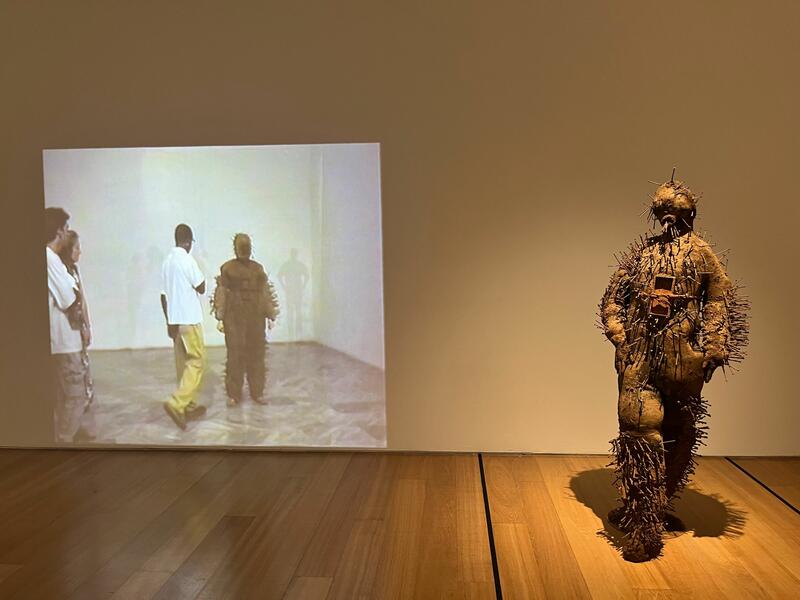
Malba marked the 25th anniversary of its founding by celebrating with a new permanent exhibition, Latinoamérica en expansión, which opened in April. The show is made up of works from the Colección Malba–Costantini, which brings together a selection of the museum's holdings and the private collection of its founder, Eduardo F. Costantini. Starting this Saturday, September 19, three new sections join the exhibition, with around 30 works, in a journey that takes on a new dimension with the recent addition of the Colección Daros Latinoamérica.
The museum seeks to represent Latin American art in the best possible way, and in recent years that pursuit has also been reflected in exhibitions dedicated to young and contemporary artists such as Fernanda Laguna, Carrie Bencardino, Lucrecia Lionti, and Sandra Vásquez de la Horra, among many others. But 25 years after its founding, a focus on its foundational roots remains central. The anniversary thus returns to those formative years — rebellious years shaped by abstraction, minimalism, and conceptualism, where what was produced grew out of desire: the desire to show context, to break away, and to reinvent.
The stance the museum takes is anthropophagic, drawing on the concept coined by Oswald de Andrade. The term, used by the Brazilian writer in his Manifiesto antropófago, refers to the idea of devouring and transforming what comes from outside. It is not simply a matter of copying European models, but of absorbing and reshaping them according to local social and cultural contexts. Much of the region's artistic production was built this way: the avant-garde movements arriving from Europe were adjusted and molded by Latin American realities.
Latinoamérica en expansión brings together around 150 works produced between 1900 and the 1970s, arranged in eleven sections that trace the paths of modernism and that were formative pillars of the collection: Latin American avant-gardes, socially engaged art, surrealist poetics, the crisis of reason during the interwar periods, and South American constructivisms.
It includes works by Frida Kahlo, Diego Rivera, Antonio Berni, Maria Martins, Emilio Pettoruti, Leonora Carrington, Xul Solar, Wifredo Lam, Remedios Varo, Joaquín Torres-García, Candido Portinari, Roberto Matta, and Rafael Barradas, among many other major artists from the region.
The artists included in the new section of the exhibition belong to key generations in the renewal of Latin American art: Luis F. Benedit, Fernando Botero, Tania Bruguera, Luis Camnitzer, Jorge de la Vega, Antônio Dias, Eugenio Dittborn, Jorge Eielson, Marisol Escobar, León Ferrari, Víctor Grippo, Guillermo Kuitca, Nelson Leirner, María Martorell, Ana Mendieta, César Paternosto, Aldo Paparella, Alejandro Puente, Wanda Pimentel, Liliana Porter, Doris Salcedo, Zilia Sánchez, Eduardo Terrazas, and Cecilia Vicuña.
The new sections incorporate different pursuits that have run through Latin American art since the 1960s. Abstraction emerges as one line of inquiry, while shifts in figuration can be seen in works by artists such as Antonio Berni, Jorge de la Vega, Cecilia Vicuña, and Fernando Botero.
The 1960s and '70s are also marked by minimalism and conceptualism, but with a sensibility shaped by the desire to reveal geopolitical context. Among the new works from the Colección Daros Latinoamérica are Energy, Memory, by Antônio Dias; Analogía I, by Víctor Grippo; and Proyecto huevos, by Luis F. Benedit, where the relationship between artifice and nature, and between culture and nature, comes into view.
The exhibition extends into the following decades, bringing to the fore issues such as migration, exile, the genocide of Indigenous peoples, and Latin American dictatorships. This group includes works by Tania Bruguera, Guillermo Kuitca, León Ferrari, and Doris Salcedo, along with Eugenio Dittborn's mail art. The body, memory, displacement, and political violence thus emerge as some of the concerns running through these works.
With this new addition, Malba continues to expand a collection that, 25 years after its founding, seeks to tell the history of Latin American art through its own transformations, ruptures, and contexts.

The museum welcomes Juan Del Prete and, for the first time, Líbero Badíi, along with donated pieces by Jorge Pineda, Mario Testino, and Margarita Paksa.
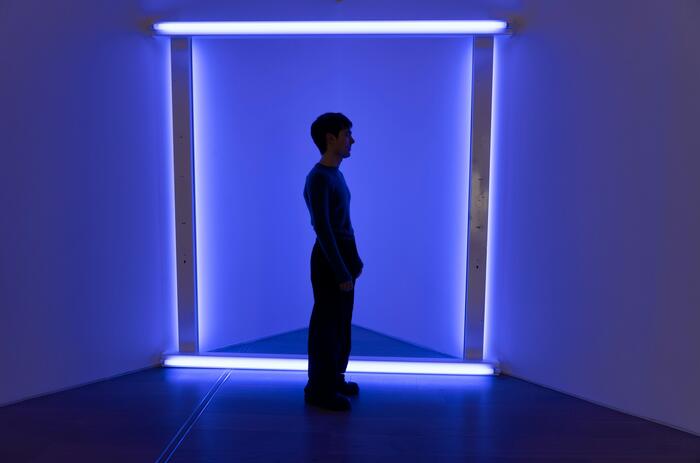
Luz, color y espacio, the exhibition presented by the Museum of Latin American Art of Buenos Aires in collaboration with Dia Art Foundation, offers an experience in which color and space envelop the viewer. It will be open to the public through August 17.
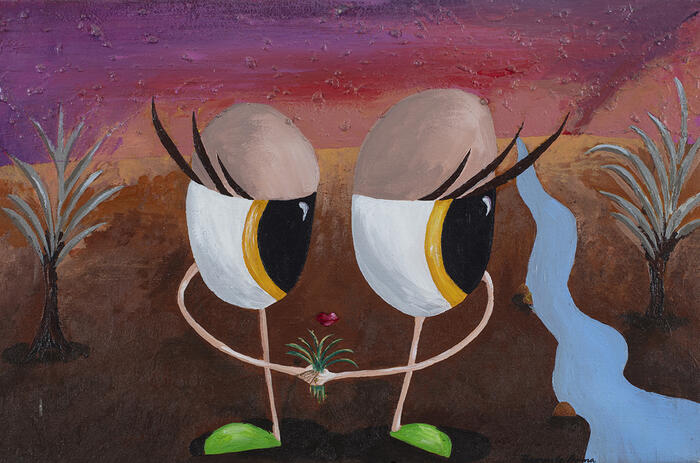
Malba presents the most comprehensive survey of the Argentine artist’s work, featuring nearly 200 paintings, drawings, collages, embroideries, sculptures, installations, and videos; an exhibition that invites making without fear.
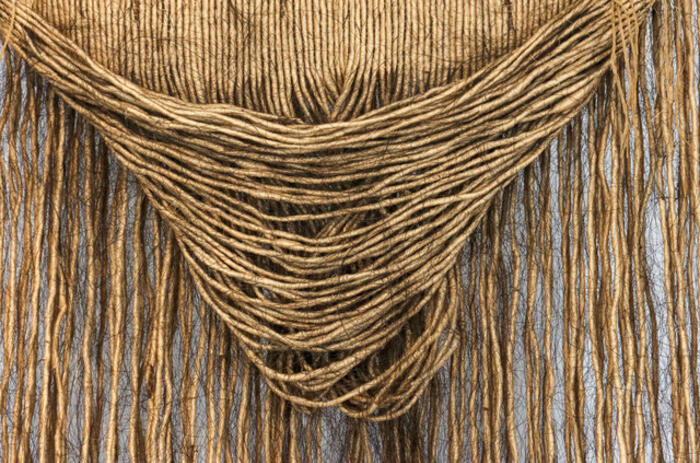
The museum presents the artist’s trajectory in relation to her contexts, documenting her artistic networks, her interventions in architecture, and her pioneering role in the development of textile practice in the Americas.