
LIVING MEMORIES OF CASSAVA: PHOTOGRAPHY AND MBYA-GUARANÍ KNOWLEDGE IN BUENOS AIRES
Kalie Granier presents at Paco Urondo a project developed with the Tava Miri community in Misiones that explores the relationships between people, plants, and land.
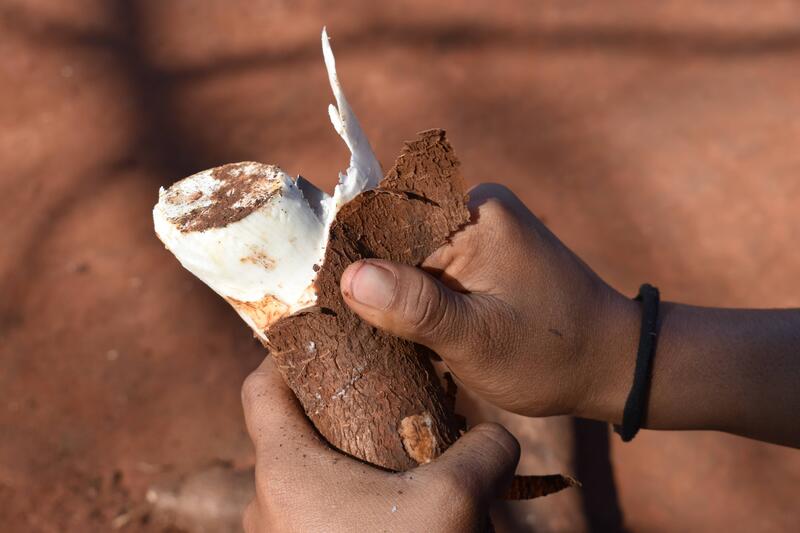
This Thursday, November 12, Manji’o Cho’o. Memorias vivas de la mandioca (Living Memories of Cassava) opens at the Centro Cultural Universitario Paco Urondo, part of the Faculty of Philosophy and Letters of the University of Buenos Aires. The photography exhibition by French artist Kalie Granier (France, 1983) was created in collaboration with Germán Acosta, cacique of the Mbya-Guaraní community Tava Miri, Juliana Escobar, and anthropologists Ana Padawer, María Lucila Rodríguez Celín, and Carla Golé.
The show presents a process of research and creation developed together with the Tava Miri community in the province of Misiones. Cassava (manji’o in Guaraní), a plant fundamental to the community’s daily life, is the starting point of a body of work that connects photography, film, anthropology, and situated narratives. The project explores the links between territory, memory, and the transmission of knowledge; the plant’s cultivation, harvest, and preparation make it possible to observe how knowledge is built and passed on through daily life, in close relation to the environment and those who inhabit it.
The exhibition is accompanied by a book that gathers photographs by Granier and texts by the participating anthropologists and by cacique Acosta. The publication includes an introductory text by James Clifford, historian and professor emeritus at the University of California, Santa Cruz (UCSC), United States.
As part of the opening, a roundtable discussion will take place on Thursday, November 12, at 4:00 p.m., featuring Germán Acosta, chief of the Mbya-Guaraní Tava Miri community; the anthropologists involved in the project; and artist Kalie Granier. Coordinated by the Department of Social Engagement and International Agreements at the Institute of Anthropological Sciences of the School of Philosophy and Letters at the University of Buenos Aires, the event aims to share the reflections that gave rise to the project and explore the intersections between art, anthropology, and community knowledge.
Manji’o Cho’o. Memorias vivas de la mandioca is on view from November 12 at the Centro Cultural Universitario Paco Urondo, 25 de Mayo 201, Buenos Aires, Argentina.
Related Topics
May interest you
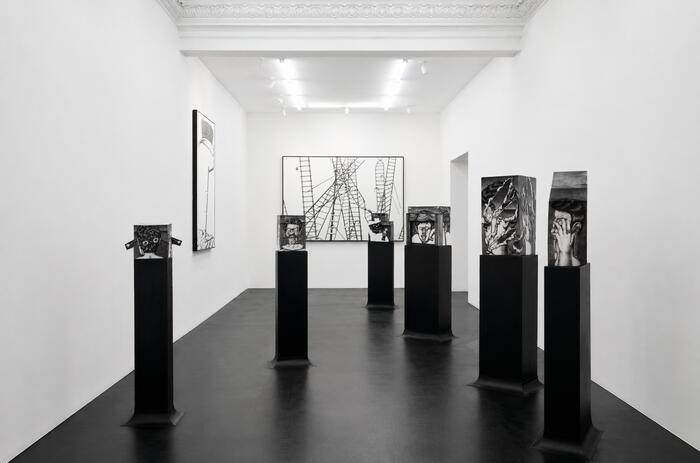
HE AND I: ON ROMANTIC LOVE AND UNCONSCIOUS DESIRES OF NICOLÁS SAID AND CERVIO MARTINI
On a wall in downtown Buenos Aires, a tiny message from a fortune cookie tells the viewer: “Today is a good day to fall in love; look carefully around you.” Beneath the text sits an egg wearing a magician’s hat, next to a lit mosquito coil. Above it all, a single word: Yo (I).
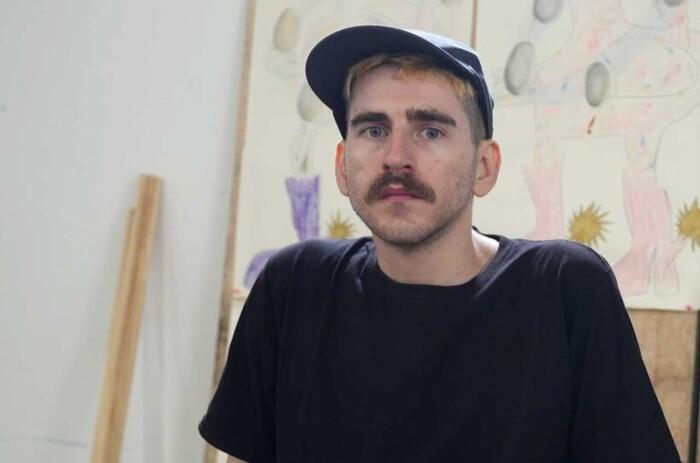
CERVIO MARTINI. THE SALON OF THE REJECTED
In sixteenth-century Florence, Duke Cosimo de’ Medici and the painter Giorgio Vasari founded the Accademia del Disegno, one of the first institutions to offer artists a space devoted to perfecting their craft, free from commercial pressures. In 1863, in Paris, by order of Napoleon III, an exhibition was held for a number of artists whose works had been rejected by the jury of an official Salon. It was given the name Salon des Refusés (Salon of the Rejected).
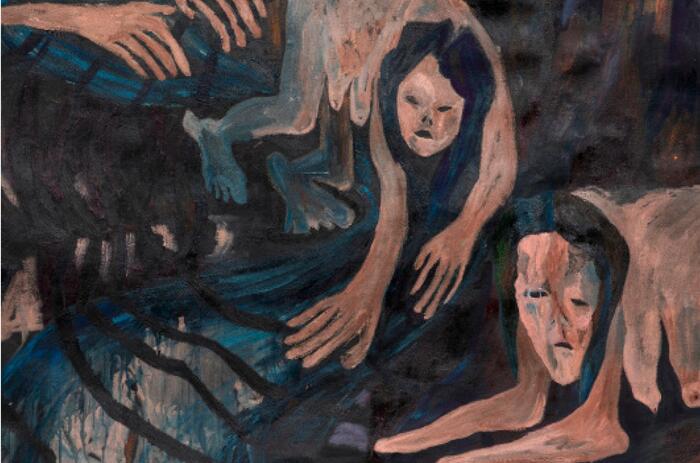
“NO ENCHANTED GARDEN”: LATIN AMERICAN TEAM FOR JUSTICE AND GENDER AT ARTEBA 2026
The stand of the feminist civil society organization presents works by Nicola Costantino, Florencia Breccia, Guido Yannitto, Marina Daiez, and weaving collectives.
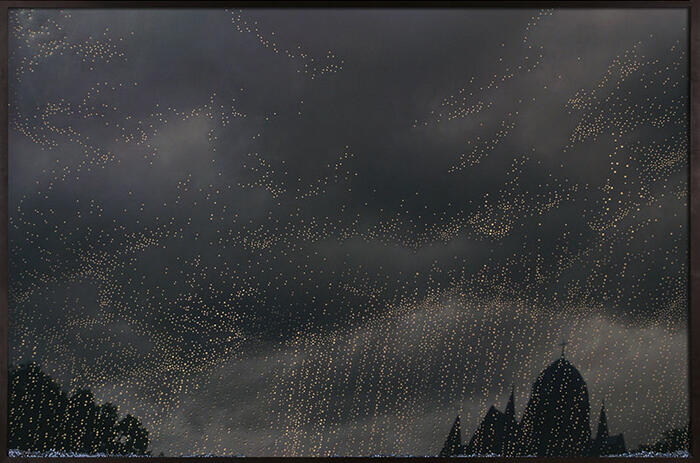
MIGUEL ROTHSCHILD NOMINATED FOR THE EFG LATIN AMERICA ART AWARD
The Berlin-based Argentine artist was selected at Pinta BAphoto with a micro-perforated photograph.