By
Marina Reyes Franco
IT'S A BEAUTIFUL DAY, YOU'LL SEE SOMEONE COME ALONG AND RUIN IT
Walter Otero Contemporary Art
August 25, 2026
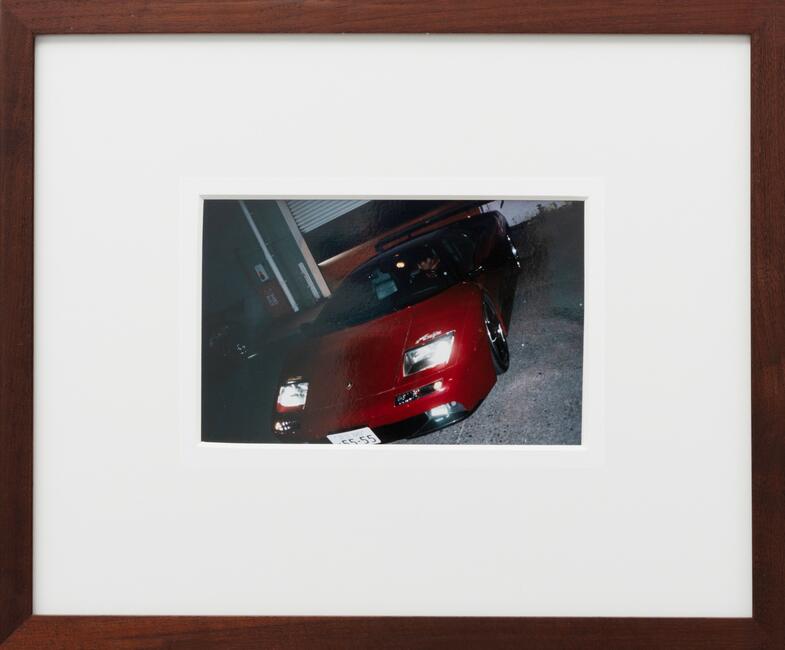
Stillz. Photo Dec 03 2024, 7 18 48 PM. Courtesy of Walter Otero Contemporary Art
In the pantheon of contemporary image-makers, Stillz occupies a paradoxical place. He has created iconic images for the most recognized artists of the last decade, yet we don't know what he looks like, as he prefers the focus to remain on his output. He's afraid of flying, yet he practically lives on a plane. He documents popular culture but also steals images of ancient sculptures from the museums he visits. Since establishing a creative collaboration with Bad Bunny in 2019, his life has essentially become a whirlwind of airplanes and production sets. Showing for the first time in Puerto Rico, Hace un día precioso, verás como viene alguno y lo jode (It's a Beautiful Day, You'll See Someone Come Along and Ruin It) offers the chance to get to know Stillz's individual artistic production, beyond the music videos we know him so well for. Through photographs and paintings, the exhibition reveals personal concerns and lesser-known artistic explorations.
Born into a Colombian family, Stillz grew up in the suburbs of Miami. It was there, at ten or eleven years old, that he picked up a camera to film skate videos with his friends, which introduced him to the visual language of Spike Jonze and Harmony Korine. At sixteen, he dropped out of school and moved to New York to work as a photographer, spending his free time exploring the city's museums. Beyond Andy Warhol, a clear reference point for his Polaroid series of pop idols, photographers Sebastião Salgado, Juergen Teller, and Wolfgang Tillmans also shaped his eye. Less well known, however, is the fact that he also became a self-taught painter under the influence of Julio Larraz, the father of a childhood friend. Though he lives in constant motion, Stillz sets up temporary studios in every city where he works for a significant stretch of time, gradually amassing an immense body of work in photography, screen printing, and painting that he reveals little by little.
The cloud photograph series — small framed Polaroids or large-format monochrome prints that blur the line between photography and xerography — stems from a contradiction. He's a traveler afraid of takeoff, yet compelled to document the view from the airplane window as though it were part of a calming ritual to capture the sacred and the ominous at once. Ni aquí ni allá is the work of an artist who longs for a place to stand still. In The Fall of Icarus (Ceiba), we witness a surrogate self-portrait, seeing himself in an F-22 Raptor stealth fighter jet that appears to be nosediving. Knowing, however, that the image was taken on the grounds of the former Roosevelt Roads Naval Station in Ceiba just days before the U.S. invasion of Venezuela, the Icarus in question could be anyone who prematurely celebrated the antiwar achievements of the Puerto Rican people in the early 2000s.
Photography is also central to his painting process: he uses reference images and breaks them down into tonal blocks to control color and texture, a method he learned from years of observing Larraz. In Yuki at Iglesia Shikaribetsu, he draws on a video he made for Japanese artist Yuki Chiba, while Untitled belongs to a series of paintings of houses he liked, which he began painting as if doing so could conjure a home of his own. Meanwhile, the exhibition's most recognizable images belong to the series of modified-car photographs that were part of the production for the Bichiyal video.
Unlike his previous exhibition Ignore Your Heroes, where he presented hundreds of Polaroids of artists, Hace un día precioso, verás como viene alguno y lo jode offers no such excess. Instead, Stillz presents the face of Antinous, rendered in a sculpture from the Museo del Prado's collection, shown alongside his contemporary counterpart, Benito Antonio Martínez Ocasio, ahead of his Super Bowl LX performance. The physical resemblance between Benito and the sculpted face of Antinous — the deified lover of Roman emperor Hadrian — is striking. Antinous was a short-lived adolescent with scant historical documentation; nevertheless, he was elevated to divinity, and his image in marble spread throughout the empire in more than eighty sculptures that survive to this day. Stillz proposes a parallel between this ancient deification and contemporary celebrity culture. But while Antinous's legacy was preserved in sculpted marble, Benito/Bad Bunny's fleeting moment is preserved in the chemical reaction of a photograph. Both figures are constructed by the collective desire of the cultures that produce them.
The works in this exhibition interweave pieces made in the midst of massive video productions with the more intimate, reflective practice of painting, offering a glimpse into the inner workings of a career at full tilt. Against the mystery that generally surrounds their creator, the pieces offer clues to the many layers that make up Stillz.
Related Topics
May interest you
News
BERNARDO MEDINA'S JÍBARO POP AND BORICUA IDENTITY AT CASA DE AMÉRICA
By
Álvaro De Benito
The Puerto Rican artist explores in Madrid the historical, cultural, and political tensions that define the relationship between Puerto Rico and the United States through a highly symbolic visual language.
News
THE NATIONAL GALLERY OF ART RECEIVES NEARLY 50 WORKS FROM THE BEREZDIVIN COLLECTION
The gift by Diana and Moises Berezdivin brings works by Allora & Calzadilla, Rafael Ferrer, Damián Ortega, Chemi Rosado-Seijo, and Rosângela Rennó, among others, to the Washington museum.
Interviews
WALTER OTERO: “A TROPICAL GALLERIST IS ONE WHO IS NOT AFRAID OF ANYTHING”
By
Álvaro De Benito
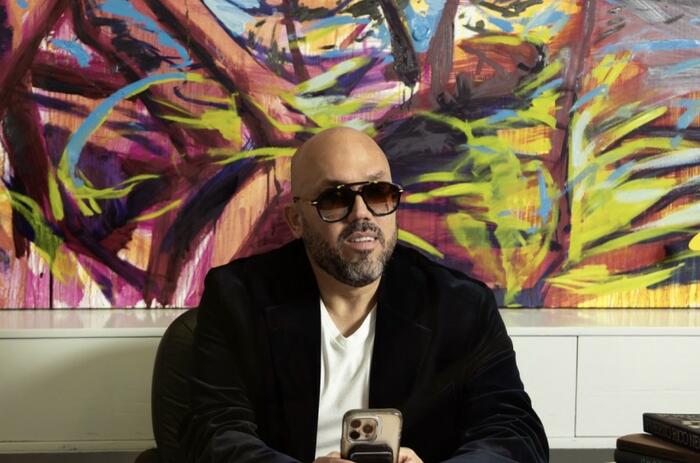
Walter Otero is recognized for his unconventional approach to artist management and the Puerto Rican art ecosystem. His career is now compiled in Walter Otero. A Tropical Gallerist, a book in which he reviews his career and reflects on changes in the sector.
News
BIOGRAPHICAL GEOLOGY: GISELA COLÓN PRESENTS HER FIRST RETROSPECTIVE IN PUERTO RICO
By
Violeta Méndez
The Puerto Rican–American artist explores the relationship between geology, memory, and vital energy in an exhibition spanning more than three decades of work.

Interviews
GISELA COLÓN: ANCIENT FORMS, NEW SOURCES OF TRANSFORMATION
By
Violeta Méndez
The artist’s organic minimalism reveals the intertwining of ecological phenomena, personal and ancestral memory, and the relationship between cultural anthropology and the natural world.
News
PINTA ART FOUNDATION AND EL ESPACIO 23 ANNOUNCED A NEW PARTNERSHIP
The collaboration covers airfare, accommodation, and participation in the Miami space's residency program for one selected artist.