By
Álvaro De Benito
Barcelona's MACBA presents I Have Learned to Swim on Dry Land, the first monographic exhibition that a Spanish institution dedicates to Cuban-American artist and activist Coco Fusco (New York, USA, 1960). The exhibition, titled after the opening sentence of Virgilio Peña's short story Swimming, offers a journey through several thematic nuclei revolving around words, language, and silence, as well as the semiotics and symbolism entwined with these concepts.
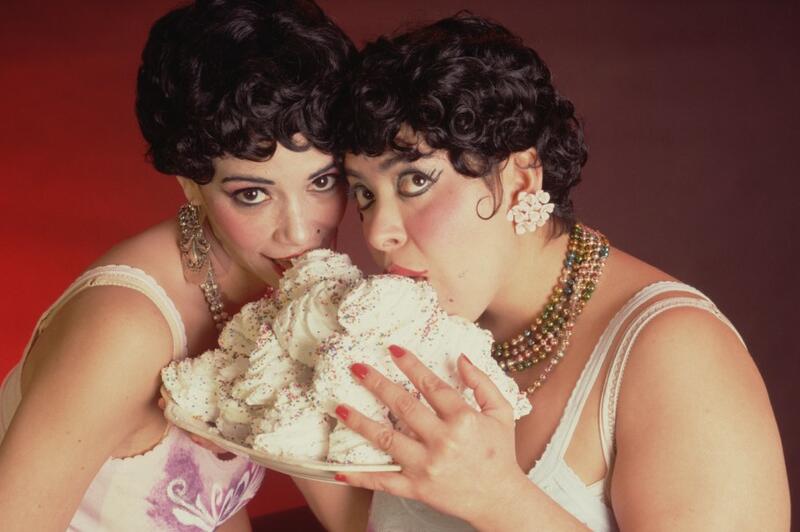
This journey unfolds as a path intertwined with audiovisual, performance, and documentary works through which Fusco creates a space highlighting the post-revolutionary tensions in Cuba and the social narratives they generate. This vision is articulated by bringing to light the lives and imaginaries of Cuban dissident artists, whose biographies are marked by repression. References include Virgilio Piñera, María Elena Cruz Varela, Heberto Padilla, Néstor Díaz de Villegas, Luis Manuel Otero Alcántara, and Maykel Osorbo—figures whose poetry, music, and art reflect and elevate this ongoing conflict.
The exhibition opens with a kind of agora presenting the artist’s proposals about topographical elements, emphasizing notions of place and meaning, echoing Havana’s Revolution Square and the revolutionary promise turned betrayal. Fusco’s collaborations with other dissident and diaspora artists enable her to witness, both directly and indirectly, how the romanticized vision embedded in collective consciousness across Europe and North America is perceived.
The show also features video excerpts of poets who have suffered repression, such as La confesión (The Confession) (2015) by Heriberto Padilla; El mensaje en una botella de María Elena (A Message In a Bottle Of María Elena) (2015) by Cruz Varela; and Vivir en junio con la lengua fuera (Living Out Of Breath In July) (2018) by Reinaldo Arenas. While Cuba is central to the project, recent U.S. policies also play a significant role.
Additionally, the exhibition includes records and documentation from Fusco’s sociological, political, and economic research. Some of this work has been published, including English is Broken Here (1995) and Dangerous Moves: Performance and Politics in Cuba (2015), while others have been exhibited extensively, such as Only Skin Deep: Changing Visions of the American Self (2001-2003). Around this documentary core, three newly created works made with Loid Der are presented: Environmental Activists Assassinated Worldwide (2023), Journalists Killed at Work Worldwide (2023), and Artists in Prison Worldwide (2024).
I Have Learned to Swim on Dry Land revisits several of Fusco’s earlier actions to reevaluate their impact and interpretation. For example, in the 1990s, Guillermo Gómez-Peña and Fusco performed The Couple in the Cage: Two Undiscovered Amerindians Visit the West (1992–1994), encountering a crossroads of diverse reactions and meanings.
The exhibition also includes actions addressing identity and gender, globalization, and sexism, highlighting works created with Nao Bustamante. It does not neglect Fusco’s cinematic side, showing La noche eterna (The Eternal Night) (2023), nor does it overlook specific projects such as Aponte’s Lost Podcast (2025), a project specifically made for MACBA in collaboration with Otero Alcántara.
A departure from institutional frameworks and their discourse, along with the need to create new institutions that enable genuine critique, are essential artistic driving forces in Fusco’s work. Artistic research, narratives, and languages, combined with a social approach, endure in the works displayed in this exhibition, while consolidating Fusco’s expansive vision.
Coco Fusco. I Have Learned to Swim On Dry Land is on view until January 11, 2026, at MACBA, Pl. del Àngels, 1, Barcelona (Spain).
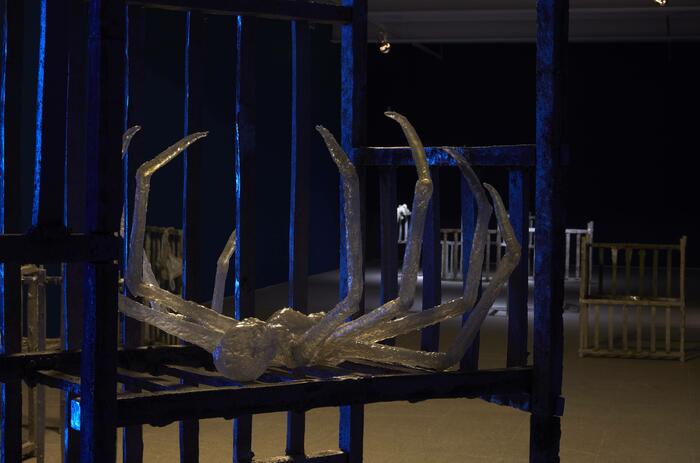
Naufus Ramírez-Figueroa (Guatemala City, Guatemala, 1978) has long warranted a mid-career exhibition such as the one hosted by the Museo Reina Sofía. His ongoing activity and presence in institutions and performances over recent years have positioned the Guatemalan artist as a key figure in the development and visibility of contemporary Central American art beyond its geographic framework.
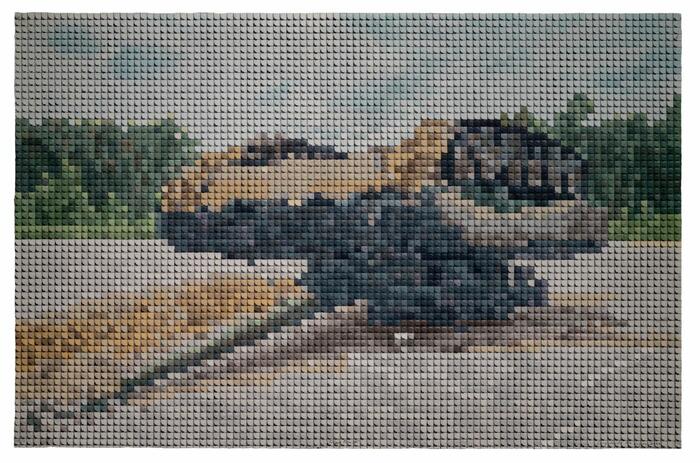
Until the end of September, the Galician city of Pontevedra is reviving its Art Biennial, an event that has been held since 1991 and now reaches its thirty-second edition under the slogan Volver a ser humanos (Becoming Human Again). Under this premise, Antón Castro, along with Agar Ledo and Iñaki Martínez Antelo, have curated a proposal centered on war, violence, and the traces they leave in society and humanity.
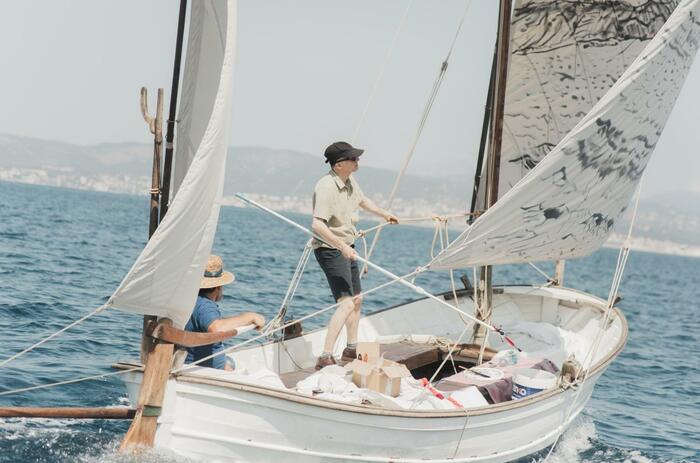
Alberto Baraya (Bogotá, Colombia, 1968) presents his project Llatina i Mestral (Catalan for Lateen and Mistral)as part of the B Biennial in Majorca. The work begins with a performative action in which the artist paints directly onto a sail while at sea. The sail becomes a canvas that captures both a physical journey and a conceptual one.

Priscilla Monge (San José, Costa Rica, 1968) arrives at the Galician Center for Contemporary Art (CGAC) with her exhibition Cuestiones de vida o muerte (Matters of Life and Death). This show brings together works from all stages of the Costa Rican artist’s career, establishing her as a key figure in Central American art through her commitment to social critique.

Sofía Crespo (Buenos Aires, Argentina, 1991) often centers her work on the use of biology-inspired technology. In her exploration of the common ground between artificial intelligence and the way it generates images, on the one hand, and human perception of the environment, on the other, there is a turning point in the Argentine artist's practice.
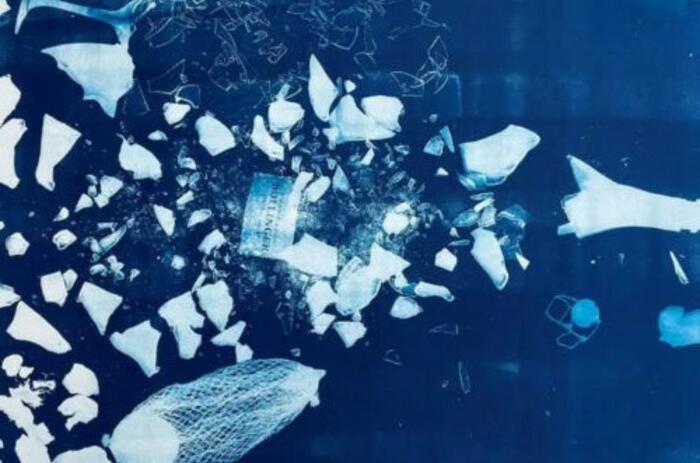
Inventory of Fragile Materials is the title of the exhibition by Rocío Aguirre (Concepción, Chile, 1989) and Camilo Delpin (Concepción, Chile, 1989), presented at Spolia Haus until mid-month. Organized in collaboration with the Chilean Embassy in Spain, the Chile-Spain Foundation, and PHotoESPAÑA, the exhibition brings together two projects that, while distinct in their visual idioms, converge conceptually in their shared investigation of the residual.