
By
Álvaro De Benito
Until the end of September, the Galician city of Pontevedra is reviving its Art Biennial, an event that has been held since 1991 and now reaches its thirty-second edition under the slogan Volver a ser humanos (Becoming Human Again). Under this premise, Antón Castro, along with Agar Ledo and Iñaki Martínez Antelo, have curated a proposal centered on war, violence, and the traces they leave in society and humanity.
Directly addressing the concept of war, but without overlooking destruction in the emotional, social, and economic realms, the Pontevedra Art Biennial draws on the theories of intellectuals such as Rob Riemen and Susan Sontag and their premises about war to lay the theoretical foundation of the gathering. As a result, the curatorial work becomes a point of reflection on art as an instrumental element and on the visions of the invited artists. Among them are seven Latin American artists who, through their proposals, sow the seed of critical analysis and thought about violence and its consequences.
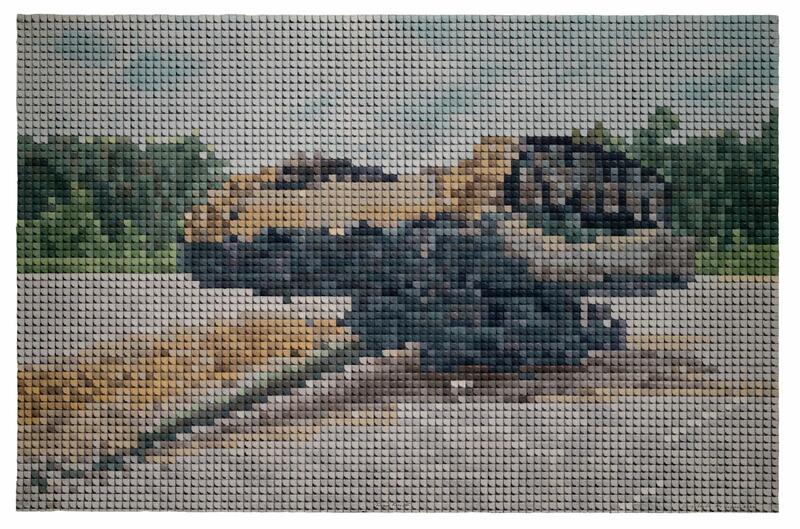
Dagoberto Rodríguez (Caibarién, Cuba, 1969) offers a conceptual and committed approach in his participation. His works, exhibited at the Museo de Pontevedra and the Fundación Manuel Moldes, revolve around the violence of war, alluding directly to the Ukrainian conflict with paintings of Russian tanks, while also turning his gaze to other crises silenced in the Western world, such as the current situations in the Rohingya refugee camps in Bangladesh or in his native Cuba. In Marte (Mars, 2023), attributing an AK-47 to the god of war ironically critiques power narratives, while the mural installation CASA TOW (2018) turns a U.S. missile into the protagonist of that violence and the uprooting it generates.
Denilson Baniwa (Barcelós, Brazil, 1984), after his appearance at ARCO as co-curator of the Watamisé program, reflects on the symbiosis between human beings, animals, and nature, and the breakdown of balance with the natural world. Through four works, the Brazilian artist highlights the importance of rhythms set by wildlife and how jungle inhabitants have coexisted in harmony with their natural environment. In this way, Baniwa proposes reimagining new ways of relating to the planet from perspectives far removed from anthropocentrism.
Fritzia Irizar (Culiacán, Mexico, 1977) presents Alepo/Guernica/Kiev/Rafah (2024), a work that directly dialogues with Picasso’s Guernica, which she reproduces to scale, and its most ferocious representation of militarism. Focusing on violence, suffering, and memory, this piece directly engages with current conflicts. Over the canvas, Irizar fired confetti bearing images of victims from Aleppo, an action she repeated using images from other conflicts, which adhered to the painting to create a stark contrast between the festive and the tragic, critically pointing to the trivialization of violence.
Regina José Galindo (Ciudad de Guatemala, Guatemala, 1974) contributes to this Pontevedra Biennial with the work Ríos de Gente (Rivers of People, 2021), exhibited at the Pazo de la Cultura. The work highlights how, in the face of social and ecological crises, collective action becomes a vital weapon. The overexploitation of resources and mass extractivism are conceived as systemic violence that significantly affects vulnerable communities. Collective action is expressed with slogans during this performance, an action configured, as the artist would say, as a human sculpture. The Guatemalan artist’s proposal thus underscores a commitment to social justice and frames her work as a tool of resistance.
Priscilla Dobler Dzul (Mérida, Mexico, 1985) presents, also at the Pazo de la Cultura in Pontevedra, El jardín de las delicias (The Garden of Earthly Delights, 2018–2021), a triptych in which the artist responds to the colonial and plundering context by depicting creatures of diverse races and genders, Indigenous cultural objects, and a language that confronts the primitive. Its three scenes — Cielo (Heaven), Tierra (Earth), and Infierno (Hell) — portray in dreamlike landscapes the transformation from the idyllic to the eradication of hope, calling, like Barawa, for a necessary rethinking of humanity’s relationship with other species and with itself.
Continuing in the same venue, Sandra Cinto (São Paulo, Brazil, 1968) presents her installation Entre as palavras e as coisas (Between Words and Things, 2006), a work composed of a bookshelf and modular canvases, which includes a wooden piece of furniture designed by the artist on which symbolic objects are placed. With this, the Brazilian artist aims to awaken awareness of personal and collective reconstruction, for instance, using cracks in broken porcelain as evidence of memory and regeneration. The books evoke a double remembrance of knowledge and education, and the bridges proposed by Cinto reflect resistance against division.
Violeta Quispe Yupari (Lima, Peru, 1989) presents ÑAMPAQ ÑAWI, QHIPAQ ÑAWI (Eye to the Past, Eye to the Future, 2025), an installation composed of a sculpture and two paintings that delves into the meaning and transformative power of fear. Sensitivity to fear can be destructive, but it can also be empathetic and strengthen the construction of a shared solidarity. The Peruvian artist also reflects on how the fear generated by experiences of war and its consequences also enables an awareness of who we are and where we come from.
The 32nd Pontevedra Art Biennial can be visited until September 30 at selected venues distributed throughout the city of Pontevedra (Spain).
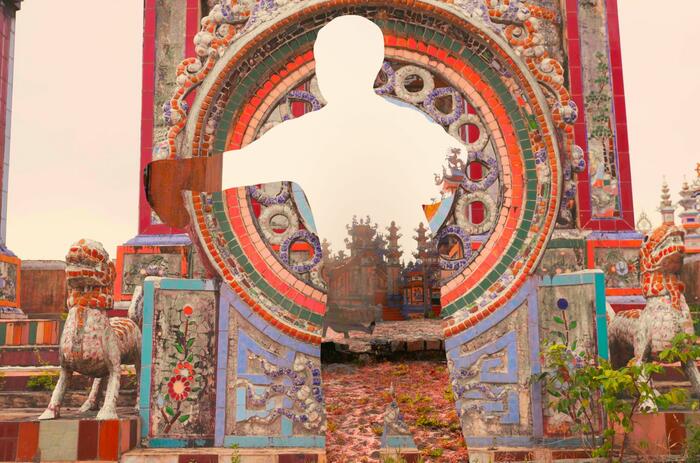
A historic edition brings together 46 artists and collectives across 11 venues in Guatemala, featuring newly commissioned works, dialogues between Mayan archaeology and contemporary art, and a focus on cultural diversity and the construction of inclusive futures.
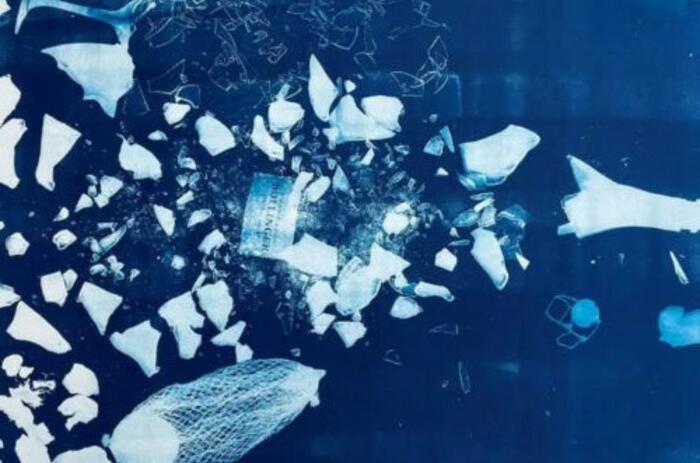
Inventory of Fragile Materials is the title of the exhibition by Rocío Aguirre (Concepción, Chile, 1989) and Camilo Delpin (Concepción, Chile, 1989), presented at Spolia Haus until mid-month. Organized in collaboration with the Chilean Embassy in Spain, the Chile-Spain Foundation, and PHotoESPAÑA, the exhibition brings together two projects that, while distinct in their visual idioms, converge conceptually in their shared investigation of the residual.
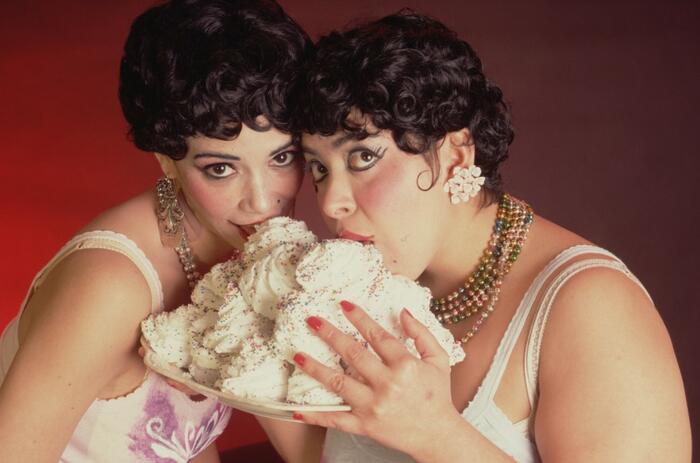
Barcelona's MACBA presents I Have Learned to Swim on Dry Land, the first monographic exhibition that a Spanish institution dedicates to Cuban-American artist and activist Coco Fusco (New York, USA, 1960). The exhibition, titled after the opening sentence of Virgilio Peña's short story Swimming, offers a journey through several thematic nuclei revolving around words, language, and silence, as well as the semiotics and symbolism entwined with these concepts.
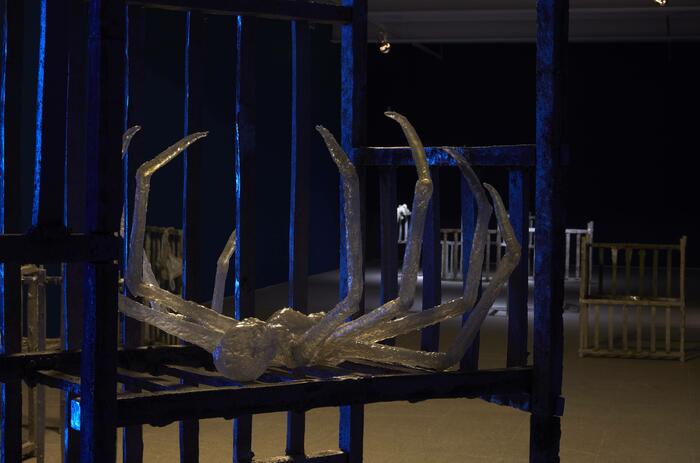
Naufus Ramírez-Figueroa (Guatemala City, Guatemala, 1978) has long warranted a mid-career exhibition such as the one hosted by the Museo Reina Sofía. His ongoing activity and presence in institutions and performances over recent years have positioned the Guatemalan artist as a key figure in the development and visibility of contemporary Central American art beyond its geographic framework.