ANTONIO RAIMONDI AND THE REPRESENTATION OF NATURE IN PERU
Museo del grabado ICPNA presents Antonio Raimondi and the official representation of nature in republican Peru, curated by Luis Felipe Villacorta.
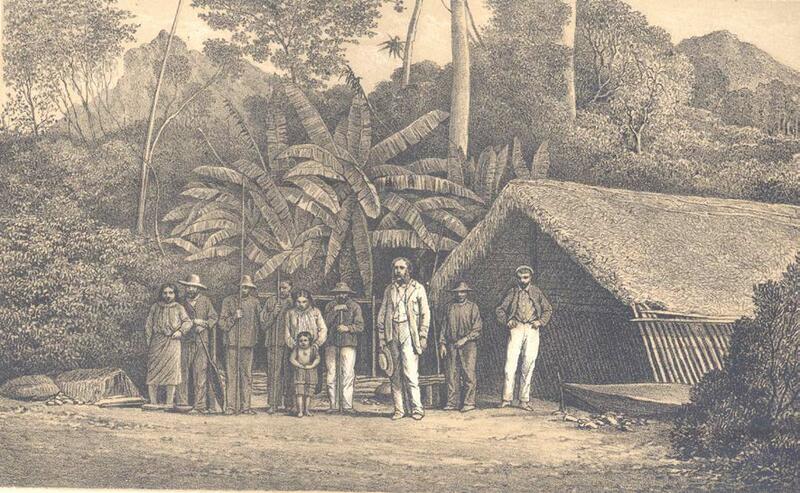
The exhibition will feature a large selection of original watercolors and period engravings produced for Antonio Raimondi's El Perú. It will also be accompanied by other bibliographic and documentary materials that give context to the curatorial script.
This initiative has been developed between the Instituto Cultural Peruano Norteamericano (ICPNA) and the Asociación Educacional Antonio Raimondi (AEAR).
It is the first exhibition of the year at the Museum and is also the first event of the year in the commemorative program for the bicentennial of the birth of Antonio Raimondi (1824-2024).
-
Tulipa monstruosa. Acuarela pintada en el Jardín Botánico de Brera, Milán Antonio Raimondi Acuarela y lápiz sobre papel Circa 1840 17.4 x 12.5 cm Colección Sucesión Giurato
-
Campanilla Roja “Ipomoea nations” (Hook.), Nichols, CONVOLVULACEAE Antonio Raimondi Acuarela sobre papel Lomas costeras, “Hamancay 8 de agosto 1854” 22 x 33 cm Colección Museo Raimondi
-
Grabado de El Perú, tomo III, de Antonio Raimondi H. del Garnier Grabado sobre papel 1880 Abierto: 27 x 38 cm Cerrado: 27 x 20 x 6.5 cm Colección Museo Raimondi
Curatorial text. By Luis Felipe Villacorta.
In the mid-19th century Italy did not exist as a political unit. The Congress of Vienna of 1815 restored in Europe the absolutist legitimacy prior to the French Revolution and the Napoleonic wars. In this context, the Italian regions were divided according to the interests of the hegemonic European powers. Only the kingdom of Piedmont and Sardinia remained autonomous under the leadership of the House of Savoy. However, nationalist sentiments fueled the popular cause of unity and independence.
This long and, at times, bloody political process took place in a particular socioeconomic scenario: the second industrial revolution. In this context, Milan stood out as the most developed city. Its strategic location in the productive Po valley, its leadership in the silk textile industry, and its status as a "road junction" for trade routes, consolidated an active mercantile bourgeoisie.
This civic drive reshaped the local scientific and technical scene when, in 1838, the Civic Museum of Natural History and the Society for the Promotion of Arts and Crafts were founded. These new institutions boosted Milan's cultural and educational offerings, represented by the emblematic Astronomical Observatory and Botanical Garden of Brera (JBB), as well as the Ambrosiana and Braidense Libraries. Milanese high schools were closely linked to these institutions, both at the curricular level and among teachers. Lyceums such as San Alessandro and Porta Nova included a course in natural history and botany. The teacher of this course was at the same time curator of the Brera Botanical Garden.
-
Map showing the Junction of the rivers Mantaro and Apurimac (Peru) Antonio Raimondi Grabado sobre papel 1868 23 x 20.5 cm Colección Museo Raimondi
-
Plano del damero de CaymaAntonio RaimondiLápiz sobre papel1863 - 186495 x 55 cm Colección Casa Museo Antonio Raimondi, Municipalidad Provincial de Pacasmayo
Balsamo Crivelli was professor of botany at both high schools and, therefore, was in charge of the aforementioned Botanical Garden. Crivelli was also a member of the Civic Museum of Natural History, where he alternated with Emilio Cornalia, a historical figure of this institution. Another relevant scientist was the chemist Antonio de Kramer, member of the Civic Museum and teacher of the Society for the Promotion of Arts and Crafts. It is interesting to note that Kramer's wife was a sister of Cornalia. Thus, academic, institutional and even family ties consolidated a Milanese scientific elite with a cosmopolitan vocation.
Recent research has shown that Antonio Raimondi was a stranger to the Milanese scientific circle. He did not take part in its academic institutions (high schools) nor in its scenarios of scientific consecration (congresses, courses, museums), in spite of being a frequent visitor to the Botanical Garden. However, Milan offered him a propitious environment that fostered his vocation as a naturalist. The family business - a pastry shop next to the Piazza del Duomo - must have given him a certain economic stability to successfully face his self-taught training.
Antonio Raimondi actively participated in the Milan Rebellion (1848) and the Defense of the Republic of Rome (1849). The failure of these insurrections prompted him to embark on new directions. On the way from Milan to the port of Genoa he received a letter from Cornalia, who regretted not having met him and offered him to be a correspondent for the Civic Museum. It was December 1849; Raimondi was on his way to Peru.
May interest you
LUCILA GRADIN: A JOURNEY THROUGH COLOR
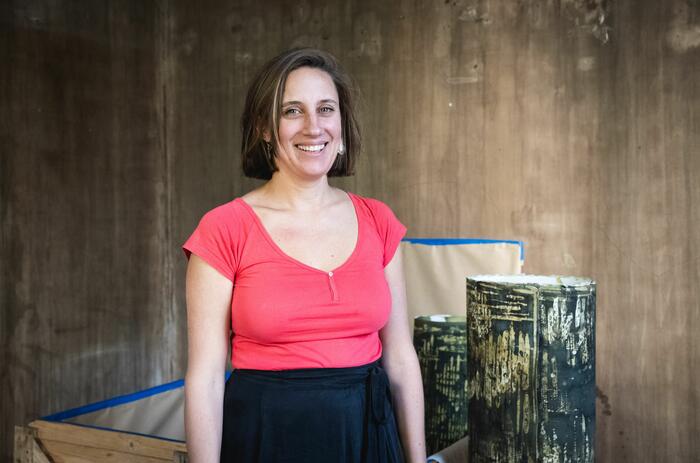
Lucila Gradin begins her work when creating her own natural dyes –through dyeing and medicinal plants from all over the world– and culminates it by pursuing the image that leaves every trace of this ancestral practice through embroidery, textiles and compositions on paper. The Argentine artist is part of the RADAR section of Pinta PArC 2024, together with COTT Gallery.
THE MONUMENTAL PORTRAITS OF HUARCAYA AT ICPNA CULTURAL
The exhibition Ver por contacto (Seeing by Contact). Fotogramas 2014-2024 brings together the work produced over the last ten years by Peruvian photographer and visual artist Roberto Huarcaya.
PINTA PArC 2024 REAFFIRMS ITS COMMITMENT TO DISSEMINATE THE REGION'S ARTISTIC IDENTITIES
Pinta PArC returns with a new edition: from April 24 to 28 at Casa Prado Miraflores, the fair will present an experimental and ambitious program, along with a careful selection of galleries.
COSMIC TRACES: ROBERTO HUARCAYA AT THE VENICE BIENNALE
Peruvian photographer Roberto Huarcaya will represent his country at the Venice Biennale 2024 with his project Cosmic Traces.
MAC LIMA COLLECTION: RESEARCH, CONSERVATION AND EXHIBITION
The Collection of the Museo de Arte Contemporáneo de Lima brings together works by Peruvian and international artists created since 1940 in media ranging from painting, sculpture and installation to photography and video. The exhibition is curated by Patricia Pajuelo, Giuliana Vidarte, Iosu Aramburu and Nicolás Gómez Echeverri.
TURNING THE MEANINGS OF OUR CONTINENT UPSIDE DOWN: HERLITZKA & CO. + HENRIQUE FARIA AT PINTA PArC
In the next edition of Pinta PArC 2024, Herlitzka & Co. (Buenos Aires) and Henrique Faria (New York) join forces to present a booth proposal that challenges conventional notions of contemporaneity and ancestry in Latin American art.
NEXT: VIBRANT PLATFORM AND TERRITORY FOR DIALOGUE
The NEXT section of Pinta PArC 2024 is set as a window to the Latin American emerging art scene, tracing a profound dialogue between diverse artistic systems and a dynamic collaboration with six galleries: Vigil Gonzales (Cusco and Buenos Aires), Salón Comunal (Bogotá), Enhorabuena Espacio (Madrid), Remota (Salta), Constitución (Buenos Aires) and Paseolab / Galería del Paseo (Lima and Punta del Este).