A LINE AS A WEAPON: LOTTY ROSENFELD IN GERMANY
The German venue exhibits the work of the challenging Chilean activist and artist, marked by exile, survival, and repression.
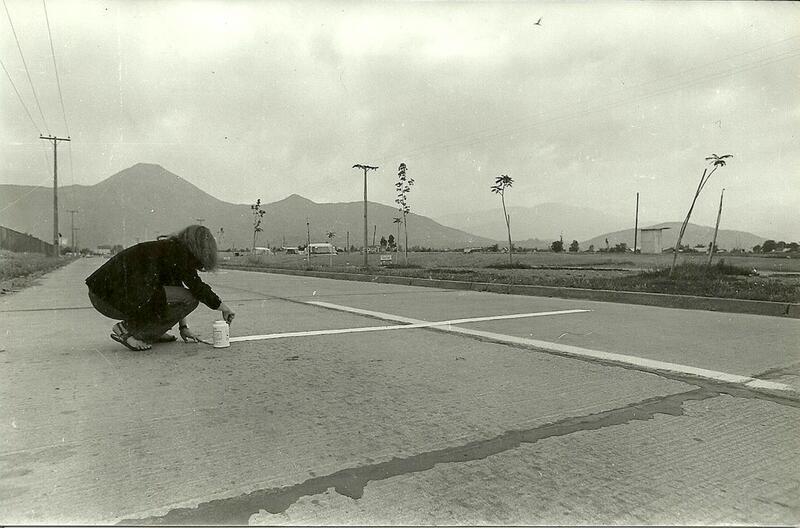
Overbeck Gesellschaft presents Lotty Rosenfeld: Esta Linea Es Mi Arma, the first major retrospective of her work in a German context. Curated by Paula Kommoss, it brings together archival material, performance documentation, early installations, and previously unseen works, tracing the trajectory of a life lived between displacement and rebellion, between silence and signal.
Daughter, exile, feminist, urban choreographer, political activist and conceptual artist, Lotty Rosenfeld was born in Santiago de Chile in 1943, into a family marked by the experiences of expulsion, survival and resilience. Her father, Ernst Rosenfeld, left Nazi Germany in 1935, part of the early wave of Jewish refugees seeking safety in Latin America. Her grandparents, Rudolf and Charlotte Rosenfeld, who once owned the Hotel Rom in Breslau, fled to Siberia, later emigrating to Chile after the war. In exile, the Rosenfeld family rebuilt a life—and a café—in Santiago, grounded in the memories of their lives in Europe.
Raised in the wake of the trauma of the Holocaust and amidst the contradictions of postwar Chile, Rosenfeld grew up to be an artist who would challenge not only dominant political systems, but also the grammar of everyday space. Her practice emerged at the height of the Pinochet dictatorship, when public protest was punishable and state violence normalized. Against this turbulent backdrop, Rosenfeld claimed the street as both medium and message.
In 1978, Lotty Rosenfeld created an untitled work based on a historical photograph of the Jonas Daniël Meijerplein in Amsterdam, the site in February 1941 of one of the earliest mass arrests of Jews by the Nazis in Western Europe. This charged black-and-white photograph became the site of one of Rosenfeld’s first artistic interventions. Rather than using the image as a static historical record, she subjected it to a series of physical alterations—cutting, editing, and perforating the surface.
These early manipulations mark the first appearance of what would later become Rosenfeld’s most recognisable motif: the white line. Though as yet contained within the frame of an archival image, this seemingly simple horizontal incision cuts across the figures and actions captured in the photograph. It interrupts the visual logic of state control—a minor yet forceful gesture imposed upon a scene of domination.
In 1979, Rosenfeld began her most iconic series of works, Una milla de cruces sobre el pavimento (A mile of crosses on the pavement). With white tape and a portable stencil, she transformed the lines that regulate traffic into crosses, into +s—signs of rupture and refusal. She called this “a symbolic act of disobedience,” one she would perform in front of various centers of power over the course of her career, including the Atacama Desert, the White House, the Chilean Stock Exchange Palacio Presidencial La Moneda and the border between East and West Germany. These works—ephemeral and site-specific—intervened precisely where bodies had been erased and systems of meaning prescribed.
In the same year, Rosenfeld co-founded the Colectivo Acciones de Arte (CADA), aligning with poets, sociologists, and artists to redefine art as social intervention. Her aesthetic was minimal, but her politics were expansive—art, for her, was a weapon. As she once stamped on the back of her photographs: Esta línea es mi arma (“This line is my weapon”).
Lotty Rosenfeld: Esta línea es mi arma will be on display until January 24, 2026, at Overbeck Gesellschaft, Kunstverein Lübeck, Königsstrasse 11, Lübeck 23552 (Germany).
May interest you

ARTE LAGUNA PRIZE 2025: INTERNATIONAL AWARD FOR CONTEMPORARY ARTISTS
Now in its 20th edition, the competition invites artists and designers of all nationalities and artistic backgrounds to participate for cash prizes, international residencies, and the opportunity to exhibit at the Arsenale Nord in Venice in 2026. Application deadline: September 10, 2025.

A SENSORIAL ENCOUNTER IN BERLIN: LYGIA CLARK AND HER LIVING UNIVERSE
Neue Nationalgalerie presents the first major retrospective in Germany of Brazilian pioneer Lygia Clark, with over 120 works and an interactive approach that expands the boundaries of the museum experience.
DIMENSION AND ARCHITECTURE IN JOSÉ DÁVILA, AT ALBARRÁN BOURDAIS
AN “ANTI-ARCHIVE” MADE HOME: ANGIE SAIZ AT THE BIENNIAL OF MEDIA ARTS
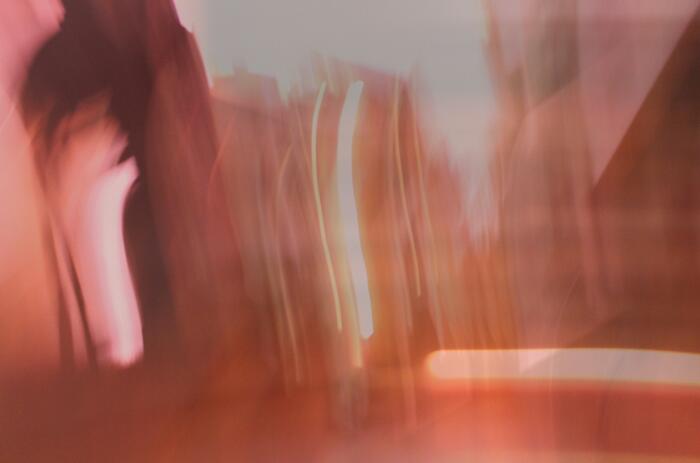
What turns a place into a home? Chilean artist presents the immersive installation Bemol, which through sound and visuality builds an intimate and subjective cartography of inhabiting again a familiar environment.

VÁSQUEZ DE LA HORRA IN GERMANY: SPACE, BODY AND THE SACRED
The exhibition sketches an intimate map where rituals, organic materials, and personal narratives intertwine to question the social norms that shape our identities.