By
María Sancho-Arroyo
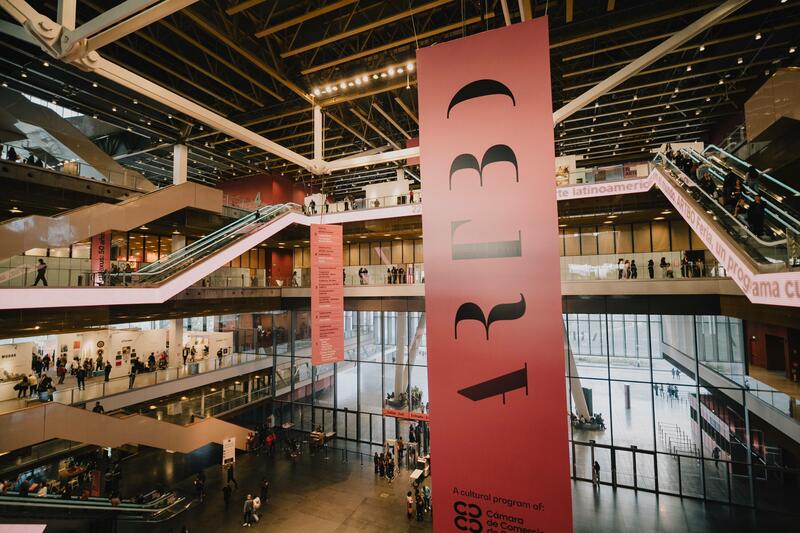
Some art fairs are defined primarily by their galleries, while others also seek to explain the cultural context in which they take place. ARTBO clearly belongs to the second category. Created in 2004 by the Bogotá Chamber of Commerce, it was conceived with an ambition that goes beyond organizing an art fair: to support the development of the art market, contribute to the city’s cultural ecosystem, and connect the Colombian and Latin American art scene with the international art world.
The 2026 edition, the fair’s 22nd, brought together 50 galleries from 12 countries, more than 220 artists, over 30 institutions and more than 40 publishers, and attracted more than 22,000 visitors. The number of galleries may seem modest compared with the major international fairs, but it reflects a deliberate decision on the part of ARTBO. In 2024, coinciding with its 20th anniversary, the fair moved to Ágora Bogotá, a large convention center spread over several levels, with natural light and terraces. Adapting to the new venue, ARTBO chose to reduce the number of galleries and focus on a more carefully selected group, with greater emphasis on quality and discovery, particularly in Colombian and Latin American art.
The composition of the fair reflects this approach. Of the 50 participating galleries, 30 were Colombian — 27 of them from Bogotá — while the international presence was made up predominantly of Latin American galleries. There were galleries from Chile, Argentina, Brazil, Mexico, Venezuela, Guatemala, Ecuador, Panama and Puerto Rico, as well as a smaller number from the United States, Spain and France, but even these galleries based maintain close connections with the region. This is the case with Mor Charpentier, founded in Paris but with a space in Bogotá since 2021, and with the young Barcelona gallery Sorondo Projects, founded by a Venezuelan and representing a significant number of artists connected to Latin America. The composition of the fair therefore reflects an internationalization with a distinctly Latin American character. Rather than being a truly global fair, ARTBO functions as a meeting point for the Latin American art scene.
The price range is also worth noting. Although there were works for different levels of collecting, most were priced roughly between $5,000 and $80,000. At the upper end, there were works priced at or above $1 million, particularly in the secondary market and by internationally established artists such as Fernando Botero and Olga de Amaral. This combination illustrates how ARTBO brings together the discovery of artists with the presentation of works by already established names.
As for sales, the general impression during the days of the fair was positive. Gallerists were reporting sales and, although the level of enthusiasm varied from one gallery to another, the atmosphere was not one of a buying frenzy. Rather, there was a steady level of activity, with works selling gradually throughout the fair.
But ARTBO does not end at the booths. The fair also includes ArteCámara, dedicated to emerging artists without gallery representation; a publishing program that approaches the book as an artistic medium; exhibitions such as Trayectoria, which this year paid tribute to Fanny Sanín, one of the best-known figures in Colombian geometric abstraction; and a special exhibition marking the 50th anniversary of ArtNexus, the publication devoted to Latin American art that was founded in Colombia in 1976 and has spent five decades documenting the region’s artists, galleries, museums and exhibitions, while helping to connect its art scene with the international art world. There are also talks, guided tours and a Design Route that brings contemporary art together with design and collectible furniture.
And, above all, ARTBO extends into the city. The Nominados programme, in which I had the opportunity to participate as an invited guest, is designed precisely for this purpose: to take visitors beyond the fair venue and introduce them to galleries, museums, collections, artists’ studios and other places that provide a better understanding of the local scene. The program included visits to MAMBO and MAMU, Casa Amaral, where we had the opportunity to meet artists Jim and Olga de Amaral and see works by both, Fragmentos — conceived by Doris Salcedo as both an artwork and a place of memory — the Columbarios at the Central Cemetery, and private collections.
For me, this was one of the most interesting aspects of the experience. Travelling to Bogotá as a guest of the fair and taking part in this program was an exceptional way of discovering a city and an art scene that would otherwise have been much more difficult to explore in such a short time. From ARTBO’s perspective, it is also a smart strategy: if a fair wants to attract an international audience, it is not enough to invite people to visit the booths. You need to give them reasons to discover the city and understand the context in which its art scene operates.
The program also brought together an international group of museum directors, independent and institutional curators, art-market professionals and Colombian and international collectors. Participants came from the United States, Belgium, Argentina and elsewhere, alongside representatives of institutions such as the Museo Reina Sofía, the Guggenheim and PAMM. For those of us taking part, the value of the program was not simply in the number of visits and activities, but also in the opportunity to share them with people from different sectors and markets. Conversations during visits, lunches and dinners provided opportunities to exchange views and perspectives and, above all, to gain a better understanding of how the local scene operates: who its key players are, how they relate to one another, how the market works and the role played by collecting in Colombia. In this sense, the program also functions as a form of networking and market education, rather than simply as a cultural itinerary.
But perhaps what is most interesting about ARTBO is not only what happens during the days of the fair, but what lies behind it throughout the year. The Bogotá Chamber of Commerce works to maintain and develop relationships between galleries, artists, collectors and the public through initiatives such as ARTBO | Fin de Semana, which in 2025 brought together 86 cultural spaces and recorded 83,400 visits.
The aim, therefore, is not only to attract an international audience for a few days, but also to develop and consolidate a local audience. And this, to me, is fundamental: markets that succeed in building a strong local scene are also better positioned to project their artists internationally. Internationalization is not built simply by bringing in buyers, collectors and professionals from abroad; it begins by creating a local ecosystem capable of supporting its artists and giving them visibility.
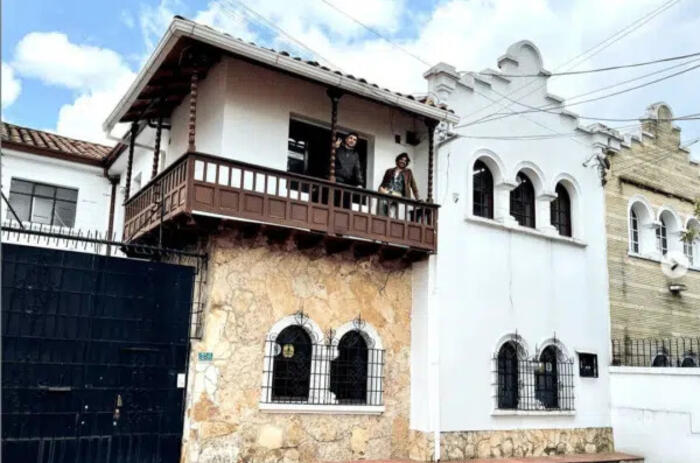
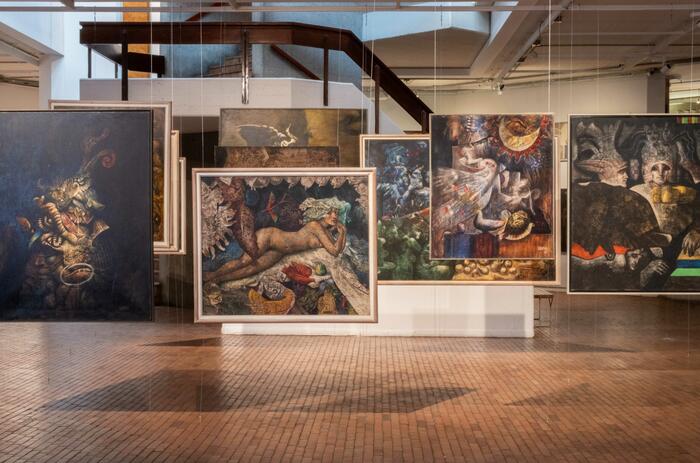
The exhibition spans sixty years of a career and more than one hundred solo shows by a pioneer of modern art in Colombia.
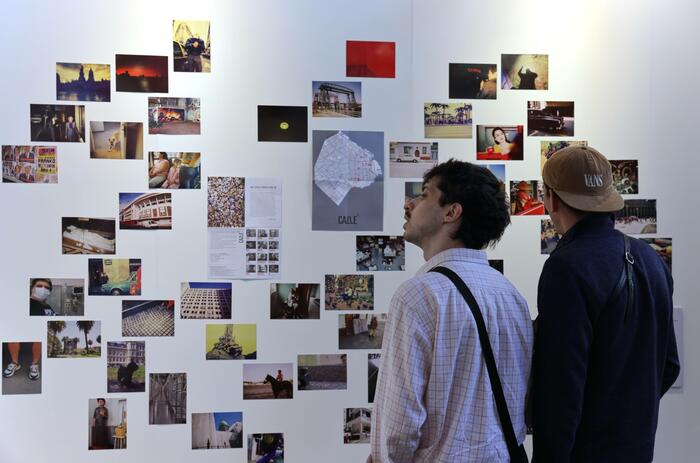
In late October and early November, the city of Buenos Aires will host three fairs with three distinct identities in a single period of intense artistic activity.
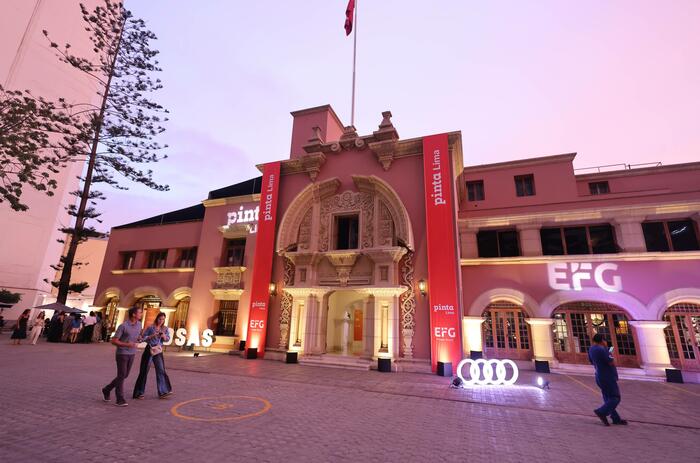
Proposals will be accepted through the end of November for the April event in Miraflores.