

By
Álvaro De Benito
Peruvian artist Wynnie Mynerva explores migration, love, and resistance in Berlin through Andean cosmology and social thought, interrogating which bodies become legible within regimes of recognition and how forms of attachment persist amid conditions of violence and exclusion.

Berlin-based gallery Société presents Volveré y seré millones, a solo exhibition by multidisciplinary artist Wynnie Mynerva (Lima, Peru, 1992), structured around questions of communal memory, relationality, and resistance. Drawing its title from the words attributed to Aymara revolutionary leader Túpac Katari, the exhibition is articulated through three interconnected conceptual frameworks: contemporary geopolitical violence in the Middle East; the global construction of Berlin as a symbolic locus of “sexual liberation”; and the artist’s own experience of migration and legal regularization within Europe.
In response to warfare, anti-migration discourses, and the ongoing marginalization of alterity, the exhibition foregrounds a critical inquiry into the mechanisms through which certain subjects endure and resist. Grounded in experiences of exclusion and in Mynerva’s migration from an Andean context to Europe, the project interrogates the processes through which bodies become socially recognizable and politically entitled. At the same time, it examines how engagement with institutional and bureaucratic structures—often repressive in nature—may operate as necessary strategies for survival rather than mere instruments of domination.
Through newly produced paintings and the video work El amor en tiempos de colonialismo (Love in Times of Colonialism), Mynerva examines relational formations among migrants that depart from normative romantic paradigms. These relationships are framed instead through an ethics of care, shared responsibility, and existential urgency. Within this framework, love is displaced from its conventional status as a private emotion and reconfigured as a relational practice sustained through continuous exchange, interdependence, and collective maintenance of life.
The conceptual foundation of the project draws upon Indigenous understandings of Abya Yala—often translated as “flourishing land”—where pre-colonial social formations did not conceive love according to European individualist definitions. Emotional life was embedded within communal existence and structured by an ontological interrelation between nature, bodies, ancestral memory, and temporal cycles. Such a worldview stands in direct opposition to the autonomous subject central to Western philosophical modernity, proposing instead a model of existence grounded in reciprocity and mutual care.
Mynerva incorporates this cosmological inheritance as the structural backbone of the exhibition, integrating myth, memory, and speculative futures of resistance. This symbolic dimension materializes most prominently in a monumental clay wall that disrupts the gallery’s spatial circulation and invokes the Andean myth of Inkarri—the last Inca ruler, dismembered and buried, whose body continues to regenerate beneath the earth in anticipation of restoring cosmic balance. The evocation of Inkarri articulates both colonial violence and collective persistence, positioning resistance not as a historical event confined to the past but as an ongoing process of regeneration and relational continuity.
Wynnie Mynerva. Volveré y seré millones is on view until June 27 at Société, Wielandstraße 26, Berlin, Germany.
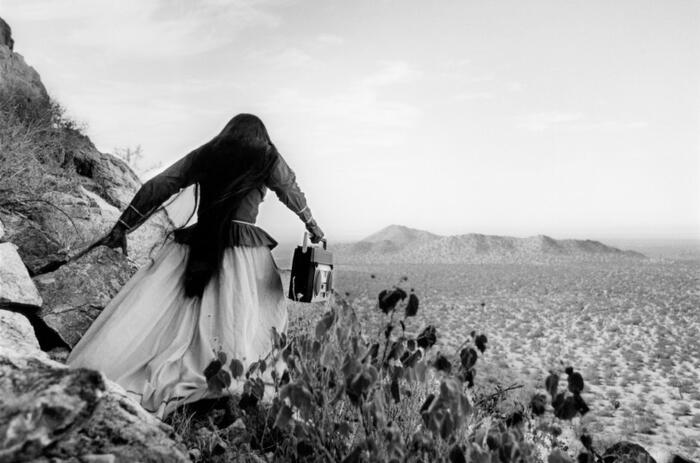
A major exhibition at C/O Berlin traces more than five decades of the Mexican photographer’s career, presenting over 250 works including her most iconic series.
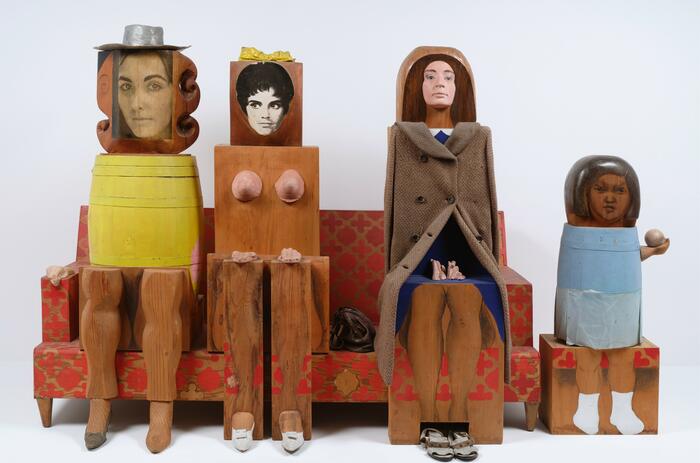
The Swiss institution presents an extensive survey spanning five decades of the Venezuelan-born artist’s production, highlighting her ironic focus on power and mass culture.
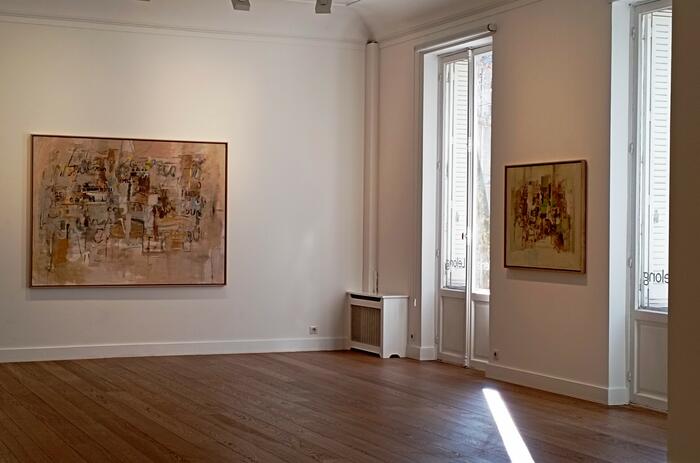
Today, those who walk through the galleries of the Museum of Modern Art or the Metropolitan Museum of Art in New York encounter a welcome surprise: canvases of undeniable visual strength hanging alongside figures such as Rothko or Tàpies. These are works by Sarah Grilo, recently acquired by these institutions. Nearly two decades after her passing, the artist has finally assumed the place of honor her career deserved.
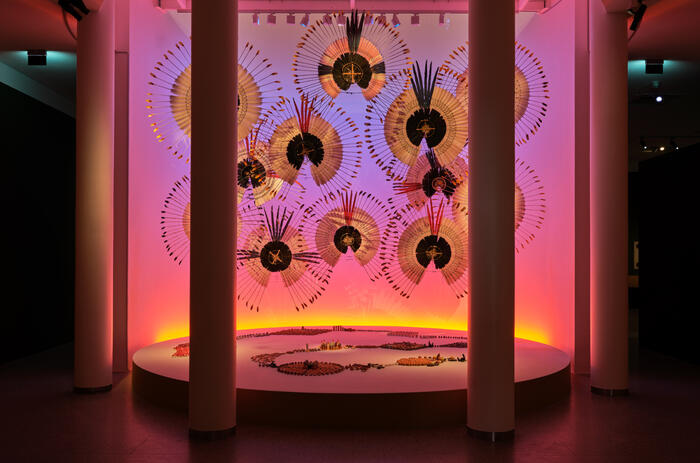
An extensive exhibition in Bonn featuring more than 400 works and objects presents Amazonia through the perspectives of its Indigenous peoples, exploring their cosmologies through a dialogue between contemporary artistic practices and historical artefacts.