
By
Álvaro De Benito
The Mexican artist departs, at Travesía Cuatro, from his established use of popular culture to embrace a more sensitive imaginary that explores tenderness, childhood, and reconciliation as forms of resistance against the contemporary world.
The Madrid venue of Travesía Cuatro presents Tierno es el día que los demonios se alejan, a solo exhibition by Romeo Gómez López (Mexico City, Mexico, 1991), featuring a sequence of works that move away from his well-known practice of reappropriating elements of popular culture in order to subvert them and construct critical narratives addressing sexuality, violence, and the institutional framework of art.
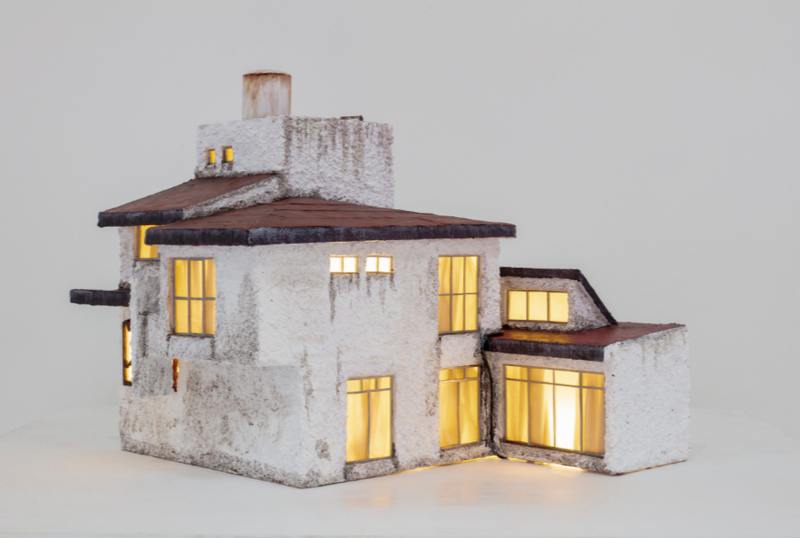
For this occasion, the artist shifts his focus towards more delicate scenes, images in which tenderness and the pursuit of reconciliation appear to confront a violent reality. Sounds envelop a dollhouse based on the home in which he spent his childhood, linked to an exploration of interiority and domestic space, although the latter does not always function as a secure refuge. In this sense, the artist evokes, in El templo de la ternura perdida, readings of empathy’s absence as a potential origin of pain and tragedy.
Several works incorporate references to industrial and cinematic culture. This is the case of Metrópolis, which reimagines the year 2026 in bronze as a landscape of ruin and global conflict, and My Little Pony / My Little Brony, a marble sculpture that delves into the emotional registers of adult fan culture, emphasizing through affective figures the need for identity and belonging.
A self-portrait of Gómez López inside a space helmet introduces a playful yet provocative gesture that contrasts with the presumed seriousness of a science-fiction aesthetic often framed as solemn. Meanwhile, other works, such as Prehistoric Love, propose a reflection on reconciliation with the past and childhood as a possible means of alleviating pain through empathy, play, and collective acceptance.
Tierno es el día que los demonios se alejan can be visited until 18 July 2026 at Travesía Cuatro, San Mateo 16, Madrid, Spain.
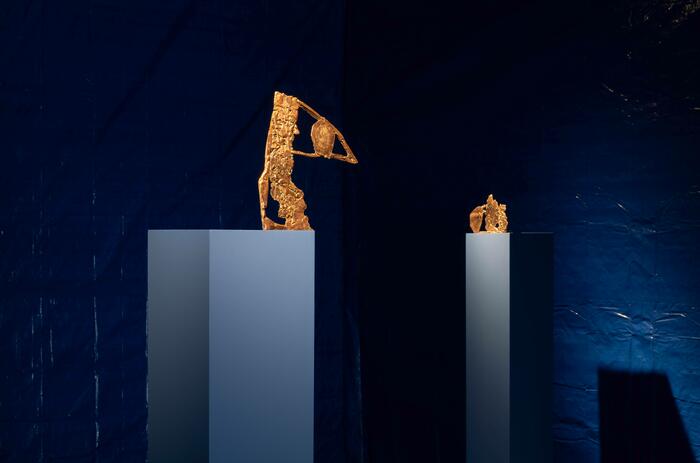
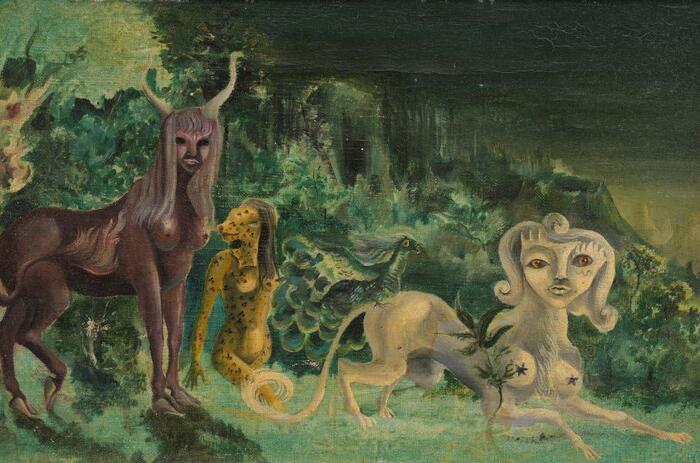
The exhibition Leonora Carrington: el surrealismo sintomático will include a painting the artist made in 1940 during her stay in Santander, a work that has remained hidden for decades.
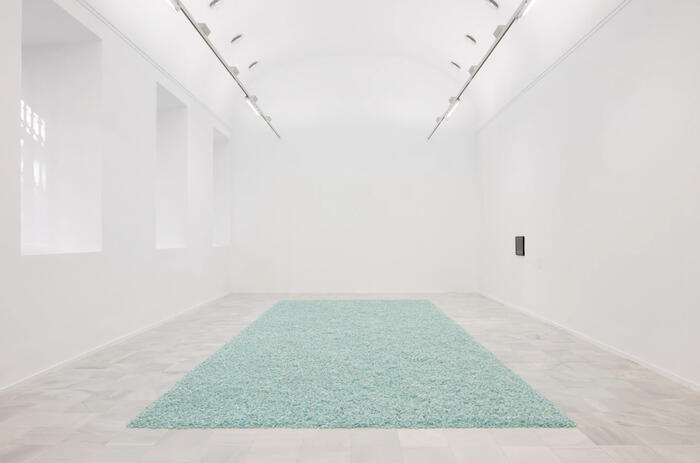
The Museo Reina Sofía presents a selection of more than fifty participatory, reconfigurable and conceptually driven works by Felix Gonzalez-Torres, activating a contemporary reading of his practice that exceeds both curatorial boundaries and established discursive frameworks.
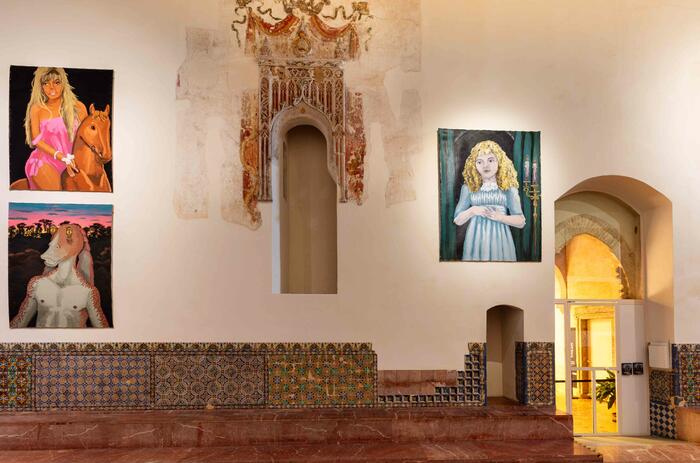
The Mexican artist explores the relationship between memory and identity in her exhibition in Seville through more than thirty large-scale paintings in which the visual language of pop culture invites viewers to recognize themselves and question socially constructed roles.