
MUTATING BODIES: THE LYSERGIC FICTION OF LUIZ ROQUE IN BUENOS AIRES
Between film and sculpture, the Brazilian artist erases the boundary between screen and real space at the gallery ISLA FLOTANTE to imagine forms of desire beyond the human.
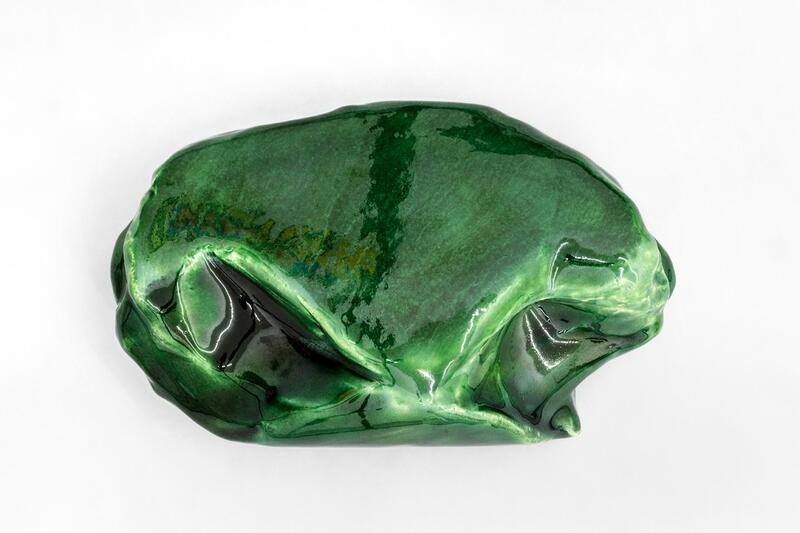
ISLA FLOTANTE is presenting, through August, Club Amarelo, the first solo exhibition by Brazilian artist Luiz Roque (Cachoeira do Sul, Rio Grande do Sul, Brazil, 1979) at its Buenos Aires gallery. The show brings together work produced during his residency at Fundación Ama Amoedo alongside earlier pieces; it includes a film and a series of glazed sculptures and raku ceramics.
In the video Clube Amarelo (Club Amarillo, 2024), filmed at Casa Neptuna, the artist combines 16-millimeter film and high definition (HD). A group of people gather in a seaside sauna, bathed in sun and moonlight, as they come into contact with non-human species and consume pharmacological substances. Their otherworldly state of being transcends any conceivable mode; it remains ambiguous whether Roque wants that state to appear desirable or not.
-
Luiz Roque. Clube amarelo, 2024. HD video and 16 mm film trasferred to digital video 7m 11s. Única. Cortesía de Isla Flotante
"Two drives coexist: making a film about an architecture conceived precisely for the pleasure of bodies, and the idea that those bodies are already other bodies. That's why the characters have colors—it's a way of thinking beyond the human. And yet the idea of the human remains closely tied to the idea of desire. I see it as something deeply defining of the human being: that pleasure, which can also be sex," the artist explains in conversation with curator Micaela Vindman.
The screening of the film is complemented by a series of sculptures whose organic forms seem to break free from the screen to take shape in real space. Spilling beyond the two-dimensional plane of the projection, these volumetric pieces expand the lysergic, tactile atmosphere of the video, blurring the line between cinematic fiction and the viewer's physical experience.
"I decided I wanted to have a conversation with the films, and that this conversation could take place through sculptures. To think that these sculptures could live inside the film and, at some point, could step outside of it. But I didn't want to exhibit prop objects: I wanted to think about how to bring the film outward, together with other things," the artist notes. He adds: "My ceramic pieces are human-scale; they're things that could belong to a body, that could attach to it, that could even be inserted into it."
Luiz Roque lives and works in São Paulo. His work occupies an in-between space among film, sculpture, and critical theory, addressing both real and imagined political conflicts and disputes. His pieces also reflect on the dissociative conditions of life in a latent state and on the bureaucratic definitions that regulate it. Through an artistic practice that combines cinematic, sculptural, and conceptual elements, the artist has established himself as one of the most prominent figures in contemporary Brazilian video art, exploring themes related to politics, technology, imagination, and the ways social and bureaucratic structures shape human experience.
Related Topics
May interest you
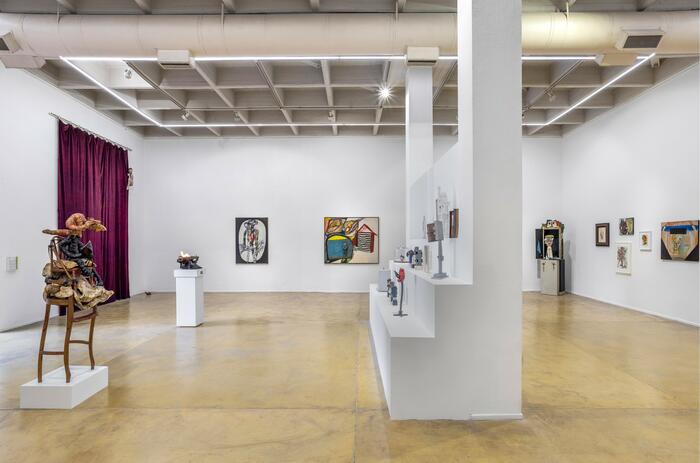
THE THINGS OF A FAMILY HOME: ON THE HELFT COLLECTION AT W—GALERÍA
"Things house spirits, or at least sprites, and for the collector—possession is the most intimate relationship that one can have with objects: not that they come alive in him; it is he who lives in them."
Walter Benjamin: Unpacking My Library: A Talk about Book Collecting (1931)
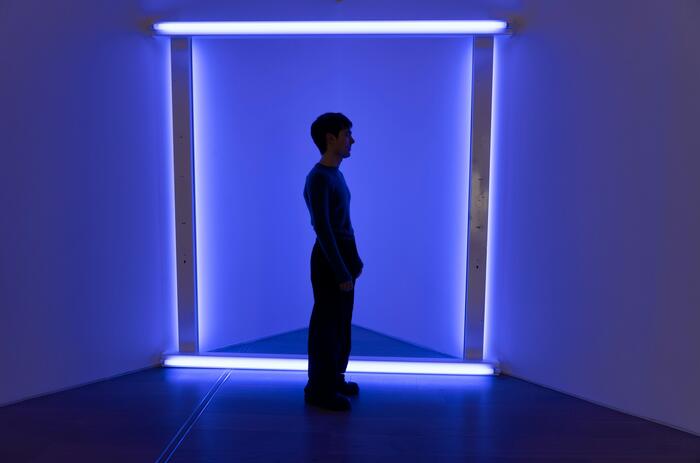
FROM RELIGIOUS ICONS TO FLUORESCENT ICONS: DAN FLAVIN AND LIGHT AS EXPERIENCE AT MALBA
Luz, color y espacio, the exhibition presented by the Museum of Latin American Art of Buenos Aires in collaboration with Dia Art Foundation, offers an experience in which color and space envelop the viewer. It will be open to the public through August 17.
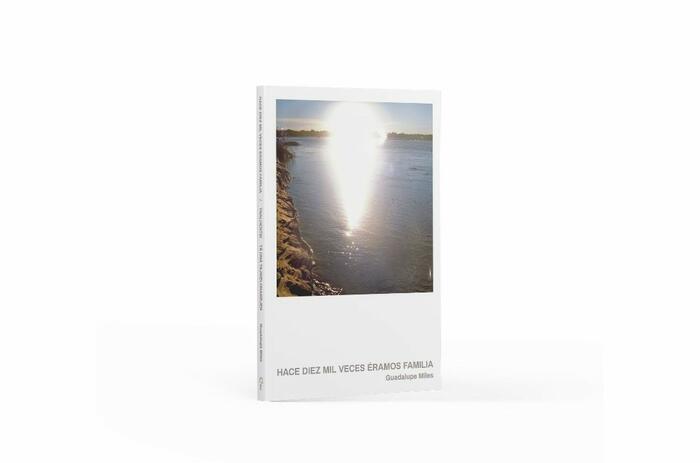
“TEN THOUSAND TIMES WE WERE FAMILY” AT THE MUSEO NACIONAL DE BELLAS ARTES
The Argentine artist's Guadalupe Miles book, edited by Julieta Escardó, documents her bond with the Wichí Santa Victoria II community.