

By
Violeta Méndez
Mathematical design, red brick, and calibrated light take center stage in a work that rejects the traditional hierarchy of the church.
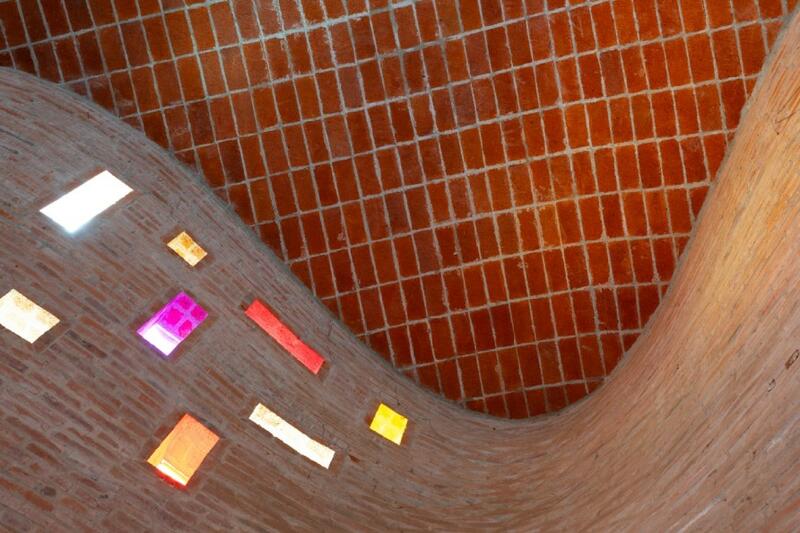
“This church does not tell you how to worship God, it instead invites you to feel Him,” explains photographer Isaac Khafif. Iglesia Cristo Obrero, declared a UNESCO World Heritage Site in 2021, is located between Punta del Este and Montevideo, in the coastal town of Atlántida, Uruguay. Completed between 1958 and 1960, it is now considered one of the most powerful and enduring examples of twentieth-century architecture in the world.
The church rejects any form of excess. Its way of elevating the faithful toward the heavens lies in its brick walls, which form undulating landscapes; in the sunlight that filters through deliberate and precise openings; and in its measured, rhythmic presence.
The design, as in other works by the renowned architect, was based on structural rationality, creating an innovative form that harmonizes with its surroundings.
“Neither orthodox modernism nor regional expressionism, the church remains as quietly revolutionary today as it was fifty years ago. It demonstrates how radical innovation can emerge from constraint, and how humble materials—brick and human thought—can produce a space of profound intensity,” Khafif describes.
Iglesia Cristo Obrero is an architectural work that redefines the religious experience.
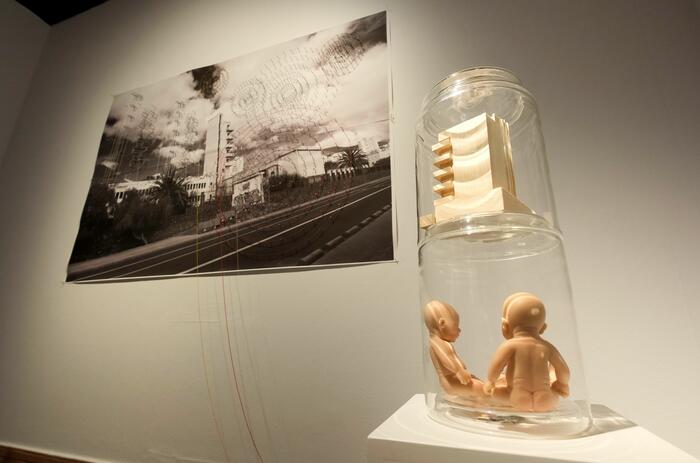
The CAAM opens its new season with an exhibition showcasing five recent acquisitions, highlighting works by Carlos Garaicoa and Karlo Andrei Ibarra that explore memory, space, and transformation.
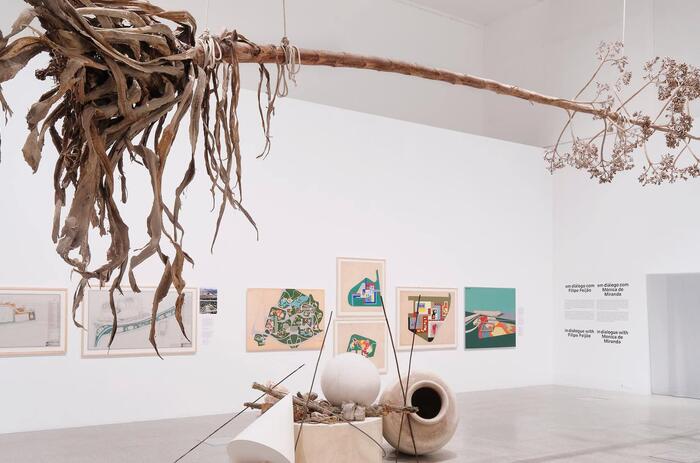
Lugar de estar: o legado Burle Marx (A Place to Be: The Legacy of Burle Marx) is the exhibition presented by Lisbon’s MAC/CCB – Museum of Contemporary Art and Architecture Center, showcasing an extensive selection of landscape projects for public spaces developed by Roberto Burle Marx (São Paulo, Brazil, 1909 – Rio de Janeiro, Brazil, 1994) and his collaborators over nearly seventy years.
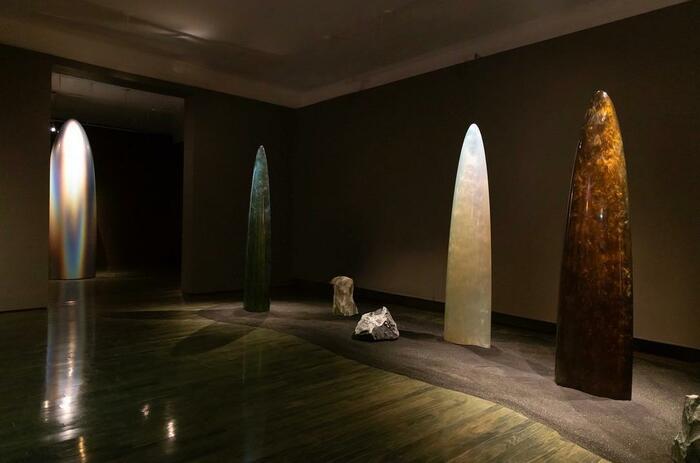
The Puerto Rican–American artist explores the relationship between geology, memory, and vital energy in an exhibition spanning more than three decades of work.
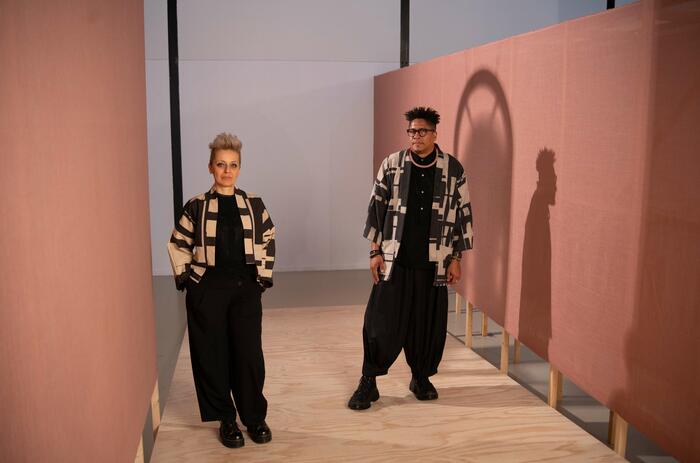
With the large-scale installation and performative work of Antonio José Guzmán and Iva Jankovic, Panama participates for the second time as a National Pavilion in the Biennale di Venezia 2026.