WHO ARE THE ARTISTS TAKING PART IN THE FIFTH EDITION OF FAARA
The residency promoted by Ama Amoedo introduces a new experience of exchange, research, and production in dialogue with Uruguay’s natural environment.
The Ama Amoedo Foundation has announced the artists participating in the fifth edition of the FAARA Residency: Carlos Amorales (Mexico), Patricia Belli (Nicaragua), Jonathas de Andrade (Brazil), Engel Leonardo (Dominican Republic), Delcy Morelos (Colombia), and Alejandra Seeber (Argentina). Through this initiative, the organization continues its commitment to fostering a lasting impact on the Latin American contemporary art ecosystem.
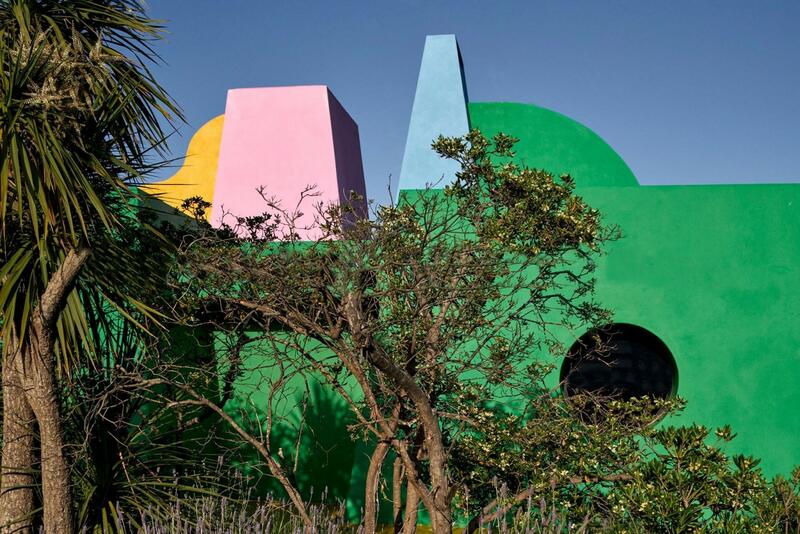
FAARA (Fundación Ama Amoedo Residencia Artística) is designed to enable artists from Central and South America, the Caribbean, and the Latin American diaspora to further develop their practices in a natural setting that offers focus and support. Each year, six artists are invited to share a living and working space for six weeks at Casa Neptuna, a house commissioned from Argentine artist Edgardo Giménez, located just steps from the sea in José Ignacio, Uruguay.
-
Fundación Ama Amoedo. Casa Neptuna, José Ignacio, Uruguay. Foto: Cristobal Palma, 2022
For this edition, the jury was composed of Pablo León de la Barra (Curator for Latin America at the Guggenheim Museum), Inés Katzenstein (Curator at the Museum of Modern Art, New York, and Director of the Cisneros Institute), and Manuel Segade (Director of the Museo Nacional Centro de Arte Reina Sofía, Madrid).
About the Selected Artists
Carlos Amorales (Mexico City, Mexico, 1970) works at the intersection of image and sign through a wide range of platforms, including animation, video, film, drawing, installation, performance, and sound. His artistic research focuses primarily on language and on the impossibility/possibility of communication through unrecognizable or uncoded means—sounds, gestures, and symbols.
-
Carlos Amorales. Black Cloud, 2007-2023. Instalación de 50,000 mariposas de papel negro, Medidas variables. Vista de instalación en el museo Brandts, Odense, Dinamarca. Cortesía Fundación Ama Amoedo
Alejandra Seeber (Buenos Aires, Argentina, 1969) is an Argentine painter based in New York. Her work explores shifting boundaries between abstraction and representation through domestic and architectural interiors that dissolve into vibrant, layered compositions. Seeber’s paintings merge intuition and structure, embracing chance, fragmentation, and spatial ambiguity. Influenced by music, stage design, urban culture, and digital aesthetics, she constructs visual spaces that are both dynamic and unstable.
Jonathas de Andrade (Maceió, Brazil, 1982) develops videos, photographs, and installations through the production of images and texts, employing strategies that juxtapose fiction and reality, tradition, and collaborations with local communities. Rooted in the artist’s interest in social issues, his works traverse the fields of language and anthropology, questioning notions of truth, power, desire, and the social imaginary.
-
Alejandra Seeber. Mental Walk. Designers, 2011. Óleo sobre tela, 196 x 259 cm. Col. Diego Herbstein, Buenos Aires. Cortesía de Fundación Ama Amoedo
-
Jonathas de Andrade. Vista de exposición, Com o coração saindo pela boca, Pabellón de Brasil, 59ª Bienal de Venecia, 2022. Foto: Ding Musa. Cortesía de Fundación Ama Amoedo
Engel Leonardo (Baní, Dominican Republic, 1977) explores relationships between the human, history, architecture, and material culture—central axes of his artistic practice. His work is often grounded in research on Antillean culture, tropical modern architecture, histories suppressed by modernity, and the transmission of Indigenous and African knowledge through objects typically regarded as artisanal, folkloric, or ethnographic. He is particularly interested in architectural and craft-based narratives that challenge notions of Antillean identity, tropicality, modernism, Indigenous culture, and the Afro-Atlantic world.
Delcy Morelos (Córdoba, Colombia, 1967) studied at the School of Fine Arts in Cartagena. Her practice is rooted in Andean ancestral worldviews and the aesthetics of minimalist art. Her abstract works invite reflection on the relationship between human beings and the earth, the human body, and materiality. In her early work, Morelos focused primarily on painting, applying natural red pigments on paper. Over time, her material explorations expanded to ceramics and textiles, leading her to gradually develop a more sculptural practice and, more recently, large-scale multisensory installations.
-
Patricia Belli. Maraña, 2024. Esqueletos animales, madera de deriva, resortes, plásticos recuperados, 600 x 300 x 400 cm (variable). Cortesía de Fundación Ama Amoedo
-
Delcy Morelos. El abrazo, 2023. Vista de instalación, Dia Chelsea, Nueva York, 2023. Tierra de jardín reciclada, arcilla de Dia Beacon, fibra de coco, heno, canela, clavo, aceite de copaiba, adhesivo ecológico (Eco Tackifier), agua y fragancia. Foto: Don Stahl. Cortesía de Fundación Ama Amoedo
Patricia Belli (Managua, Nicaragua, 1964) holds a Master of Fine Arts from the San Francisco Art Institute (2001). She was a Fellow of the Berlin Artists-in-Residence Programme (2022–23) and one of the recipients of the CIFO Arts Grants and Commissions Program 2024. She has participated in numerous biennials, including EVA International, Ireland (2018, curated by Inti Guerrero); the Berlin Biennale (2018, curated by Gabi Ngcobo); FEMSA Biennial, Mexico (2020–21, curated by Daniel Garza Usabiaga); and the Carnegie International, USA (2022, curated by Sohrab Mohebbi). In 2001, she founded EspIRA (Espacio para la Investigación y Reflexión Artística), dedicated to the sensitive and critical training of Central American artists, which she directed for 20 years. Her work is included in the collections of Tate Gallery, London; the KADIST Foundation, San Francisco; the Ortiz Gurdián Foundation, Nicaragua; the Museum of Contemporary Art and Design of Costa Rica; and the ArsTEOR/éTica Foundation. She lives and works in Managua.
*Cover image: Ama Amoedo Foundation. Casa Neptuna, José Ignacio, Uruguay. Photo: Cristobal Palma, 2022.
Related Topics
May interest you

2025 OPEN CALL: AMA AMOEDO FOUNDATION GRANTS FOR LATIN AMERICAN ART
For the third consecutive year, the Ama Amoedo Foundation launches its grant program, an initiative aimed at providing resources and opportunities to strengthen the art ecosystem and its institutions across Latin America. The open call closes on August 31.
LAST WEEKS TO APPLY FOR THE FUNDACIÓN AMA AMOEDO RESIDENCY AT PIVÔ
Fundación Ama Amoedo, in partnership with Pivô (São Paulo, Brazil), has an open call for visual artists of Uruguayan nationality, whether they reside in the country or not. One spot will be awarded for a three-month residency in São Paulo, taking place from August 6 to October 31, 2025. The application deadline is Friday, April 11, 2025.
FAARA 2025 RESIDENCY: THE SIX SELECTED ARTISTS
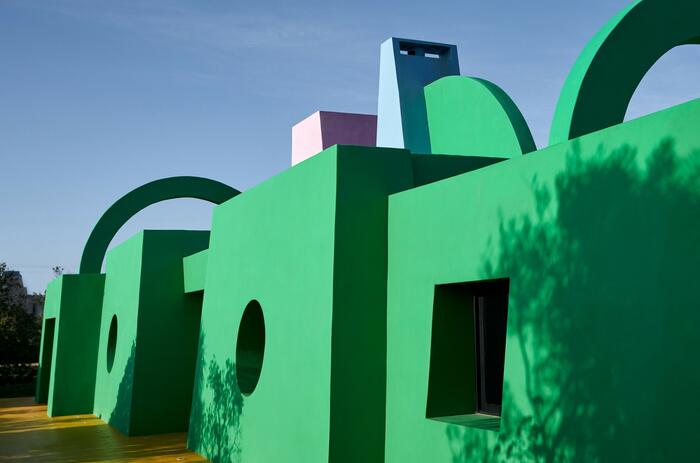
Fundación Ama Amoedo announced the selection for the FAARA Residency 2025 at its emblematic Casa Neptuna in José Ignacio, Uruguay.
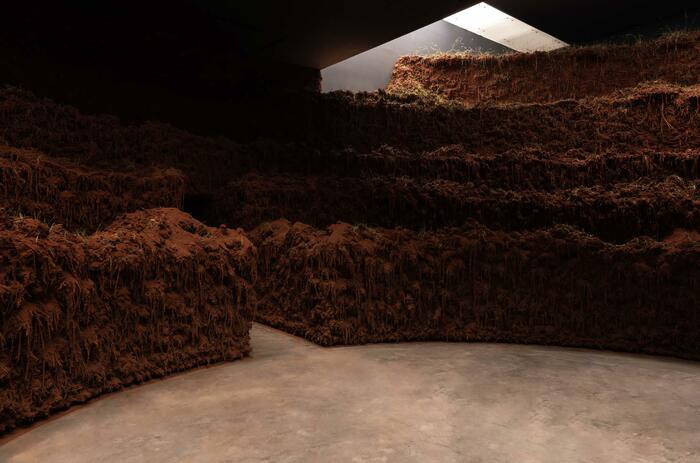
THE EARTH AS A FEMININE DIVINITY: DELCY MORELOS IN MEXICO
Within the framework of Mexico City Art Week 2026, MUAC continues to present the Colombian artist's exhibition, a proposal that invites visitors to inhabit the ritual.
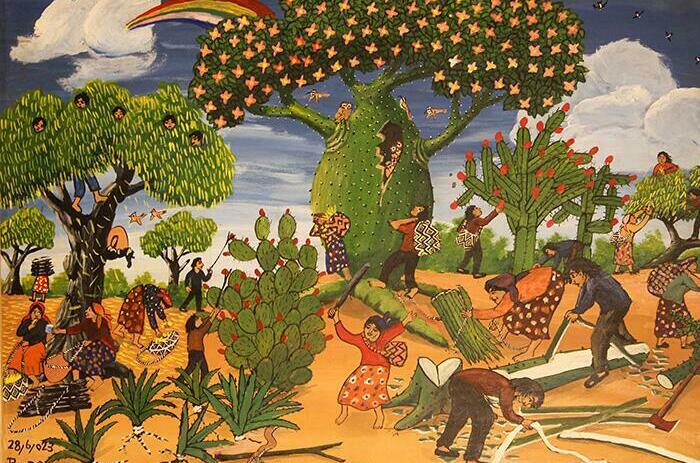
FIRST INDIGENOUS ART BIENNIAL IN BUENOS AIRES
The event will bring together 46 Indigenous artists from different regions of Argentina and neighboring countries, with exhibitions and activities taking place between February and April.
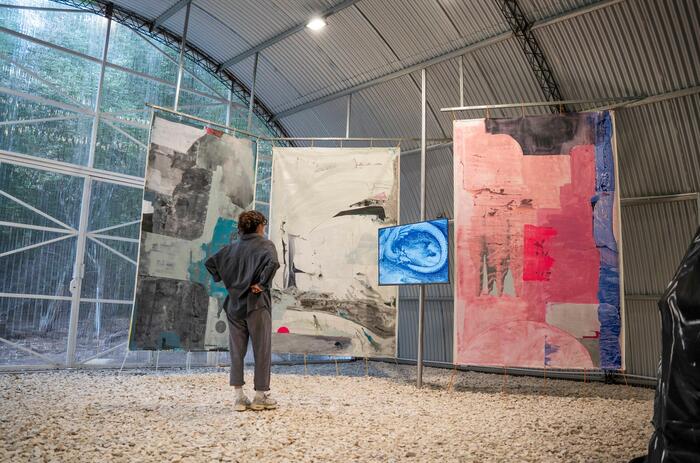
PROCESSES OF A RESIDENCY: POETICS OF OVERFLOW AT SOLANAS ART EXPERIENCE
As part of the 2025 Latin American Residency Program, SAE presents a group exhibition that highlights the processes of production, research, and experimentation developed by eight artists in dialogue with Punta Ballena.
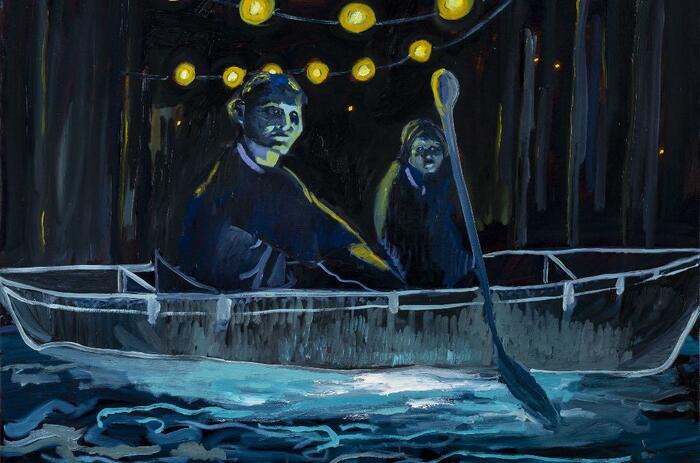
WATER AS A CRITICAL OPERATOR: DÁVALOS AT THE MUSEO DE ARTE MODERNO OF SANTO DOMINGO
Mario Dávalos' retrospective challenges inherited notions of the static landscape; working across multiple disciplines, it rethinks the histories of bodies and cultural representation.
RODRIGO BARCOS APPOINTED DIRECTOR OF TOMAS REDRADO ART’S SUR GLOBAL PROJECT
The Argentine curator, artist, and gallerist will lead a platform committed to positioning Latin American art within international conversations “without diluting its specificity.”
THE IMMA SHOWCASES THE DEEP REFLECTION OF CECILIA VICUÑA
The exhibition presented at the Irish institution showcases an artist who reflects on the interrelation between humanity and nature and advocates listening as a path toward transformation through memory and connection.