
TWO GARDENS TO REMEMBER HOME: HIBA SCHAHBAZ AND DIANA EUSEBIO AT MOCA
From the ancestral to the mythical, two parallel exhibitions explore how memory, identity, and nature shape the symbolic territories where migrant communities imagine —and reinvent— their roots.
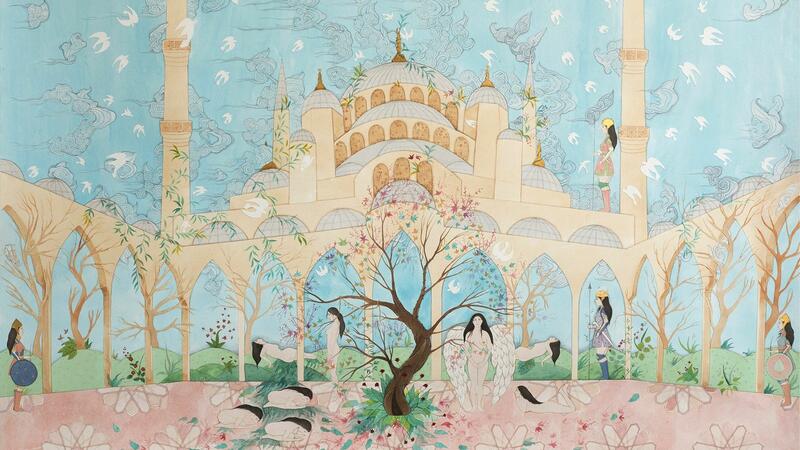
At the Museum of Contemporary Art North Miami (MOCA), Diana Eusebio’s Field of Dreams and Hiba Schahbaz’s The Garden converge around a shared sensibility: understanding the garden as a space of origin and transformation. Through distinct artistic languages —Eusebio’s natural dyes and textiles and Schahbaz’s expansive pictorial worlds— both artists trace pathways where home, memory, and spirituality intertwine in landscapes that invite viewers to reflect on identity through newly rooted perspectives.
Diana Eusebio: Field of Dreams is the South Florida-based artist’s reimagining of what it means to build and preserve a sense of home. Drawing from her Afro-Dominican and Indigenous Quechua Peruvian heritage, Eusebio uses natural dyes and textiles to tell stories about memory, migration, and belonging.
This first solo museum exhibition features hand-dyed fabrics and digital works that pay tribute to those places the artist calls home: the Dominican Republic, Peru, and Miami, Florida. Field of Dreams reminds us of ancestral traditions and celebrates nature and wisdom passed down through generations.
This exhibition, curated by Kimari Jackson, transforms the gallery into an ethnobotanical garden of art, filled with suspended Spanish moss and soft muhly grass, family portraits communicatively representing layered memories. Visitors are invited to move through this living environment that celebrates heritage, community, and the enduring bond between people and the natural world.
Spanning over fifteen years, Hiba Schahbaz: The Garden is the first major retrospective of Pakistani-American artist Hiba Schahbaz. The exhibition brings together motifs that recur throughout Schahbaz’s visual lexicon: global allegory, a direct feminist gaze, and fantastical beings that traverse elemental realms of earth, fire, wind, sky, and sea, alongside human architectural interventions. Collectively, this selection of paintings forms an environment that invites viewers into the artist’s expansive, imagined worlds.
The exhibition is framed conceptually through the idea of the jannat, or “Paradise Garden”—an idyllic space referenced in Islamic tradition and Sufi poetry across the Middle East and South Asia. The curatorial layout draws inspiration from the Persian and Mughal char-bagh, a quadrilateral garden divided by water channels with a central fountain. These sixteenth- and seventeenth-century landscapes embodied harmony, spirituality, and transcendence. Within The Garden, this structure becomes a poetic framework, echoing Schahbaz’s language of multiplicity and transformation.
Beyond historical references, the exhibition also reflects the lush landscapes and gardening culture of South Florida. The devotion to cultivating flora and community in Miami—particularly within immigrant and diasporic communities of color—parallels traditions of care and collective tending that are prevalent across South Asia.
The Garden, curated by Jasmine Wahi, invites viewers into a living terrain where myth, history, and imagination intertwine, offering new visions of femme subjectivity taking root and flourishing.
Both exhibitions will be on display until March 16, 2026, at MOCA, Joan Lehman Building, 770 NE 125 Street, North Miami, Florida (United States).
May interest you

TARA LONG AT LOCUST PROJECTS: A SWEET, DARK, AND SURREAL UNIVERSE
The artist unfolds an all-encompassing installation that invites viewers to move through scenes in constant tension between allure and ruin.
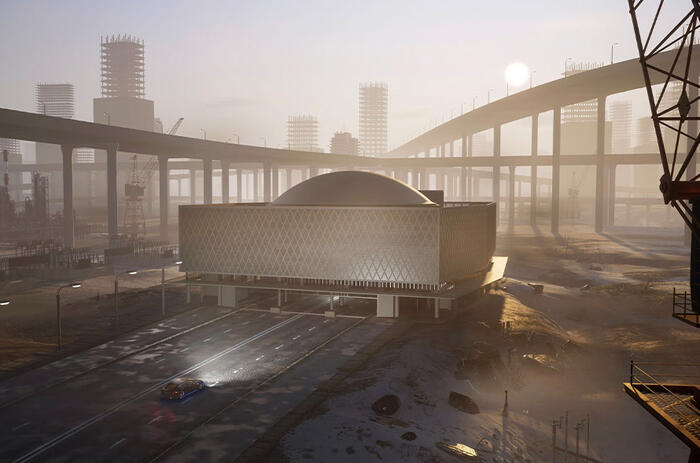
LAWRENCE LEK'S WORLD IN MIAMI, WHERE MACHINES SEEK MEANING
The Bass presents an immersive expansion of the artist's fictional universe, where sentient vehicles confront questions of memory, purpose, and control inside a corporate system designed to repair—and restrain—them.
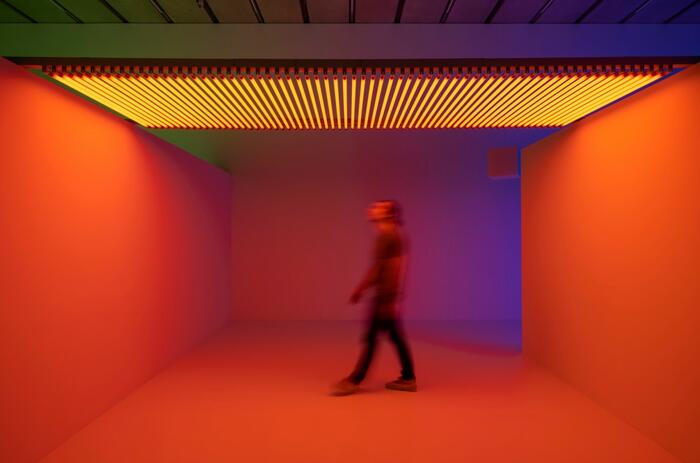
CARLOS CRUZ-DIEZ: LIGHT AS A LIVED EXPERIENCE AT PAMM
The museum invites visitors to immerse themselves in a field of pure, perceptual color.
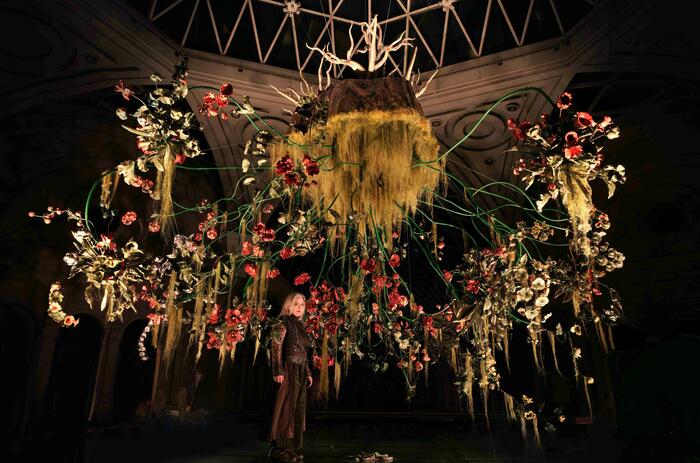
OF FLORA AND BEASTS, NICOLA’S REALM
Among jaguars, giant flowers, and living ceramics, Nicola Costantino unfolds a universe where technique and concept seek each other out. From initial rawness to a beauty guided by nature, her work continues to evolve like an expanding jungle.

PINTA MIAMI RETURNS TO COCONUT GROVE FOR ITS 19th EDITION
A leading platform for Ibero and Latin American art, the fair brings together galleries, curators, and emerging talents for a dynamic edition shaped by new voices and cross-regional perspectives.

JUAN CRUZ ANDRADA AND HIS PERSPECTIVE FOR UNDERSTANDING THE VALUE OF ART DURING MIAMI ART WEEK
By Violeta Lozada
Art Week opens its doors next week and Miami begins to beat differently. There’s a pulse you can feel while walking through the fairs—a mix of curiosity, intuition, and discovery.
MIAMI ART WEEK SPOTLIGHT: OSCAR MARTÍNEZ
By Violeta Lozada
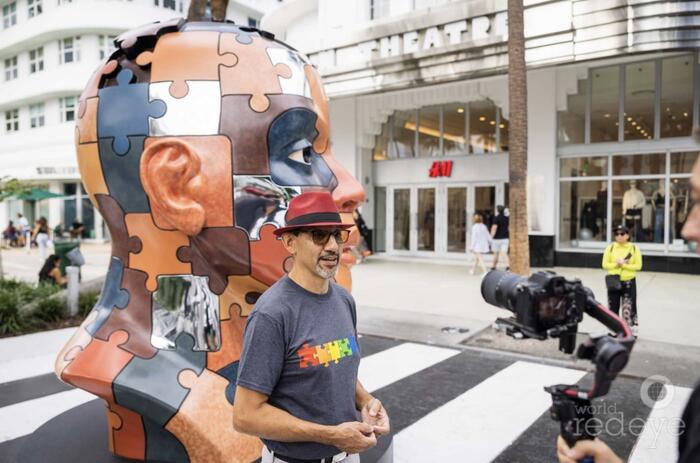
At this year’s Miami Art Week, a surge of Latin artistic energy is reshaping the city’s creative landscape. One standout exhibition is Oscar Martínez’s new sculptural installation on Lincoln Road demonstrating the depth, range, and confidence with which Latin artists are stepping into one of the world’s most influential art gatherings.