THROUGH DESIGN AND IMAGINATION, ANOTHER WORLD IS POSSIBLE
ArtScience Museum in Singapore presents an exhibition that invites society to co-create the future from hope and creativity.
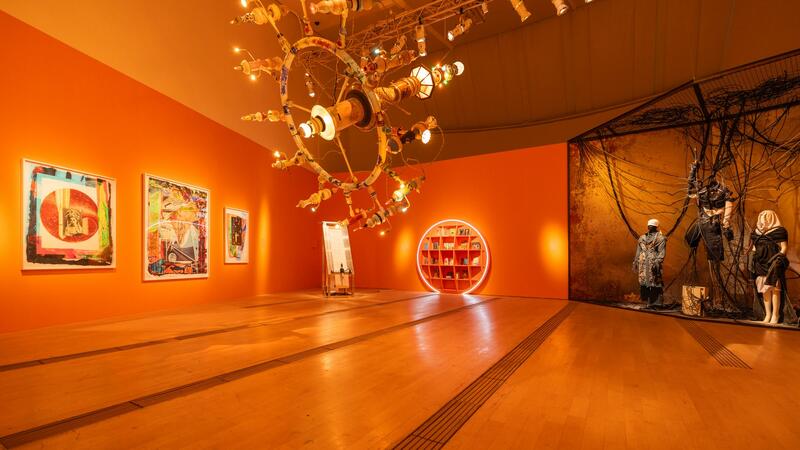
In a world saturated with dystopian imaginaries—where chaos, collapse, anxiety, and ecological devastation dominate our visions of tomorrow—the exhibition Another World Is Possible emerges as an intervention of hope. Centered on the practice of designer, director, BAFTA-nominated producer, and exhibition co-curator Liam Young, the show invites visitors to step into abundant speculative worlds that urge the public to reflect on how imagination and design are essential tools in shaping the possibilities of the future. Another World Is Possible is not merely a display of speculative aesthetics, but a research-based inquiry into the politics, poetics, and plurality of futurity.
Unfolding across seven thematic chapters, the exhibition explores the mechanisms through which futures are imagined, narrated, and materially constructed. Drawing from Indigenous, Afrofuturist, and Southeast Asian perspectives, it positions worldbuilding as both a critical methodology and a form of creative resistance. Here, imagination is not escapism but praxis—a space for cultural memory, ancestral knowledge, and radical possibility.
Liam Young and Australian First Nations actress Natasha Wanganeen present After the End (2024), a speculative film envisioning a post–fossil fuel future in which stolen lands have been returned to Indigenous Peoples. In Southeast Asia, Singaporean artist Ming Wong casts Cantonese opera performers as space warriors. Filipino artist Leeroy New creates space-inspired wearable sculptures from discarded plastics, transforming waste into wonder. Thai artist Torlarp Larpjaroensook suspends an illuminated “space station” made from household objects of his Thai-Chinese heritage, turning the everyday into a vessel that explores the relationship between memory, culture, and the future.
Weaving narratives of resilience, cautious optimism, and ecological balance, these visions affirm that imagination is not the privilege of a few but an intrinsic human capacity. When channeled through speculative fiction, it becomes not only a storytelling tool but a means to redesign the future. It resists the myth of universality and instead embraces the multiplicity of ways of imagining what is to come—situated in time, place, and culture.
-
View of "Another World Is Possible", ArtScience Museum. Marina Bay Sands
Singaporean artist Debbie Ding presents New Village (2024), a digital reconstruction of a colonial town built from oral histories. Singapore-based architect Jason Pomeroy showcases a study on circular floating farm systems designed to mitigate the effects of global warming, sparking conversations on responsibility and collective action. Meanwhile, architects Finbarr Fallon, Annabelle Tan, and Kai McLaughlin explore the “rewilding” processes of modern cities, materializing a uniquely Singaporean futurist sensibility.
Another World Is Possible reclaims the future as a space of agency, creativity, and hope. The future is not something we inherit—it is something we co-create. Another world is not only possible; it is already being imagined here.
Designers, artists, and contributors include:
Serwah Attafuah, Conor Bateman, Big hART, bioSEA, Björk, CD Projekt Red, Centre for Strategic Futures, Chynna Campbell, Cheryl Chung, Saad Chinoy, James Clyne, Dezign Format, Die Gute Fabrik, Debbie Ding, Thomas Dubois, Gareth Edwards, Ethereum Foundation, Finbarr Fallon, Shiro Fujioka, General Interactive Co., GWS Living, Halogen, Andrew Thomas Huang, Olalekan Jeyifous, Torlarp Larpjaroensook, Ken Liu, Osborne Macharia, Kai McLaughlin, Leeroy New, Ong Kian Peng, Darius Ou, Jason Pomeroy, RAD+ar, Regency Enterprises, Jakob Kudsk Steensen, Osheen Siva, Superlative Future, Sutu, The Love Punks, The Satellite Sisters, Syafiq Halid, Systmz, Annabelle Tan, Tent Futures, Thatgamecompany, Urban Redevelopment Authority, Ustwo Games, Natasha Wanganeen, WOHA, Ming Wong, Samatha Yap, Yong Zhen Zhou (Interactive Materials Lab), Liam Young, Youths in Balaclava, Clement Zheng (Interactive Materials Lab).
The exhibition Another World Is Possible is co-curated by ArtScience Museum (Joel Chin, Adrian George, Honor Harger, Joshua Lau, Charleen Leo) and Liam Young, with the support of the DesignSingapore Council.
May interest you

JAN VAN EYCK ACADEMIE RESIDENCY, AN INVITATION FOR RESEARCH AND EXCHANGE
The renowned post-academic institute in Maastricht is currently accepting applications for its eleven-month residencies, which will take place between January and December 2027. Application deadline: December 4, 2025.

REMEMORY 2026: SYDNEY BIENNALE UNVEILS ARTISTS AND WORKS ILLUMINATING SUPPRESSED HISTORIES
The 25th edition, curated by Hoor Al Qasimi, announced new projects which will explore memory and history through works from around the world.
PARIS, CAPITAL OF ART AND FASHION: MIU MIU AND HELEN MARTEN’S 30 BLIZZARDS AT ART BASEL
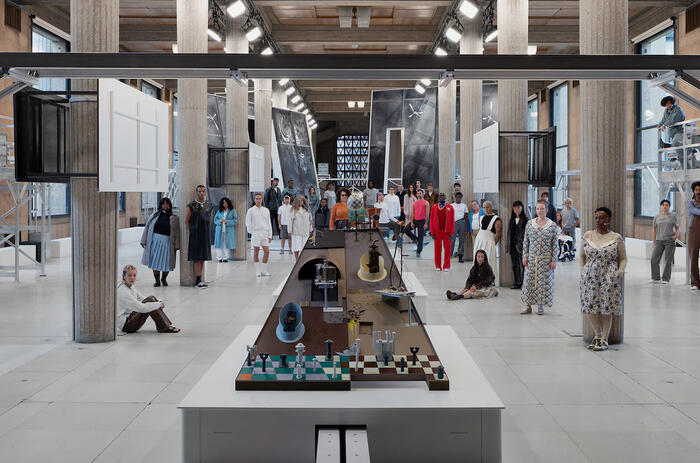
In a city where art and fashion have long shared the same stage, one of the most talked-about encounters during Art Basel Paris week was 30 Blizzards, a performative project by British artist Helen Marten, presented by Miu Miu at the Palais d’Iéna. The preview gathered an international mix of collectors, curators, and fashion figures, confirming how naturally these worlds now intersect.
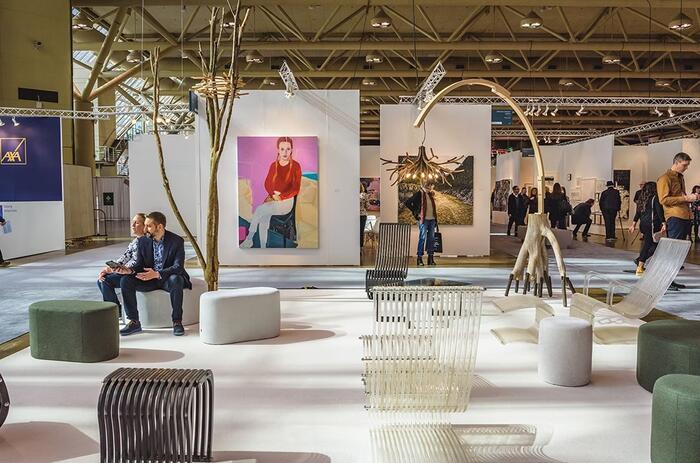
CANADA’S LEADING ART FAIR INTRODUCES A SECTION FULLY DEVOTED LATIN AMERICAN ART
Curated by Karen Huber, Arte Sur brings together eleven galleries whose artists engage with memory, territory, craft, and identity.