JULIO LE PARC, THE MAN FROM MENDOZA WHO TURNED LIGHT INTO A WORK OF ART, HAS PASSED AWAY
He was 97 years old and had been hospitalized for two days at the American Hospital of Paris. On June 11, a major retrospective was set to open at the Tate in London.
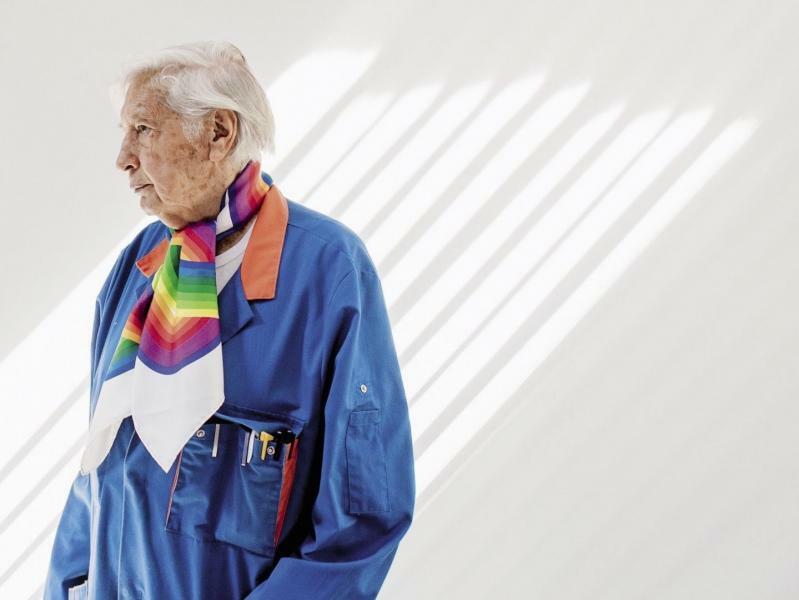
Julio Le Parc (Palmira, Argentina, 1928 – Paris, France, 2026) died this Saturday in Paris. He had been admitted to the American Hospital of Paris two days prior, succumbing to a progressive decline in health that in recent years had prevented him from traveling as he once did. His son Yamil, who today manages his father's studio, confirmed the news. "He fought until the end — he was so excited" about the show that the Tate in London was set to open on June 11, he said.
The son of a railway worker, Le Parc was born on September 23, 1928, in Mendoza, and began working at the age of 13, delivering newspapers and fixing bicycles. He studied fine arts at night while working days in factories and bookshops. He worked as a doorman at the Teatro Colón. He took part in the student movement that in 1955 occupied the three fine arts schools in Buenos Aires, ousted their directors, and reformed the curricula. In 1958 he received a grant from the French Cultural Service, and on November 4 he arrived in Paris. He never lived in Argentina again.
From the French capital, he built one of the most coherent and combative careers in twentieth-century art. In 1960 he founded the Groupe de Recherche d'Art Visuel (GRAV), a collective that from its very first founding declaration declared war on the art system: against the mythification of the artist, against the artwork as an object of worship, and in favor of the spectator as an active participant. "We wanted to challenge the art system," he said. In 1966, that challenge received its greatest recognition when he won the Grand Prix International de Peinture at the Biennale di Venezia. That same year, GRAV staged Un jour dans la rue in the streets of Paris, a collective experience that began at 8 in the morning and ended at midnight despite police intervention. The following year, French Culture Minister André Malraux awarded him the title of Chevalier de l'Ordre des Arts et des Lettres.
He never stopped moving, in every sense. In 1968 he was expelled from France during the events of May '68 and traveled through Europe for five months until pressure from the cultural community succeeded in having the measure lifted. He visited Cuba several times and traveled tirelessly across Latin America; he declined invitations to exhibitions he considered opportunistic, donated part of a cash prize to the Nicaraguan people, organized collective solidarity murals, founded artists' unions, and participated in antifascist brigades. Art and politics, for him, were not separate worlds.
But it was light that made him immortal. From his first light boxes of 1960, through his "Modulaciones" of the 1970s and his "Alquimias" of the 1980s, Le Parc built a universe in which movement, color, and light combined to transform the viewer's experience. His spheres — red, blue, yellow, golden — ended up suspended in Mendoza, at the CCK, at the MALBA, at Ezeiza airport, at the Hirshhorn in Washington, at the Palais de Tokyo in Paris, and at the Serpentine Gallery in London. In 2014, France awarded him the Légion d'honneur.
This is how MALBA bid him farewell: "His work expanded the boundaries of artistic experience and left a profound mark on generations of artists and audiences around the world."
Related Topics
May interest you
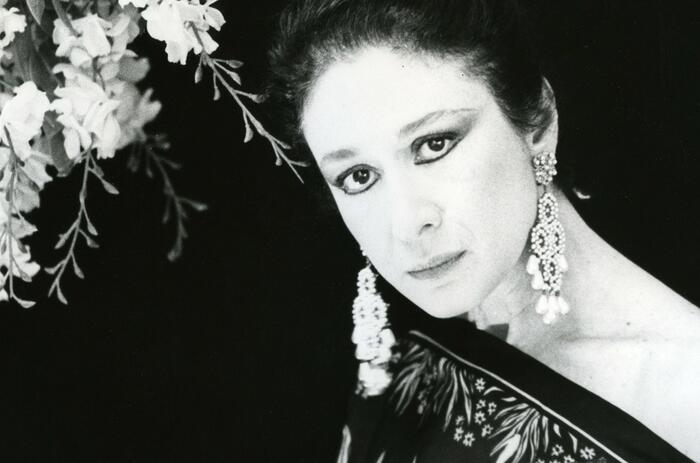
FAREWELL TO ARGENTINE ARTIST AND ARTISAN MARTHA LE PARC
Textile artist Martha Le Parc passed away in Paris at the age of 88, surrounded by her children and her first husband, the iconic kinetic artist Julio Le Parc. Despite having been separated for decades, they spent their final days together at the American Hospital in the French capital after battling a severe lung infection.

CELEBRATING LE PARC AT ALBARRÁN BOURDAIS
The Albarrán Bourdais gallery, at its Madrid venue, is hosting the exhibition En movimiento, by Julio Le Parc (Mendoza, Argentina, 1928). With a celebratory tone, as this is the first solo exhibition dedicated to the Argentine artist in Spain in 30 years, the show explores a fundamental part of the work of this master of kinetic and op-art and does so with a selection of several pieces that illustrate key periods. Without being a retrospective, there is something of that essence in the way the tour is presented, which proposes, through connected groups, an analysis of the connection between the past and the present.
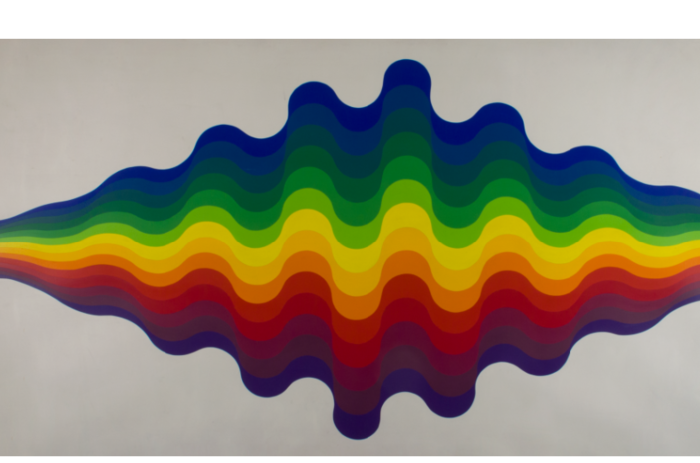
JULIO LE PARC LAUNCHES VIRTUAL MUSEUM: AN IMMERSIVE CONTEMPORARY ART EXPERIENCE
The Argentine artist has introduced the Julio Le Parc Virtual Labyrinthus Museum, an enveloping digital space that invites the public to explore more than 500 works, including previously unseen pieces created especially for this platform.
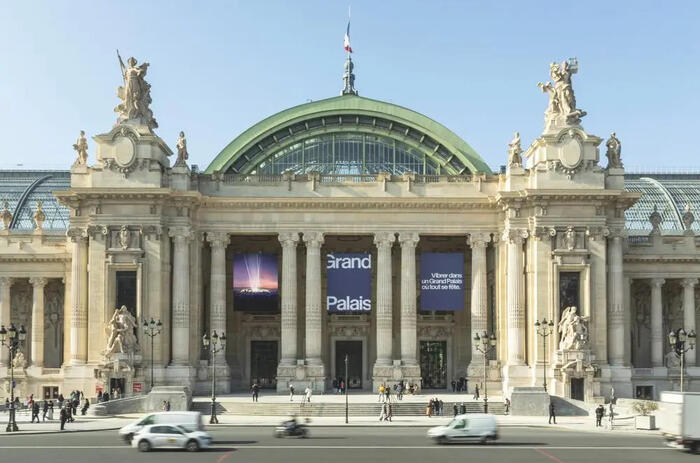
CAN YOU TRUST WHAT YOU SEE? LEANDRO ERLICH AT THE GRAND PALAIS, PARIS
The Buenos Aires artist has turned the prestigious French building into his new stage: climbable structures, houses suspended in mid-air, and impossible staircases, through September 6.
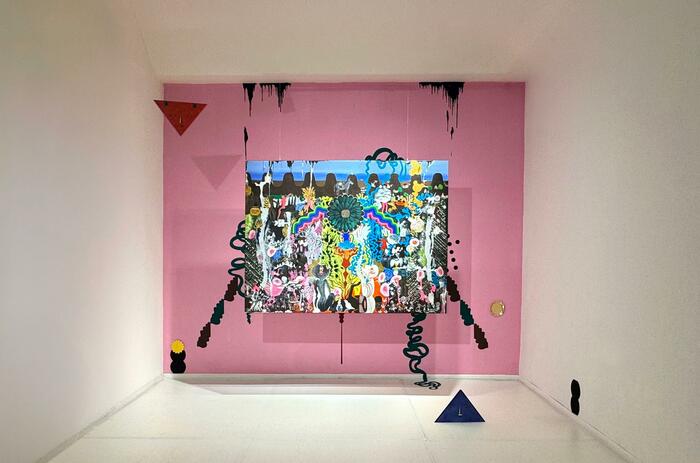
BUENOS AIRES DRESSES UP FOR NODO CIRCUITOS: FIVE ART GALLERIES TO VISIT
Meridiano's program brings together this weekend — June 4, 5 and 6 — a tour of galleries in San Telmo, Microcentro, La Boca, Villa Crespo and Retiro. The circuit offers an active reading of local contemporary art.
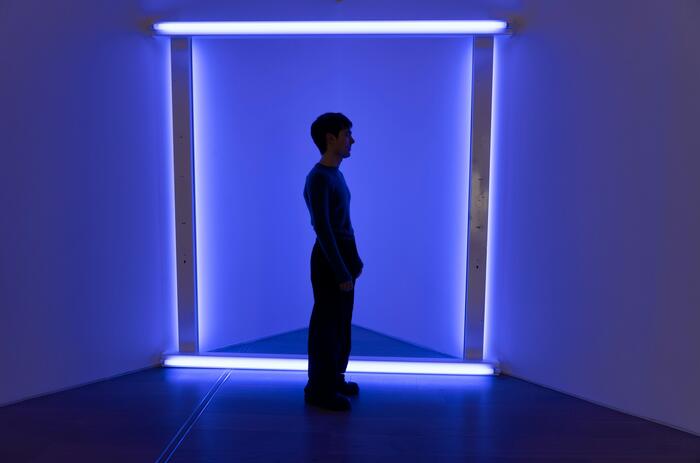
FROM RELIGIOUS ICONS TO FLUORESCENT ICONS: DAN FLAVIN AND LIGHT AS EXPERIENCE AT MALBA
Luz, color y espacio, the exhibition presented by the Museum of Latin American Art of Buenos Aires in collaboration with Dia Art Foundation, offers an experience in which color and space envelop the viewer. It will be open to the public through August 17.

MALBA ADDS EIGHT WORKS TO ITS COLLECTION FOR ITS 25TH ANNIVERSARY
The museum welcomes Juan Del Prete and, for the first time, Líbero Badíi, along with donated pieces by Jorge Pineda, Mario Testino, and Margarita Paksa.