DEMOCRATIC AND OPEN MAIL ART: TRANSGRESSORS IN CALIFORNIA
An exhibition tracing how generations of artists transformed the postal system into a space for creative freedom and political action, challenging censorship and borders.
California Museum of Photography in Riverside, UCR ARTS and the Getty Research Institute present Transgresoras: Mail Art and Messages, 1960s–2020s, an exhibition exploring how Latinx and Latin American women artists harnessed the postal system to subvert censorship and circulate their work as acts of political resistance and creative expression. After its debut in Riverside, it will travel nationally in an exhibition tour organized and sponsored by Art Bridges.
Bringing together works by over 50 artists and spanning over seven decades, the exhibition addresses a significant gap in art historical scholarship by bringing together works that have remained largely unknown and under-researched. Through an intergenerational approach, Transgresoras presents historical visual poetry, drawings, prints, performance documentation, video, and photography—alongside contemporary works by artists who continue to employ correspondence in their practices.
-
Image: Graciela Sacco, Urban Intervention No. 2, from the series Bocanada, 1993. Artist stamps, 8 1/4 x 12 1/8 inches. Getty Research Institute, ©Graciela Sacco Estate
Featured artists include Anna Bella Geiger, Cecilia Vicuña, Graciela Gutiérrez Marx, Liliana Porter, Magali Lara, Marta Minujín, Mónica Mayer, Regina Silveira, Rosa de la Montaña (aka Teddy Sandoval), Virginia Errázuriz, as well as a younger generation of artists, such as Amalia Pica, Beatriz Cortez, Carmen Argote, Carolina Caycedo, Clarissa Tossin, Gala Porras-Kim, Giana de Dier, Marilyn Boror Bor, and Regina José Galindo, Voluspa Jarpa, among others.
The exhibition will feature dynamic displays of postcards, drawings, textile and video works, sculpture, installations, and an interactive maker space. “There was a real lack in the field,” explains co-curator Zanna Gilbert, Senior Research Specialist at the Getty Research Institute. “The research hadn’t been done. There was no way to read about these artists’ contributions to Mail Art. We wanted to create a resource for students and future artists while highlighting women’s vital role in this movement.”
-
Image: Arleene Correa Valencia, Me quiere poner vestido (She Wants Me to Wear a Dress), c. 1996/2024, Letters and photograph from family archive, 13 1/16 x 16 1/16 inches. Courtesy of the artist and Catharine Clark Gallery, San Francisco; photo by Liliya Rattari
Transgresoras maps a subversive network that bypassed institutional gatekeeping and built solidarity across borders. For many Latin American women artists working under authoritarian regimes, the postal service provided a crucial means of evading censorship and creating platforms for political protest and artistic exchange.
“Many of the artists we focus on started out in authoritarian contexts, where there were significant limits on what could be said and expressed,” notes co-curator Elena Shtromberg, Professor of Art History at the University of Utah. “Mail Art created a practice that was meant to be democratic and open—everyone could participate.”
The exhibition is organized around six intergenerational constellations: Visual Poetry Networks; Mail Art Correspondences and Feminist Collectivity; Postcards, Paperwork and Rubber Stamping; Censorship and Clandestine Communication; At a Distance: Migration and Family Separation; and Ecocritical and Decolonial Strategies.
-
Image: Marilyn Bor Boror, Ni Parece Guatemala!, 2020. Postcard, 4 x 6 inches. ©Marilyn Bor Boror. Courtesy of the artist
Transgresoras aims to establish a lasting resource for scholars, students, and artists while creating new dialogues between generations of artists. New audio interviews with select artists will be presented as part of the exhibition experience.
The exhibition will be accompanied by a richly illustrated catalog with scholarly essays, copublished by UCR ARTS and X Artists’ Books and designed by Impresos México in early 2026.
Transgresoras: Mail Art and Messages, 1960s–2020s will be on display until February 15, 2026, at UCR ARTS California Museum of Photography, 3824 & 3834 Main Street, Riverside, California (United States).
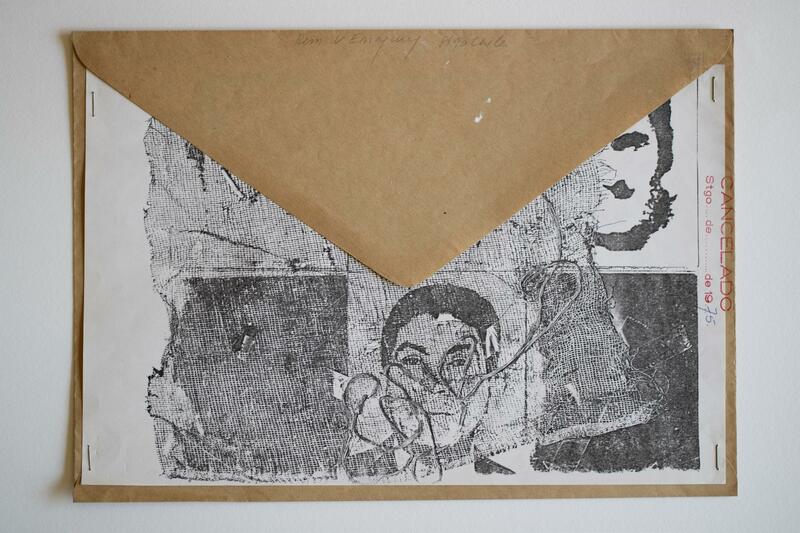
*Cover image: Virginia Errázuriz, Untitled, from the series Cancelados, c. 1979. Letter-sized envelope and photocopy intervened with rubber stamp and handwritten inscription. 9 ½ x 13 ¼ inches. © Virginia Errázuriz.
Related Topics
May interest you
AN “ANTI-ARCHIVE” MADE HOME: ANGIE SAIZ AT THE BIENNIAL OF MEDIA ARTS
What turns a place into a home? Chilean artist presents the immersive installation Bemol, which through sound and visuality builds an intimate and subjective cartography of inhabiting again a familiar environment.

POROUS BODIES, THOUGHT IN ACTION: CAROLINA PAZ IN NEW YORK

BEYOND THE BLUE CHIPS: ERIC ALFARO AND THE RISE OF EMOTIONALLY RESONANT ART
By Violeta Lozada
As the global art market recalibrates, a quiet but powerful shift is rising. Collectors are increasingly moving away from multimillion-dollar blue-chip purchases and towards living artists whose work offers emotional resonance, personal connection, and affordability. Cuban painter Eric Alfaro is a standout in this new wave, an artist whose work combines painterly sophistication with accessible pricing and deeply human themes.

GATHERING THE SCATTERED: LUNA PALAZZOLO-DABOUL’S POETIC ARCHAEOLOGY OF MEMORY
By Violeta Lozada
In her solo exhibition ‘Scattered Pieces’, Miami-based artist Luna Palazzolo-Daboul transforms the act of scattering into a meditation on memory, labor, and belonging. Installed in Paradise Plaza (151 NE 41st Street, Suite 133), the site-specific work unfolds across the floor as an archive of fragments, each one a piece of the artist’s evolving journey.