

By
María Sancho-Arroyo
The Auction Results: What the Market Reveals
This article is the fourth in a four-part series that explored how the collection was formed, its journey to the international market, the twelve paintings that went up for auction, and, finally, what the auction results reveal about the market for major Impressionist and Post-Impressionist works.
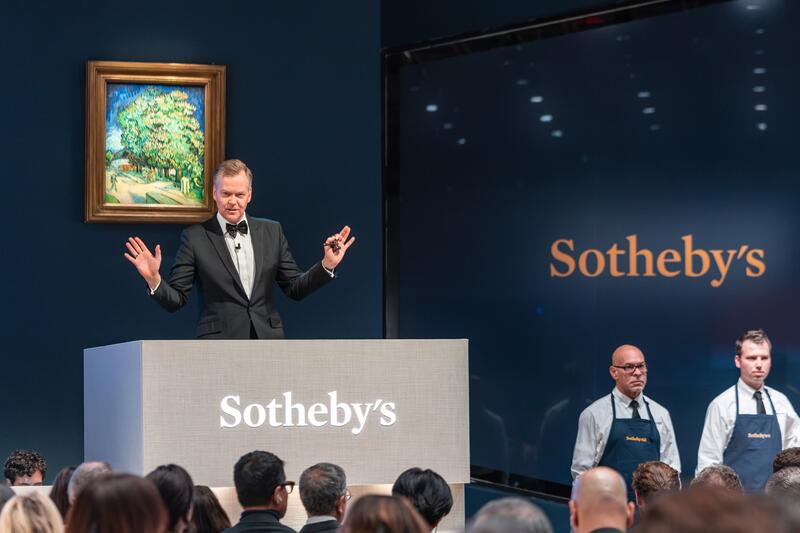
The Blaquier-Arrieta Collection realized approximately $412 million, including buyer’s premium, at Sotheby’s New York on 18 November. The twelve paintings brought a combined hammer price of $358.05 million, falling $56.45 million short of their total low estimates. The sale was heavily concentrated in two works: Van Gogh’s Châtaigniers en fleurs, which sold for $190.43 million including fees, and Cézanne’s Arlequin, which achieved $111.01 million. Together, the two paintings accounted for approximately 73% of the total proceeds.
Van Gogh’s Châtaigniers en fleurs set a new auction record for the artist, becoming the most expensive work by Van Gogh ever sold at auction. It surpassed the previous record set in 2022, when Verger avec cyprès sold for $117.2 million.
All twelve works in the collection sold, allowing Sotheby’s to close the evening with a white-glove sale. As the final lot came down, the auctioneer was presented with a pair of white gloves by Adela de Casal, Sotheby’s representative in Argentina, who played a key role in bringing the Blaquier-Arrieta collection to auction.
The collection had been expected to generate considerably more. Sotheby’s guaranteed the entire group, with the amount reportedly understood to be in the region of $450 million. Although the precise terms of the guarantee have not been disclosed, the reported figure of $450 million is significantly higher than the final result. The sale therefore raises questions about the risks assumed by the auction house and the likelihood of a low, if not negative, profit. The guarantee was supported by third-party irrevocable bids on ten of the twelve paintings, with the remaining two backed by Sotheby’s itself.
Despite the importance of the collection and the expectations surrounding it, bidding was relatively thin. Several paintings attracted little competition, with some selling after a single bid, and seven of the twelve lots hammered below their low estimates. The estimates themselves were ambitious and may have reflected the sellers’ expectations, with Sotheby’s potentially agreeing to those levels as part of its effort to secure the consignment.
This was particularly notable given the renewed interest in Impressionist and Modern art in recent years, following a period in which Contemporary art had dominated much of the market’s attention. Yet many advisers and dealers attending the sale considered the estimates high. The results suggest that, even for a collection of exceptional quality and provenance, ambitious estimates do not necessarily translate into competitive bidding.
The Van Gogh was, of course, the most consequential lot of the evening. As discussed in the previous instalment, Châtaigniers en fleurs had become the subject of a restitution claim by the heirs of German Jewish publisher Samuel Fischer, who argued that the painting had been sold in 1936 under duress resulting from Nazi persecution. Sotheby’s had conducted its own provenance research before the sale and maintained that the circumstances did not support this interpretation. The painting had been deposited with the Amsterdam dealer Paul Cassirer in 1932 or 1933, several years before the Fischer family fled Berlin for Vienna in 1935 to escape Nazi persecution. It was subsequently sold through the gallery in June 1936 for 68,000 Swiss francs, approximately $22,000 at the time. Sotheby’s regarded the price as consistent with the market for Van Gogh at the time, pointing, for example, to Orchard with Cypresses, which sold for $15,000 in 1935. The Fischer heirs had never previously pursued a restitution claim for Châtaigniers en fleurs.
| Lot | Estimate (USD) | Hammer price (USD) | Aggregate price (USD) |
| 1 | 2,000,000–3,000,000 | 2,000,000 | 2,500,000 |
| 2 | 8,000,000–12,000,000 | 4,000,000 | 5,000,000 |
| 3 | 10,000,000–15,000,000 | 5,000,000 | 6,070,000 |
| 4 | 15,000,000–20,000,000 | 17,000,000 | 20,230,000 |
| 5 | Estimate upon request (reported c. 180,000,000) | 165,000,000 | 190,430,000 |
| 6 | 800,000–1,200,000 | 850,000 | 1,088,000 |
| 7 | 20,000,000–30,000,000 | 15,500,000 | 18,000,000 |
| 8 | 25,000,000–35,000,000 | 24,000,000 | 27,500,000 |
| 9 | Estimate upon request (reported c. 120,000,000) | 99,000,000 | 111,010,000 |
| 10 | 30,000,000–40,000,000 | 21,000,000 | 24,200,000 |
| 11 | 3,000,000–5,000,000 | 3,100,000 | 3,902,000 |
| 12 | 700,000–900,000 | 1,600,000 | 2,048,000 |
Restitution claims are always taken very seriously by auction houses, given their legal, reputational and ethical implications. In this case, however, the timing of the claim was striking. Brought just six days before the auction, it placed considerable pressure on Sotheby’s and the sellers at a moment when the sale was already fully organized and publicly promoted. Whether or not the claim was ultimately substantiated, bringing it so close to the auction inevitably increased the pressure to reach an agreement. After several days of frantic negotiations, a settlement was reached that allowed the painting to remain in the sale. The terms have not been disclosed, and it remains unknown whether the agreement involved financial compensation. In my view, the timing may have strengthened the heirs’ negotiating position considerably, as the urgency of resolving the matter before the auction may have enabled them to secure a more favorable settlement than they might otherwise have obtained.
The decision by Sotheby’s to reach an agreement rather than withdraw the painting was commercially significant: the Van Gogh was the most valuable lot in the collection and the highest-valued painting offered during the November New York auction season. Its sale generated considerable publicity for Sotheby’s, although the financial implications of the settlement and the guarantee make it difficult to assess the profitability of the transaction.
The role of Withers Art and Advisory, which was involved in bringing the collection to auction, is also worth noting. It is led by Mari-Claudia Jiménez, a New York-based lawyer who was formerly Chairman and President, Americas, at Sotheby’s. Given her background in negotiating major collection sales and handling restitution matters, her involvement was likely particularly relevant in addressing the restitution claim that emerged shortly before the auction.
The New York auction season provided a positive backdrop, with the major evening sales at Sotheby’s, Christie’s and Phillips exceeding $2 billion in total, approximately 7% higher than the previous year and above their combined low estimates. The Impressionist and Modern segment also continued to recover, with sales reaching approximately $142 million, up 13% from the previous season.
These results confirm that interest in established artists and historically significant works remains strong, particularly when quality, provenance and rarity are compelling. But demand has its limits: buyers are not willing to bid at any price. Selectivity remains a defining feature of the market, and pricing is critical to generating competition. The Blaquier-Arrieta results illustrate that even an exceptional collection can fall short of expectations when buyers are unwilling to meet the prices being asked.
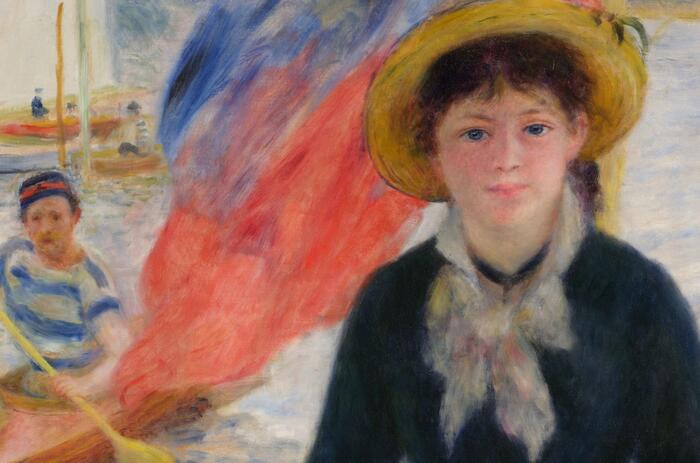
This article is the first of a four-part series exploring how the collection was built, its journey towards the international market, the twelve paintings now coming to auction and, finally, what the sale results reveal about the market for major Impressionist and Post-Impressionist works.
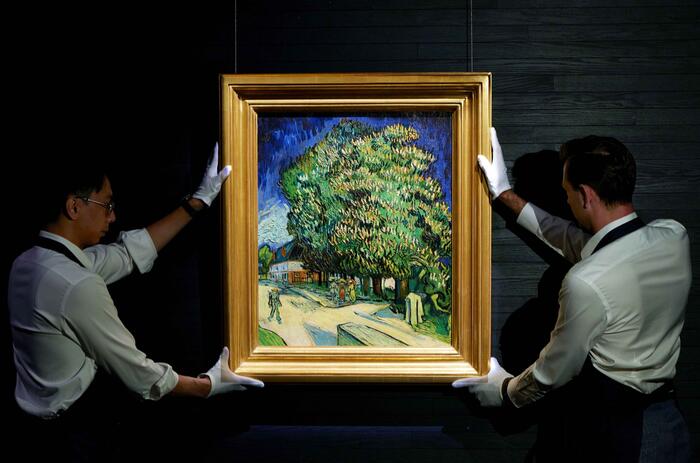
This is the second article in a four-part series exploring the Blaquier-Arrieta collection. In Part One, The Art of Collecting, I looked at how Nelly Arrieta de Blaquier and her husband built the collection, the role of London dealer Martin Summers, and the very different art market in which many of the paintings were acquired.
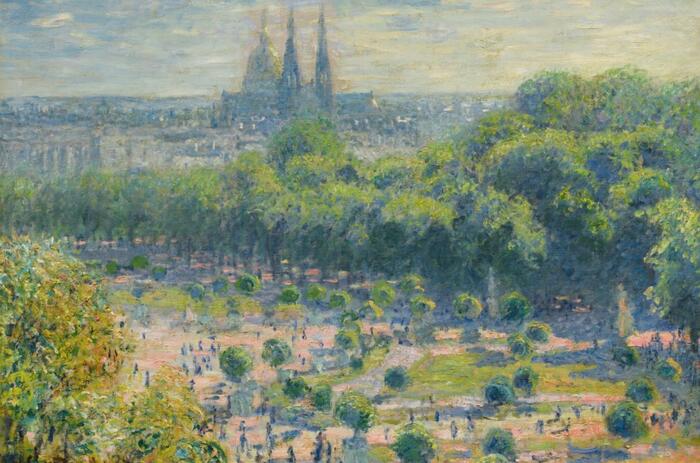
The Twelve Paintings
Following the first two parts of this series, which explored the history of the Blaquier-Arrieta collection, the family’s approach to collecting and the circumstances surrounding the sale, this third instalment focuses on the twelve paintings being offered at Sotheby’s on 18 November.