

By
María Sancho-Arroyo
From a Private Collection to the International Market
This is the second article in a four-part series exploring the Blaquier-Arrieta collection. In Part One, The Art of Collecting, I looked at how Nelly Arrieta de Blaquier and her husband built the collection, the role of London dealer Martin Summers, and the very different art market in which many of the paintings were acquired.
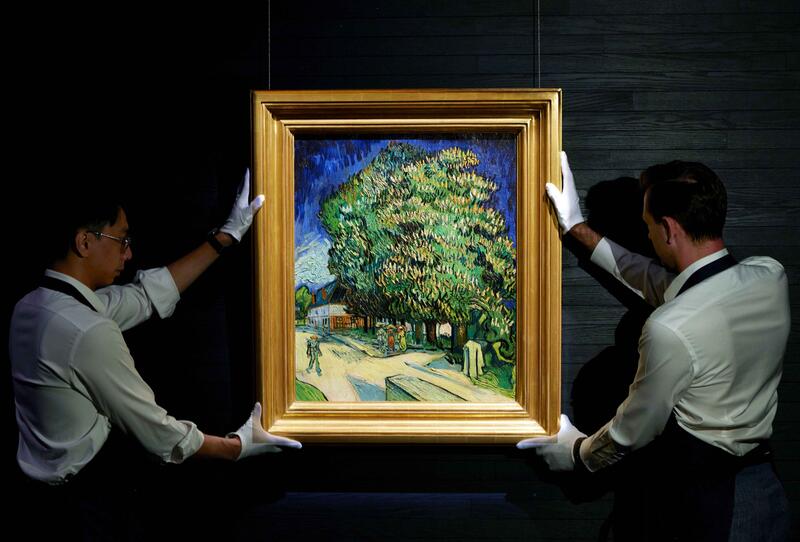
This article turns to what happened next: the gradual dispersal of the wider collection, the transfer of works to Luxembourg, the role of Christie’s in earlier transactions, and the involvement of Christie’s and Sotheby’s in the sale of different parts of the collection.
When a collection that has remained for decades out of public view comes to the market, the auction is only one part of the story. The Blaquier-Arrieta sale offers an opportunity to consider broader developments in the international art market: how major works move between countries, how private collections are gradually dispersed, and how auction houses assess and compete for consignments that can shape an entire auction season.
Sotheby’s is offering twelve Impressionist and Post-Impressionist paintings from the collection in New York on 18 November 2026. The group is expected to reach approximately $450 million. It includes works by Van Gogh, Cézanne, Pissarro, Renoir, Degas and Monet. The sale brings together paintings of exceptional quality, spanning some of the most important names in Impressionist and Post-Impressionist art, and is the highest-valued single-owner sale of the November New York auction season. Part Three of this series will examine each of the twelve paintings individually, exploring their histories and place within the collection.
The Luxembourg episode: what is known
The transfer of works from Argentina to Luxembourg has attracted considerable attention in the press. According to Clarín, one of Argentina's largest and most widely read newspapers, the paintings included in the forthcoming sale have been held since 2019 in a specialised storage facility in Luxembourg, alongside works from other collections. Luxembourg is home to one of the best-known free ports for the storage of art and other valuable assets, and it is likely that the paintings have been held there. A family spokesperson told the newspaper that the decision to export them was made for reasons of conservation and security.
According to Clarín, the family initially obtained a temporary export licence, with an option to sell, granted by Argentina’s Secretariat of Culture during the government of Mauricio Macri. As part of the process, the works underwent administrative evaluation and valuation, followed by the necessary procedures with Customs and the Central Bank. Such assessments form part of the usual procedures for obtaining export authorisation for works of art of this value. The heirs subsequently converted the temporary licence into a permanent export authorisation, a process that required the payment of nearly $24 million in taxes and charges. According to the newspaper, the sale of a Monet from the Nymphéas series covered this amount. The following year, Customs challenged the valuation of the exported works, leading to a potential fine of more than $7 million. According to the family spokesperson, as reported by Clarín, the claim was subsequently dismissed.
The family explained that the decision to transfer the paintings to Luxembourg was motivated by conservation and security concerns. Given the value and importance of the works, storing them in a specialised facility outside Argentina would have offered an appropriate level of protection. However, the move also had significant implications for their future marketability. Once outside the country, the paintings could be offered for sale internationally without the need to arrange a new export from Argentina. The subsequent conversion of the temporary export licence into a permanent one was particularly important in this respect. It meant that, when the decision to sell eventually came, the works were already legally established outside the country. Had they remained in Argentina, obtaining permission to export them at that later stage might have been more complicated or uncertain.
The gradual dispersal and the role of the auction houses
The twelve paintings should not be understood as the entirety of the Blaquier-Arrieta collection. The family’s holdings include European furniture and decorative arts, silver and other objects. These categories are not included in Sotheby’s New York sale. The family has also stated that its Argentine art collection has not left the country and is not being offered for sale.
Some important works have already been sold separately. According to art-market journalist Kenny Schachter, writing in Artnet in January 2026, Van Gogh’s Le Zouave (1888) was first offered privately through Christie’s during the Covid period, with an asking price of approximately $300 million. After being restored and framed, the painting returned to the market in a subsequent private auction organised by Christie’s, where it reportedly sold for just over $190 million, according to sources cited by Schachter. The price has not been officially confirmed. In November 2025, Christie’s also sold two 1886 oil paintings by Paul Signac from the collection for a combined $5.8 million. The auction house is now preparing another offering from the family’s holdings, scheduled for December in London under the title The Blaquier-Arrieta Collection.
While Sotheby’s sale focuses on twelve Impressionist and Post-Impressionist paintings, Christie’s offering comprises approximately 330 lots and covers a much broader range of categories. The selection includes French 18th-century silver, with a particularly important Louis XV silver tureen by Juste-Aurèle Meissonnier as its centrepiece, as well as Limoges enamels, Italian 17th-century bronzes, Old Master paintings, gold boxes, French furniture, Impressionist bronzes and works on paper. The combined estimates for the two sales amount to approximately $20–30 million, considerably below the $450 million expected for Sotheby’s twelve paintings in New York.
This is increasingly familiar in the market for major collections. A family does not necessarily consign every work to one auction house or offer all its holdings at the same time. Different categories may be better suited to different sales, locations or methods of transaction. A painting of exceptional importance may be sold privately, while a group of paintings may be presented in a dedicated evening auction. Silver and decorative arts may be offered through specialist departments. The result is a process of dispersal that can extend over several years.
The choice of sale method also matters. A private sale offers confidentiality and a negotiated transaction, while a public auction creates an open event and the possibility of competition between bidders. Neither method guarantees a higher price in every case. The appropriate route depends on the work, the seller’s priorities, the likely buyers and the terms offered by the auction house.
In recent years, auction houses have also developed another format: the private auction. Rather than presenting a work in a public sale, they organise a bidding process restricted to a select group of invited collectors. This approach combines the confidentiality and exclusivity of a private transaction with the competitive element of an auction. It is particularly suited to works at the highest price levels, where the pool of potential buyers may be relatively small. The reported sale of Van Gogh’s Le Zouave through Christie’s is one example of this format.
The two auction houses, Sotheby’s and Christie’s, have both been involved with the family over the years. This is not unusual in the upper end of the art market, where relationships between auction houses and collectors are often developed over long periods. Specialists maintain regular contact with collectors, visit their homes, become familiar with their holdings and follow the development of their collections. These relationships may eventually lead to consignments, particularly when circumstances change, collections are reorganised or works pass to the next generation.
What is particularly interesting is that the family has not chosen to bring the entire collection to market through a single auction house or in one major sale. Instead, different groups of works and objects are being offered separately, through both Christie’s and Sotheby’s, and over a period of time. This approach allows the family to manage the dispersal without bringing too many works to the market at once. Maintaining relationships with both auction houses may also be important, particularly if further parts of the collection are considered for sale in the future. However, recent developments surrounding the Van Gogh suggest that the division between the two houses may also have reflected different assessments of the risks associated with individual works.
The auction houses: competition, risk and due diligence
The decision to divide the collection between Sotheby’s and Christie’s initially appeared to reflect the longstanding relationships between the family and both auction houses, as well as their competition for important consignments. Sotheby’s secured the twelve Impressionist and Post-Impressionist paintings for its November sale, while Christie’s was entrusted with the decorative arts, which will be offered in London in December. However, recent developments surrounding Van Gogh’s Châtaigniers en fleurs suggest that the division may have involved considerations beyond the usual commercial negotiations.
According to art-market journalist Julie Brener Davich, Christie’s was aware of potential restitution issues relating to the Van Gogh’s provenance and would presumably have been reluctant to guarantee the painting without further investigation. The auction house had previously handled a Cézanne from the Fischer family collection in 2007. Although the family did not challenge that particular sale, it had reserved the right to contest future transactions involving works that might have been sold under pressure during the Nazi period. Christie’s declined to comment on the matter.
The presence of Richard Aronowitz as Christie’s Global Head of Restitution is also relevant. Before joining Christie’s in 2022, Aronowitz had spent fifteen years leading Sotheby’s European restitution department. His experience in this field, and his familiarity with the procedures involved in investigating historical ownership and restitution claims, would have given Christie’s considerable expertise in assessing such risks.
Sotheby’s, by contrast, accepted the consignment of all twelve paintings, including the Van Gogh, and provided a financial guarantee for the collection. The restitution claim raised by the Fischer heirs shortly before the auction has now introduced an additional element of uncertainty. Although Sotheby’s has stated that its research has not established that the painting was sold under duress, it has acknowledged the concerns raised by the family and is seeking a mutually satisfactory resolution.
It is therefore possible that the two auction houses approached the consignment differently. Christie’s may have been unwilling to assume the financial and reputational risks associated with the Van Gogh, or may have proposed terms that reflected greater caution. It is also possible that Sotheby’s offered a more attractive financial proposal and was prepared to take on the consignment. Neither explanation has been confirmed, and the precise terms discussed between the family and the two auction houses remain unknown.
The Van Gogh’s possible withdrawal from the sale introduces a further uncertainty. With a reported estimate in the region of $180 million, it is by far the most valuable work in the group and the highest-valued painting offered during the November New York auction season. If it is removed from the 18 November auction while the claim is being examined, the overall value of the consignment would fall from approximately $450 million to around $270 million. Its absence would therefore significantly alter the scale and profile of the sale, as well as expectations surrounding the result.
The uncertainty surrounding the claim may also affect the painting’s commercial appeal. Even without a court ruling or an injunction, questions over a painting’s ownership history may make potential buyers more cautious, particularly at the highest price levels. Buyers must consider the possibility of future litigation, the costs involved and the implications for the work’s resale. The existence of a claim may therefore narrow the pool of bidders and affect the level of competition.
In cases involving works sold under pressure during the Nazi period, disputes have increasingly been resolved through negotiated settlements, often involving financial compensation or other mutually agreed arrangements. Although it is too early to know whether a similar outcome will be reached here, such cases illustrate the growing importance of provenance research and restitution considerations in the work of international auction houses. These issues can have a direct bearing on the decision to accept, guarantee and offer a painting for sale.
Rarity, estimates and the depth of the market
At this level, the relationship between quality and price is not automatic. The paintings in this sale are likely to attract considerable attention, given their artistic importance, rarity, high estimates and the fact that they are fresh to the market, having been out of public view for many years. However, attention does not necessarily translate into competitive bidding or high prices. The final result depends on the number of serious buyers prepared to compete, particularly when estimates reach tens of millions of dollars, and in some cases exceed $100 million, levels at which the pool of potential buyers becomes very small.
Rarity can create interest, especially when a work has been absent from the market for decades, but it does not guarantee competition. If only one buyer is prepared to bid at the estimated level, the result may be limited. If several buyers are willing to compete, the price can rise considerably.
The estimates published for the Blaquier paintings are ambitious. Van Gogh’s Châtaigniers en fleurs carries an estimate upon request, understood to be in the region of $180 million, while Cézanne’s Arlequin also carries an estimate upon request, understood to be in the region of $120 million. Other works are estimated in the tens of millions. Given the scale of the consignment and the family’s longstanding relationship with Christie’s, Sotheby’s had to put forward a very attractive proposal to secure the paintings. This competitive context may also help explain the relatively ambitious estimates assigned to some of the works.
If the Van Gogh is withdrawn, the total estimate for the Blaquier sale will necessarily be affected. Beyond the arithmetic reduction, its absence would remove the work that has attracted the greatest attention and carried the highest valuation in the November season. The remaining paintings would still form an important group, but the sale would be materially different in both scale and profile.
The auction on 18 November will provide the next measure of how the market responds, although the position of the Van Gogh may remain unresolved by then. The estimates and the attention surrounding the sale have set high expectations. Much will depend on the number of buyers prepared to compete for each painting and the prices they are willing to pay.
In the next part of this series, we will turn to the twelve paintings themselves: looking at each work, its history, its significance and the estimate Sotheby’s has placed on it. Together, they offer a closer look at the remarkable group of works originally scheduled to come under the hammer on 18 November. The final article will then examine the auction results and what they reveal about the market for major Impressionist and Post-Impressionist works.
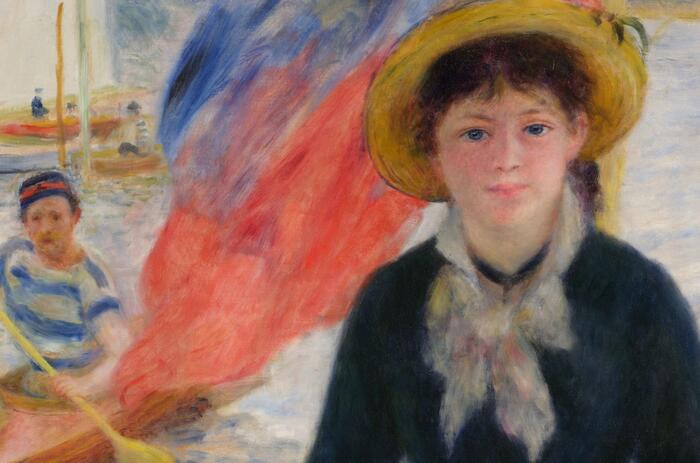
This article is the first of a four-part series exploring how the collection was built, its journey towards the international market, the twelve paintings now coming to auction and, finally, what the sale results reveal about the market for major Impressionist and Post-Impressionist works.
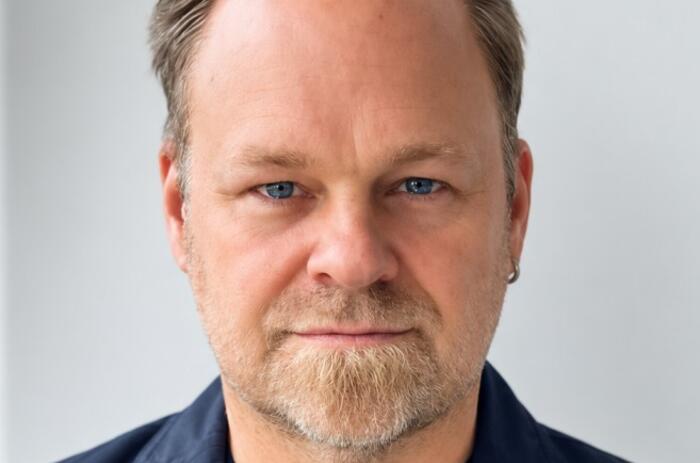
We speak with Tobias Ostrander, the Estrellita B. Brodsky Adjunct Curator of Latin American Art at Tate Modern, at a moment of growing international recognition for Latin American art, as the institution presents three major exhibitions. The conversation explores the region’s growing visibility, the reassessment of the art-historical canon, and the importance of building a global art history grounded in diverse perspectives and local contexts.

The Mexican cultural practitioner and president of CIMAM discusses the principal challenges facing museums—from diversity and funding to ethics and independence—ahead of the Annual Conference of an organization seeking to broaden the voices participating within it.
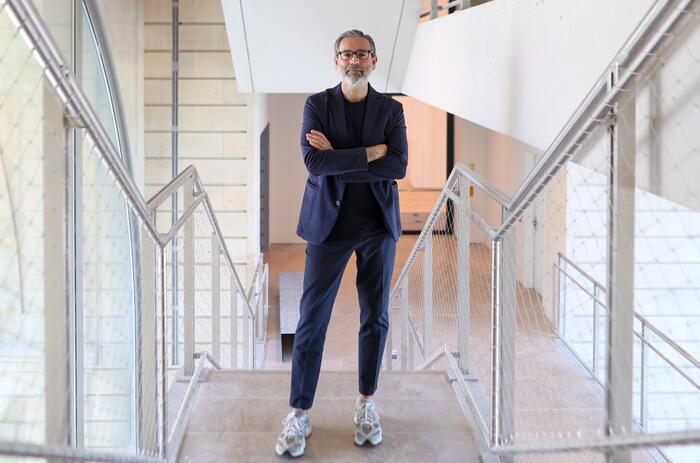
We spoke with Daniel Vega, director of Faro Santander, to address the cultural strategy of the center, its commitment to territorial engagement, and the controversy surrounding the Gelman Collection, which anchors one of its inaugural exhibitions.