

By
María Sancho-Arroyo
Part one: The Art of Collecting
This article is the first of a four-part series exploring how the collection was built, its journey towards the international market, the twelve paintings now coming to auction and, finally, what the sale results reveal about the market for major Impressionist and Post-Impressionist works.
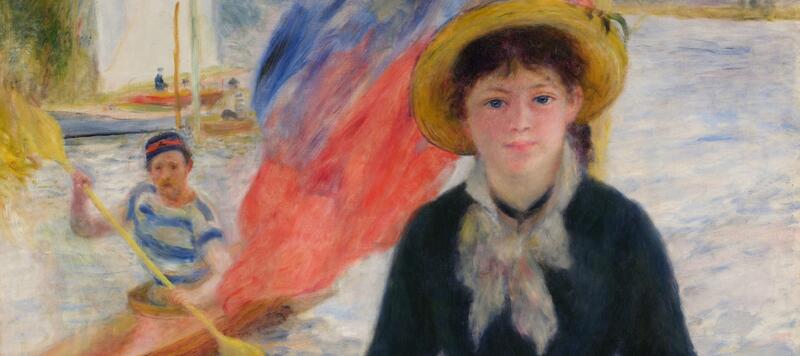
A great collection is rarely the result of a shopping list. It is more often the outcome of a sustained point of view: a collector’s ability to recognize quality, the patience to wait for the right work, and relationships with dealers who understand what that collector is looking for. The Blaquier-Arrieta collection offers a particularly interesting example of this approach. As twelve of its Impressionist and Post-Impressionist paintings prepare to come to auction at Sotheby’s in New York, the story behind them is as revealing as the sale itself.
The collection is so extensive, and its history offers so many different points of interest, that it deserves a closer examination. This article is the first of a four-part series exploring how the collection was built, its journey towards the international market, the twelve paintings now coming to auction and, finally, what the sale results reveal about the market for major Impressionist and Post-Impressionist works.
Part Four: The Auction Results - What the Market Reveals
Among the works now coming to auction are paintings by some of the most important names in modern art, including Vincent van Gogh, Paul Cézanne, Claude Monet and Edgar Degas, among others. Sotheby’s has brought together twelve Impressionist and Post-Impressionist paintings under the title Legendary: The Blaquier-Arrieta Collection, with a combined estimate of approximately $450 million. These works represent only a selection from a much larger collection assembled over several decades by Nelly Arrieta de Blaquier and her husband, Carlos Pedro Blaquier. The family’s wider holdings also include European furniture and decorative arts, silver and Latin American art.
Christie’s has previously handled sales from the family’s collection, including works by Van Gogh and Signac, and will also offer silver and other objects in a London sale in December 2026. The twelve paintings now being offered by Sotheby’s mark a new stage in this gradual dispersal. The family’s wider holdings also include European furniture and decorative arts, silver and Latin American art, which, according to reports in the Argentine newspaper Clarín, remain outside the current sale.
A collector’s eye and a dealer’s network
Nelly Arrieta de Blaquier is widely regarded as the driving force behind the collection. She was not simply a wealthy buyer with access to the art market, but a collector with a strong personal interest in art and a discerning eye. Alongside her collecting activities, she was actively involved in the cultural life of Buenos Aires and internationally, including through her involvement with the Asociación Amigos del Museo Nacional de Bellas Artes, the International Council of the Museum of Modern Art in New York and the International Committee of Friends of the Musée d’Orsay in Paris.
The couple travelled regularly to London, where they acquired many of the paintings through the Lefevre Gallery in Bruton Street. Its director, Martin Summers, played an important role in the formation of the collection. Through his extensive network of contacts, he was able to bring important Impressionist and Post-Impressionist works to the Blaquier’s attention as they became available.
The way Summers and Nelly worked together was central to the formation of the collection. Summers provided knowledge of the market, access to works and an understanding of what was available. Nelly, in turn, brought her own taste and judgement to the selection. Summers could identify opportunities and recommend works, but the final decision rested with the Blaquier-Arrieta couple. This combination of professional expertise, personal judgement and trust helped the collection take shape over time.
A different moment in the art market
Many of the paintings were acquired during the 1960s and 1970s, with some accounts extending the period into the 1980s. The art market was very different from the one that exists today. A collector with the necessary resources, knowledge and relationships could work with a gallery over time to assemble a group of major works. Although paintings of this quality were already expensive, there was a greater availability of them on the market. Today, the market is more international and competitive, and the supply of exceptional paintings is considerably smaller. Many are held in museums or in private collections that rarely sell.
The difference in prices offers a striking illustration of this change. Art Market journalist Marion Maneker recounts that Martin Summers was once hesitant to ask between $2 million and $3 million for a Van Gogh that was being acquired by the collector Stavros Niarchos. This was considered a substantial sum at the time. Adjusted for inflation, it would be equivalent to around $20 million today. The contrast with the present market is considerable: Sotheby’s has placed an estimate of $180 million on the Blaquier-Arrieta Van Gogh, Châtaigniers en fleurs (1890). These are different paintings and separate transactions, but the comparison gives an indication of how dramatically the market for major works by Van Gogh has changed.
The public return of a private collection
The Blaquier-Arrieta paintings have been largely absent from public view for decades. Their presentation at Sotheby’s, together with the international tour preceding the auction, brings them back before a wider public, even if only temporarily. For audiences who have known these works mainly through catalogue reproductions and accounts within the art world, this is a rare opportunity to see them together. As is customary with auction previews, the exhibition in New York will be free and open to everyone, allowing visitors to view the paintings at close quarters, whether or not they intend to bid. In this sense, an auction preview can offer something of the experience of a temporary museum.
The story of the Blaquier-Arrieta collection does not end with how it was assembled. After decades in private hands in Argentina, some of its most important works are now entering the international market. The next article will examine how the paintings left Argentina and were transferred to Luxembourg in 2019, the gradual dispersal of the wider collection, and the competition between Christie’s and Sotheby’s for some of its most important works. It will explore how Sotheby’s secured the twelve paintings now at the centre of this auction, despite Christie’s long-standing involvement with the family’s collection, as the two auction houses compete for a place in the next chapter of its history.

We speak with Tobias Ostrander, the Estrellita B. Brodsky Adjunct Curator of Latin American Art at Tate Modern, at a moment of growing international recognition for Latin American art, as the institution presents three major exhibitions. The conversation explores the region’s growing visibility, the reassessment of the art-historical canon, and the importance of building a global art history grounded in diverse perspectives and local contexts.

The Mexican cultural practitioner and president of CIMAM discusses the principal challenges facing museums—from diversity and funding to ethics and independence—ahead of the Annual Conference of an organization seeking to broaden the voices participating within it.
For years, the proximity of Frieze London and Art Basel Paris has prompted the same question: which city comes out on top? Having visited both fairs this autumn, I think the question deserves a different approach.
We spoke with Daniel Vega, director of Faro Santander, to address the cultural strategy of the center, its commitment to territorial engagement, and the controversy surrounding the Gelman Collection, which anchors one of its inaugural exhibitions.