
AMONG SHELLS, ROOTS, AND DEITIES: PIZZANI AT GALLERIA DORIS GHETTA
For her first solo exhibition in Italy, Lucia Pizzani presents a new site-specific installation conceived for the spaces of Galleria Doris Ghetta. The exhibition Trópico Pasado brings together recent sculptural and pictorial works, united by a deep engagement with the organic as visual language and by a sustained inquir into the relationships between bodies –vegetal, animal, human– and their shifting habitats.
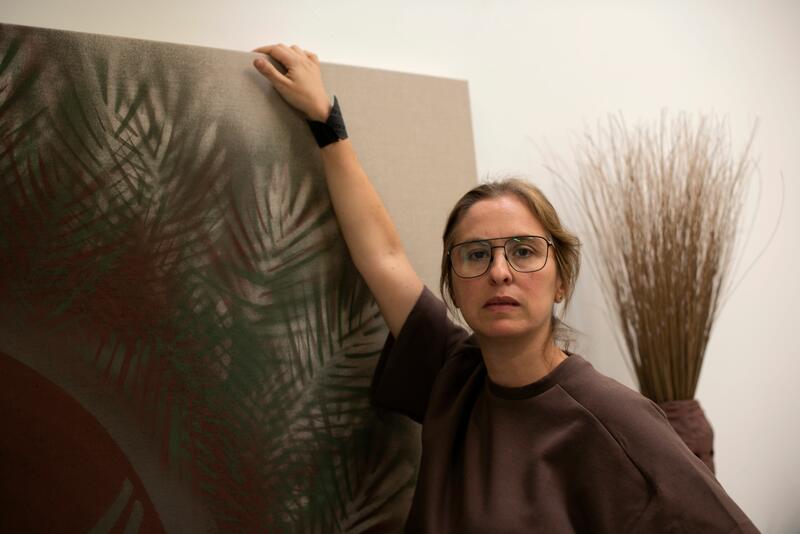
Employing earthy tones and techniques such as air brushing on jute and ceramic modeling, Pizzani constructs a fluid and sensuous world, where vaguely botanical forms intertwine with motifssuggestive of genitalia, leaves, roots, spores. Painted wall interventions expand the works into the space, producing an immersive, almost ritual atmosphere.
At the heart of the show are her ceramic sculptures, with glossy surfaces and crimson-violet hues: totemic vessels that recall ancient female deities or forest spirits. Some of them host living plants, reinforcing the connection between matter and organism. Their ambiguous presence –part fetish, part planter, part relic–evokes mythological or speculative narratives, as if these were remnants of an ancestral civilization or projections of a posthuman future.
-
Lucia Pizzani. Ser de Palma, 2025. Red stoneware clay and bronze palm leaf, 57 x 22 x 22 cm (Galleria Doris Ghetta)
Following a period of research in the region—through visits to local museums and exchanges with scientists and artists—Pizzani developed the Conchas series, which represents a different kind ofimprint. The title Concha means “shell” in Spanish, and as Pizzani explains: “The idea of armor or anouter layer has been in my mind for many years and is embedded in my work. The shell represents both protection and home —an exoskeleton, the opposite of the human body, which has its skeletal structure inside.”
Coming from Venezuela, a country marked by conflict and prolonged crisis, this association with protection is both deeply personal and political. Her wall-based pieces, echoing seeds or imprints, also seem to belong to an archaic or imagined symbolic system. In the tension between abstraction and vitality, Pizzani’s aesthetic invites to think in terms of symbiosis and transformation: across genders, bodies, and species.
Lucia Pizzani (1975, Caracas) lives and works in London. She holds a degree in Communications from Universidad Católica Andrés Bello (Caracas), a specialization in Conservation Biology from the Center for Environmental Research and Conservation at Columbia University (New York), and na MFA from Chelsea College of Art (London). Her work has been exhibited at major international institutions including theQueens Museum (NewYork), Magasin3 Museum of Contemporary Art (Stockholm), MOCO (Montpellier), and FundaciónMarso (Mexico City), among others. She has been commissioned by Frieze London, the Harewood Biennial, and the TEA Museum in Tenerife.
Her work is held in several prominent public collections such as Tate, Serpentine Galleries, CPPC, MOLAA, and Magasin 3. In 2024, her first monograph was published, featuring critical texts by Nicolas Bourriaud, Lucia Pietroiusti, and Jesús Torrivilla.
Trópico Pasado will be on view from June 27 to July 26, 2025, at Galleria Doris Ghetta, Pontives 8, 39046 Ortisei, (Italy).
May interest you
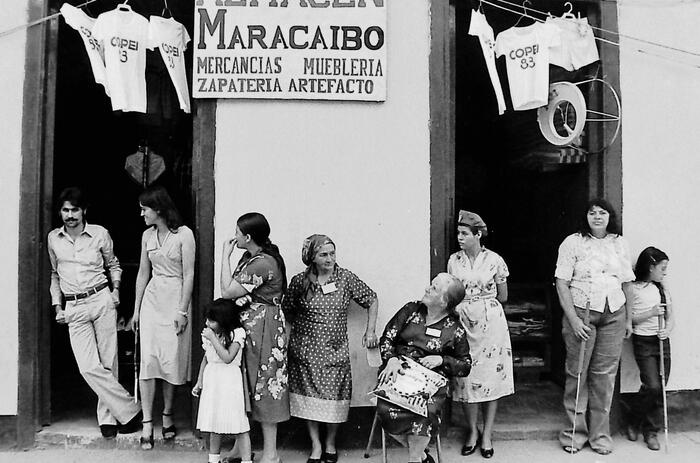

TO TAIMA OR NOT TO TAIMA: AN EMOTIONAL ARCHAEOLOGY OF THE VENEZUELAN DIASPORA
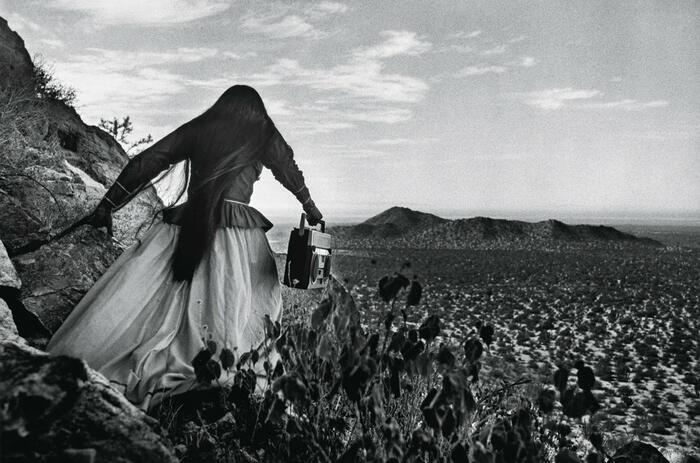
GRACIELA ITURBIDE RETROSPECTIVE AT CASA DE MÉXICO
The Casa de México Foundation in Spain is hosting Cuando habla la luz (When Light Speaks), the first retrospective of Graciela Iturbide (Mexico City, 1942) since she received the 2025 Princess of Asturias Award for the Arts. Curated by Juan Rafael Coronel Rivera, the exhibition brings together 115 works spanning from 1972 to 2017.
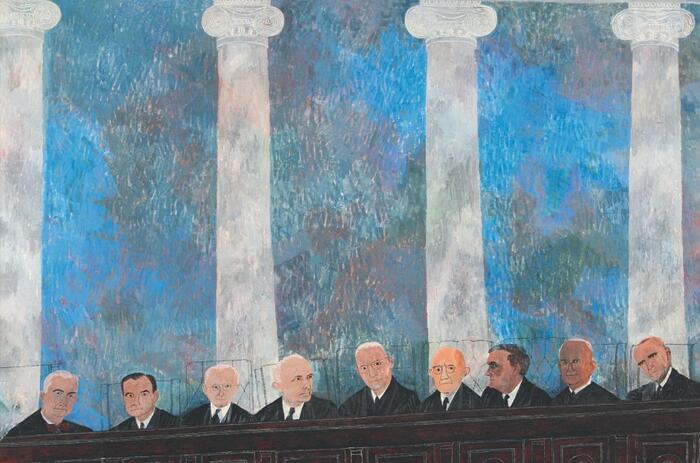
BEN SHAHN, ON NONCONFORMITY
Ben Shahn, On Nonconformity is the artist’s first retrospective in the United States in almost fifty years. Impeccably curated and designed, the exhibition aims to bring renewed critical attention to one of America’s most consequential modernists.