
FLORENCIA BLANCO ON THE ARCHITECTURE OF FREDDY MAMANI SILVESTRI
Ch'ixifuturismo is the exhibition at Fundación Larivière that presents photographs by Florencia Blanco on Freddy Mamani Silvestri's architecture, in dialogue with works by Narda Alvarado, Tin Ayala, Iván Cáceres, Cristina Collazos, Miguel Hilari and Claudia Joskowicz, and curated by Santiago García Navarro. The exhibition includes 40 photos, a series of drawings, three videos and a film.
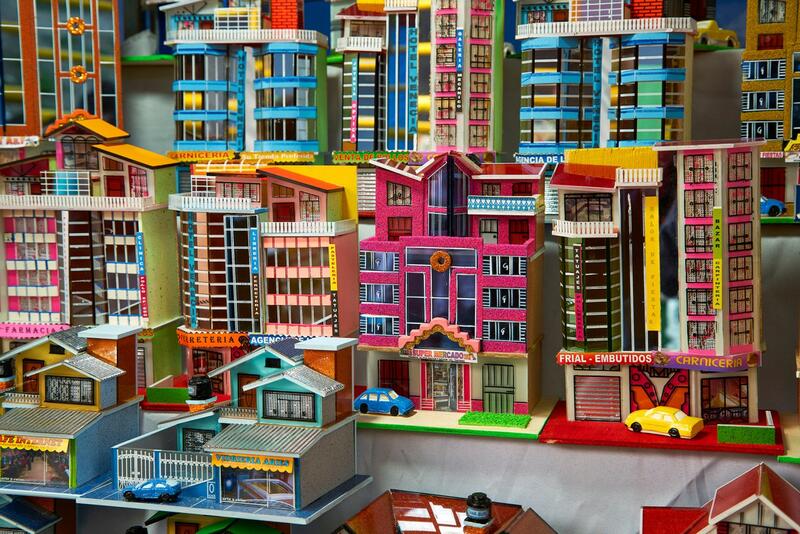
Florencia Blanco's photographs from her series on the Alasita festival (handcrafted miniatures whose ritual purpose is to attract abundance) and photos of the work of Freddy Mamani Silvestri, creator of cholets (from "chola/o" and "chalet"), an architectural style developed from the city of El Alto throughout Bolivia over the last 20 years, are on view at Fundación Larivière.
"Ch'ixi, which in Aymara means marbled, is a term that serves sociologist Silvia Rivera Cusicanqui to get out of the mestizaje trap. In one of its most common conceptions, mestizaje - the mestizos, the mestizo - supposes the overcoming of the white/indigenous opposites as a way of masking the historical asymmetrical relationship determined by coloniality. For Rivera, the tension between opposites inherent to the Ch'ixi is what has allowed the Indians to create and recreate their autonomy over time, instead of identifying themselves with the passive image of the victim," says curator Santiago Garcia Navarro. He adds: "In this exhibition, ch'ixifuturismo alludes to the futures implied in everything that the city of El Alto produces autonomously in its exchanges with the global world, of which Freddy Mamani's architecture is a striking example.
"This work on cholets has a very strong link with my own life in the city of Salta. Part of my life was spent in that city, which was founded in the colony, with native peoples who since the 12th century were part of the Inca empire. So these people had the experience of colonial urban centers. Not because of a history written in books, but because of gestures, ways of living together, of producing, of linking with nature and with their festivities," says the artist, who became interested in this territory as a child on family trips. And she adds: "That life there got me involved, with that territory and with that history. Bolivia seems a distant country, but when you are close - and if you are interested, as was my case - it is a place very similar to Salta and Jujuy in terms of history and how an Andean city becomes a contemporary one". In this sense, her first photographic essay was entitled Salteños, focusing on the urban culture of the city of Salta. Before that essay, in the mid-nineties, she began photographing Bolivia and continues to do so to this day in the thriving city of El Alto.
In the book Una forma propia, fotografías sobre la arquitectura de Freddy Mamani, Florencia Blanco, its author, writes: "Freddy Mamani Silvestre is Aymara, born in 1971, in Catavi, a rural town. He arrived with his family in El Alto because of his miner father who was relocated to the area. Both were construction workers. Freddy studied engineering and then architecture. From the desires and needs of his clients, he began to design unique buildings that changed the profile of the city, colorful buildings with eccentric forms that combine varied aesthetics: modern, Latin American and Chinese baroque, Andean, folkloric, futuristic, anime and science fiction architecture".
Florencia Blanco was born in Montpellier, France, in 1971. In Argentina she lived in Bahía Blanca, Pedro Luro, Salta and, since 1989, in Buenos Aires. She studied film and photography. Since 1997 he has been working on photographic essays, which she regularly exhibits in Argentina and abroad. Since 2000 she has exhibited in Buenos Aires, Washington, New York, Cairo and Moscow, among many other places.
Related Topics
May interest you
EXPERIMENTAL ART PROJECTS IN ARGENTINA
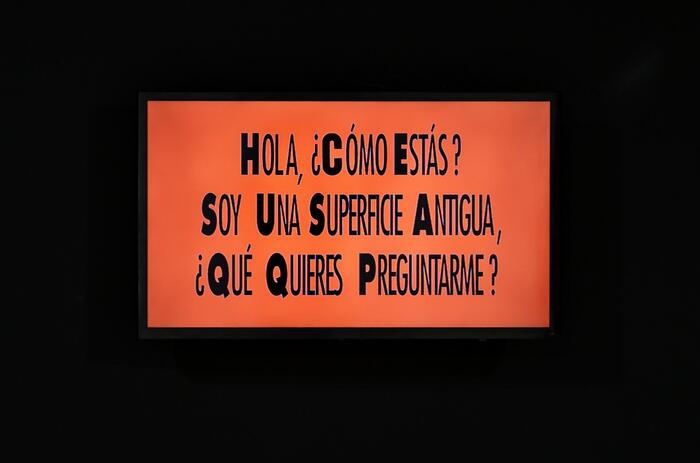
The Museum of Modern Art of Buenos Aires inaugurated El Aprendizaje Infinito (Infinite Learning), an exhibition that recognizes Argentina's master artists and puts in dialogue the historical tradition of arts education and the experimental projects of the latest decades.
FOREIGNERS EVERYWHERE: LATIN AMERICA TAKES OVER THE VENICE BIENNALE
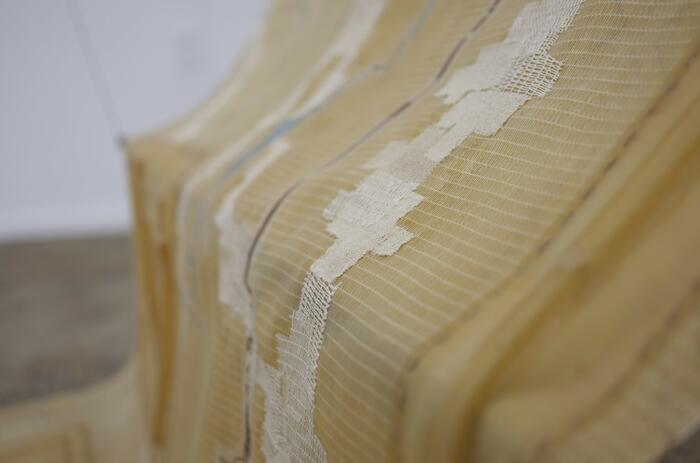
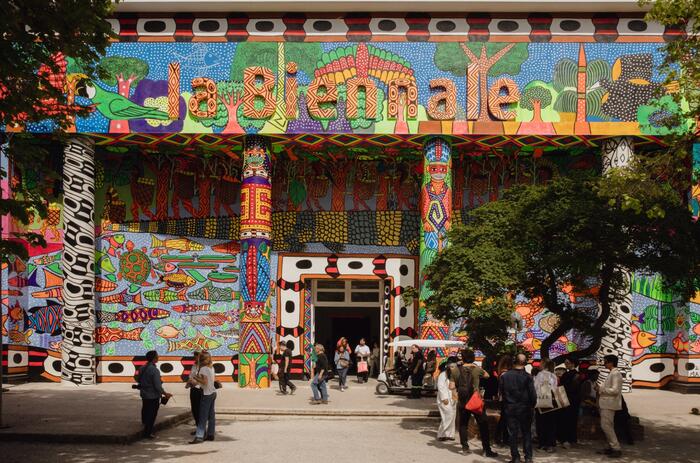
The exhibition of the 60th edition of the Venice Biennale - Stranieri Ovunque (Foregneirs Everywhere) - curated by Brazilian Adriano Pedrosa, presents 331 artists, significantly more than the usual number. More than a third of those artists come from Latin America.
ASUNCIÓN IN THE SPOTLIGHT: LAST EDITION OF PINTA SUD
Pinta Sud | ASU presents the third and final edition of Asunción’s Art Week, taking place from August 5-11, 2024. The event will feature art exhibitions, events, and various activities free and open to the public, offering seven days of artistic celebration throughout the city.
LILIANA PORTER'S DISLOCATED TIME
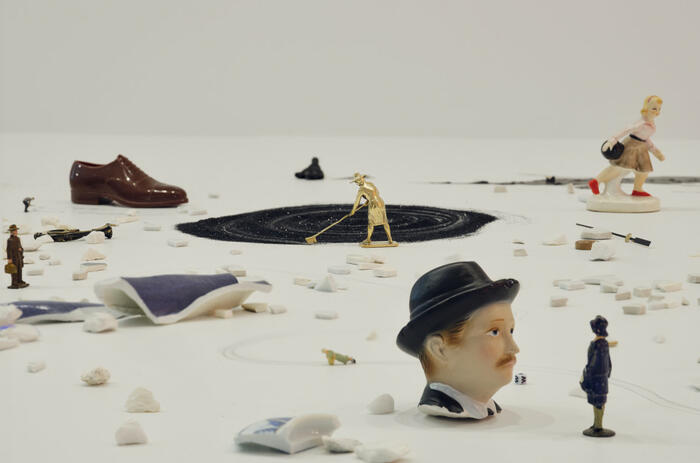
Liliana Porter: The Task is the artist’s exhibition at Dia Bridgehampton. The exhibition comprises a new commission alongside a selection of works from the 1970s and video documentation of a recent play by Porter and collaborator Ana Tiscornia.